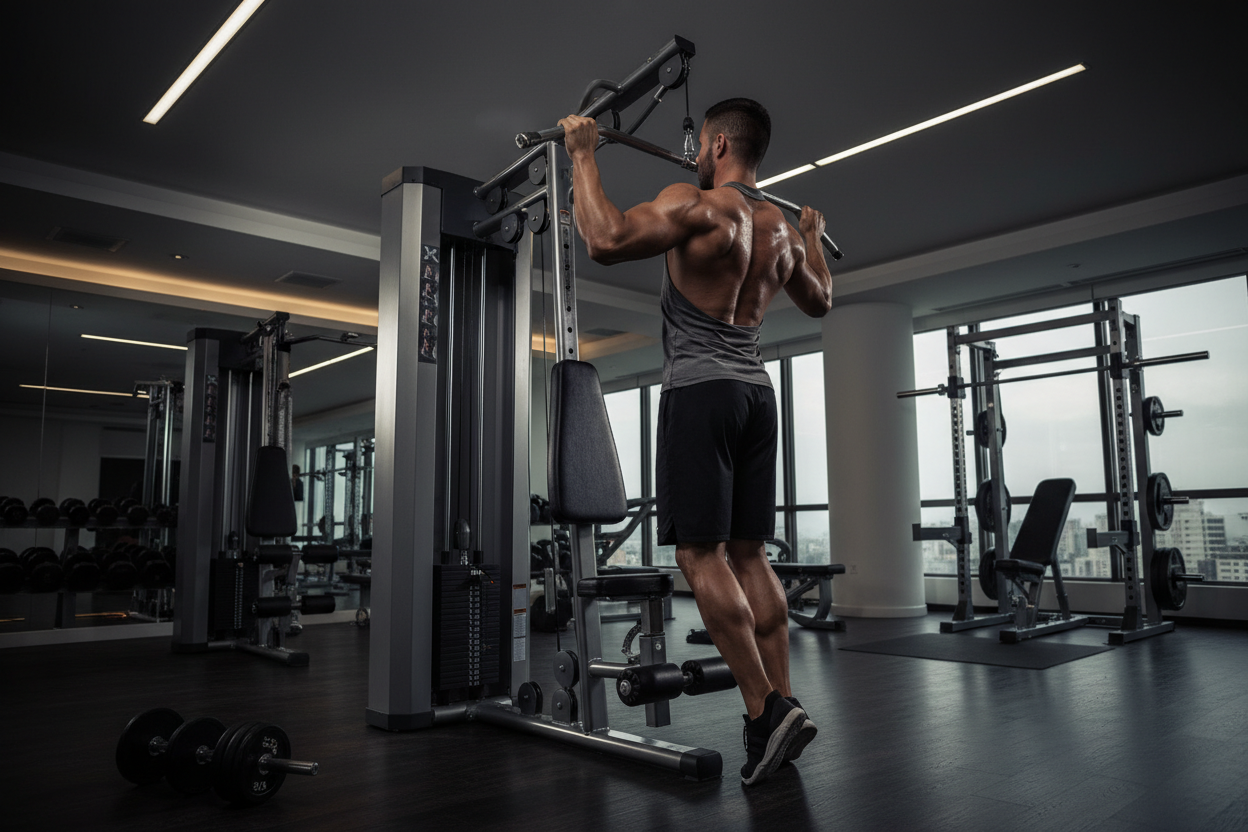
Lats Machine Explained: Is It Worth The Home Gym Space?
Building a massive, v-tapered back in a home gym usually starts with a pull-up bar. But when you hit a plateau or want to isolate those muscles with controlled volume, relying solely on bodyweight isn't enough. That's exactly where a dedicated lats machine comes into play.
Whether you are dealing with low basement ceilings or trying to replicate the smooth, heavy pulls you get from commercial equipment, deciding to add this piece to your setup requires careful planning. In this guide, we will break down everything you need to know before investing in a lat pulldown system for your home.
Key Takeaways
- Space is the ultimate deciding factor: Standard models require at least 80 to 85 inches of vertical clearance.
- Weight stack vs. plate-loaded: Plate-loaded saves money, while selectorized weight stacks offer commercial-level convenience.
- Versatility matters: Most modern units include a low row pulley, making them a complete back-building station.
- Cable quality is non-negotiable: Look for nylon-coated, aircraft-grade cables for a smooth, frictionless pull.
Sizing Up Your Space and Equipment
Garage vs. Basement Clearance
The biggest mistake buyers make is underestimating the height of a lats exercise machine. Unlike a standard bench, these towering units need significant vertical clearance. If you are setting up in a basement with standard 7-foot ceilings, you will need to measure carefully. Many high-end models graze the 85-inch mark. If you are accustomed to the massive, dual-tower lat machines at the gym, remember that home models are engineered to have a smaller footprint, but they still demand vertical real estate.
Maximizing Your Back Workouts
Beyond the Basic Pulldown
While sometimes confusingly referred to by beginners as a lateral exercises machine, this equipment is specifically designed for your latissimus dorsi. However, its utility goes far beyond standard wide-grip pulldowns. By swapping attachments, a good lat exercise machine transforms into a triceps pushdown station, a high-cable bicep curl rig, or even a face-pull setup for rear delts. Ensure the model you choose features a low-pulley option so you can seamlessly transition into seated cable rows.
From Our Gym: Honest Take
We have tested dozens of home pulley systems, and I can tell you firsthand: the knee pad adjustability will make or break your experience. At 6-foot-2, I often find that budget plate-loaded models don't lock my thighs in securely enough when I am pulling anything over 180 pounds. During a recent heavy back session on a mid-tier lats workout machine, the carriage jittered slightly because the guide rods weren't properly lubricated. Once we applied a silicone-based spray, the nylon-coated cables glided perfectly. My advice? Spend the extra $100 for a machine with solid steel guide rods and fully adjustable, high-density foam rollers. Your heavy sets will thank you.
Frequently Asked Questions
Is a lats machine worth it for a home gym?
Absolutely, provided you have the space. While pull-ups are fantastic, a dedicated machine allows for drop sets, single-arm isolations, and variable grips that are incredibly difficult to replicate with free weights alone.
How much ceiling height do I need?
You should aim for at least 85 to 90 inches of ceiling clearance. This gives the machine enough room to operate, plus a few inches of buffer so you aren't scraping the ceiling when changing attachments.
Can I do other exercises on a lats workout machine?
Yes. With a high pulley and a low pulley, you can perform triceps pushdowns, upright rows, bicep curls, and even cable crunches, making it a highly versatile piece of equipment.