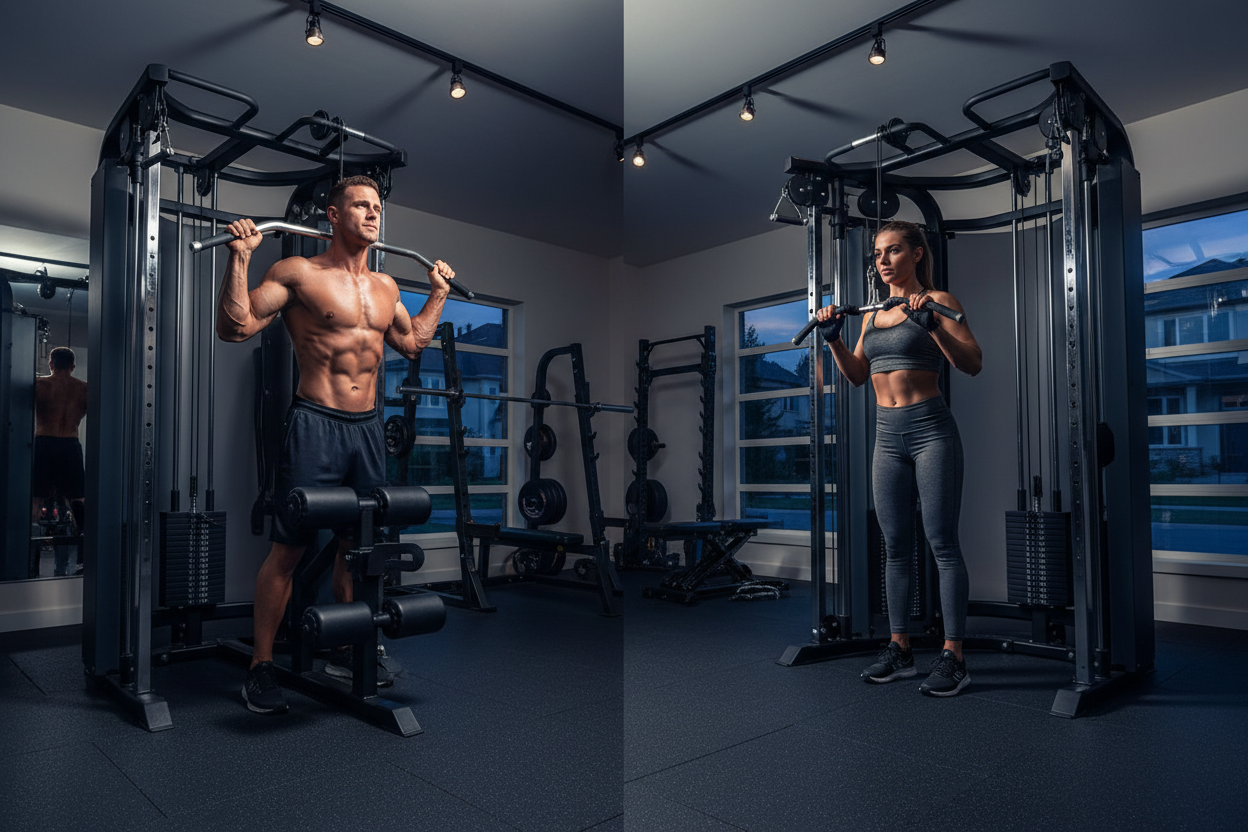
Lat Pulldown Machine vs Cable: What to Know Before You Buy
Building a massive, v-taper back in a home gym usually brings up one major dilemma: maximizing your floor space without compromising your heavy pulls. If you are staring down an empty garage corner and trying to decide between a lat pulldown machine vs cable tower, you are not alone.
Both pieces of equipment offer incredible back-building potential, but they serve completely different home gym strategies. This guide will break down the footprint, versatility, and real-world performance of both options so you can make the smartest investment for your training style.
Key Takeaways
- Versatility: Cable machines (functional trainers) offer full-body workouts, while lat pulldown machines specialize in heavy, isolated back training.
- Footprint: Standalone lat towers usually take up less width but require dedicated floor space, whereas cable systems often demand a wider footprint.
- Stability: Dedicated lat pulldown machines feature built-in knee pads, allowing you to lift heavier weights without lifting yourself off the seat.
- Budget: Plate-loaded lat pulldowns are generally much more budget-friendly than high-quality, dual weight-stack cable machines.
Space Planning & Footprint
When outfitting a North American garage or basement gym, square footage is your most valuable currency. How these two pieces fit into your layout is often the deciding factor.
The Dedicated Lat Machine
A standalone lat pulldown (often combined with a low row) is typically tall and narrow. Most models require a footprint of about 4 feet by 5 feet, plus clearance for the plates if it is plate-loaded. If you have a standard 8-foot ceiling, you will easily clear most towers, but always measure twice for low-ceiling basements.
The Cable System
Cable machines, specifically functional trainers, are usually wider. While corner-mounted cable towers exist, a standard functional trainer needs about 5 to 6 feet of width. You also need to account for the 'working space' in front of the machine for exercises like cable crossovers or lunges.
Training Application & Versatility
Your workout programming should dictate your equipment, not the other way around.
Heavy Back Isolation
If your primary goal is progressive overload on your lats, the dedicated machine wins. The inclusion of adjustable knee rollers is a game-changer. When you are pulling anything close to your body weight, a cable machine without knee pads will literally lift you off the floor. A dedicated lat tower locks your lower body in, allowing for pure lat isolation.
Full-Body Utility
If you want a Swiss Army knife for your home gym, the cable machine is unmatched. Beyond pulldowns, you can perform triceps pushdowns, lateral raises, cable crunches, glute kickbacks, and chest flyes. It is the ultimate accessory station.
From Our Gym: Honest Take
Over the last four years in my two-car garage gym, I have cycled through both setups. When I first bought a functional trainer, I thought it would completely replace the need for a lat tower. I would drag my adjustable bench over to the cables, sit down, and try to pull heavy.
The honest truth? It was frustrating. Without knee pads to anchor me down, anytime I pulled over 140 pounds, my glutes would hover off the bench. I eventually sold the functional trainer and bought a plate-loaded lat pulldown/low row combo. The knurled lat bar and thick thigh pads let me max out the weight sleeves without losing my form. The caveat? I do miss the dual adjustable pulleys for chest flyes, but for pure back development, the dedicated machine was the right call for my specific goals.
Frequently Asked Questions
Is a dedicated lat pulldown machine worth the space?
Yes, if back development is a priority and you frequently lift heavy. The built-in seat and knee rollers provide the stability required to safely pull heavy loads that a standard cable setup cannot match.
Can you do lat pulldowns on a functional trainer?
Absolutely. You can attach a long straight bar across two pulleys or use a single D-handle for unilateral pulldowns. However, you will need to pull up a bench or sit on the floor, which limits how much weight you can comfortably stabilize.
Which option is better for a budget home gym?
A plate-loaded lat pulldown machine is significantly cheaper than a high-quality cable machine. You can utilize the Olympic plates you already own, saving you the premium cost of cast iron weight stacks.