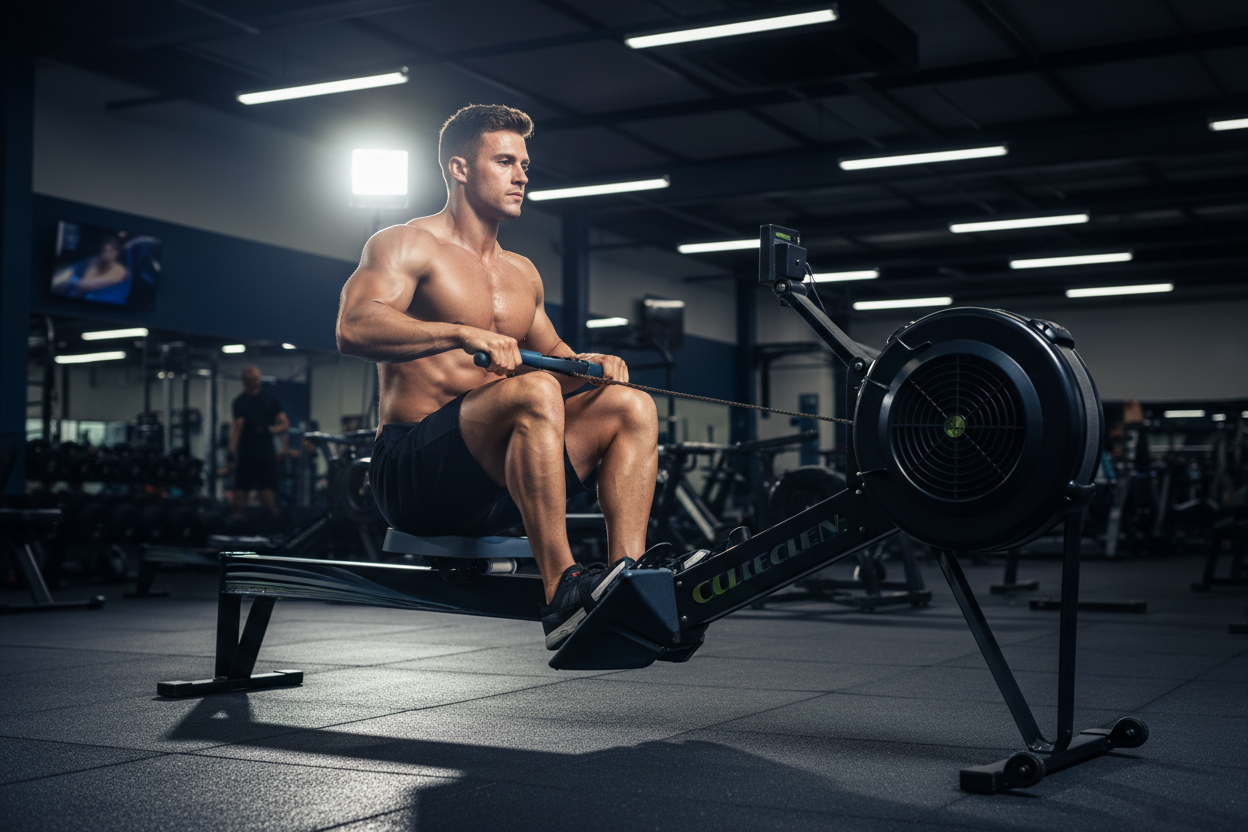
Is Using a Rowing Machine a Good Workout? The Honest Truth
You have seen it sitting in the corner of the gym. It looks a bit like a medieval torture device, and frankly, it sounds like a wind tunnel when someone actually uses it. But here is the reality: using a rowing machine as a workout is arguably the most efficient use of your time in the gym.
Many people skip the rower (ergometer) because they aren't sure how to use it, or they assume it's just an arm workout. That is a massive misconception. If you are looking for a singular machine that builds power, endurance, and mental grit simultaneously, you have found it. Let’s break down why this machine deserves to be the centerpiece of your training routine.
Key Takeaways: Is Rowing Effective?
- Total Body Engagement: Unlike cycling or running, rowing activates approximately 86% of your muscles, including legs, core, and back.
- High Calorie Burn: Because it combines strength and cardio, rowing pushes your heart rate up faster, leading to a higher calorie burn per minute than most steady-state cardio.
- Low Impact: It offers high intensity with zero impact on your knees and ankles, making it sustainable for long-term fitness.
- Versatility: It works for high-intensity interval training (HIIT) sprints and long, steady endurance sessions alike.
The Science: What Do Rowing Machines Workout?
The most common myth is that rowing is an upper-body exercise. If your arms are tired but your legs aren't, you are doing it wrong.
A proper rowing stroke is 60% legs, 30% body swing (core), and only 10% arms. When you drive back, you are performing a movement very similar to a deadlift or a leg press. This makes the rowing machine good exercise for building posterior chain strength—working your hamstrings, glutes, and lower back.
Why Rowing is the Best Exercise for Efficiency
Time is usually our biggest constraint. Is rowing good exercise for busy schedules? Absolutely. Because you are pushing against resistance with every stroke, you are essentially doing resistance training and cardiovascular training at the same time.
Runners often lack upper body strength. Lifters often lack cardiovascular endurance. Rowing bridges that gap. It forces your heart to pump blood to muscles all over your body, not just your legs, which creates a massive metabolic demand. This is why many coaches argue that rowing is the best exercise for general physical preparedness.
Is the Rowing Machine a Good Workout for Weight Loss?
If your goal is body composition change, you need to burn calories and build muscle. Are rowers a good workout for this? Yes, because of the "afterburn" effect.
Because rowing recruits so much muscle mass, it triggers Excess Post-exercise Oxygen Consumption (EPOC). This means your body continues to burn calories at a higher rate even after you step off the machine as it repairs muscle tissue and replenishes energy stores. While running is great, the muscular demand of rowing often gives it the edge for fat loss protocols.
Common Mistakes: Stop "Shooting the Slide"
How good is rowing for you if your form is bad? Not very good at all. In fact, it can lead to back pain if ignored. The most common error I see is "shooting the slide."
This happens when your legs push the seat back, but your handle stays still, leaving your upper body to do all the heavy lifting at the end. Everything needs to move together. Drive with your legs, swing the hips, then pull the arms. Reverse the order on the way back in. Legs, core, arms. Arms, core, legs.
My Training Log: Real Talk
Let me tell you something the brochures won't. The first time I committed to a 5,000-meter row, I thought my lungs were going to collapse. But the real surprise wasn't the cardio; it was the grip and the seat.
There is a very specific, gritty reality to rowing. About 15 minutes in, the sweat makes the handle slippery, and you realize you shouldn't have worn loose shorts because the fabric gets caught in the slide tracks—a rookie mistake that ruins your rhythm. I also learned the hard way that setting the damper (the lever on the side of the fan) to 10 isn't "better." It just drags the air more, like rowing through mud.
The pros usually row between a 3 and 5 setting. When I dropped my damper down to a 4.5, my stroke rate improved, and I actually got a better workout because I could sustain the intensity without my lower back seizing up. That specific "whirring" sound of the flywheel maintaining momentum? That becomes addictive once you find your flow.
Conclusion
So, is rowing a good workout? It is humbling, grueling, and incredibly effective. Whether you are looking to improve your cardiovascular health, lose weight, or cross-train for another sport, the rower delivers.
Don't be intimidated by the mechanics. Sit down, strap your feet in (tight across the widest part of your foot), and focus on the leg drive. Your fitness levels will thank you.
Frequently Asked Questions
Is rowing good for belly fat?
Yes. While you cannot spot-reduce fat, rowing burns a high number of calories and builds muscle. This combination increases your overall metabolic rate, helping you shed fat from all over the body, including the belly area.
Can I do a rowing workout every day?
Technically yes, because it is low impact. However, because it is a full-body resistance workout, your muscles need recovery. It is usually best to alternate hard rowing days with lighter recovery rows or different activities to prevent burnout and overtraining.
Is rowing better than running?
For joint health and upper body engagement, yes. Rowing eliminates the pounding impact that runners face, making it safer for knees and hips long-term. However, running is strictly weight-bearing, which is better for bone density. Ideally, a mix of both is perfect, but for total body conditioning, rowing often wins.