Is There Really Such a Thing as a 'Stronger Exercise'?
I remember staring at my 250-lb barbell set three years ago, wondering why my bench press hadn't moved an inch in six weeks. I was scouring forums at 2 AM, looking for a stronger exercise that would magically unlock my chest gains and fix my plateaus. It is a common trap we all fall into—thinking the secret to growth lies in some 'hidden' variation rather than the boring, gritty reality of better execution and mechanical advantage.
Quick Takeaways
- Stability is the primary driver of force; if you are wobbling, you are not getting stronger.
- Mainstream programs like Livestrong are great for starting, but they eventually lack the loading capacity needed for long-term mass.
- Exercise selection should be based on your specific limb lengths and joint health, not what an influencer calls 'optimal.'
- A solid floor setup is a safety requirement for heavy lifting, not an afterthought.
The Myth of the Magic Movement
Lifters love to hunt for the one 'weird trick' or the secret movement that the pros are supposedly hiding. I have seen guys spend hours researching the exact degree of incline for their bench while their actual form looks like a wet noodle. Here is the hard truth: a movement isn't inherently 'stronger' just because it has a fancy name. It is the way you apply tension and load to that movement that matters. If you cannot stabilize your torso, you cannot push maximum weight. Period.
I wasted months trying every cable fly variation under the sun before I realized my basic dumbbell press was stalling because I wasn't using my legs to drive. I was treating the bench like a lounge chair. When you search for a new movement because you have stalled, you are often just avoiding the hard work of fixing your technique. We want the novelty to solve the problem that only intensity can fix. Before you swap out your primary lifts, ask yourself if you have actually mastered the bracing, the tempo, and the recovery required to make the current one work. Most of the time, the 'magic' is just adding five pounds and actually hitting your depth.
Graduating from Mainstream Internet Routines
Programs like the stronger livestrong series or the livestrong stronger track are decent for getting people off the couch and into a routine. If you are currently grinding through stronger month 1, you are likely seeing those glorious 'newbie gains.' This is the honeymoon phase where your nervous system is just figuring out how to fire your muscles in the right order. It feels great, and the scale usually moves in the right direction. But let's be real about the limitations here.
Those high-rep, circuit-style movements eventually hit a hard ceiling. You can only do so many air squats or light dumbbell lunges before your body simply stops caring. To keep growing, you have to move toward movements that allow for massive loading. This usually means transitioning from the living room floor to a dedicated space with a barbell and a rack. The transition from a 'fitness' program to a 'strength' program is where most people get lost. They fear the heavy iron because it's intimidating, but that is exactly where the progress lives. If you have finished your first few months of a mainstream routine, it is time to stop 'exercising' and start 'training.' That means tracking your numbers, prioritizing compound lifts, and realizing that 3 sets of 5 heavy reps will often do more for your physique than 50 reps of a light lateral raise.
How to Actually Pick a Stronger Exercise for Your Home Gym
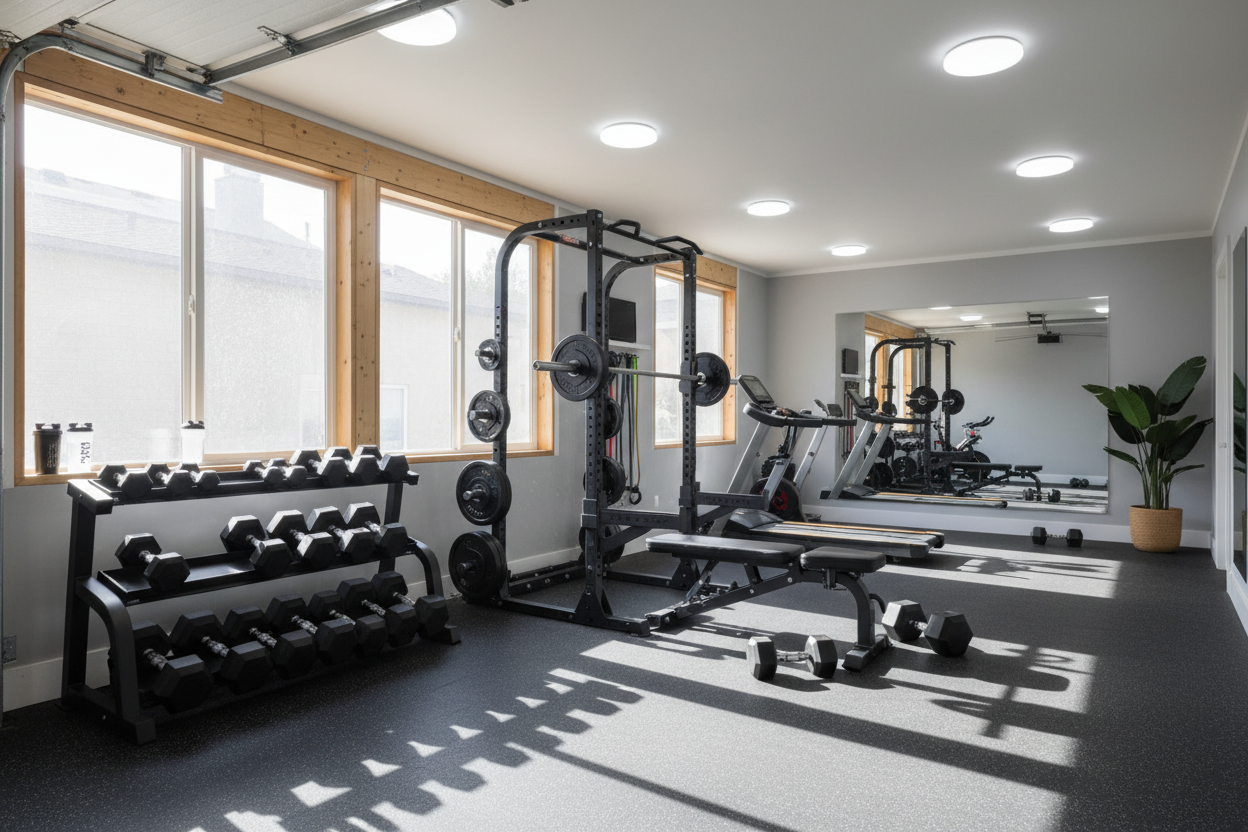
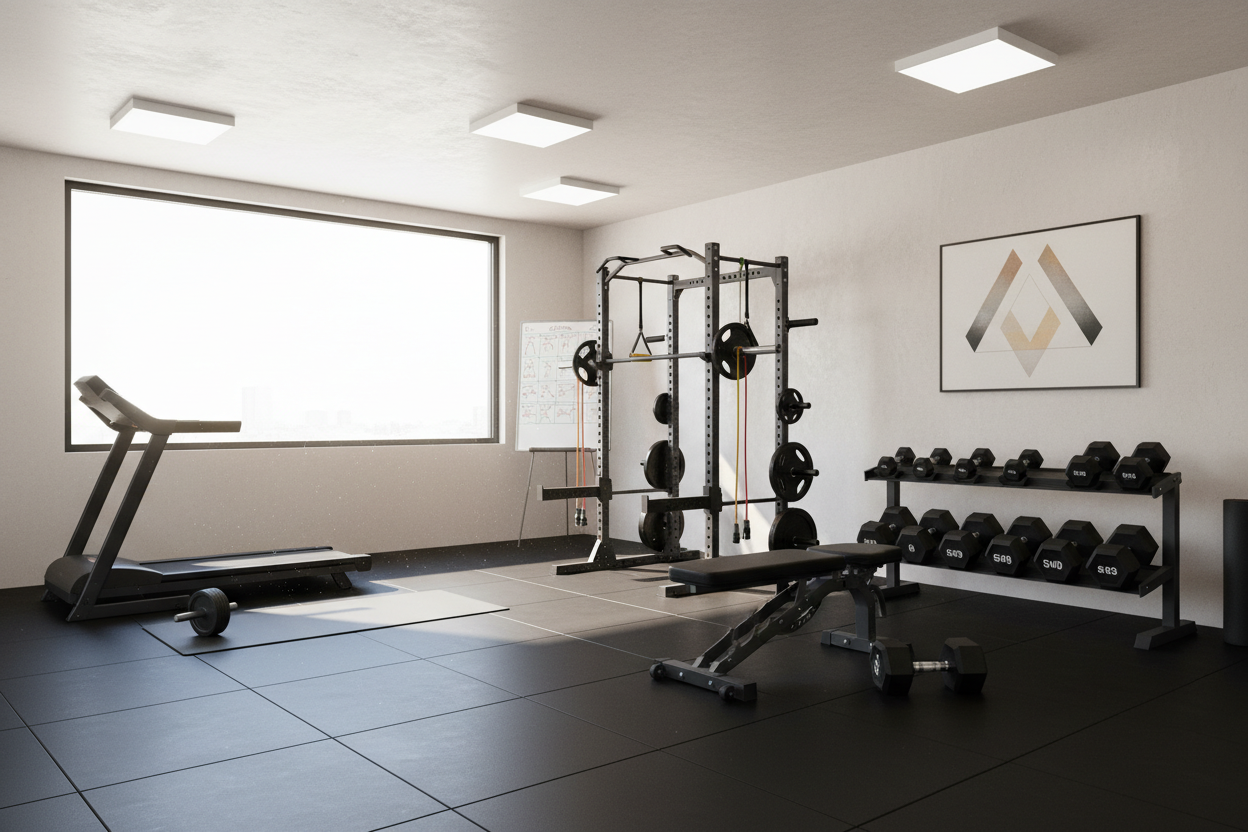
When you are training in a garage, you do not have the luxury of a $5,000 commercial leg press or a row of specialized selectorized machines. You have to be smarter about your selection. A 'stronger' movement for a home lifter is one that offers high stability and a massive ceiling for weight. Why? Because if you are balance-challenged during a lift, your brain will literally shut down your muscle output to prevent you from snapping something. This is a survival mechanism, and it is the enemy of gains.
This is why a barbell row is often superior to a standing cable row for raw strength development. When you are mastering the row exercise, you learn that bracing your hips and using the floor for leverage allows you to pull significantly more weight. That extra load is the literal signal your body needs to grow. When picking your home gym movements, look for 'big' exercises: the squat, the press, the pull. These should be the meat of your workout. If you are limited on equipment, choose the variation that lets you move the most weight through a full range of motion safely. For example, if a standard deadlift feels awkward, try a trap bar deadlift. It provides more stability and allows most people to pull heavier with a flatter back. The goal is to find the variation that fits your body like a glove, allowing you to add weight to the bar every single week without your form falling apart.
Modifying Movements When You're Banged Up
There is no law saying you have to back squat if your knees feel like they are full of broken glass. I used to be a purist, grinding through stinging shoulder pain because I thought the traditional overhead press was mandatory for 'real' lifters. I was wrong, and I paid for it with a month of physical therapy. If your joints are screaming, you need to pivot. Forcing a movement just because it is considered 'optimal' by some guy on YouTube is a fast track to a long layoff.
If your shoulders are acting up, find a low-impact shoulder exercise like a landmine press or a neutral-grip dumbbell press. These variations change the angle of the joint and take the stress off the connective tissue while still hammering the muscle fibers. The same applies to your back and legs. Can't squat? Try Bulgarian split squats. Can't conventional deadlift? Try rack pulls. Swapping a 'classic' for a variation that doesn't hurt allows you to train with the intensity required to actually get stronger. You cannot build muscle if you are constantly sidelined by inflammation. Consistency beats a 'perfect' exercise selection every single day of the week. Listen to your joints; they are the only ones telling you the truth about your programming.
Setting Up Your Space to Handle Heavy Loads
You can own the most expensive Montana-made barbell in the world, but if your feet are sliding on smooth, dusty concrete, you are going to fail your lift. I have had my bench slide backward during a heavy set because I was being cheap with my flooring. It is a terrifying feeling to have 225 pounds over your face while your foundation is shifting. If you want to move heavy weight safely, your environment has to be locked down.
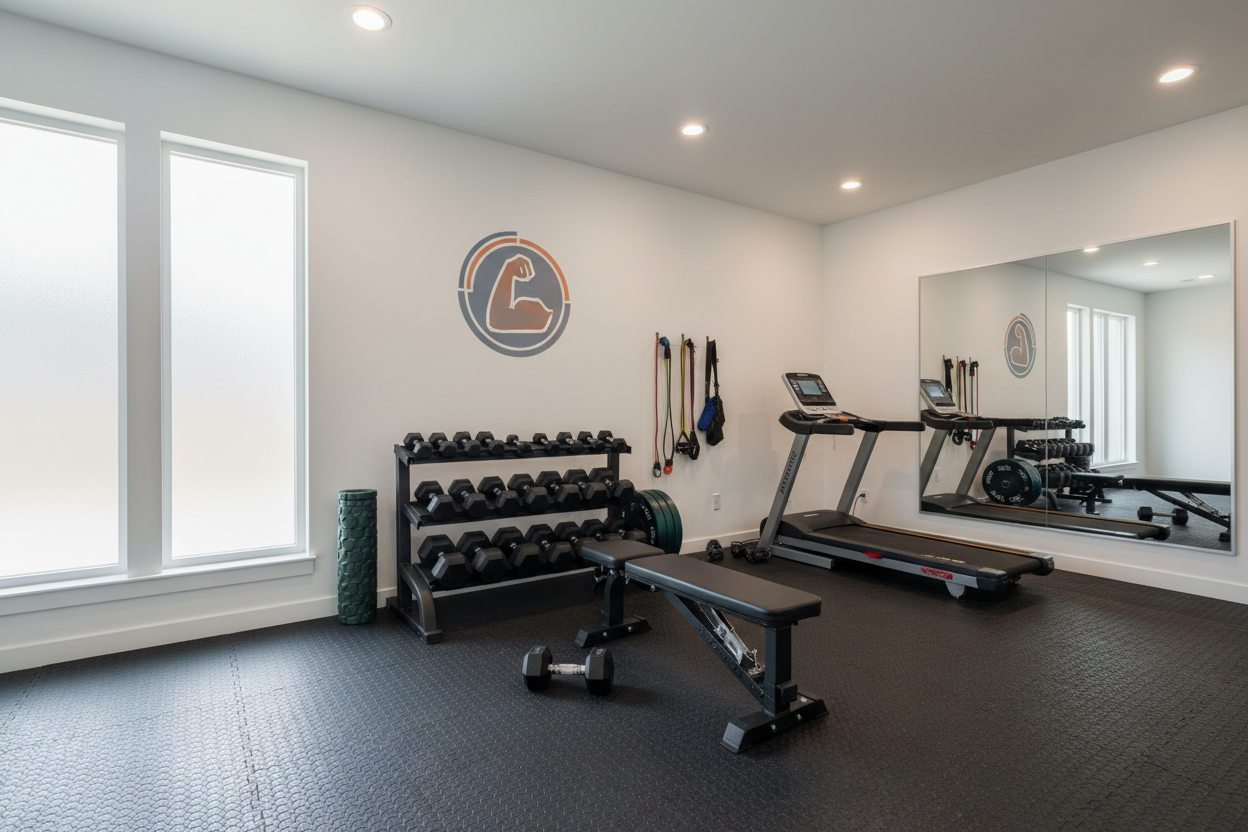
Investing in a heavy-duty 6x8ft exercise mat isn't just about protecting your garage floor from dropped weights; it is about creating a high-friction surface. Proper flooring allows you to dig your heels in and use leg drive on the bench or stay rooted during a heavy overhead press. If you are pushing serious weight, you need to be anchored. Don't let a small savings on equipment be the reason you tear a muscle because your foot slipped mid-rep. A dedicated lifting surface also helps define your 'work zone,' keeping the rest of your garage clean and ensuring that when you step onto that mat, it is time to perform. High-traction flooring is the most underrated 'performance' upgrade you can make to a home gym.
Personal Experience: The 'All-in-One' Mistake
Early in my lifting career, I bought a cheap 'all-in-one' home gym machine from a big-box store. I thought it would be the ultimate stronger exercise solution because it had 20 different attachments. It was a disaster. The cables were sticky, the range of motion was cut short by the frame, and the weight stack maxed out at 150 pounds within four months. I ended up selling it for pennies on the dollar. I went back to a basic power rack and iron plates, and my strength exploded. The lesson? Complexity is usually a mask for poor quality. Stick to the tools that let you add weight indefinitely.
FAQ
Is there a single best exercise for everyone?
No. The best exercise is the one that allows you to move the most weight through the longest range of motion without causing joint pain. For some, that is a front squat; for others, it is a box squat.
When should I stop a beginner program?
You should move on when you can no longer add weight to the bar for three consecutive sessions despite having your sleep and nutrition dialed in. That is a sign your recovery needs a more sophisticated approach.
Does equipment brand matter for getting stronger?
To a point. You don't need a $1,000 bar, but you do need equipment with tight tolerances. A cheap bar that bends permanently under 300 pounds is a safety hazard, not a bargain.