
Is the Rowing Machine Actually Effective? The Honest Truth
You walk into the gym and see lines of treadmills occupied, while the lonely machine in the corner sits gathering dust. It makes you wonder: are rowing machine good exercise options compared to the more popular equipment, or is it just a niche tool for competitive athletes?
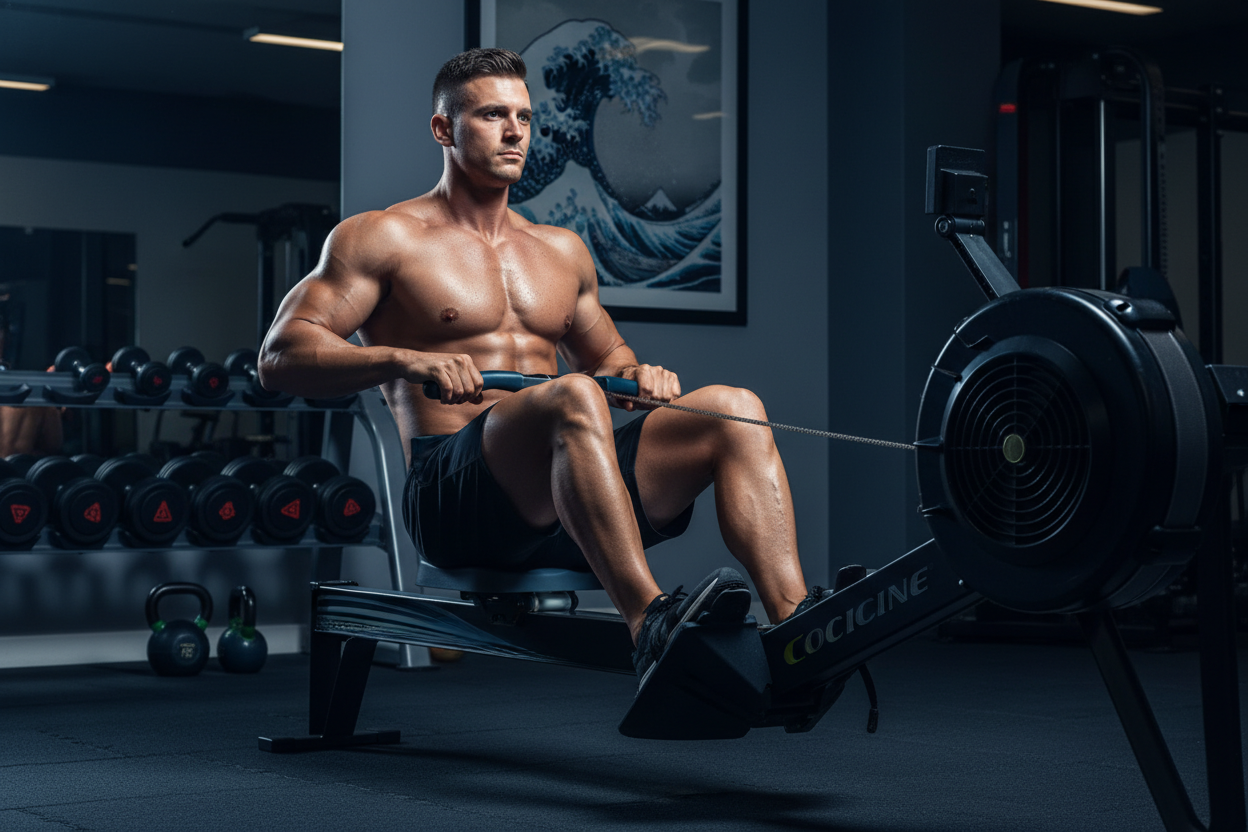
Here is the reality: The rowing machine (often called an ergometer) is likely the most efficient piece of equipment on the floor. It doesn't just work your heart; it demands effort from nearly every muscle fiber you possess. But it is also unforgiving. If your form is off, the benefits vanish.
As a coach who has spent years analyzing movement patterns, I am going to break down the physiology, the benefits, and the raw truth about why this machine might be the missing link in your fitness routine.
Key Takeaways: The Effectiveness of Rowing
For those looking for a quick answer on the effectiveness of rowing machine workouts, here is the breakdown of why it ranks so highly among fitness professionals:
- Total Body Engagement: Unlike cycling or running, a proper rowing stroke recruits approximately 86% of the body's muscle mass.
- High Caloric Output: Due to the compound movement, rowing burns calories at a rate comparable to or higher than running, depending on intensity.
- Joint Preservation: It offers a high-intensity workout with zero impact on the knees and ankles, making it sustainable for long-term health.
- Hybrid Training: It is one of the few exercises that simultaneously improves cardiovascular endurance and muscular endurance.
The 86% Rule: What Muscles Benefit From Using a Rowing Machine?
There is a massive misconception that rowing is an arm workout. If your biceps are burning more than your quads, you are doing it wrong.
The rowing benefits for the body rely on a specific kinetic chain. The American College of Sports Medicine notes that the stroke is 60% leg drive, 20% core bracing, and only 20% arm pull. When you strap in, you are engaging:
- The Drive (Legs): Quadriceps, hamstrings, and glutes initiate the explosive movement.
- The Body Swing (Core): Your erector spinae and abdominals must stabilize the force generated by your legs. Rowing machine benefits core strength by forcing you to hold a rigid torso against resistance.
- The Finish (Upper Body): Lats, rhomboids, rear delts, and biceps complete the motion.
Why Rowing is the Best Exercise for Efficiency
Because you are moving multiple large muscle groups through a full range of motion, the heart has to work double-time to oxygenate that tissue. This is why rowing is the best workout for time-crunched individuals. You don't need an hour; 20 minutes of intervals on an ergometer can leave you floored.
The "Low Impact" Advantage
High-impact activities like running on pavement create micro-trauma in the joints over time. One of the most significant long term effects of rowing is the preservation of joint health.
Is indoor rowing a good workout for those with bad knees? Absolutely. Since your feet remain in contact with the footplates and you are seated, there is no shock wave traveling up the tibia. This makes rowing low impact nature ideal for rehabilitation, older adults, or athletes recovering from injury who still need to maintain peak cardiovascular output.
Cardio vs. Strength: The Hybrid Effect
People often ask, "Is a rowing machine the best overall workout for building muscle or losing weight?" The answer is that it sits uniquely in the middle.
While you won't build bodybuilder-level hypertrophy (size) on a rower alone, the resistance provided by the flywheel creates significant muscular endurance. This is why rowing machines are good for creating a lean, athletic physique. You are essentially doing hundreds of horizontal leg presses and rows in a single session.
Benefits of Rowing 30 Minutes a Day
Consistency is where the magic happens. Rowing for health doesn't require marathon sessions. A steady 30-minute session at a moderate stroke rate (18–22 strokes per minute) creates a massive aerobic base. This improves your VO2 max (how efficiently your body uses oxygen) and enhances metabolic flexibility.
My Training Log: Real Talk
I want to step away from the science for a moment and talk about my actual experience on the "erg." Specs on a page are one thing; the feeling of the machine is another.
The first time I tried a 2,000-meter time trial, I made the rookie mistake of cranking the damper setting (the lever on the side of the fan) up to 10. I thought 10 meant "harder workout." It doesn't. It just felt like I was trying to row a boat through wet concrete. My lower back screamed within three minutes because the drag factor was too high for my technique.
But the thing that sticks with me most isn't the muscle soreness—it's the "erg cough." After a truly max-effort sprint, there’s this specific, metallic taste in the back of your throat and a dry cough that lingers for about 20 minutes. That’s how I knew I had actually pushed my anaerobic threshold. Also, nobody talks about the blisters. If you grip the handle too tight (death-gripping), you will tear up your palms. I learned quickly to hook the handle with my fingers rather than squeezing it, letting the lats do the work rather than my forearms.
Conclusion
So, is rowing the best workout for you? If you are willing to learn the technique, the answer is yes. It offers a rare combination of safety, intensity, and full-body recruitment that spin bikes and treadmills simply cannot match. Whether you are looking for home rowing machine benefits or hitting the gym, the ergometer remains the king of efficiency.
Frequently Asked Questions
Is rowing enough exercise on its own?
Yes, for general fitness and cardiovascular health, rowing is enough exercise. It covers both aerobic conditioning and muscular endurance. However, if your goal is significant muscle mass increase, you should supplement rowing with heavy resistance training.
What does a rower workout do for women's health?
Rowing machine women's health benefits are substantial, particularly for bone density and posture. The pulling motion helps counteract the "hunched" posture from desk jobs, and the load-bearing nature of the leg drive helps maintain bone density without the high impact of jumping.
Ergometer vs. Rowing Machine: Is there a difference?
Technically, no. An ergometer is simply a device that measures work performed. However, in the fitness world, "erg" usually refers specifically to air-resistance rowers (like the Concept2) used by competitive rowers, while "rowing machine" is the general term for magnetic, water, or air rowers used for general fitness.


