Is the Impex Smith Machine Worth Your Floor Space? The Honest Truth
You have likely stumbled across a listing for a used unit or perhaps you have an older model gathering dust in the garage. The impex smith machine is a staple in the history of home gyms, often bridging the gap between budget equipment and functional strength training. But in an era of high-tech smart gyms and commercial-grade power racks, does this classic piece of gear still hold up?
We aren't here to sell you the latest shiny object. We are here to analyze whether this specific machinery provides the safety and hypertrophy potential you need, or if it's just a heavy coat rack waiting to happen.
Key Takeaways: The Verdict
- Durability: Impex machines (often branded under Marcy or Powerhouse) are known for decent structural integrity but often use nylon bushings rather than linear bearings, resulting in more friction.
- Market Value: These are rarely sold new under the "Impex" name anymore. You are looking at the used market.
- Safety: Excellent for solo lifters due to integrated safety catches, though the weight capacity is usually lower than commercial gym equipment.
- Best For: Hypertrophy (muscle building) and accessory work, rather than pure strength (powerlifting) due to the fixed bar path.
Understanding the Impex Lineage
First, let’s clear up the branding confusion. Impex is the parent company behind massive names like Marcy, Competitor, and the older Powerhouse series. When you see an Impex machine, you are looking at the DNA of what is arguably the most popular entry-level home gym equipment in the United States.
Unlike the massive rigs you see at a commercial facility, these units were designed specifically for residential basements and garages. This means a smaller footprint, but it also implies lighter gauge steel. Understanding this trade-off is vital before you load up the bar.
Analyzing the Mechanics: Bushings vs. Bearings
The science of a Smith machine comes down to the glide. When you press, you want the bar to move vertically with zero resistance other than gravity.
Most Impex models utilize nylon bushings that slide along chrome guide rods. High-end commercial units use linear ball bearings. Why does this matter? Nylon creates friction. If the guide rods aren't lubricated regularly, the bar can "stutter" on the way down. This changes the resistance curve of your lift, meaning you are fighting the machine's friction rather than just the weight plates. For bodybuilding, this is manageable. For max-effort strength work, it is less than ideal because it alters your natural bar path mechanics.
The Legacy Model: Impex Powerhouse Smith 3000
A common search for home gym hunters is the impex powerhouse smith 3000 price and specs. This specific model is a relic of the early 2000s home gym boom. It usually features a peculiar setup: a vertical Smith section combined with a pec-deck and a lat pulldown attachment.
If you find one used, the price usually hovers between $150 and $300, depending on the condition of the cables and upholstery. Do not pay retail prices for this. The value here is in the versatility. However, be warned: the pulley systems on these older units often lack the smoothness of modern machines. The cable travel can feel "grainy" if the previous owner didn't maintain the pulleys.
Safety and Load Capacity
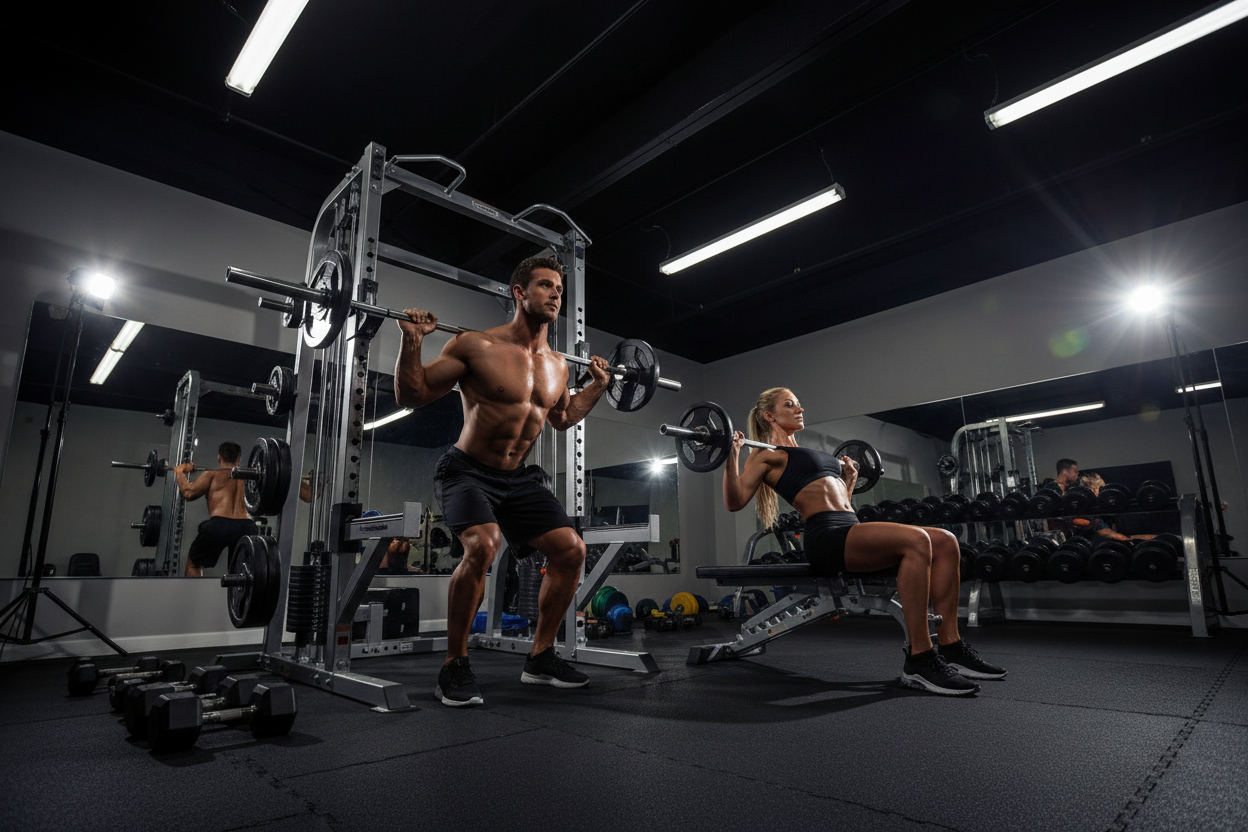
The primary reason to use this machine is the self-spotting mechanism. The Impex hook system allows you to rack the weight at almost any point during the repetition with a simple wrist turn.
However, pay close attention to the weight capacity. Most residential Impex Smith machines are rated for around 300 to 600 lbs (including the user on pull-up stations). This is plenty for the general fitness enthusiast, but if you are squatting 400 lbs, you are pushing the structural limits of the frame. The steel gauge is typically 14-gauge, which is thinner than the 11-gauge steel used in heavy-duty racks.
My Personal Experience with Impex Smith Machine
I spent about six months training exclusively on an older Impex Powerhouse unit in a friend's uninsulated garage, and there are things the manual won't tell you. The first thing I noticed was the "sticking point"—not in my muscles, but in the machine itself. Because it used plastic bushings, there was a specific point about halfway up the guide rod where the bar would drag slightly, almost like hitting a patch of mud.
I had to keep a can of silicone lubricant nearby and spray the rods every two weeks. If I didn't, the eccentric (lowering) phase of the bench press felt jerky. Also, the knurling on the bar was surprisingly passive. It didn't bite into the hand like a rogue barbell; it was smooth, almost slippery. I had to use chalk for anything over 185 lbs just to feel secure. It got the job done for hypertrophy work—my chest grew during that cycle—but I never felt comfortable testing a true one-rep max because the whole unit would wobble slightly when I re-racked the weight aggressively.
Conclusion
The Impex Smith machine is a workhorse of the budget home gym world. It isn't smooth enough for competitive powerlifters, and it requires maintenance to keep the friction low. However, if you can find a used unit like the Powerhouse 3000 for a fair price, it offers incredible value for bodybuilders looking to train safely without a spotter. Treat it right, keep it oiled, and it will last for decades.
Frequently Asked Questions
What is a fair price for a used Impex Powerhouse Smith 3000?
Condition is everything. For a rusty unit with missing cables, $50 to $100 is fair. For a pristine unit with all attachments and a bench included, the impex powerhouse smith 3000 price generally sits between $200 and $350. Anything over $400 is approaching the cost of brand-new, modern alternatives.
Can I use Olympic weights on an Impex Smith machine?
It depends on the specific model. Many older Impex machines were designed for "Standard" plates (1-inch holes). However, most came with heavy-duty plastic adapter sleeves that slide over the bar ends to accommodate Olympic (2-inch) plates. Always check if these sleeves are included before buying.
Is the Impex Smith machine bar 45 lbs?
Rarely. Unlike a standard Olympic barbell, Smith machine bars are often counterbalanced or simply lighter because they are hollow pipes attached to the carriage. Impex bars typically weigh between 15 and 25 lbs. Do not assume you are lifting 45 lbs just because the bar looks thick.