Is the Donow Smith Machine Actually Built to Last? The Honest Truth
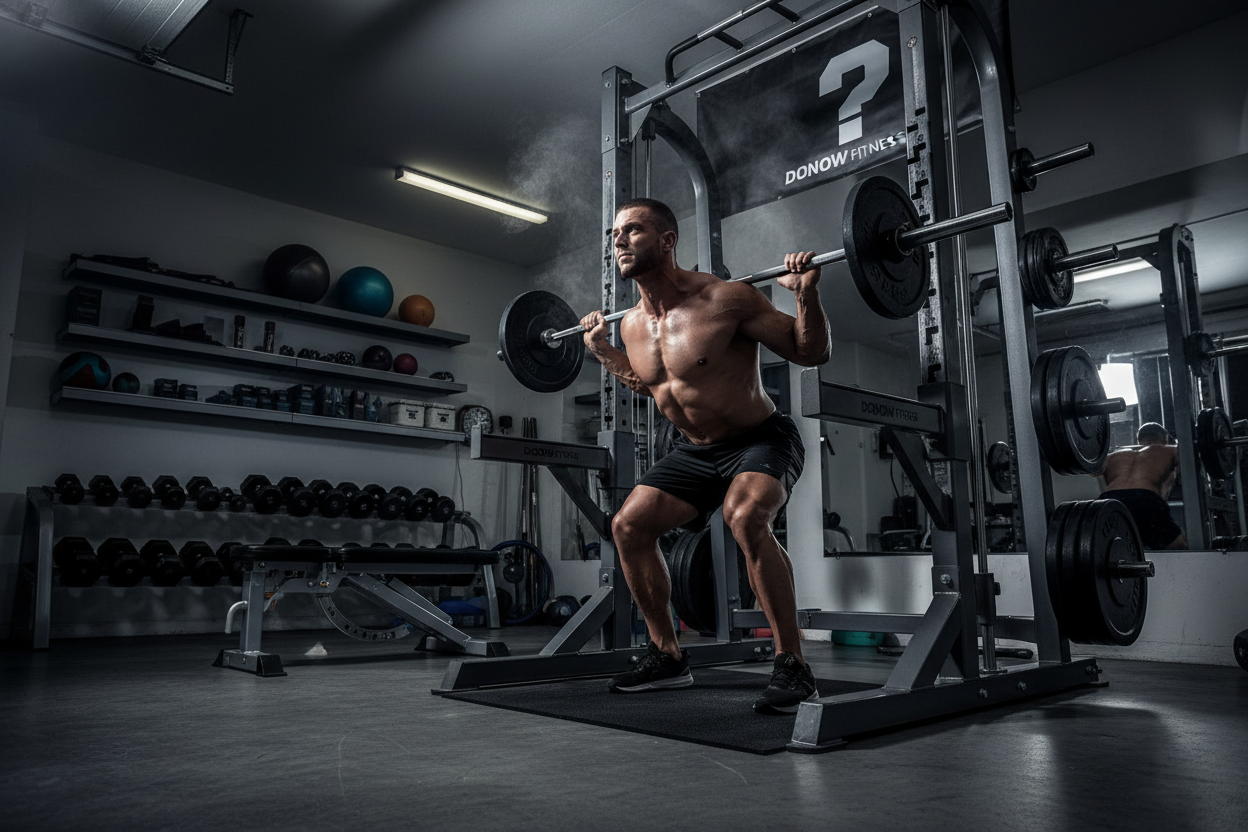
Building a home gym usually comes down to a battle between your budget and your floor space. You want a setup that mimics a commercial gym, but you don't want to spend five figures. Enter the donow smith machine. If you have been scrolling through equipment listings, you have likely seen this all-in-one cage popping up as a cost-effective contender.
But with lower price tags come valid concerns about safety, stability, and longevity. Is this machine a hidden gem for your garage gym, or is it a wobbly regret waiting to happen? I’m going to break down the engineering, the feel, and the reality of owning this beast without the marketing fluff.
Key Takeaways: Is It Worth It?
- Versatility is King: It functions as a Smith machine, power rack, and cable crossover system, replacing three separate bulky pieces of gear.
- Assembly Reality: Expect a 4-8 hour build time. The instructions are decent, but there are hundreds of bolts.
- Glide Smoothness: The linear bearings offer a surprisingly smooth motion, provided you keep the guide rods lubricated.
- Weight Capacity: While sturdy enough for most bodybuilders, elite powerlifters may find the gauge steel limit testing near the 700lb mark.
- Value Proposition: When paired with a donow weight bench, it offers one of the best price-per-exercise ratios on the market.
Analyzing the Build Quality and Stability
The biggest fear with budget-friendly Smith machines is the "wobble factor." When you are under a heavy load, the last thing you want is the structure shifting. Donow fitness equipment generally utilizes 14 to 16-gauge steel. While this isn't the 11-gauge steel you find in a commercial facility, it is standard for residential gear.
The footprint is wide enough to prevent tipping during pull-ups or dips, but you need to be realistic. If you slam a heavy barbell into the J-hooks, you will see some vibration. For strict hypertrophy training and controlled movements, the frame holds up well. However, if you plan on doing dynamic, explosive cross-training movements, you might want to weigh down the base or bolt it if possible.
The Smith Bar Mechanics
The heart of this machine is the guided barbell. Cheap Smith machines use plastic bushings that drag and stutter. The Donow model utilizes linear bearings. This is a crucial distinction.
Linear bearings allow the bar to glide up and down the steel rods with minimal friction. This matters for safety and muscle engagement. If the bar sticks, you compromise your form. The catch system on the Donow is reliable, with safety stops that are easy to adjust. This allows you to bench press or squat alone safely, which is the primary reason most people buy a Smith machine in the first place.
Cable System and Attachments
Most users are surprised to find that the cable pulley system is the highlight of this machine. It usually operates on a 2:1 ratio, meaning 100lbs of weight feels like 50lbs. This allows for smoother travel and longer cable extension, which is perfect for lateral raises, tricep pushdowns, and cable crossovers.
The pulleys are generally smooth, though they may require a break-in period. One thing to note is the positioning of the uprights. Because this is a compact unit, doing cable crossovers requires you to step slightly forward to keep tension on the pecs throughout the full range of motion.
Integrating the Donow Weight Bench
You cannot fully utilize this cage without a solid platform. The donow weight bench is frequently sold as a bundle or recommended add-on. It is designed to fit specifically within the depth of the cage.
Why does this matter? Some third-party benches are too long, making it awkward to align the Smith bar with your chest for pressing. The proprietary bench usually includes leg hold-downs, which are essential if you plan on using the high pulley for lat pulldowns. Without those hold-downs, you will lift off the seat when the weight gets heavy.
My Training Log: Real Talk
I’ve spent a decent amount of time testing entry-level all-in-ones, and my experience with the Donow had some distinct highs and lows. Let's talk about the assembly first. I hope you have a socket wrench set and a free Saturday, because the little wrench they include in the box is a nightmare. My hands were cramping by step 12.
Once it was built, the first thing I noticed was the knurling on the Smith bar. It’s surprisingly aggressive—in a good way. I didn't need chalk. However, there is a specific quirk with the cable system. When I first did a tricep pushdown, I felt a slight "grit" or friction at the very top of the concentric movement. It wasn't a dealbreaker, but it wasn't whisper-quiet like a gym machine. I had to spray a significant amount of silicone lubricant on the guide rods and the pulley wheel axles to get that buttery feeling. After the lube job, it ran 90% better, but straight out of the box, expect a little drag.
Conclusion
The Donow Smith Machine isn't going to replace a $5,000 commercial rig, and it doesn't try to. It is a functional, safe, and versatile centerpiece for a home gym that solves the space issue. If you are a bodybuilder or general fitness enthusiast looking to lift safely at home, it checks the right boxes. Just be prepared for a long assembly process and keep a can of silicone spray handy.
Frequently Asked Questions
What is the maximum weight capacity for the Donow Smith Machine?
Most Donow Smith machine models are rated for approximately 800 to 1,000 lbs on the frame, with the Smith bar itself usually handling up to 350-400 lbs safely. Always check the specific manual for your model, as catches and J-hooks have different ratings than the cables.
Can I use a standard 7-foot Olympic bar with this cage?
Yes, the front uprights typically include J-hooks and spotter arms, allowing you to perform free-weight movements like squats and military presses outside of the guided Smith rail system. A standard 7-foot Olympic bar fits the width perfectly.
Does the machine come with weights included?
Generally, no. The Donow Smith machine is sold as the frame and attachment system. You will need to purchase Olympic weight plates (2-inch center hole) separately. The cable system also utilizes these plates rather than a pre-selected weight stack to keep shipping costs and prices down.