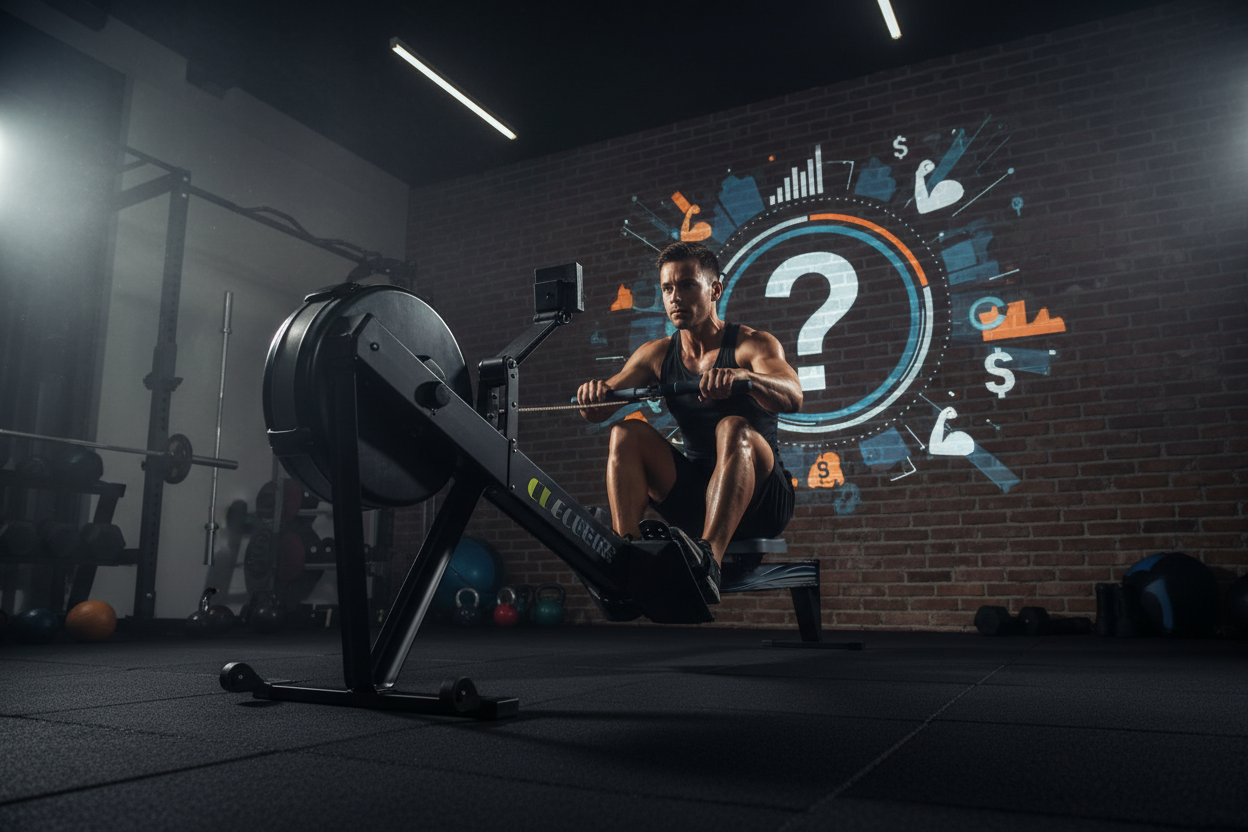
Is a Rowing Machine Worth It? The Honest Truth for Your Home Gym
You are staring at that empty corner of your garage or living room, wondering if you should fill it. We have all seen the graveyard of home gym equipment—dusty treadmills turned into laundry racks and ellipticals that haven't seen a human stride in years. You want to know: Is a rowing machine worth it, or will it meet the same fate?
It is a valid concern. Rowers (ergometers) look intimidating. They don't offer the mindless escapism of a stationary bike where you can zone out to Netflix easily. They require focus. But if you are looking for efficiency and longevity, the answer isn't just a simple yes or no—it depends entirely on your goals and your tolerance for discomfort.
Quick Summary: Is a Rower Worth It?
If you are in a rush, here is the breakdown of why this machine might be the best (or worst) investment for you:
- Total Body ROI: Unlike cycling or running, rowing engages roughly 86% of your muscles, combining cardio with strength endurance.
- Joint Longevity: It is zero-impact. If you have bad knees or ankles, this is the safest high-intensity option.
- Space Efficiency: Most modern rowers (like the Concept2 or Hydrow) store vertically, taking up the footprint of a dining chair when not in use.
- The Learning Curve: It requires technique. If you aren't willing to learn proper form, you risk lower back pain.
The Return on Investment: Health & Physiology
When asking "is a rowing machine a good investment," you have to look at the physiological return. Most cardio machines make you choose between aerobic capacity and muscular endurance. The rower forces you to do both.
The "86% Rule"
The magic of the rowing stroke is the kinetic chain. You drive through the legs, swing the core, and pull with the arms. This triple extension mimics the mechanics of Olympic lifting but without the heavy weights. You aren't just burning calories; you are building a posterior chain (hamstrings, glutes, back) that combats the effects of sitting at a desk all day.
Time Efficiency
Because you are using so much muscle mass, the metabolic demand is higher. A 20-minute row often feels like a 40-minute run. If you are time-poor, this efficiency makes the machine highly valuable.
The Practicality: Space and Noise
Many people wondering "should i buy a rowing machine" are limited by square footage. Here is the reality of living with one.
Footprint vs. Storage
While in use, a rower is long—expect to need about 9 feet of length. However, the vertical storage capability is a game-changer. Unlike a treadmill, which remains a massive object even when folded, a rower tipped on its end becomes unobtrusive.
The Noise Factor
This depends on the resistance type. Air rowers (the standard in Crossfit boxes) generate wind noise—the harder you pull, the louder it gets. Magnetic rowers are silent but can feel less "dynamic." Water rowers provide a satisfying whoosh sound, which many find meditative rather than annoying.
The "Hidden" Cost: The Learning Curve
Here is where I need to be blunt. If you ask yourself "should i buy a rower," you must also ask, "Am I patient?"
Rowing is technical. It is not as intuitive as running. The sequence is legs, body, arms—then arms, body, legs. If you rush this or hunch your shoulders, your lower back will scream at you. The machine punishes bad form. However, once you click into the rhythm, it becomes almost hypnotic. The barrier to entry is higher than a bike, but the ceiling for mastery is also higher.
My Training Log: Real Talk
I want to bridge the gap between the marketing brochures and reality. I have logged over 2 million meters on my rower, and here is what the specs won't tell you.
The "Rower's Bum" is real.
The first two weeks you own this machine, your sit bones are going to hurt. The seats are generally hard rubber (especially on the Concept2). I spent the first month adjusting my position every 500 meters. It goes away eventually as you get conditioned, or you buy a seat pad, but don't be surprised if sitting feels raw initially.
The Callous Placement.
You will develop calluses, but not where you get them from lifting barbells. These sit right at the top of the palm, just under the fingers. I remember trying to wash my hair after a 10k row and my hands were stuck in a permanent "claw" shape for about 20 minutes.
The "Dark Place."
There is a specific mental grit required for rowing. On a treadmill, you can hop off the sides if you get tired. On a rower, to stop is to completely halt the flywheel. The momentum dies instantly. It forces a level of mental accountability that I haven't found in any other machine. It’s a love-hate relationship, but mostly love.
Conclusion
So, is a rower worth it? If you want a machine that allows you to read a magazine while casually pedaling, absolutely not. Do not buy one.
However, if you want a piece of equipment that respects your time, saves your joints, and forces you to become mentally tougher, it is arguably the best money you can spend on a home gym. It is the gold standard for efficient suffering.
Frequently Asked Questions
Can I lose belly fat by just rowing?
Rowing is a calorie-torching workout that contributes significantly to a caloric deficit, which is required for fat loss. While you cannot "spot reduce" belly fat, the high metabolic demand of rowing combined with its core engagement makes it highly effective for overall body composition changes.
Is a rowing machine bad for your back?
It is only bad for your back if your form is incorrect. A proper rowing stroke actually strengthens the back muscles. However, if you round your spine (slouch) or initiate the drive with your back instead of your legs, you can cause strain. Start with low resistance and focus on technique first.
How much should I spend on a decent rower?
You generally get what you pay for. "Budget" hydraulic rowers under $200 often break quickly and have poor motion. A quality magnetic or air rower typically starts around the $500 range, with the industry-standard machines (used by Olympians) costing around $900-$1,000. These hold their resale value incredibly well.