Is a Pull Workout Machine Actually Worth the Investment?
Hitting a plateau with your back training is a frustrating reality for many home gym owners. When barbell rows and pull-ups stop yielding the hypertrophy you want, or lower back fatigue starts hindering your progress, it might be time to upgrade your equipment.
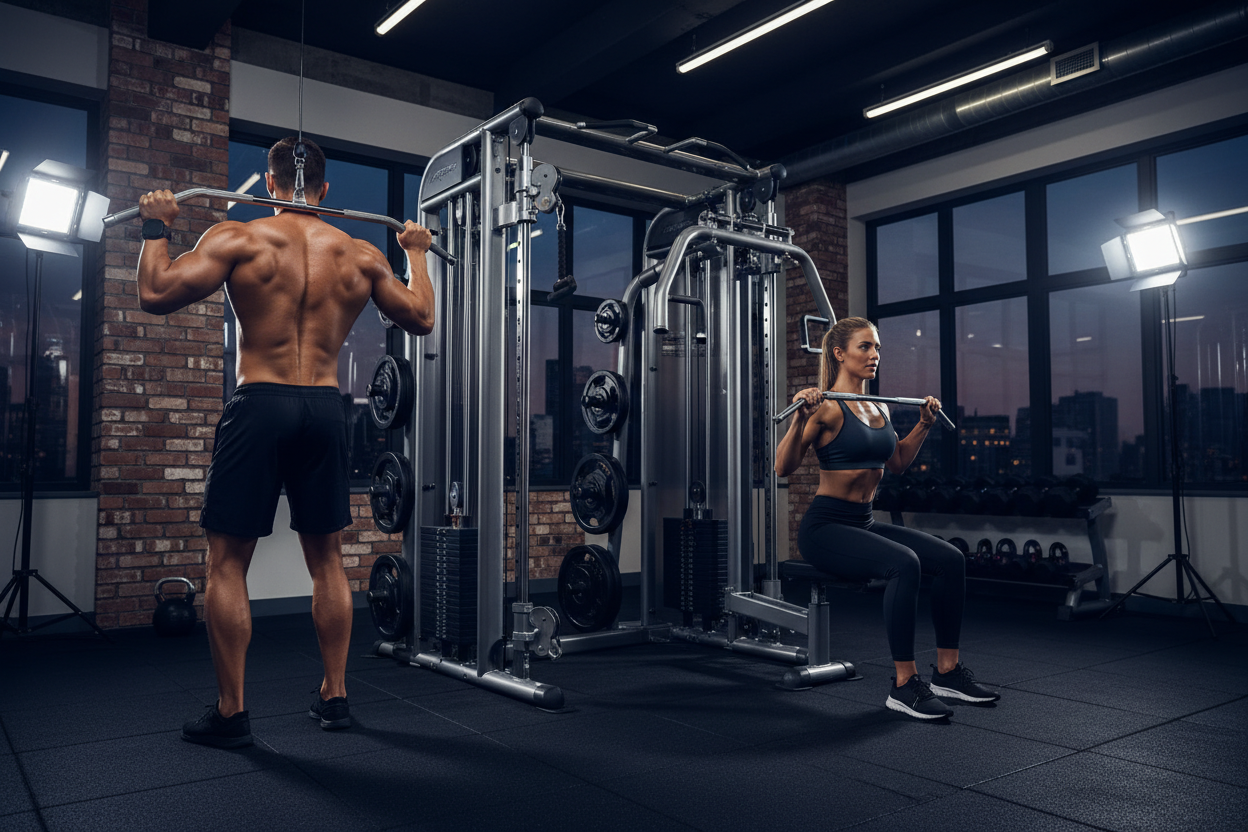
Integrating a dedicated pull workout machine into your space can isolate your lats, rhomboids, and rear delts with a level of precision that free weights simply cannot match. But with varying footprint sizes, pulley ratios, and weight stack options on the market, choosing the right unit for a garage or basement gym can feel overwhelming. In this guide, we will break down exactly what you need to look for so you can maximize your back gains without wasting valuable floor space.
Key Takeaways
- Analyze Pulley Ratios: A 1:1 ratio provides true weight resistance, ideal for heavy lat pulldowns and seated rows.
- Measure Vertical Clearance: Ensure you have at least 84 to 90 inches of ceiling height to accommodate guide rods and a full range of motion.
- Balance Your Routine: A dedicated pulling unit prevents postural imbalances caused by over-investing in push-focused equipment.
- Prioritize Dual Functionality: Look for machines offering both high and low pulley access to maximize exercise variety per square foot.
Balancing Your Push and Pull
If your garage currently looks like a dedicated push machine gym, you are not alone. Many lifters naturally gravitate toward push machines like chest presses, shoulder presses, and leg extensions. However, to build a resilient, balanced physique, you need to match your push day machines with equal pulling volume.
The Danger of Over-Pushing
Relying solely on push exercise machines can lead to rounded shoulders and severe posture issues. When you invest in a high-quality pull system, you complement your push day workout machines perfectly. After all, what good are all those machines for push day if your back cannot stabilize the heavy loads during a bench press? Whether you are doing a heavy push machine workout or utilizing various push exercises gym machines, a solid pulling foundation is non-negotiable. Do not let your sanctuary become just a collection of push day gym machines and push workout machines—balance is key.
Sizing Up Your Space and Specs
Bringing a cable or plate-loaded unit into a North American home gym requires careful planning. You aren't just measuring the floor space; you have to account for the operational footprint.
Footprint and Vertical Clearance
Most lat pulldown and low row combo units require a footprint of roughly 48 by 55 inches. However, the real trap for basement gyms is the ceiling height. You need a minimum of 84 inches for the machine itself, plus an extra few inches to actually load plates or perform standing triceps pushdowns without the cable scraping the ceiling.
Weight Stacks vs. Plate-Loaded
Plate-loaded machines are incredibly budget-friendly and utilize the Olympic plates you likely already own. However, they tend to have a less consistent resistance curve. If your budget allows, a selectorized weight stack (usually ranging from 200 to 300 lbs) offers seamless drop sets and a smoother pull, which is crucial for maximizing time under tension.
From Our Gym: Honest Take
We recently tested a popular commercial-grade lat pulldown and low row combo in our own 400-square-foot garage setup. The first thing I noticed was the cable smoothness. Upgrading from a cheap, friction-heavy nylon pulley to aluminum pulleys made a night-and-day difference in how my lats engaged during heavy sets.
At 6-foot-2, I often struggle with getting a full stretch at the top of a pulldown on compact home equipment. This specific unit had an 86-inch height, which finally allowed me a full range of motion without the weight plates bottoming out. However, I have to be honest about a minor caveat: the knee pad adjustment. The pop-pin mechanism felt slightly sticky out of the box and required a quick spray of dry silicone lubricant to function smoothly. It is a minor maintenance step, but something you should expect when assembling heavy-duty equipment at home. Overall, having a dedicated pulling station completely transformed our back days.
Frequently Asked Questions
Is a pull workout machine worth the space in a small home gym?
Yes, provided you choose a multi-functional unit. A high and low cable combo allows you to perform lat pulldowns, seated rows, bicep curls, and face pulls, offering massive versatility for a relatively small footprint.
What is the ideal weight capacity for a home pulling machine?
For most intermediate to advanced lifters, a weight capacity of 250 to 300 lbs is ideal. Even if you do not row 300 lbs yet, a higher weight capacity indicates a sturdier frame and thicker gauge steel.
Can I do push exercises on a pull machine?
Absolutely. While designed for pulling, a high pulley is perfect for triceps pushdowns, and a low pulley can be used for overhead triceps extensions.