
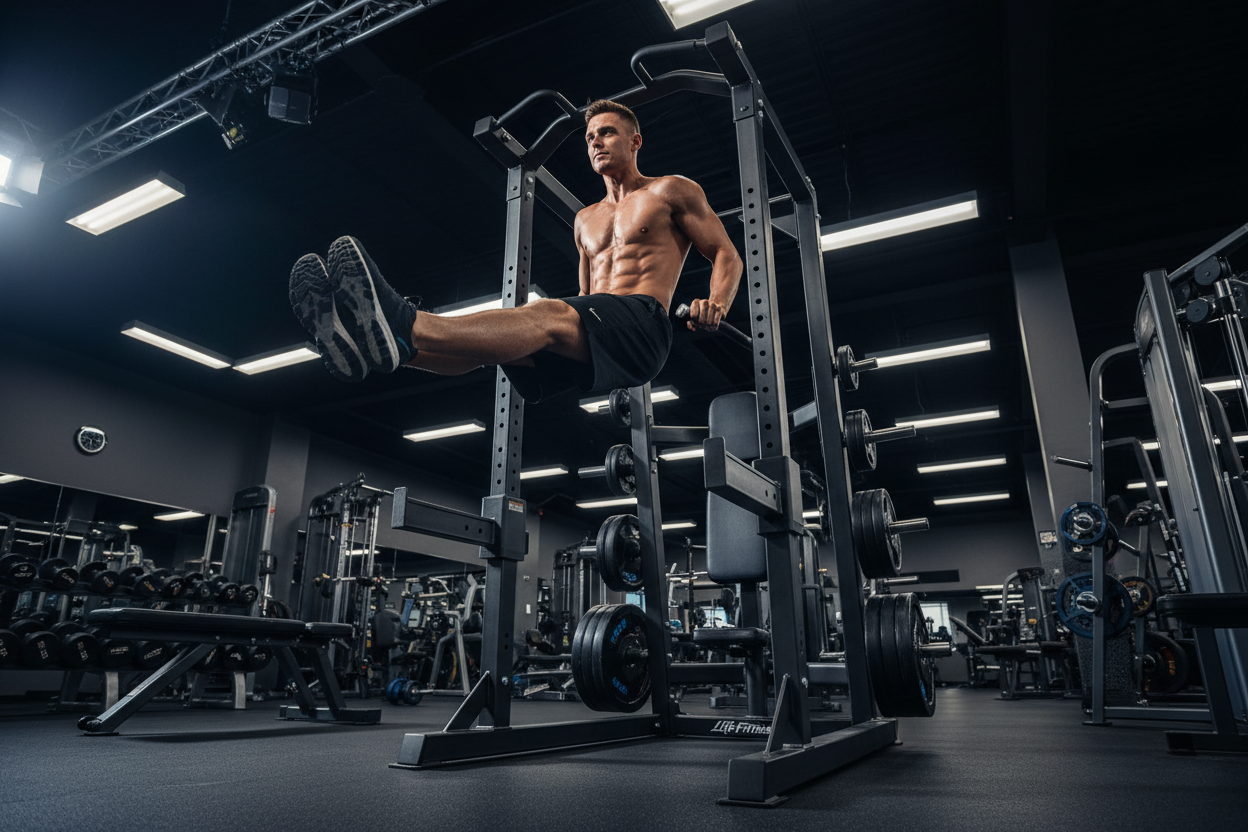
Is a Power Tower Life Fitness Setup Worth the Premium Price?
Most home gym enthusiasts eventually hit a wall with budget equipment. You buy a cheap dip station on Amazon, assemble it, and three months later, it wobbles every time you perform a knee raise. This is usually the moment people start searching for commercial-grade solutions, specifically looking at a power tower life fitness setup.
Life Fitness (and its heavy-duty sibling, Hammer Strength) sets the gold standard for gym floors worldwide. But does that commercial pedigree translate effectively to a garage gym or a spare bedroom? Or are you paying for a brand name when a mid-tier rack would suffice? Let's break down the mechanics, the durability, and the actual value proposition.
Key Takeaways
- Commercial Durability: A Life Fitness-tier power tower utilizes 11-gauge steel or thicker, eliminating the dangerous sway found in budget models during dynamic movements.
- Biomechanics Focus: Unlike generic brands, these towers are engineered with specific angles for arm pads and back supports to reduce rotator cuff strain during dips and knee raises.
- Resale Value: High-end commercial brands hold their value significantly better than consumer-grade equipment, making them a safer long-term asset.
- Footprint Consideration: These units are often welded or bolted with large footprints, making them difficult to move once installed in a home setting.
The Gap Between Consumer and Commercial Gear
When we talk about this specific tier of equipment, we aren't talking about a $150 unit that arrives in a flat-pack box. We are discussing welded frames and high-density upholstery.
The primary difference lies in stability. A standard home-use tower usually weighs between 60 to 90 pounds. A commercial unit from a brand like Life Fitness or Hammer Strength often weighs upwards of 200 pounds. That mass matters. When you are hanging from a bar or supporting your entire body weight on dip handles, mass equals safety.
The Biomechanics Factor
Engineers design commercial equipment for thousands of repetitions a day. This forces them to prioritize biomechanics to prevent user injury. On budget towers, the dip handles are often parallel and fixed at a width that might destroy your shoulders if you aren't the exact size of the prototype dummy.
In contrast, a premium setup usually features angled handles. This allows you to find the grip width that aligns with your skeletal structure, keeping your elbows tucked and your anterior deltoids safe. It seems like a small detail until you develop impingement from a fixed-width bar.
Analyzing the Station Components
The Vertical Knee Raise (VKR)
The VKR station is where most budget towers fail. The back pad is often too thin, and the arm pads are too short. When you bring your knees to your chest, the pressure on your forearms can be excruciating on cheap equipment.
A Life Fitness-quality build uses high-density foam that doesn't bottom out. The back pad is usually contoured to support the lumbar spine, preventing you from swinging and using momentum. This isolates the rectus abdominis and hip flexors effectively.
The Pull-Up Station
Look at the grip options. Budget towers offer foam grips that tear and spin over time. Commercial towers use knurled steel or vulcanized rubber bonded to the metal. The variety of grips—neutral, wide, and close—allows you to target the latissimus dorsi from different angles without worrying about the bar bending under load.
My Personal Experience with Power Tower Life Fitness Gear
I want to step away from the specs and talk about the actual feel, because specs don't tell you what it's like at rep 12.
I spent years training in a garage gym with a generic $200 power tower. I got used to the "rhythm" of the wobble. I had to time my dips so the tower wouldn't tip forward. I thought that was normal.
Then I switched to training at a facility that had a proper commercial Life Fitness/Hammer Strength layout. The first thing I noticed wasn't the stability—it was the forearm pads on the leg raise station. On my home unit, I could feel the plywood base of the pad digging into my ulnar bone (the elbow) whenever I got tired and sagged a bit. It hurt more than the ab workout.
On the commercial unit, the padding was so dense and the upholstery so thick that I couldn't feel the structure underneath, even when holding a weighted leg raise for time. Furthermore, the dip handles had a specific grit to the texture. It wasn't soft foam; it was a textured material that gripped my sweaty palms without slipping. It felt industrial. It felt safe. That psychological shift—trusting the gear completely—actually allowed me to push harder than I ever did at home.
Conclusion
Investing in a power tower life fitness style setup is overkill for a beginner who just wants to do a few morning pull-ups. However, if you are serious about calisthenics or bodybuilding, the stability and biomechanical advantages of commercial-grade gear are undeniable.
You are paying for the assurance that the equipment will never fail you, regardless of how much weight you add to your dip belt. If you have the budget and the floor space, the upgrade changes your training intensity entirely.
Frequently Asked Questions
Does Life Fitness sell power towers directly to consumers?
Life Fitness primarily focuses on commercial sales, but they do have a consumer line. However, their heavy-duty power towers are often found under their "Hammer Strength" brand, which is the gold standard for plate-loaded and bodyweight strength equipment.
Can I disassemble a commercial power tower for moving?
It is difficult. Unlike consumer models that bolt together in many small pieces, commercial units often feature welded mainframes for stability. You usually need a truck and several people to move a fully assembled or partially welded commercial station.
What ceiling height do I need for a commercial tower?
You generally need at least 8 feet (96 inches) of clearance. However, to perform pull-ups without your head hitting the ceiling, a 9-foot ceiling is recommended. Always measure the highest point of the equipment and add 12 to 18 inches for head clearance.


