Is a Pilates Rowing Machine Actually Effective? The Honest Truth
You have limited floor space, a tight budget, and a desire for a workout that torches calories without destroying your joints. Naturally, the idea of a pilates rowing machine sounds like the Holy Grail of home fitness. It promises the cardio intensity of a crew team with the sculpting precision of a boutique studio.
But does combining these two distinct modalities actually work, or do you end up with a machine that does neither job particularly well? As someone who has spent years analyzing biomechanics and gym equipment, I’m here to separate the marketing fluff from the physiological reality.
Key Takeaways
- Hybrid Efficiency: A pilates rower combines the cardiovascular benefits of rowing with the resistance-based lengthening of a reformer.
- Space Saver: These machines are ideal for home gyms where fitting both a Concept2 and an Allegro Reformer is impossible.
- Core Engagement: Unlike standard rowing, doing pilates on a rowing machine forces deeper transverse abdominis activation due to the slower, controlled eccentric movements.
- The Trade-off: Hybrid machines often lack the high-end drag of a dedicated rower and the complex adjustability of a professional reformer.
The Hybrid Concept: Rower Pilates Explained
To understand the equipment, we first have to understand the movement. Pilates rowing isn't just about sitting on a sliding seat and pulling a handle. It is a deliberate fusion of two energy systems.
A standard rowing machine is a power-endurance tool. You drive through the heels, engaging the posterior chain for explosive cardio. A pilates reformer, conversely, is about time under tension, alignment, and stabilizing muscles.
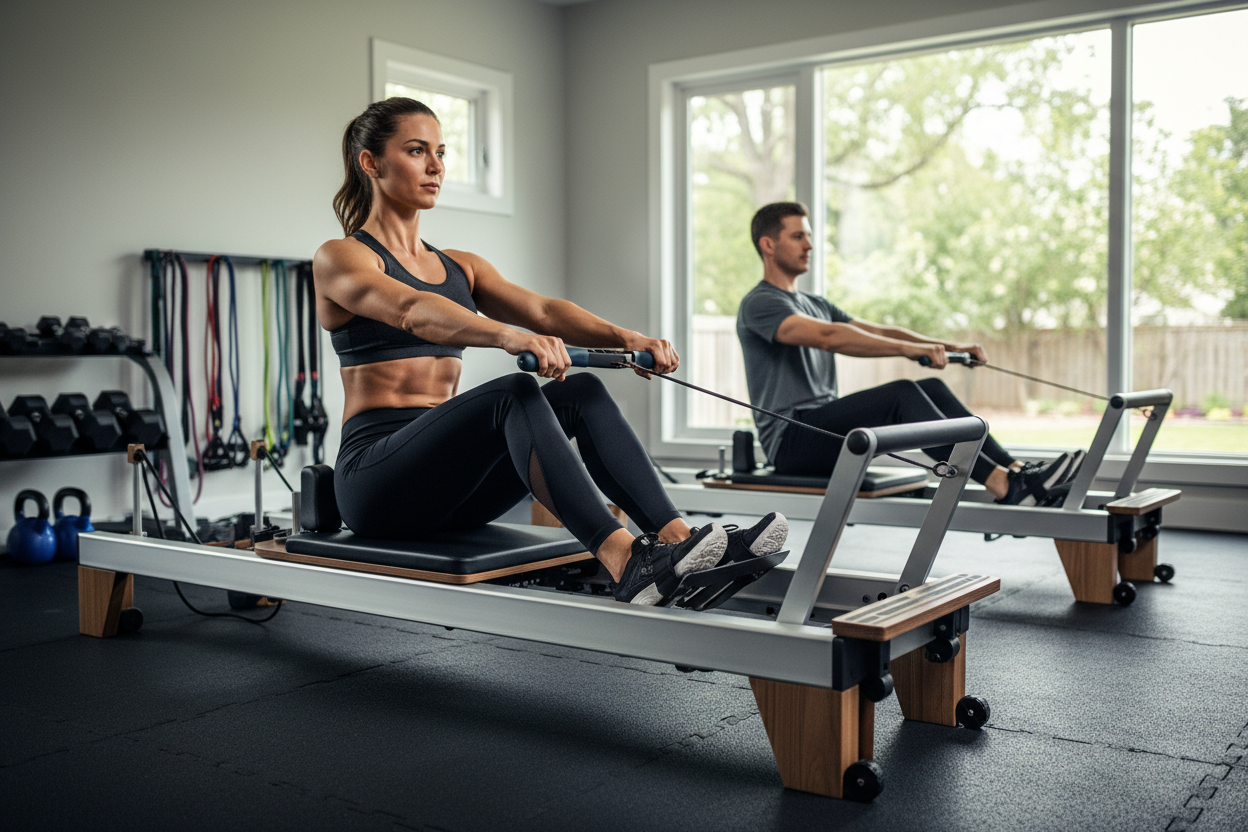
When you see a rower pilates machine (often popularized by brands like AeroPilates), you are usually looking at a reformer that includes a cardiovascular attachment or a glider that sits closer to the ground. The goal is to allow you to perform the "hundreds" and leg circles, then switch modes to perform standard rowing strokes for heart rate elevation.
Rowing Machine vs Pilates Reformer: The Core Differences
If you are on the fence, understanding the rowing machine vs pilates reformer debate is crucial. They serve different masters.
The Rowing Machine (The Engine Builder)
Pure rowing is about output. It is metabolic conditioning. If your primary goal is VO2 max improvement and burning maximum calories in 20 minutes, a dedicated rower wins. However, it requires strict form to avoid lumbar stress.
The Pilates Reformer (The Architect)
The reformer builds the chassis. It corrects imbalances, improves posture, and strengthens the deep core. If you are recovering from injury or want long, lean muscle tone, the reformer is superior.
The Synergy: Rowing Reformer
The rowing reformer hybrid attempts to bridge this gap. By adding resistance cords (typical in Pilates) to the rowing action, you change the resistance curve. Instead of the air or water resistance that gets harder the faster you row, cords provide linear or progressive tension. This makes the rowing stroke feel more like a strength exercise than a pure cardio sprint.
How to Perform Pilates on Rowing Machine
You don't necessarily need a hybrid to mix these styles. You can perform pilates on a rowing machine—specifically the sliding seat drills—if you are creative, though a dedicated pilates rower is safer.
The classic "Pike" movement can be mimicked on a rower by placing your hands on the floor behind the machine and your feet on the seat, sliding it back and forth. However, a true rowing pilates machine allows for supine (lying down) exercises. You can lie on the glide board, utilizing the pulley system for arm circles and leg presses, exactly as you would in a studio class.
My Personal Experience with Pilates Rowing Machine
I want to be transparent about what it feels like to actually use these hybrids. I spent a month testing a popular pilates reformer rowing combo unit in my garage, and there are nuanced details the spec sheets won't tell you.
First, the "switch" is annoying. Going from a cardio row to a pilates flow isn't seamless. You have to stop, unclip the heavy-duty tension cords, and often adjust the foot bar. It breaks the sweat-flow state. If you are someone who likes high-intensity interval training (HIIT), that 30-second fiddle time feels like an eternity.
Second, the "catch" feels different. On a concept rower, you feel the bite of the water or air immediately. On the hybrid unit I used, there was a split-second of slack in the bungee cord before the tension kicked in. It creates a slight jerkiness if you aren't controlling your motion. However, I will say this: the burn in my lower abs during the slow-return phase of the row was significantly higher than on a standard rower. Because the machine used elastic tension, I couldn't just let momentum slide me back in; I had to fight the cords on the return, which lit up my core in a way I didn't expect.
Conclusion
Is a pilates rowing machine worth the investment? If you are a competitive rower, no; stick to air or water rowers. But for the general fitness enthusiast who wants the spinal health benefits of Pilates with the calorie burn of rowing, this is a smart, space-saving solution. It forces you to respect the resistance rather than just fighting it.
Frequently Asked Questions
Can I lose weight with a pilates rower?
Yes. While Pilates alone is not a major calorie burner, the rower pilates combination adds a significant cardiovascular component. The rowing intervals spike your heart rate, while the strength sections build muscle tissue, which increases your resting metabolic rate.
Is a rowing pilates machine good for bad backs?
Generally, yes. The rowing reformer design is low impact. The gliding motion removes the jarring impact of running. However, because rowing requires a strong hinge at the hips, you must ensure your form is correct to avoid straining the lumbar spine.
What is the difference between a rowing machine and a Pilates reformer?
The main difference lies in resistance and intent. A rowing machine uses wind, water, or magnetic resistance for cardio and power. A pilates reformer uses springs or cords to provide tension for stability, flexibility, and muscular endurance exercises.