Is a BMI Exercise Machine Actually Worth It? The Honest Truth
You have likely stumbled across the bmi exercise machine while scrolling through marketplace listings or looking for a compact solution for your garage gym. It sits in that confusing middle ground between high-end commercial gear and budget department store equipment. You might be wondering if this multi-station setup is a hidden gem or just a clothes rack in the making.
The reality of home gyms is that brand names often matter less than build quality and biomechanics. Whether you are looking at a specific BMI-branded multi-gym or equipment designed to improve your Body Mass Index, the goal remains the same: resistance training without a commute. Let’s strip away the marketing fluff and look at the mechanics, durability, and actual utility of this equipment.
Quick Summary: Is It Right For You?
- Versatility: Most BMI workout machines are multi-station units, allowing for chest presses, lat pulldowns, and leg extensions in a single footprint.
- Space Efficiency: Ideal for corners or garages where you cannot fit a full power rack and barbell setup.
- Safety: The cable-driven system removes the need for a spotter, making it safer for solo training than free weights.
- Maintenance: Requires regular cable lubrication and bolt tightening to prevent the "stutter" feeling during reps.
- Best For: Beginners to intermediates focused on general fitness and hypertrophy rather than powerlifting.
Understanding the BMI Home Gym System
When we talk about this category of equipment, we are usually discussing a cable-based multi-gym. Unlike free weights, which rely on gravity and a strict vertical plane, a bmi home gym utilizes a system of pulleys and weight stacks. This provides constant tension on the muscle, which is excellent for hypertrophy (muscle growth).
The Build Quality Factor
The biggest variable with bmi gym equipment is the frame stability. Lower-end models use thin-gauge steel that wobbles when you hit the top of a lat pulldown. If you are shopping for one, look for 11-gauge or 12-gauge steel frames. If the machine shakes every time you drop the pin in the weight stack, you won't feel confident pushing your limits.
Cable Smoothness and Resistance
The heart of any bmi workout machine is the pulley system. A common issue with budget variations is friction. If the pulleys use cheap plastic bushings instead of sealed bearings, the movement will feel gritty. This friction adds artificial resistance on the way up and reduces resistance on the way down, ruining the eccentric portion of your lift.
How to Structure a Workout on This Equipment
Many people buy bmi workout equipment and only use the chest press. To get your money's worth, you need to utilize the full station.
Upper Body Push/Pull
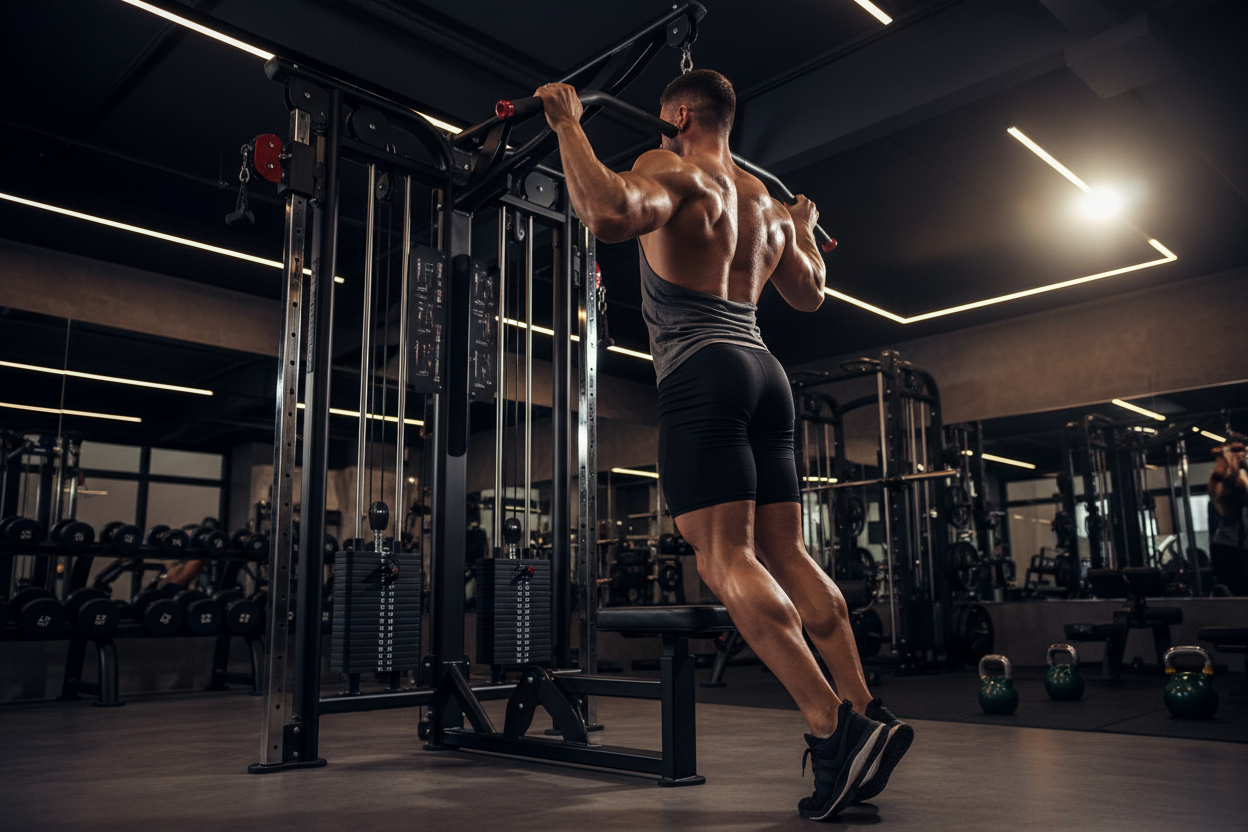
Alternate between the chest press station and the lat pulldown bar. This ensures you are balancing your anterior (front) and posterior (back) chain. A common mistake is ignoring the low row pulley—use this for seated rows and bicep curls to hit muscles the main press misses.
Leg Development
Most units come with a leg extension/curl attachment. While these aren't as effective as a barbell squat for building mass, they are excellent for isolation. Focus on high reps (15-20 range) here. The pivot point on the machine must align with your knee joint; otherwise, you risk shearing force on the knee.
Common Mistakes to Avoid
Don't treat the weight stack numbers as absolute pounds. Due to the pulley ratios (often 2:1), lifting "100" on the stack might only be 50 pounds of actual resistance. Don't let your ego dictate the pin placement. Focus on the squeeze and the slow release.
Another error is neglecting cable maintenance. If you hear a squeak, that is metal-on-metal wear. Silicone spray is your best friend here. Dry cables eventually snap, and you do not want to be mid-rep when that happens.
My Training Log: Real Talk
I spent about six months training exclusively on a refurbished BMI-style multi-station unit when I didn't have access to a commercial facility. Here is the unvarnished truth about the experience.
The first thing I noticed was the "dead zone" at the start of the chest press. Because the cables had stretched slightly over time, the first two inches of the movement had zero resistance before the weight stack actually engaged. I had to rig a makeshift spacer on the weight stack just to get tension from the start.
Then there were the leg extensions. The foam rollers on these machines are notoriously unforgiving. After three sets of heavy extensions, the vinyl would dig into my shins, leaving bruises because the padding was too dense and the vinyl was slippery with sweat. I ended up wrapping a towel around the ankle pad just to get through leg day.
However, the lat pulldown was surprisingly solid. Unlike a barbell row where my lower back often gives out before my lats, the machine locked me in. I could grind out reps to absolute failure safely. It wasn't pretty, and the machine creaked like an old ship, but it did the job.
Conclusion
A bmi exercise machine isn't going to replace a full commercial gym, and it certainly won't make you a powerlifter. But if your goal is consistent, safe resistance training at home without needing a spotter, it is a viable tool. The key is managing your expectations regarding the smoothness of the cables and committing to the maintenance required to keep it running.
Frequently Asked Questions
Can I build significant muscle with a BMI home gym?
Yes, you can induce hypertrophy (muscle growth) as long as you apply progressive overload. While you may eventually max out the weight stack for large compound movements like the chest press, the machine is highly effective for isolation exercises and high-volume training.
How often should I lubricate the guide rods?
You should wipe down the guide rods and apply a silicone-based lubricant (never WD-40) at least once a month. If you use the machine daily, check the cables for fraying every two weeks to ensure safety.
Is a multi-station machine better than free weights?
It depends on your goals. Free weights are superior for stabilizer muscles and functional strength. However, a multi-station machine is safer for solo training and better for isolating specific muscle groups without cheating on form.