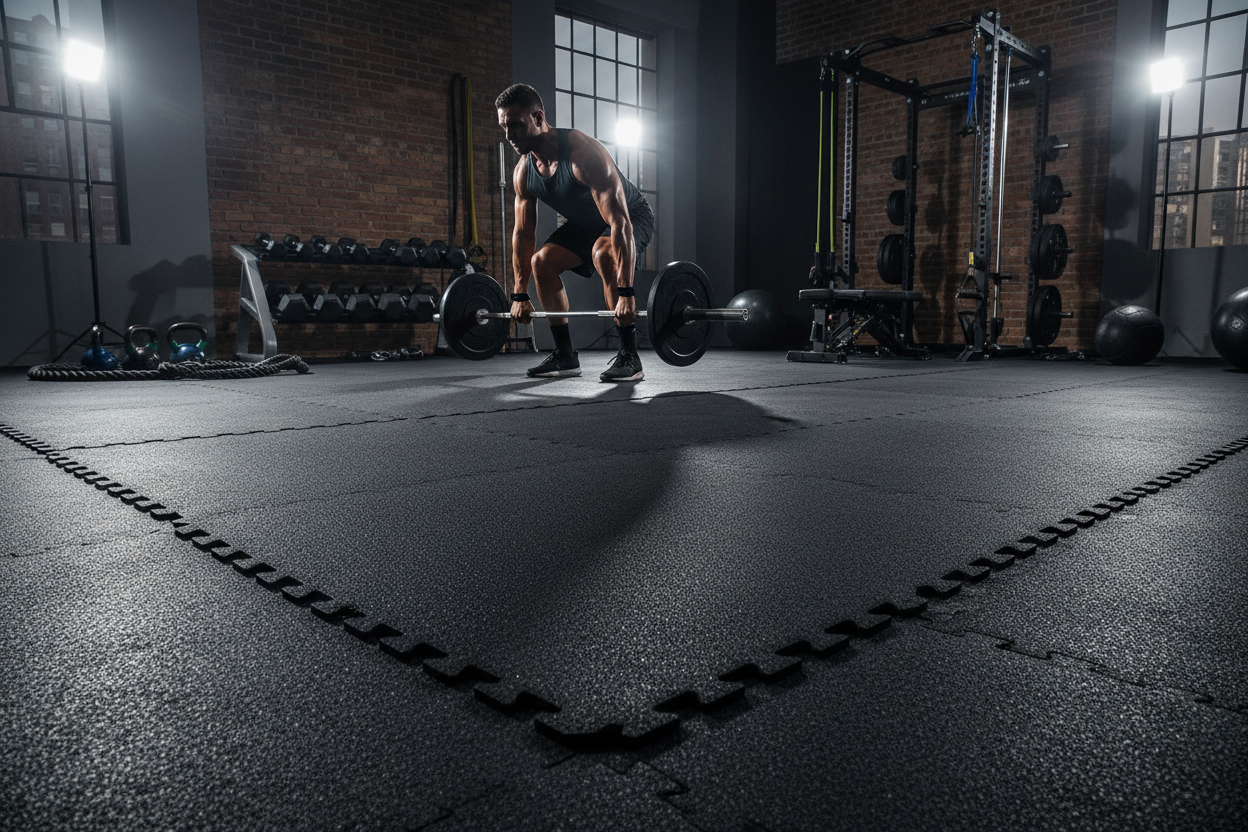
Interlocking Rubber Mat: The Ultimate Home Gym Flooring Guide
If you have ever winced as a barbell slammed into your bare concrete garage floor, you already know the importance of proper gym flooring. Cheap foam puzzle pieces might seem like a budget-friendly fix, but they tear under heavy benches and compress dangerously during squats. That is where a high-quality interlocking rubber mat changes the game.
Whether you are outfitting a compact basement corner or a full two-car garage, choosing the right flooring protects your foundation, your equipment, and your joints. In this guide, we will break down exactly what to look for so you can build your home gym on a solid foundation.
Key Takeaways
- Thickness dictates function: 3/8-inch is standard for general fitness, while 1/2-inch or thicker is required for heavy weightlifting.
- Density matters: Look for vulcanized or high-density recycled rubber to prevent compression under heavy racks.
- Easy installation: Precision-cut edges allow for seamless, glue-free installation in almost any room shape.
- Odor considerations: Virgin rubber smells less than recycled tire rubber, though both require initial off-gassing.
Choosing the Right Specs for Your Space
Thickness and Density Explained
Not all interlocking floor mats rubber options are created equal. The biggest mistake home gym owners make is buying mats that are too thin. For yoga, bodyweight exercises, or light dumbbell work, a 1/4-inch mat might suffice. However, if you plan to drop kettlebells or set up a heavy power rack, you need at least a 3/8-inch to 1/2-inch thickness. Density is equally critical; a high-density mat will not squish under your feet during heavy deadlifts, providing the stable base you need for maximum power transfer.
Space Planning and Installation
Fitting Your Garage or Basement Gym
One of the greatest advantages of a rubber interlocking floor mat is its modularity. Unlike heavy 4x6 horse stall mats that require two people to drag into place, interlocking tiles usually come in manageable 2x2 or 3x3 foot squares. When planning your layout, measure your room's square footage and add 10% for cutting waste. Because they lock tightly together, you rarely need adhesive, making them perfect for renters or those who might relocate their gym setup later.
Durability and Maintenance
Keeping Your Gym Floor Pristine
Rubber flooring is built to take a beating, but it still requires basic upkeep. Sweat, chalk, and dirt will eventually accumulate. To maintain the grip and appearance of your mats, vacuum regularly and mop with a pH-neutral cleaner. Avoid harsh chemicals like bleach, which can degrade the rubber over time. High-quality vulcanized rubber will resist moisture and bacteria, making it an excellent long-term investment for humid garage or basement environments.
From Our Gym: Honest Take
When we first outfitted our testing garage, we debated between traditional horse stall mats and interlocking tiles. We ultimately went with 3/8-inch interlocking rubber tiles, and the installation took less than an hour for a 150-square-foot space. The precision-cut teeth locked together so seamlessly that you can barely see the seams, and my chalked grip holds solid when planting my feet for heavy bench presses.
However, I will be completely honest about the initial smell. Because we used recycled rubber tiles, the off-gassing was noticeably strong for the first two weeks. We had to leave the garage door open and run a high-velocity fan to clear it out. Once that faded, they have been bulletproof. After a year of dropping 405-pound deadlifts and dragging a heavy iron sled across them, there is zero peeling or compression damage.
Frequently Asked Questions
Is an interlocking rubber mat worth it for a home gym?
Absolutely. It provides essential shock absorption, protects your subfloor from cracking under dropped weights, and offers a non-slip surface for safer workouts. It is a fundamental investment for any serious home gym.
Can I install rubber interlocking floor mats over carpet?
It is generally not recommended to install rubber mats directly over plush carpet, as the soft sub-layer can cause the interlocking seams to unlock or break under heavy loads. If you must build over carpet, place a rigid layer of plywood down first to create a stable subfloor.
How do I cut interlocking rubber mats to fit my room?
You can easily trim rubber mats to fit around walls or pillars using a sharp utility knife and a straight edge. Score the rubber multiple times rather than trying to cut all the way through on the first pass, and place a piece of scrap wood underneath to protect your floor.