Interlocking Foam Mats 24x24: What to Know Before You Buy
Building a home gym usually starts with a harsh realization: concrete is brutal on your joints, and dropping a dumbbell on hardwood is a mistake you only make once. For many North American home gym owners, the immediate solution is flooring. But before you cover your entire basement or garage, you need to know exactly what you are stepping onto.
Enter interlocking foam mats 24x24. They are lightweight, budget-friendly, and incredibly easy to install. However, they aren't a magical fix for every workout style. In this guide, we will break down when to use them, when to upgrade, and how to plan your layout so you can train safely and comfortably.
Key Takeaways
- Each 24x24 tile covers exactly 4 square feet, making room calculations incredibly simple.
- Foam is ideal for bodyweight exercises, stretching, and light dumbbells, but not for heavy barbell drops.
- Heavy stationary equipment will permanently compress standard EVA foam.
- For heavy lifting, a 24x24 rubber mat is a necessary upgrade over foam.
Space Planning: Doing the Math on Your Layout
One of the biggest perks of 24x24 foam tiles is the simple math. Whether you are outfitting a sprawling two-car garage or carving out a small apartment corner, measuring is a breeze.
Ideal Setups for a Foam Mat 24x24
Because each tile is exactly 2 feet by 2 feet, a single tile yields 4 square feet of coverage. If you have a standard 10x10 spare bedroom (100 square feet), you will need exactly 25 tiles. We always recommend buying a few extra 24 x 24 foam tiles to account for cutting around baseboards, door frames, or awkward basement pillars. Their puzzle-piece edges allow you to create custom shapes without needing professional installation tools—just a straight edge and a utility knife.
Material Showdown: Foam vs. Rubber Floor Tiles
People often confuse a standard 24x24 gym mat made of EVA foam with a heavy-duty commercial floor. Understanding the difference is crucial for the lifespan of your gym.
When to Choose 24x24 Foam Mats
If your routine consists of yoga, Pilates, calisthenics, or light kettlebell work, 24x24 foam floor tiles are your best friend. The high-density foam 24x24 offers excellent shock absorption for your knees and wrists. They also act as fantastic thermal insulators if you are working out on a freezing concrete garage floor.
When to Upgrade to a 24x24 Rubber Mat
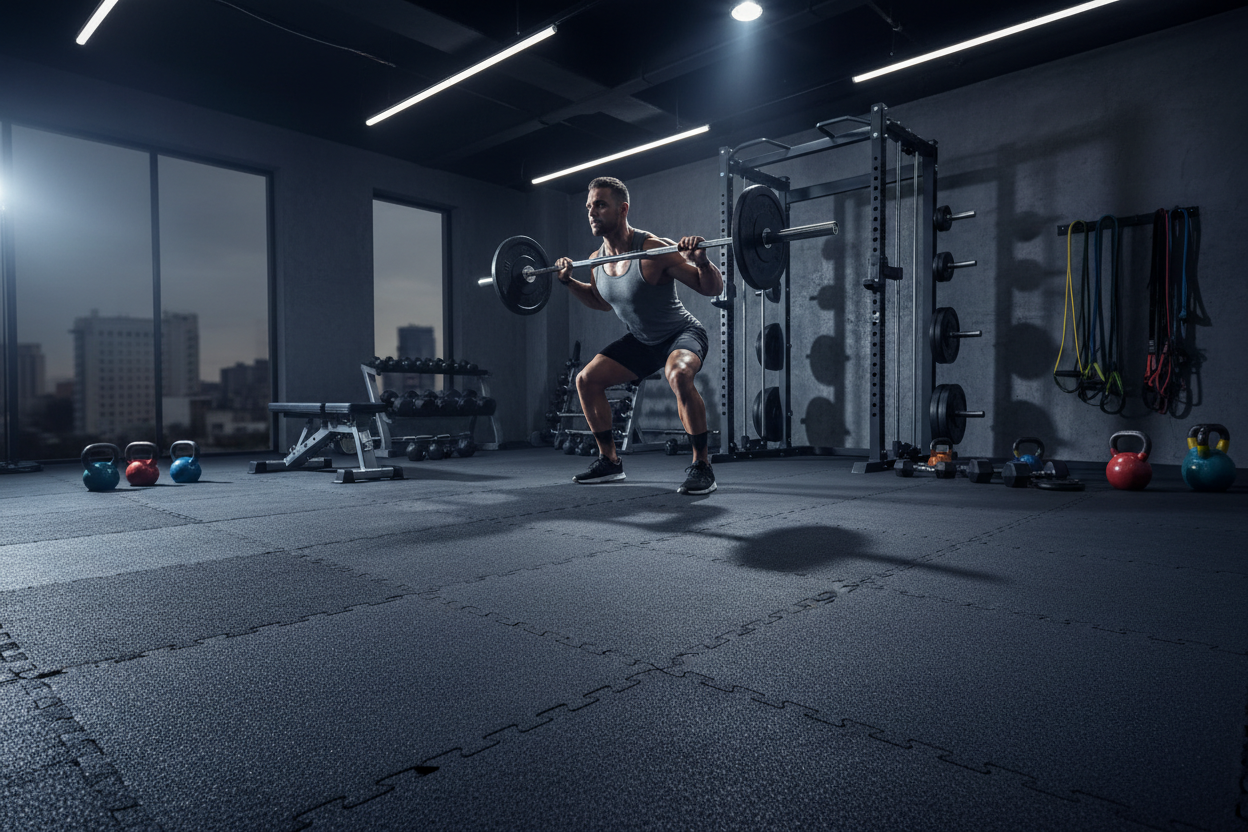
If you are deadlifting 300 pounds or dropping heavy dumbbells, foam won't cut it. An impact like that will punch right through soft flooring, damaging both the mat and your subfloor. In these high-impact drop zones, you need a dense 24 x 24 rubber mat. Many home gym owners use a hybrid approach: foam floor tiles 24x24 for their stretching and mobility zones, and rubber mats under their power racks.
From Our Gym: Honest Take
We've tested dozens of flooring solutions over the years. I recently laid down a 6x8 foot section of 24 x 24 interlocking foam mats in my own garage gym specifically for core work and mobility flows. The cushioning is noticeably superior to rubber when you are kneeling, and the 24x24 interlocking foam tiles snapped together seamlessly in under ten minutes.
But here is the honest caveat: 24x24 foam will permanently compress under heavy, stationary equipment. I left a heavy flat bench sitting on standard foam 24x24 tiles for just a weekend, and the metal feet left permanent half-inch indentations. If you are setting up a heavy squat rack or keeping a treadmill in place, you absolutely must use rubber or wood under the contact points, reserving the 24x24 floor mat sections for open floor space.
Frequently Asked Questions
Are 24x24 foam floor tiles good for home gyms?
Yes, but it depends entirely on your training style. They are excellent for bodyweight workouts, plyometrics, and light dumbbell routines. They are not recommended for dropping heavy barbells or parking heavy cardio machines.
How do I clean my 24x24 foam mats?
Maintenance is incredibly easy. Sweep or vacuum up loose dirt, then wipe them down with a damp mop using mild soap and water. Avoid harsh bleach or acidic cleaners, as they can degrade the EVA material over time.
Can I put cardio equipment on foam 24x24 tiles?
It is generally better to use a high-density PVC or rubber equipment mat under heavy treadmills or ellipticals. The heavy weight and constant vibration can tear or permanently compress standard interlocking foam over time.