Intense Fitness: Building a Home Setup That Survives Your Workouts
We've all been there: you're mid-set, pushing for a PR, and your rack shakes just a little too much for comfort. When you transition from casual workouts to intense fitness, standard department-store equipment simply becomes a liability.
Whether you're hitting heavy powerlifting cycles, high-intensity functional training, or explosive Olympic lifts, your home gym needs to match your output. This guide breaks down exactly what you need to build a space that handles serious training safely and effectively without breaking the bank.
Key Takeaways
- Prioritize 11-gauge steel: For heavy lifting, 3x3-inch uprights with 11-gauge steel offer the stability required for maximum loads.
- Invest in thick flooring: Minimum 3/4-inch vulcanized rubber protects your foundation and your bumper plates.
- Factor in overhead clearance: Always measure your ceiling height before buying a power rack or planning overhead lifts.
- Focus on contact points: Spend your budget on the things you actually touch daily—barbells, grips, and bench pads.
Choosing Gear for an Intense Gym Environment
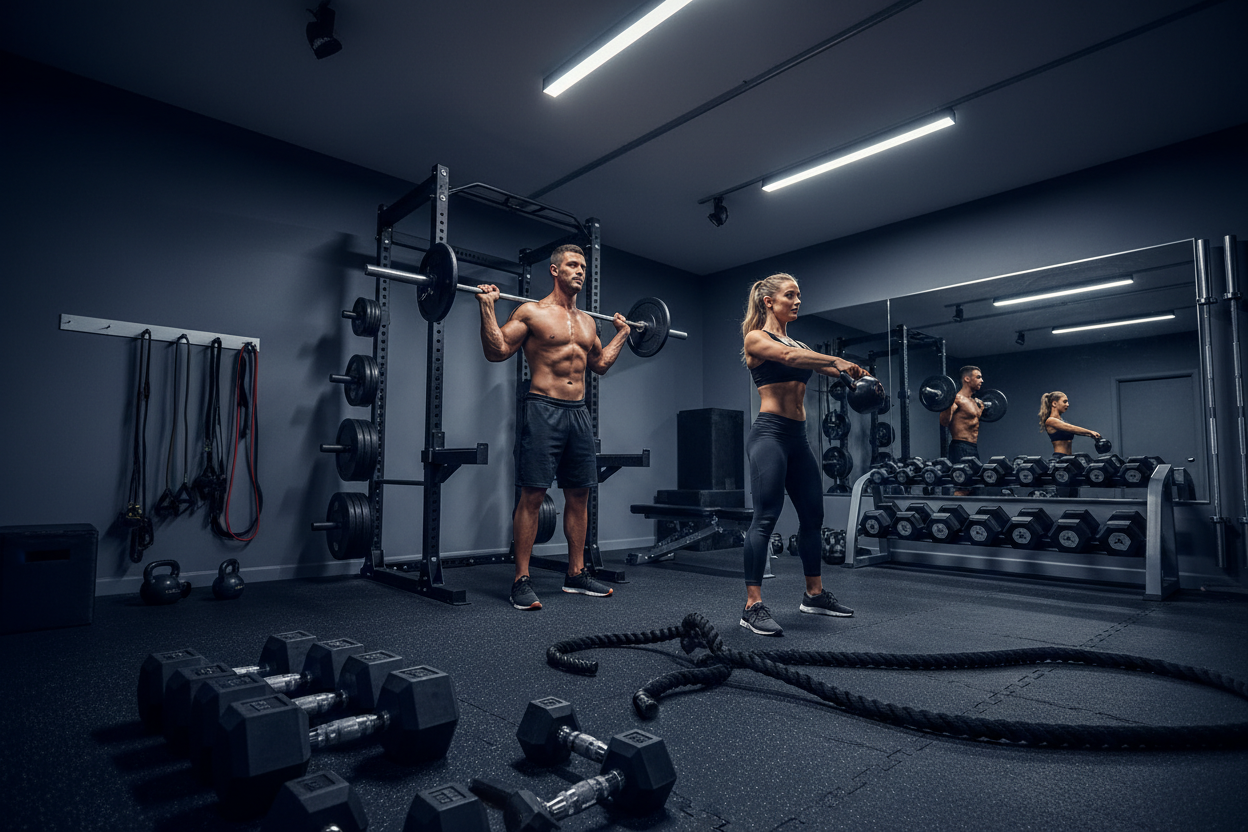
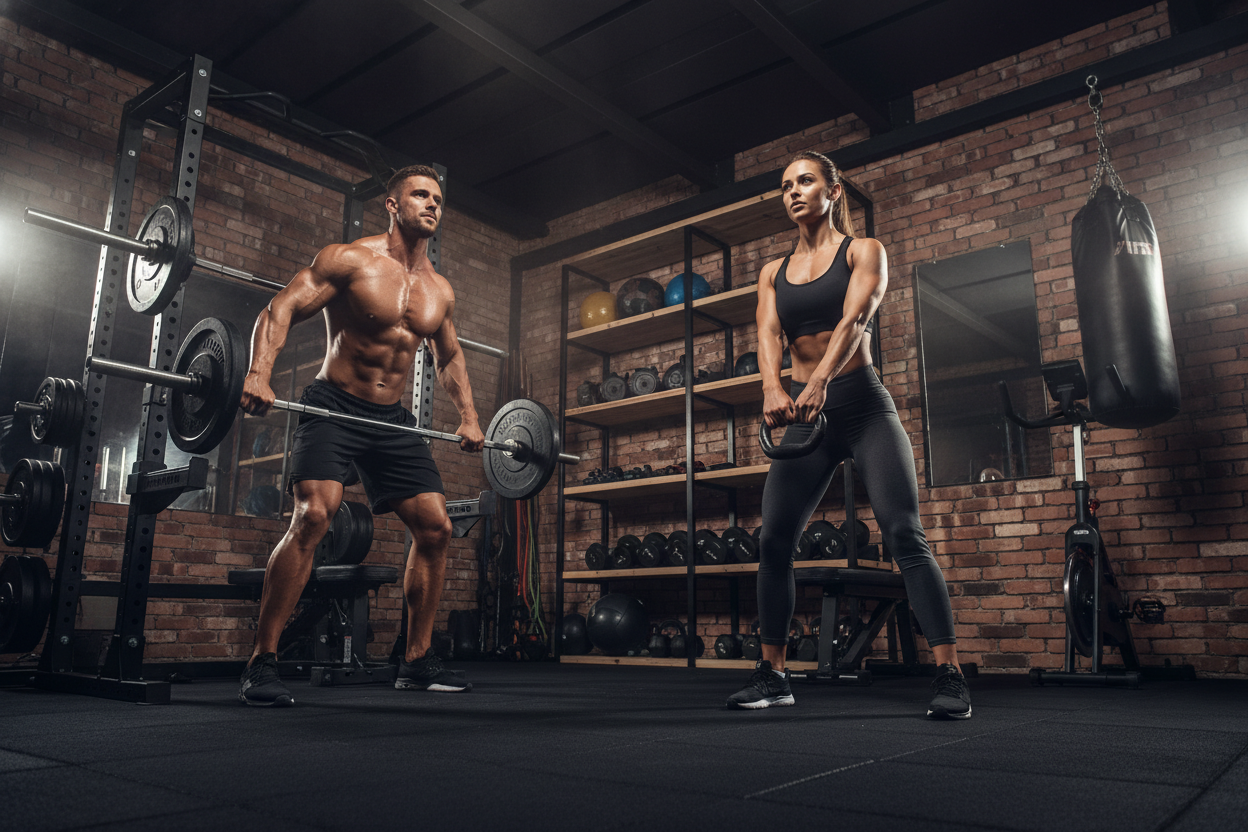
Building an intense gym at home means prioritizing durability over bells and whistles. When you are lifting heavy and dropping weights, structural integrity is your best friend.
Steel Gauge and Weight Capacities
The backbone of any serious setup is the power rack. Entry-level racks often use 14-gauge or 12-gauge steel (remember, the lower the gauge, the thicker the steel). For high-impact workouts, you want 11-gauge steel. It provides a rock-solid foundation that won't sway when you rack a heavy squat or perform kipping pull-ups.
Flooring That Protects Your Foundation
Do not skip on flooring. High-impact drop zones require serious shock absorption. Interlocking foam tiles will compress and tear under heavy dumbbells. Instead, opt for 3/4-inch thick horse stall mats or specialized high-density gym rubber. This not only protects your concrete foundation but also dampens noise and extends the life of your plates.
Designing Your Intense Fitness Gym Layout
Space planning is critical when transitioning your garage or basement into an intense fitness gym. Cramped spaces lead to compromised form and potential injuries.
Clearance for Dynamic Movements
Most home gym owners forget to account for the barbell's length and the athlete's height. A standard Olympic barbell is 7.2 feet long; you need at least two feet of clearance on either side to load plates comfortably. Furthermore, if you plan on doing overhead presses or Olympic weightlifting, measure your ceiling height. You will need at least 9 to 10 feet of vertical clearance to safely lock out a barbell overhead without punching a hole in your drywall.
From Our Gym: Honest Take
When I first started doing heavy cleans and snatches in my garage, I learned the hard way that cheap barbells bend. After finally upgrading to a 28mm Olympic bar with 190k PSI tensile strength, the difference was night and day. The knurling held my chalked grip secure, and the whip was perfect for catching heavy loads.
However, there is a caveat: high-quality bare steel or zinc bars require maintenance. After 8 months of daily use in a humid garage, I found that I needed to brush chalk out of the knurling weekly and apply a light coat of 3-in-1 oil to prevent surface rust. It is a minor chore, but absolutely necessary to protect your investment.
Frequently Asked Questions
Is intense fitness safe to do at home?
Yes, provided you have the right safety equipment. Always use spotter arms or safety straps inside a bolted-down power rack when lifting heavy alone. Proper flooring and high-quality gear significantly reduce the risk of accidents.
Do I need commercial-grade equipment for my home gym?
Not necessarily. While true commercial gear is built to withstand hundreds of users a day, 'light commercial' or premium home gym equipment (like 11-gauge steel racks) is more than sufficient for a single athlete or family engaging in heavy training.
How do I reduce noise when dropping heavy weights?
Noise reduction starts from the ground up. Use a layered approach: a base of 3/4-inch rubber mats topped with a dedicated deadlift platform made of plywood and additional rubber drop zones. Using high-quality crumb rubber bumper plates also helps absorb sound better than iron or standard urethane plates.