I Wasted $3K on Gear Before Finding My Real Garage Gym Essentials
I remember the night I finally hit 'buy' on a $1,200 selectorized lat pulldown machine. I thought it was the missing piece to my home setup. Six months later, it was a glorified clothes rack for my lifting hoodies. I had spent thousands on niche machines while my 'rack' was a pair of wobbly stands that shook every time I re-racked a squat.
Building a space starts with the right garage gym essentials, not the shiny stuff you see in highly edited influencer clips. I’ve since sold off the fluff and stripped my gym back to the bones. If I were starting over today with a limited budget and a standard two-car garage, this is exactly what I’d buy—and what I’d ignore.
Quick Takeaways
- Prioritize a 11-gauge steel power rack over any single-use machine.
- Invest in one high-quality multi-purpose barbell (avoid the $50 'beater' bars).
- Protect your concrete with at least 3/4-inch rubber flooring.
- Buy iron plates if you lift heavy; bumpers if you drop weights from overhead.
How I Fell for the Influencer Setup Trap
The biggest mistake I made was trying to recreate a commercial gym in a 400-square-foot space. I spent too many nights scrolling through home gym equipment deals, convincing myself that a discounted cable crossover or a GHD was a 'necessity' for a complete physique. It wasn't.
Most lifters overcomplicate their first build. You see a pro bodybuilder using a specific iso-lateral row machine and think you need it. In reality, you need a place to squat, press, and pull. My garage became so cluttered with garage gym basics that I barely had room to actually move. If you can't perform a burpee or a walking lunge without hitting a machine, you've got too much gear.
The 4 Non-Negotiable Garage Gym Essentials
When you strip away the marketing, your training revolves around a few core pieces. These garage gym must haves are the foundation of 90% of effective strength programs, from Starting Strength to 5/3/1. If it doesn't help you move heavy weight safely, it's a luxury, not a necessity.
1. A Power Rack That Can Take a Beating
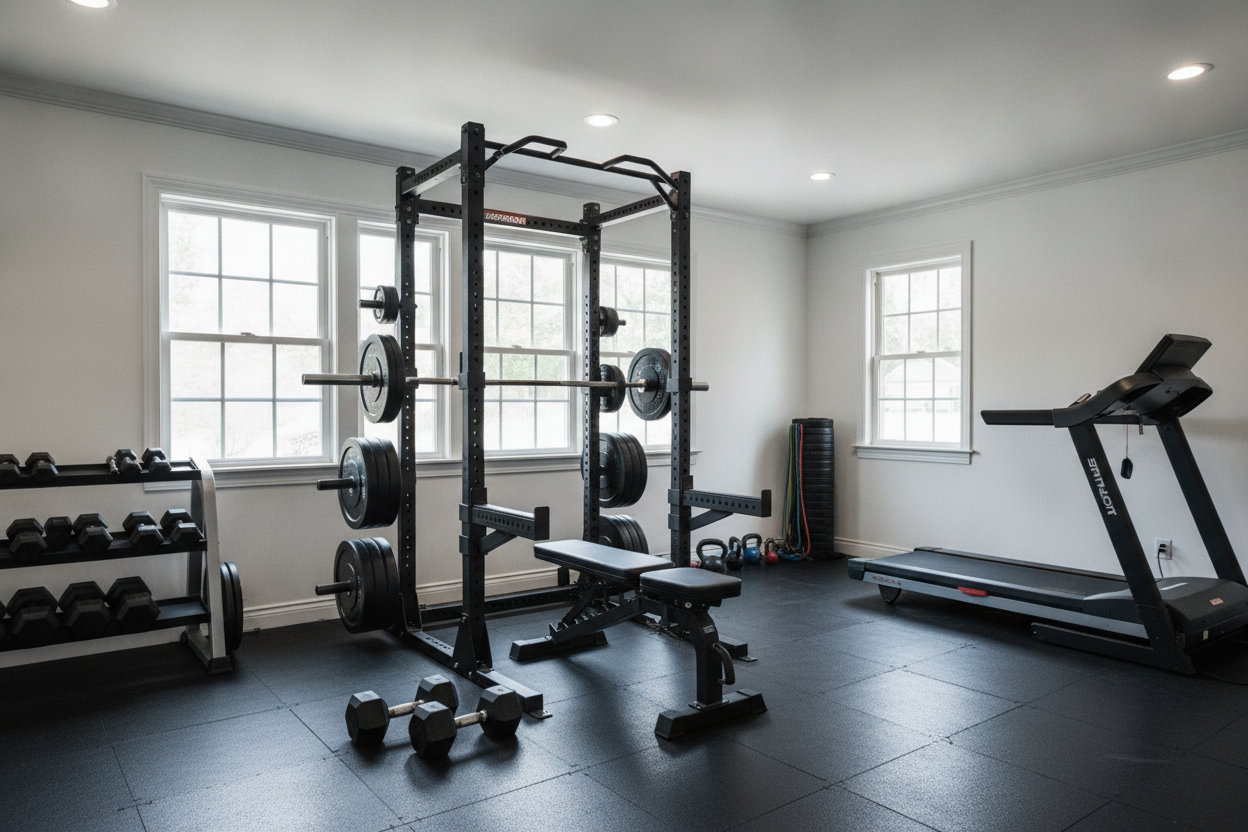
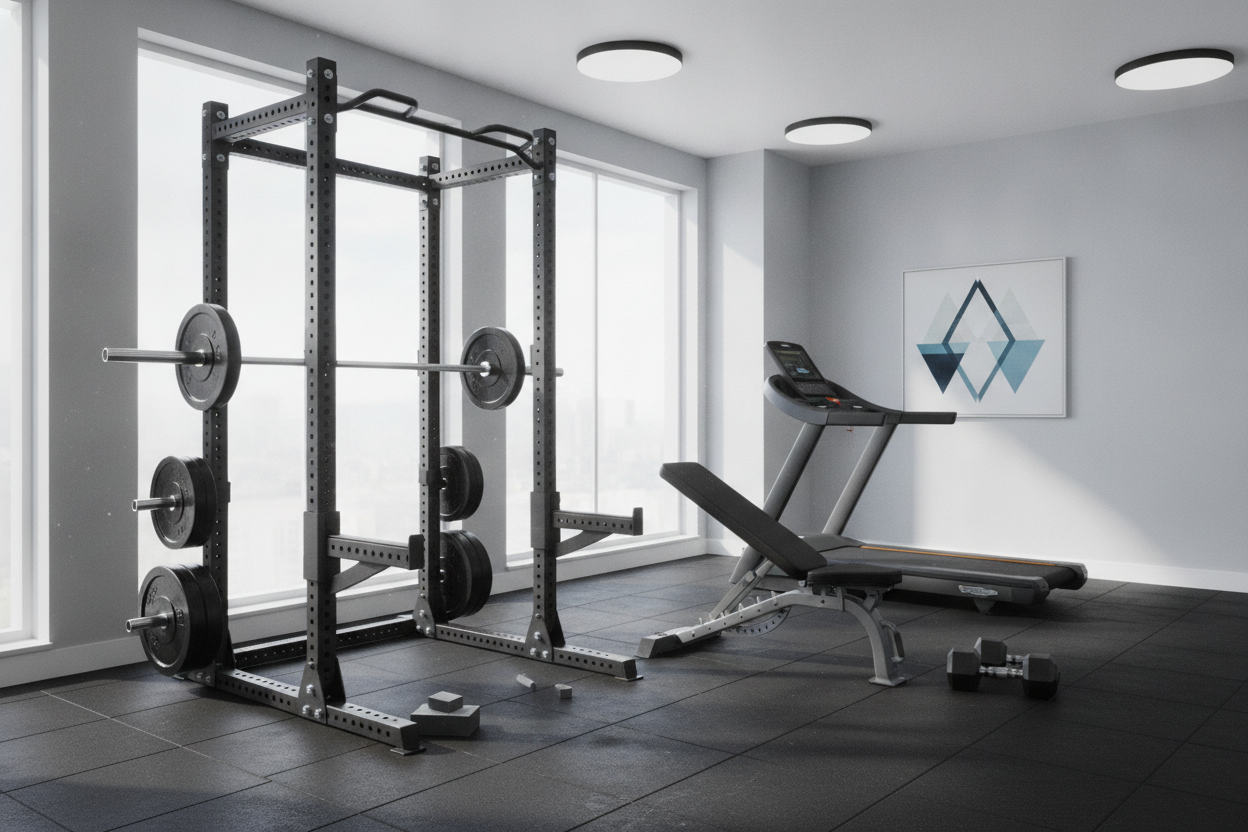
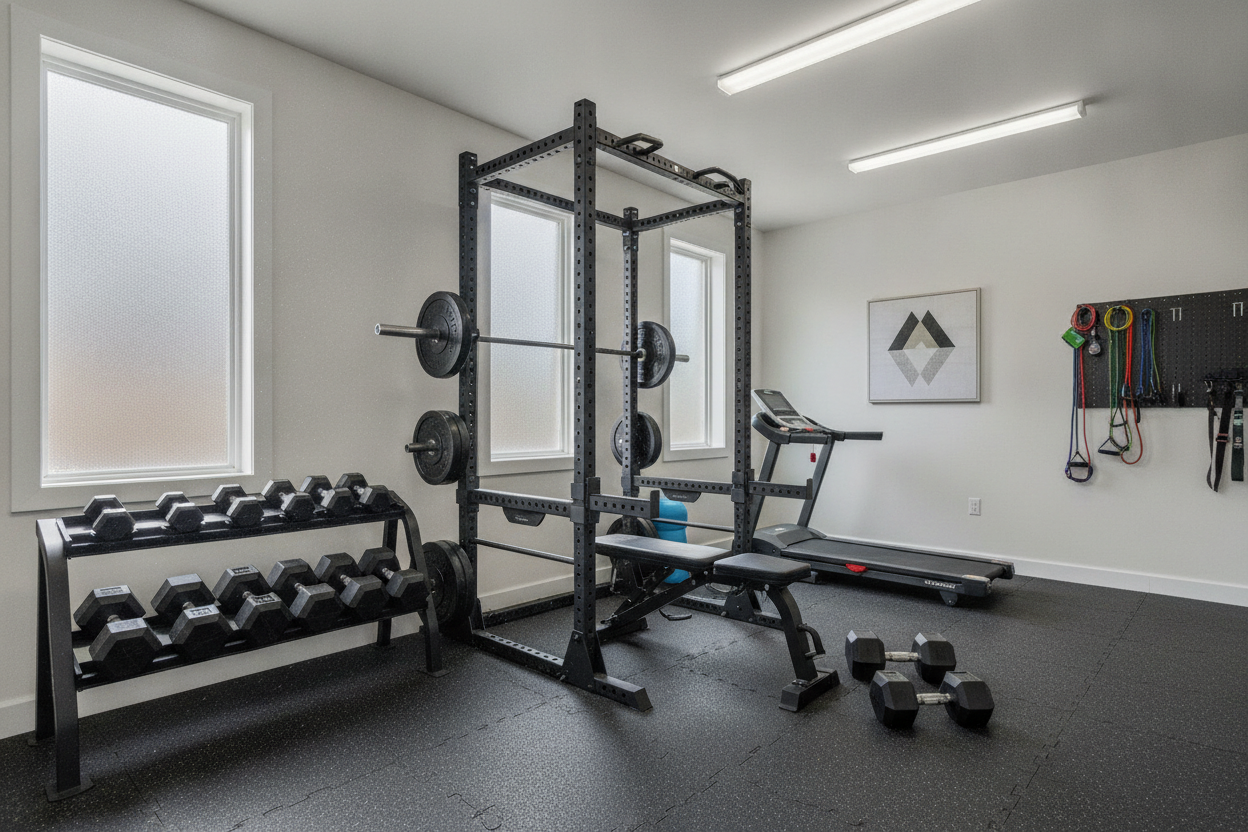
Your rack is the anchor of your gym. Don't buy a rack made of thin 14-gauge steel that feels like it’s going to tip when you rack 225 lbs. Look for 11-gauge steel with at least 2x3 or 3x3 inch uprights. You want something with a 1,000-lb weight capacity, even if you aren't squatting that yet.
Safety is the real reason you buy a rack. If you're training alone in a garage at 6:00 AM, you need reliable flip-down safeties or pin-and-pipe spotters. I personally prefer a full cage over a half-rack because it offers more stability for pull-ups and band work.
2. A Multi-Purpose Barbell You Won't Outgrow
A cheap barbell is a safety hazard. I’ve seen cheap bars permanently bend after a heavy set of deadlifts. A quality multi-purpose bar should have a 190,000 PSI tensile strength and a decent knurl that grips your hand without drawing blood. Look for a bar with dual knurl marks so you can use it for both powerlifting and Olympic movements.
3. Heavy-Duty Flooring (Do Not Skip This)
Concrete is tough, but it’s brittle. Dropping 400 lbs on bare concrete will eventually lead to cracks that are expensive to fix. If you don't want to tile the whole garage in horse stall mats, at least grab a large, durable exercise mat that covers a 6x8 ft area under your rack.
This provides a level surface for your rack to sit on and dampens the vibration when you're pulling heavy. Thicker is always better here—aim for 3/4 inch. Thin yoga mats or foam tiles will compress under a rack and leave you with an unstable lifting surface.
4. Iron or Bumper Plates (Depending on Your Sport)
If you’re strictly powerlifting, go with cast iron. They’re thinner, so you can fit more on the bar, and they have that classic 'clank.' However, if you plan on doing cleans or snatches, bumpers are mandatory. You don't need a 500-lb set on day one. Start with a pair of 45s, 25s, 10s, 5s, and 2.5s. You can always add more 45s as you get stronger.
The So-Called 'Garage Gym Necessities' You Should Actually Skip
The fitness industry wants you to believe you need a $2,000 treadmill and a wall-mounted cable system. You don't. Most specialized cardio machines are the first things to end up on Facebook Marketplace. If you want cardio, run outside or buy a jump rope for $15.
Skip the GHD (Glute Ham Developer) early on; it’s a massive space hog that does exactly one thing. Use your garage gym equipment list to focus on versatility. A flat bench and a rack can do more for your physique than five different specialized machines. I regret buying a leg extension machine that took up 15 square feet when I could have just done Bulgarian split squats with a dumbbell.
Planning Your Garage Gym Equipment List for Year Two
Once you’ve spent a year hitting the basics and actually proving to yourself that you’ll use the space, then you can talk about upgrades. Maybe that's a set of adjustable dumbbells or a high-end adjustable bench. Once you've spent a year hitting the basics, check out this comprehensive equipment guide to see where to invest your next paycheck.
Remember, a gym is a tool, not a showroom. Every piece of gear should have a job. If it’s just sitting there taking up space where you should be deadlifting, it’s gotta go.
FAQ
Do I really need a power rack?
Yes. If you plan on squatting or benching heavy without a spotter, the safeties on a power rack are the only thing standing between you and a serious injury. Don't risk it with cheap squat stands.
Should I buy used gear?
Absolutely. Iron plates and racks are basically indestructible. Check local listings for people who bought garage gym necessities and never used them. You can often find high-end gear for 50% off retail.
What is the minimum space I need?
A standard 8x8 foot area is enough for a rack and a barbell. However, keep in mind a standard Olympic bar is 7 feet long, so you need at least 10 feet of width to comfortably load and unload plates.