I Wasted $3,000 on Equipment for a Gym (Here's What I Kept)
I remember the day the delivery truck dropped off a commercial-grade leg press in my driveway. I’d spent six months’ worth of savings on it, convinced that equipment for a gym wasn’t legitimate unless it weighed half a ton and did exactly one thing. I was wrong. Six months later, that leg press was a very expensive clothes rack, and I was still doing squats in the corner because they actually worked better.
- Focus on versatility over variety to maximize your floor plan.
- Prioritize a high-quality barbell before any other accessory.
- Flooring is a structural investment, not an afterthought.
- Used commercial gear is great; cheap new cardio machines are trash.
I Tried to Build a Mini Gold's (And Failed Miserably)
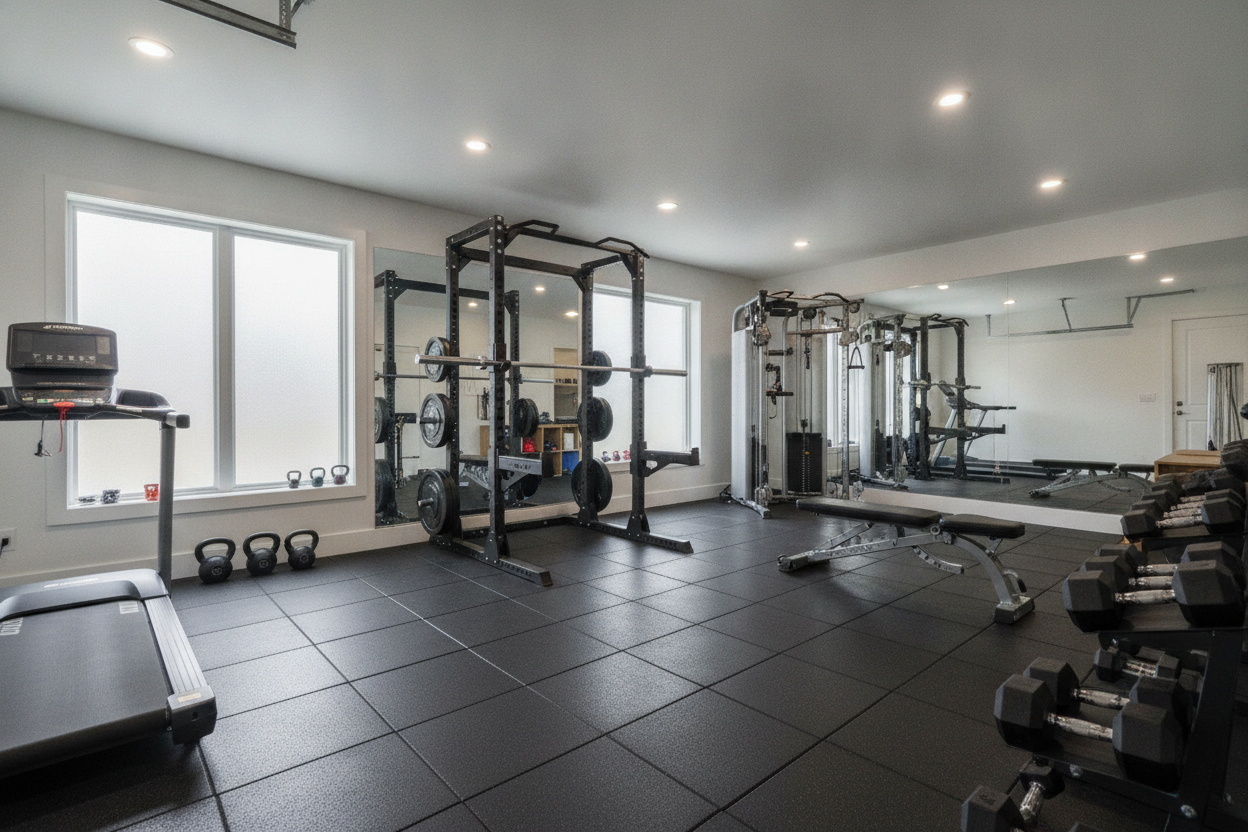
The mistake most of us make when looking for fitness equipment for gyms is thinking we need to replicate the local big-box facility. Commercial gyms have 50 machines because they have 500 members who all want to do something different. In your garage, you are the only member. You do not need a dedicated pec deck or a seated calf raise machine that eats up 15 square feet of prime real estate.
I spent $3,000 on 'deals'—mostly single-station machines and a cheap cable crossover that shook every time I pulled more than 40 pounds. It looked impressive on Instagram, but my training suffered. I spent more time maintenance-greasing cheap pulleys than actually lifting. If a piece of gear doesn't help you squat, bench, deadlift, or press, it is probably taking up space you do not have.
The Core Four: The Only Equipment for a Gym You Actually Need
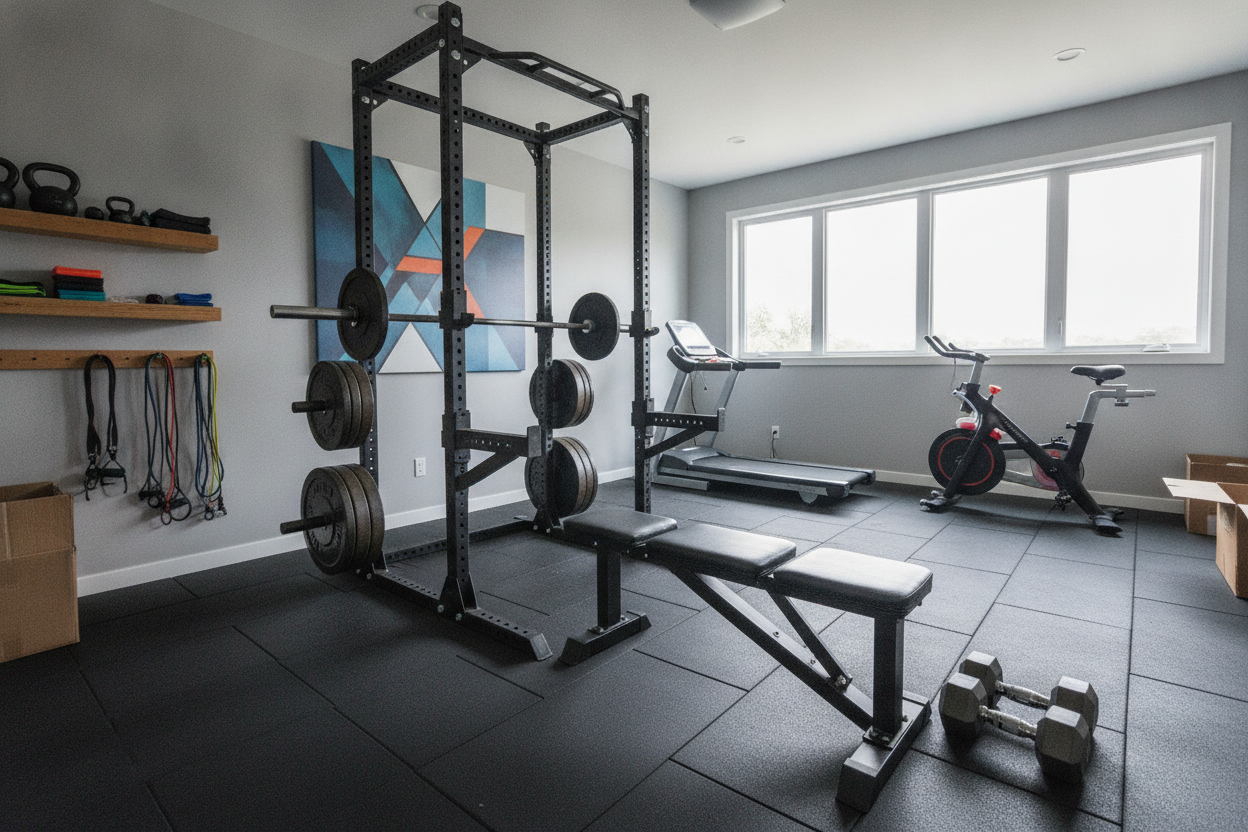
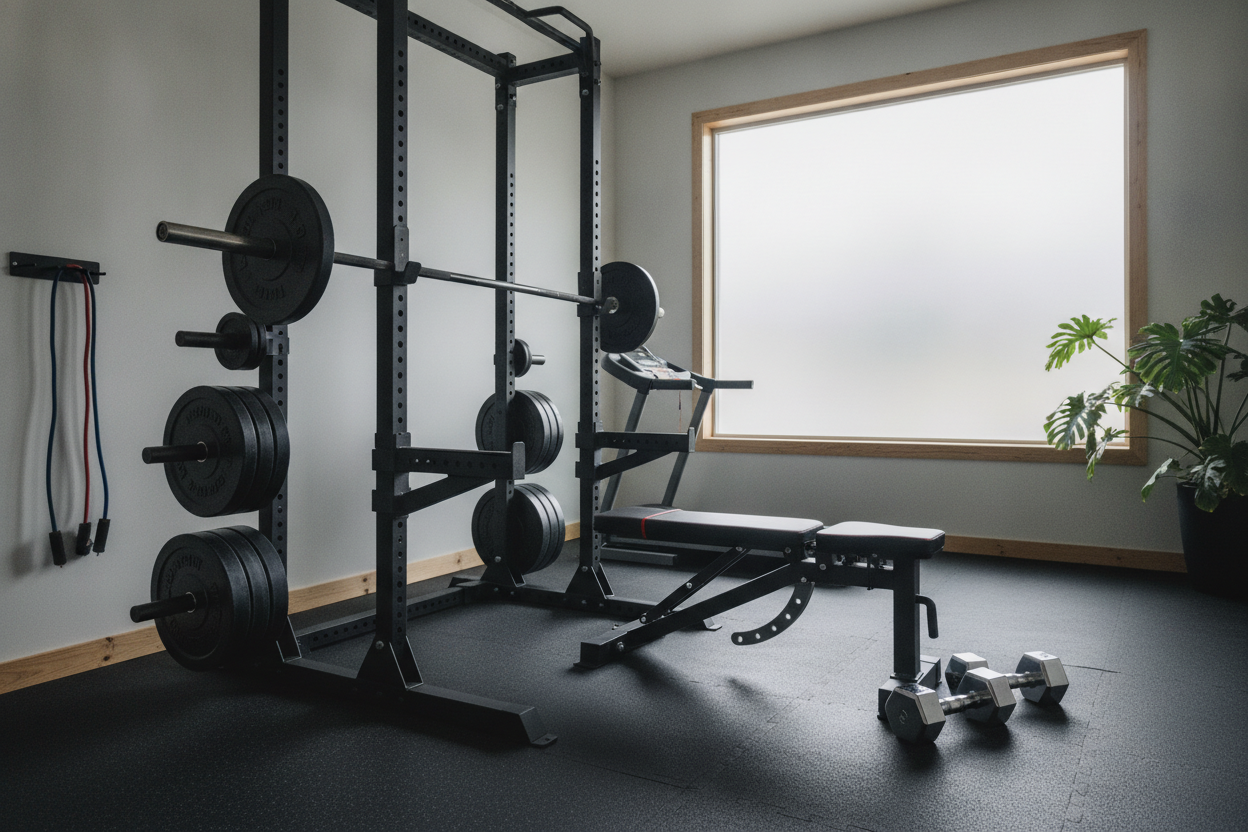
If I had to start over with a blank slab and a limited budget, I would buy four things and stop. First is the rack. You need a place to fail safely. I am partial to 3x3-inch 11-gauge steel because it does not budge when you are re-racking a heavy set of squats. You can find plenty of versatile power rack setups that include pull-up bars and landmine attachments, effectively turning a 4x4 footprint into a total-body station.
Second is the barbell. Do not buy the $50 chrome bar from the big-box store. The knurling will be passive, and the bushings will seize within a month. Get a multi-purpose bar with a decent whip and at least 190,000 PSI tensile strength. Pair that with a flat bench—adjustable is nice, but a rock-solid flat bench is cheaper and often more stable for heavy pressing. Finally, get iron or bumper plates. If you plan on deadlifting, bumpers are the way to go to save your ears and your concrete.
Stop Ignoring Your Foundation (Literally)
People spend $800 on a bar and then drop it on bare concrete. That is how you crack a slab and ruin the internal equipment of gym builds. You need heavy-duty gym flooring that can actually absorb the shock of a 405-lb pull. I am talking at least 3/4-inch thick rubber. It deadens the noise so your neighbors do not hate you and provides the literal grip you need so your feet do not slide during a max-effort bench press.
The Cardio Trap: What Not to Buy
When most people source equipments for gym use, they instinctively look for a treadmill. Unless you are a competitive distance runner living in a climate where you can't go outside, don't do it. A $500 treadmill is a plastic death trap that will break in a year. A $3,000 treadmill is a massive footprint that you will eventually use to hang-dry your laundry. For conditioning, buy a jump rope, a heavy sandbag, or a used air bike. They take up half the space and require zero electricity.
How to Score Real Deals Without Getting Scammed
You do not have to pay MSRP for everything. I have found some of my best gym equipment and accessories on secondary markets, but you have to be fast. Look for 'rust' that is actually just surface oxidation—a wire brush and some 3-in-One oil can make a $20 barbell look brand new. If you prefer buying new for the warranty, keep an eye on seasonal home gym equipment deals during Black Friday or New Year’s. That is usually when the big manufacturers clear out last year’s inventory to make room for new colors.
When Does Commercial Gear Actually Make Sense?
There is a tipping point where consumer-grade stuff won't cut it. If you are moving from a solo garage setup to outfitting a profitable gym or a personal training studio, you need equipment for gymnasium standards. This means bolt-down racks, thicker vinyl on benches, and machines with weight stacks that can handle 10+ hours of use a day. For most of us, that is overkill. But if you are training three clients back-to-back, that extra durability pays for itself in reduced downtime.
FAQ
What is the minimum space I need for a home gym?
You can get a full workout in an 8x8 foot space. A standard Olympic bar is 7.2 feet long, so you need at least 9 or 10 feet of width to load plates comfortably without hitting the wall.
Should I buy iron or bumper plates?
If you do cleans or snatches, get bumpers. If you just want to get strong and do not mind the noise, iron plates are thinner, allowing you to fit more weight on the bar, and they are usually cheaper.
Is a DIY rack safe?
I would not trust my life to a wooden rack. With the price of budget steel racks today, the $100 you save is not worth the risk of a 300-pound bar collapsing on your chest if you miss a rep.