I Was Wrong About Exercises Without Equipment to Build Muscle
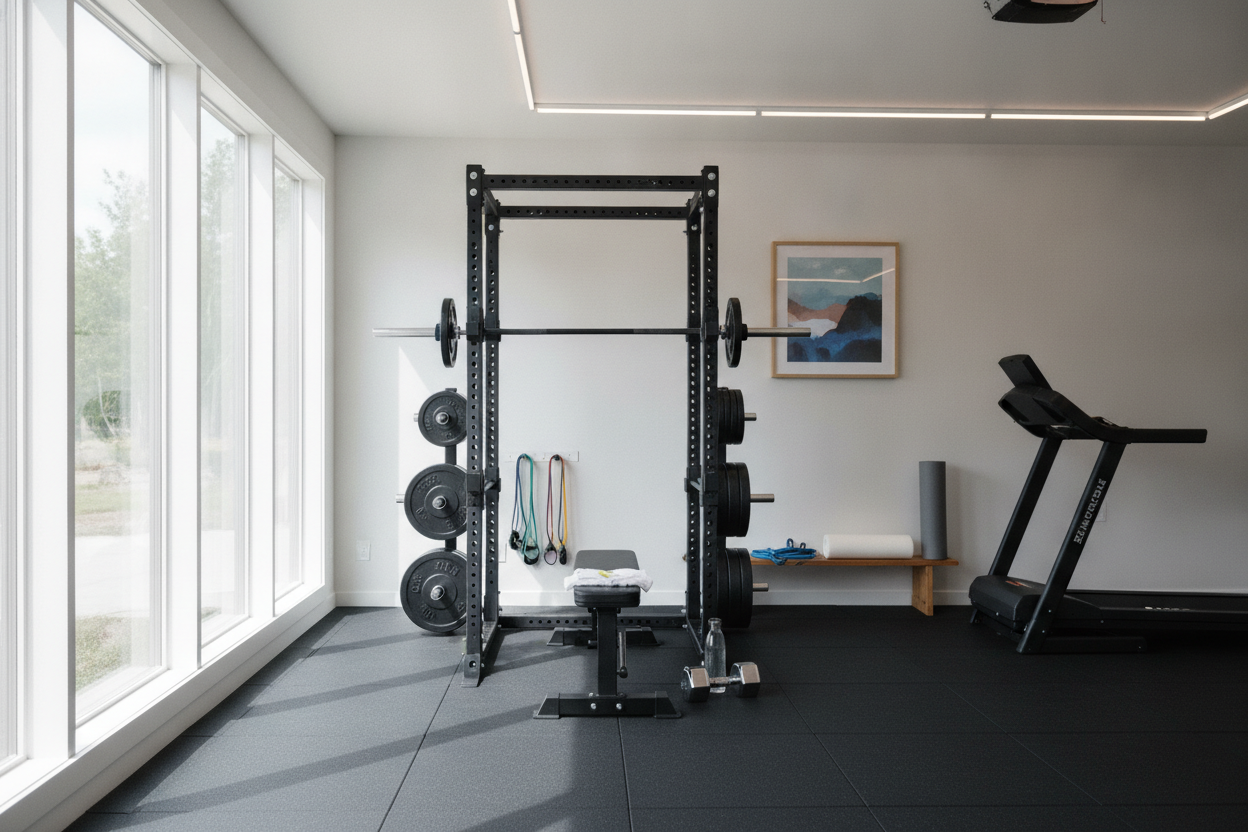
I’ve spent the last decade convinced that if it wasn’t a barbell, it wasn’t worth lifting. My garage is a shrine to iron—thousands of dollars in plates, racks, and specialty bars. Then, during a routine set of heavy triples, my lower back decided it was done. A sharp, hot nerve pain shot down my leg, and suddenly, my 490-pound total was a zero.
The gym I’d spent years building became a graveyard of heavy objects I couldn't touch. I was scrolling through equipment forums at midnight, looking for some magic brace, but the reality was simpler: I had to stop loading my spine. I had to find exercises without equipment to build muscle or watch my hard-earned gains evaporate while I sat on the couch.
- Leverage is your new best friend; stop doing high reps and start making the movement harder.
- Tempo is the secret to hypertrophy when you lack external load.
- Unilateral work (single-leg/single-arm) is mandatory to hit failure without a rack.
- Injury doesn't mean the end of progress—it's a chance to fix your mechanics.
Confessions of an Iron Addict on a Forced Hiatus
Being banished from the squat rack is a special kind of hell for a lifter. I spent the first week of my injury sulking, convinced that bodyweight training was just for people who liked neon headbands and 80s aerobic tapes. I thought I’d lose ten pounds of muscle by the end of the month. My back tweak was a L5-S1 warning shot that told me to rethink everything about how I approached tension.
I had to confront the reality of training without my beloved barbell. It’s easy to hide behind a heavy weight and use momentum to cheat a rep. When it’s just you and the floor, there’s nowhere to hide. I realized I had been using my equipment as a crutch for poor mobility and lazy eccentrics. This forced hiatus wasn't just about healing; it was about learning how to actually recruit muscle fibers without relying on 400 pounds of steel.
Why I Hated Bodyweight Training (And What Changed)
I used to think a muscle building workout without equipment was just code for 'doing 500 air squats while watching TV.' I hated the idea of 'junk volume'—those endless circuits that make you sweat but don't actually trigger growth. If I wasn't straining under a heavy load, I felt like I was wasting my time. I wanted to feel the weight, not just the burn.
Everything changed when I stopped treating bodyweight like cardio. I started applying the same principles I used for powerlifting: intensity, mechanical tension, and progressive overload. I realized that muscle exercises without weights only work if you make them feel like a 5-rep max. By slowing down the eccentric phase and manipulating my body’s leverage, I was hitting failure at 8 reps instead of 50. I stopped counting reps and started counting seconds under tension.
The Core Exercises Without Equipment to Build Muscle
You don't need a 3:1 pulley system or a commercial cable machine to build a back or chest. You need to understand physics. To make exercises to build muscle without equipment effective, you have to move away from the standard 'gym class' versions of these movements. We’re looking for maximum tension on the target muscle, not just moving from point A to point B. It’s about making the movement as disadvantageous as possible for your muscles.
Lower Body: Making Your Legs Burn Without a Barbell
Squatting without a bar feels like a joke until you try a paused Bulgarian split squat. I found that by placing my rear foot on a couch or chair and taking a full three seconds to descend, my quads were screaming by the tenth rep. If you want a real workouts to build muscle without weights, the pistol squat is the gold standard. It requires massive ankle mobility and serious quad strength to stay upright.
I spent weeks just working on the eccentric (the lowering part) of the pistol squat. I’d take five seconds to reach the bottom, pause, and then use a hand for a tiny bit of assistance on the way up. My glutes and quads haven't been that sore since my first 20-rep squat program. I also integrated 'Sissy Squats'—holding onto a doorframe and leaning back to isolate the quads. It’s a 300-lb stimulus on your knees without a single plate in sight.
Upper Body: Pushing Past the Standard Push-Up
The standard push-up is too easy for anyone with a decent bench press. To fix that, I started doing deficit push-ups. I grabbed two sturdy chairs or even just stacks of old books to increase the range of motion. By getting my chest below my hands, the stretch on the pecs is massive. I’d hold that bottom stretch for two seconds on every single rep. It turns a boring movement into a chest-splitting workout.
For pulling, I used a sturdy dining table for inverted rows. It’s not as fancy as a rack, but it works. I’d tuck my legs to make it easier or extend them out to make it harder. I even used a doorway to do 'doorway rows' for my rear delts. It felt ridiculous at first, but the pump was real. You’re forced to focus on the squeeze because you can't just 'ego lift' the weight. I found that my mind-muscle connection actually improved because I wasn't distracted by trying to balance a heavy bar.
Transitioning Back to the Garage Gym
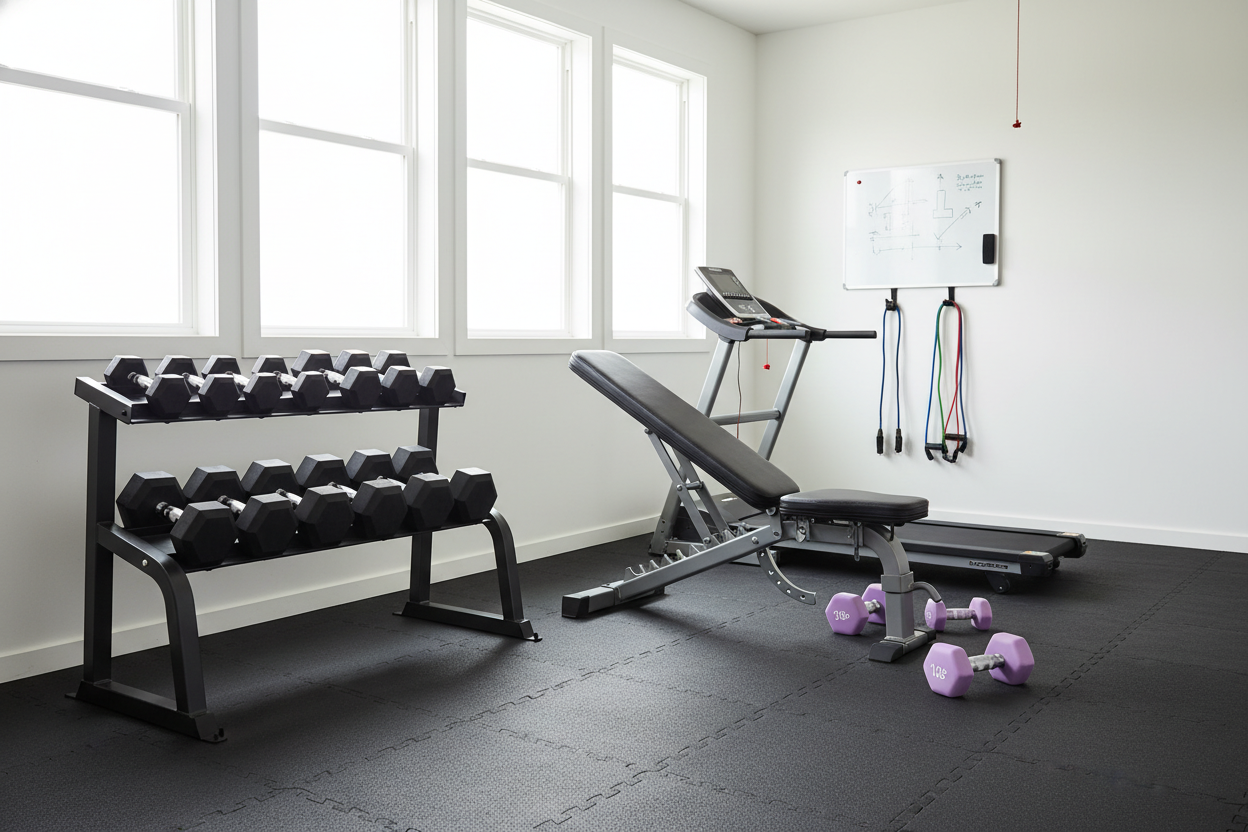
After twelve weeks, my back finally felt stable enough to return to the iron. But something strange happened: I was stronger in ways I didn't expect. My core stability was through the roof from all the unilateral work. When I finally got back on my adjustable weight bench, my stability on incline presses was noticeably better. I wasn't shaking under the weight anymore.
I didn't ditch the bodyweight stuff, either. I started using those deficit push-ups as a finisher after my heavy bench sets. The bodyweight movements taught me how to actually feel the muscle working instead of just moving a bar through a range of motion. I’m back to the iron, but I’m a much more efficient lifter because of that forced hiatus. I no longer look at my rack as the only way to get big.
The Blueprint for Your Own No-Iron Routine
If you’re stuck at home or traveling, don't just do '30 minutes of HIIT.' Pick four movements: a single-leg squat variation, a deficit push-up, an inverted row, and a core movement like a hollow body hold. Do 4 sets of each, focusing on a 3-0-1-0 tempo (3 seconds down, 1 second up). If you can do more than 12 reps, find a way to make the angle harder.
This is a great bridge for anyone currently saving up for their first bumper plate sets. You don't have to wait for the equipment to arrive to start building a foundation. Treat your body like the weight it is, stop counting reps, and start making every rep count. Your spine—and your gains—will thank you for the variety.
FAQ
Can you actually build muscle with just bodyweight?
Yes, but you have to train to failure. If you can do 30 reps easily, the movement is too light. You need to change the angle, increase the range of motion, or slow down the tempo to make it harder.
How often should I do these workouts?
Treat it like a weight session. 3 to 4 times a week is plenty if the intensity is high enough. Your nervous system and connective tissues still need recovery time, especially with the deep stretches in deficit movements.
What if I can't do a pistol squat?
Start with 'box' pistol squats where you sit back onto a chair and stand up on one leg. Gradually lower the height of the chair as you get stronger. You can also hold onto a doorframe for balance until your stabilizing muscles catch up.