I Tested Every shoulder trap workout. This Built My Yoke.
I spent three years loading up 405 on a barbell and doing those tiny, pathetic pulses we call shrugs. My traps didn't grow, but my chiropractor's bank account sure did. There is nothing more frustrating than spending forty minutes grinding out heavy reps only to wake up with a tension headache instead of a thicker upper back. I realized the hard way that if you want a massive yoke, you have to stop treating your traps like an isolated accessory and start treating them like the stabilizers they are. This shoulder trap workout is the result of years of trial, error, and a lot of wasted chalk.
Quick Takeaways
- Standard barbell shrugs often lead to forward head posture and neck pain rather than muscle growth.
- Traps and deltoids function best when they are forced to stabilize heavy, moving loads.
- High pulls and farmer's carries are the gold standard for upper body thickness.
- High-density flooring is non-negotiable when training with heavy carries at home.
- Frequency beats intensity; hitting these muscles 2-3 times a week yields better results than one 'destroy' day.
Why Endless Heavy Shrugs Are Wrecking Your Neck
The standard barbell shrug is the most overrated movement in the gym. I've watched guys load up six plates a side, only to move the bar about two inches while their chin juts forward like a turtle. This is a recipe for disaster. When you overload the traps in a purely vertical plane with your arms at your sides, your body naturally compensates by using the levator scapulae. This muscle isn't designed to move 500 pounds; it's designed to help rotate your neck. When it gets overworked, you don't get big traps—you get a stiff neck and chronic migraines.
Furthermore, the traps are a massive muscle group that spans from the base of your skull all the way down to the middle of your back. A tiny shrugging motion only hits the very top fibers. To get real growth, you need range of motion and time under tension. Most people use so much weight that they lose all control of the eccentric phase, which is where the actual muscle damage and subsequent growth happen. I stopped doing traditional shrugs two years ago, and my yoke has never looked better. The key is moving away from isolation and toward movements that demand the traps work in tandem with the shoulders and core.
The Anatomy of a Thick Yoke
If you want to look like you can walk through a brick wall, you have to understand how the traps and deltoids interact. They are a functional unit. The traps are responsible for scapular elevation, depression, and retraction, while the deltoids handle the actual movement of the humerus. When you perform the best exercise for shoulders and traps, you are usually looking at a compound movement that requires the traps to hold the shoulder blade in a stable position while the delts move the weight.
Think about a heavy overhead press. Your delts are the prime movers, but your traps are working overtime to keep your shoulders from collapsing under the load. This isometric tension is a massive stimulus for growth. Whether you are looking for the best shoulder exercise for women or trying to add three inches of thickness to your own upper back, the mechanics of scapular stability remain the same. You cannot have powerful shoulders without a stable base provided by the traps. By choosing exercises that force these muscles to work together—like high pulls or heavy carries—you create a much more balanced and injury-resistant physique. We aren't just building 'beach muscles' here; we're building a functional upper body that can actually carry a load.
My Minimalist shoulder trap workout
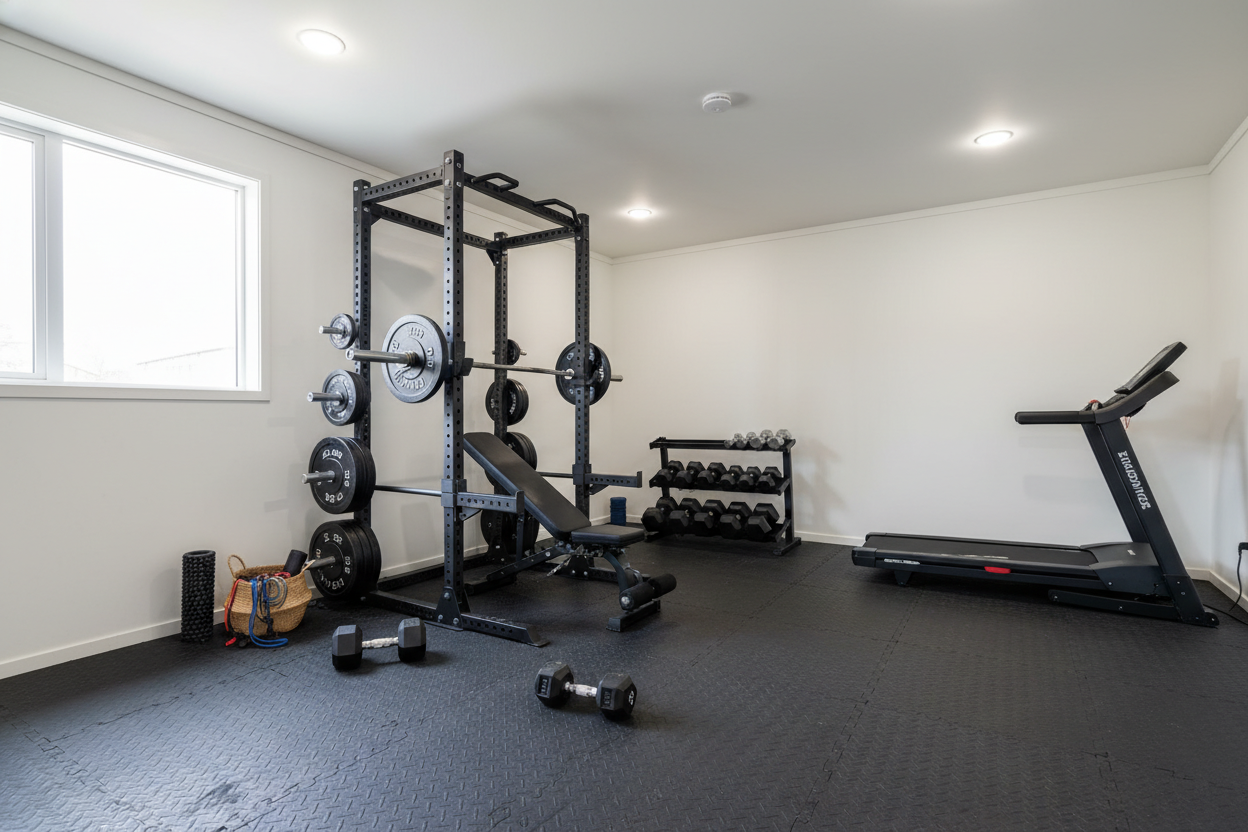
This is the routine I narrowed down after years of fluff. It’s one of the best shoulder and trap workouts for home gym owners because it requires minimal equipment: just a barbell, some plates, and a pair of heavy dumbbells or a trap bar. We do three moves, three times a week. That’s it.
First: Snatch-Grip High Pulls. This is the king of yoke builders. Use a wide grip on the barbell, hinge slightly at the hips, and explosively pull the bar toward your lower chest, letting your elbows flare out and up. Unlike a shrug, this is explosive. You’re using your hips to drive the weight, and your traps and delts have to catch and control that momentum. I do 5 sets of 3-5 reps. It’s about power, not 'feeling the burn.'
Second: Heavy Farmer's Carries. This is the most 'real world' exercise there is. Pick up the heaviest weights you can hold for 30 seconds and walk. Your traps are under constant, brutal tension as they fight to keep your arms in their sockets. I prefer using a trap bar for these because it allows for a more neutral grip and higher weight capacity, but heavy dumbbells work in a pinch. Aim for 4 rounds of 40 yards. If your grip doesn't fail before your lungs do, you aren't going heavy enough.
Third: Banded Face Pulls. This is our 'prehab' and hypertrophy move. Use a resistance band anchored at eye level. Pull the band toward your forehead, pulling the ends apart and focusing on squeezing your shoulder blades together. This hits the rear delts and the mid-to-lower traps, which are often ignored. Do 3 sets of 15-20 reps. This keeps the shoulders healthy and fills in the gaps between the 'show' muscles.
Protecting Your Floors During Heavy Carries
If you’re training in a garage or a spare room, the logistics of heavy carries are a nightmare. I learned this the hard way when I dropped a 110-pound dumbbell and put a spiderweb crack in my concrete slab. You cannot perform a high-intensity shoulder trap workout if you're constantly worried about destroying your house. Standard 1/2-inch foam tiles from the big box store are a joke; they’ll compress and tear the first time you set a heavy bar down.
You need a dedicated lifting surface. I recommend investing in the best large exercise mat you can find—specifically one made of high-density recycled rubber with at least a 1/4-inch thickness. This provides enough vibration dampening to keep the noise down and enough impact protection to save your foundation. If you’re doing snatch-grip high pulls, you’re eventually going to miss a rep or need to bail. Having a 6x8 foot or larger rubber surface gives you the confidence to actually push your limits without turning your garage into a construction zone.
How to Program This Into Your Current Split
The beauty of this routine is its flexibility. Because it only consists of three movements, you can plug it in almost anywhere. I personally like to use it as a 'finisher' on my pull days. After I’m done with heavy deadlifts or rows, I’ll hit the high pulls and carries. Your traps are already warmed up from the heavy pulls, so you’re just finishing them off.
If you’re running a dedicated shoulder day, swap out your lateral raises for the high pulls once in a while. You’ll find that the explosive nature of the pull carries over to your overhead press strength. For those on a full-body split, I suggest doing the face pulls every session as a warm-up and rotating the carries and high pulls every other workout. Just be mindful of your recovery. The traps can handle a lot of volume, but your central nervous system (CNS) can’t. If you start feeling a constant 'tug' in your neck or your grip strength starts plummeting, back off for a week. This isn't a sprint; it's a slow build toward a thicker, more powerful frame.
My Personal Experience: The 2019 Floor Incident
I used to think I was too 'hardcore' for floor mats. I was training in a rental garage with bare concrete. I was doing a set of heavy carries with 120-pound dumbbells. On the third lap, my left grip gave out. The dumbbell hit the floor, bounced, and took a chunk out of the concrete the size of a golf ball. Not only did I lose my security deposit, but I also realized that training on hard, unforgiving surfaces was wrecking my joints. Switching to a high-density rubber mat didn't just save my floors; it made my joints feel 100% better because the surface had a tiny bit of 'give.' Don't be cheap where it matters.
FAQ
Can I do this workout with just dumbbells?
Yes. You can do dumbbell high pulls and farmer's carries easily. For the face pulls, you can use light dumbbells with a chest-supported row variation, though bands are superior for the constant tension they provide.
How often should I train my traps?
Traps are resilient. You can hit them 2-3 times a week as long as you aren't doing 20 sets per session. Keep the volume moderate and the intensity high.
Will this workout make my neck look shorter?
Building massive traps can give the illusion of a shorter neck, but it also creates that 'power' look. If you're worried about aesthetics, make sure you're also hitting your side delts to maintain width.