I Teach These 3 Beginner Shoulder Exercises to Every New Lifter
I remember standing in front of a massive dumbbell rack at a commercial gym years ago, feeling completely lost. I’d just watched a TikTok ‘influencer’ perform a seven-move circuit that looked more like interpretive dance than a workout. I tried it, felt a sharp pinch in my right rotator cuff, and didn't touch a weight for a week. Most beginner shoulder exercises you see online are over-engineered fluff designed to get views, not to build actual muscle.
- Focus on three foundational movements to build a base.
- Prioritize stability over total weight in the first month.
- Use a bench to remove momentum and protect your spine.
- Don't skip rear delt work; your posture depends on it.
Why You Need to Ignore Social Media's 'Optimal' Routines
Stop scrolling through those 8-exercise giant sets. If you are just starting out, your nervous system doesn't need 'muscle confusion'—it needs repetition and mastery of the basics. I see guys in my garage gym trying to mimic pro bodybuilders who have ten years of training under their belts. When you're new, your goal is to learn how to move a load from point A to point B without your joints screaming at you. Simple shoulder workouts beat complex ones every single time.
Stripping away the fluff isn't about being lazy. It’s about efficiency. When you focus on a basic shoulder workout, you can actually track your progress. If you’re doing 12 different lateral raise variations, you’ll never know which one is actually making you stronger. Stick to the movements that offer the most 'bang for your buck.' This approach prevents the mental burnout that happens when you feel like you have to spend two hours at the rack just to see a pump. You want results, not a chore list.
Movement 1: The Seated Dumbbell Overhead Press
This is the king of the beginner shoulder workout. I always start my clients with a seated version rather than standing. Why? Because most beginners have the core stability of a wet noodle when pressing heavy weights overhead. By sitting on a bench—ideally one with a solid 14-gauge steel frame and a high-density foam pad—you lock your pelvis in place. This removes the temptation to arch your lower back like a banana, which is how most people end up with a lumbar strain instead of bigger delts.
Set your bench to a high incline (about 75 to 80 degrees) rather than a perfectly vertical 90. This slight angle is much friendlier on the shoulder joint and allows for a more natural path for the dumbbells. I recommend using a pair of adjustable dumbbells, like the ones that go up to 52.5 lbs in 5-lb increments, so you can slowly micro-load as you get stronger. You can find more details on proper pressing mechanics and video demos over at our comprehensive workout hub. Focus on bringing the weights down until your elbows are just below your shoulders, then drive them back up without clanking them together at the top.
Movement 2: The Chest-Supported Lateral Raise
If you want those 'boulder shoulders,' you have to hit the side delts. But if you watch people doing standard lateral raises, they’re usually swinging their torsos like they’re trying to take flight. This is why I consider the chest-supported version one of the best shoulder exercises for beginners. You lean your chest against an incline bench, which physically prevents you from using momentum. It’s a humbling exercise. You’ll probably have to drop down to 5-lb or 10-lb dumbbells, but the isolation you get is worth the ego hit.
This is a staple in any simple shoulder workout because it teaches you how to actually 'feel' the muscle working. Keep a slight bend in your elbows and think about pushing the weights out to the walls rather than up to the ceiling. Because you’re supported by the bench, your lower back stays out of the equation entirely. It’s pure, isolated work on the lateral head of the deltoid. If you find yourself shrugging the weights up with your traps, you’re going too heavy. Lighten the load and focus on the sweep.
Movement 3: The Banded Pull-Apart
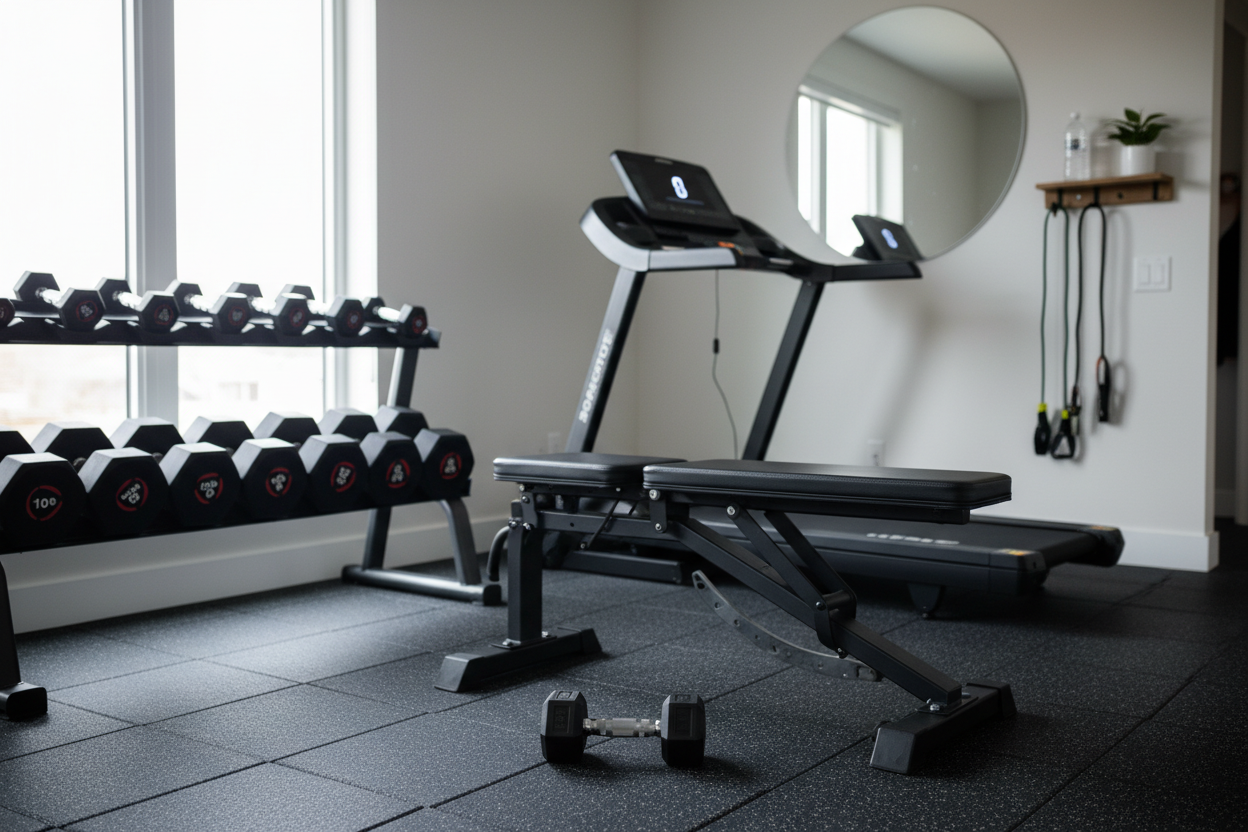
Every easy shoulder workout needs a 'pre-hab' element. Most of us spend our days hunched over a keyboard, which leads to rounded shoulders and weak upper backs. The banded pull-apart targets the rear delts and the muscles between your shoulder blades. It’s not a 'heavy' lift, but it’s essential for shoulder health. I keep a few latex-free resistance bands hanging on my power rack and do these between sets of presses. It acts as a primer, getting the rotator cuff warm and ready for heavier loads.
Don't treat this as an afterthought. It’s a foundational piece of basic shoulder exercises because it offsets the 'pushing' dominance of most gym routines. Grab the band with an overhand grip, arms straight out in front of you, and pull it apart until it touches your chest. Control the return; don't let the band snap back. These movements eventually scale into more complex gym workout shoulder exercises as you gain strength, but for now, focus on the squeeze in your upper back. It’s the best insurance policy against impingement you can buy.
Putting It Together: Your First Basic Shoulder Workout
You don't need a three-hour session to see growth. For shoulder exercises in gym for beginners, I recommend a simple 3-set approach for each of the movements above. Start with the Seated Press for 3 sets of 8-10 reps. This is your heavy hitter. Follow it up with the Chest-Supported Lateral Raise for 3 sets of 12-15 reps to really fatigue the muscle. Finish with 3 sets of 20 reps on the Banded Pull-Aparts to flush the area with blood and reinforce good posture.
Progression is the only thing that matters. If you did 20-lb dumbbells for 10 reps last week, try for 11 reps this week. Or, if the gym only has 5-lb jumps, stay at the same weight but improve your form. This simple shoulder workout should be done twice a week, with at least 48 hours of rest in between. Don't add more exercises until you’ve mastered these three. Consistency beats variety every day of the week, especially when you're just building your foundation.
Setting Up Your Space for Safe Pressing
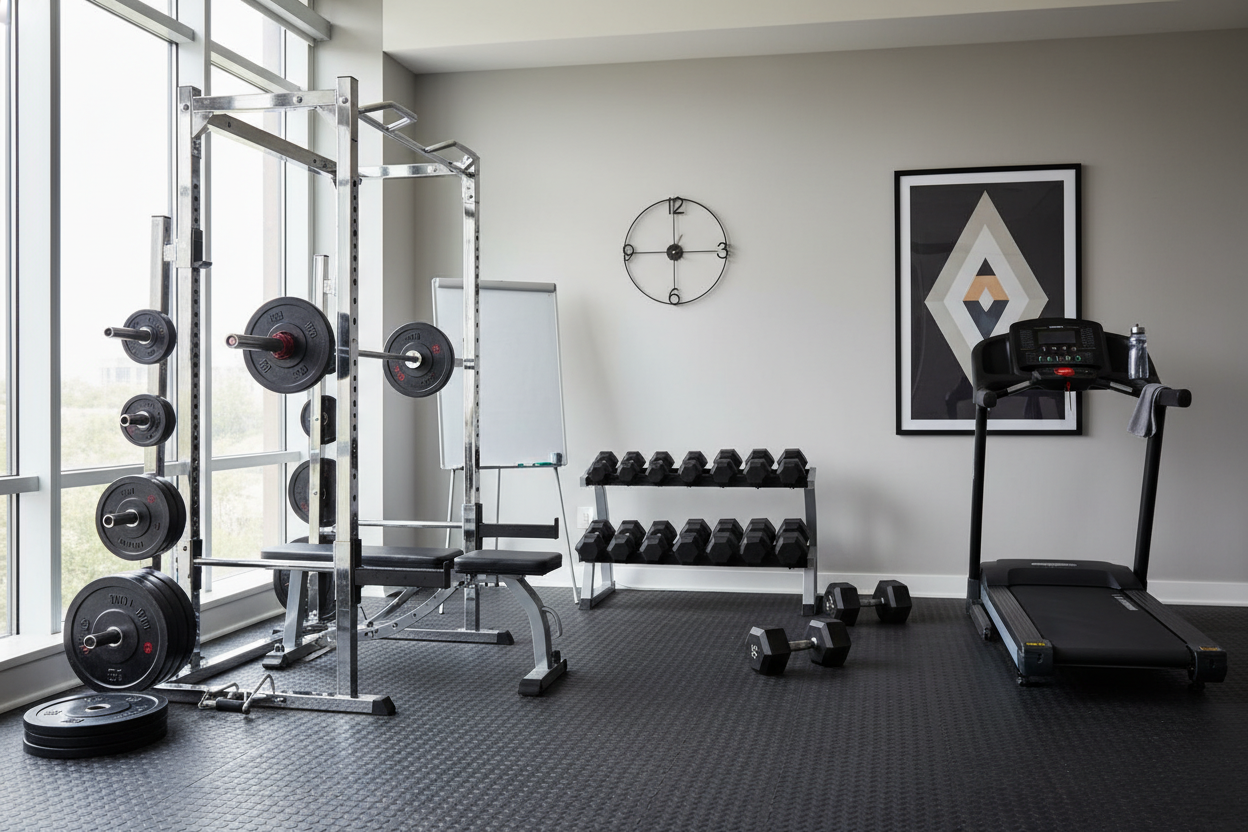
Whether you're in a commercial gym or building a home setup, your environment matters. I’ve seen guys try to do overhead presses while standing on a slippery concrete floor or a cheap, thin yoga mat. That’s a recipe for a disaster. You need a stable, non-slip surface so your feet can actually grip the ground and provide a base for your lift. A solid gym flooring for home workout setup provides the traction you need to keep your hips from shifting when the weight gets heavy.
Check your bench too. If it wobbles when you sit on it, don't use it for heavy presses. I once bought a cheap 'Amazon special' bench that claimed a 500-lb capacity but felt like a lawn chair the moment I picked up a pair of 50s. Invest in gear that doesn't make you wonder if it's going to collapse mid-set. A stable bench and a grippy floor are just as important as the dumbbells themselves when you're learning how to stabilize weight overhead.
What if I feel a clicking in my shoulder?
If it doesn't hurt, it's usually just a tendon sliding over a bone—annoying, but normal. If it hurts, stop. Most 'clicking' during beginner shoulder exercises is caused by a lack of warm-up or poor elbow positioning. Try tucking your elbows slightly forward rather than flaring them out to the sides.
Can I do these exercises with just bands?
You can, but you'll hit a ceiling quickly. Shoulders respond well to the consistent tension of dumbbells. Bands are great for the pull-aparts and lateral raises, but for the overhead press, you really want the measurable resistance of iron or rubber-coated weights.
How long until I see results?
If you're eating enough protein and hitting these moves twice a week, you'll feel 'tighter' in your shirts within a month. Real, visible muscle growth usually takes 8-12 weeks of consistent effort. Don't rush the process; the shoulders are a small muscle group that takes time to fill out.