I Swapped Iron for the Banded Single Leg Hip Thrust (Here Is Why)
I spent five years convinced that if I wasn't loading four plates onto a barbell for hip thrusts, I wasn't actually training. My garage gym routine involved ten minutes of dragging a 45-pound bar across stall mats, hunting for the one foam pad that wasn't shredded, and doing the 'plate math' shuffle. By the time I finished my first set, my lower back felt like it had been through a trash compactor, and my glutes were barely waking up. That changed when I stripped the bar and started focusing on the banded single leg hip thrust.
Quick Takeaways
- Zero spinal loading makes this a win for anyone with lower back sensitivity.
- The resistance curve matches your muscle’s strength, hitting peak tension where you need it most.
- Unilateral work exposes and kills muscular imbalances you didn't know you had.
- Setup takes 60 seconds, not 10 minutes.
The Day I Got Sick of Loading 45-Pound Plates Solo
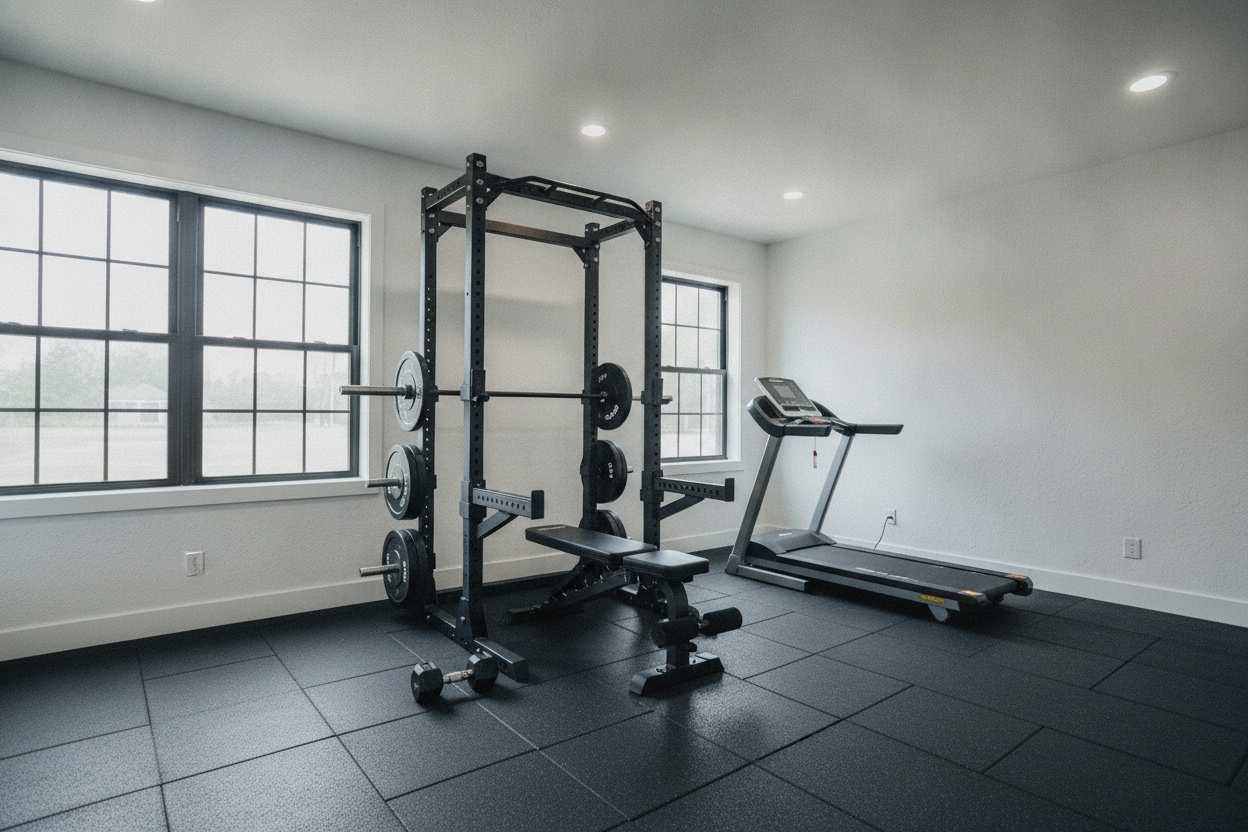
There is a specific kind of exhaustion that comes from being your own plate loader. In a commercial gym, it’s annoying. In a home gym, it’s a workout killer. I realized one Tuesday morning that I was dreading my 'heavy' day not because of the effort, but because of the logistics. Setting up a 315-pound hip thrust in a tight 8x8 space is a logistical nightmare. The bar rolls, the plates clank against the rack, and you’re constantly worried about the barbell crushing your pelvis if the pad slips.
I decided to experiment. I grabbed a heavy-duty loop band and tried a single leg hip thrust with band instead. The first thing I noticed wasn't the ease of setup—it was the immediate, localized fire in my right glute. Without the barbell's massive footprint, I could actually focus on the contraction. No more bracing against a bar that wanted to tilt. No more worrying about the floor. Just pure, unadulterated glute work that felt more productive than any three-plate set I'd done in months.
Why the Banded Single Leg Hip Thrust Is a Glute Cheat Code
If you look at the physics of a standard barbell thrust, the weight is constant. Gravity doesn't care where you are in the movement. However, your glutes are actually at their strongest when they are fully shortened—at the very top of the hip thrust. This is where a band changes the game. As you drive your hips up, the band stretches, increasing the resistance exactly when your glutes are capable of producing the most force.
When comparing the barbell vs. hip thrust with band, the tension curve of the band is far more 'anatomically friendly.' You aren't fighting a heavy load at the bottom where your hips are in a disadvantaged position. Instead, you're getting slammed with resistance at the lockout. This 'accommodating resistance' is why 100 pounds of band tension can often feel more effective for hypertrophy than 200 pounds of dead weight on a bar.
Fixing the Asymmetry Problem
We all have a dominant side. When you're under a heavy barbell, your strong leg will subconsciously take over about 60-70% of the work. You might think you're symmetrical, but the mirror doesn't lie after a few months of bilateral-only training. By switching to a single-leg setup, there is nowhere for the weak side to hide. I discovered my left glute was essentially a passenger during my heavy sets. Forcing it to move a heavy band solo for 15 reps was a humbling experience that finally balanced out my hip stability.
How to Set Up a Single Leg Hip Thrust With Band (Safely)
Setup is where most people fail and go back to the barbell. You need a solid pivot point. I personally use the Gxmmat Hip Thrust Bench because it sits at the perfect anatomical height. Most standard weight benches are about 17 inches high, which is actually too tall for most people to get a proper scapular pivot. You want the edge of the bench right at the bottom of your shoulder blades.
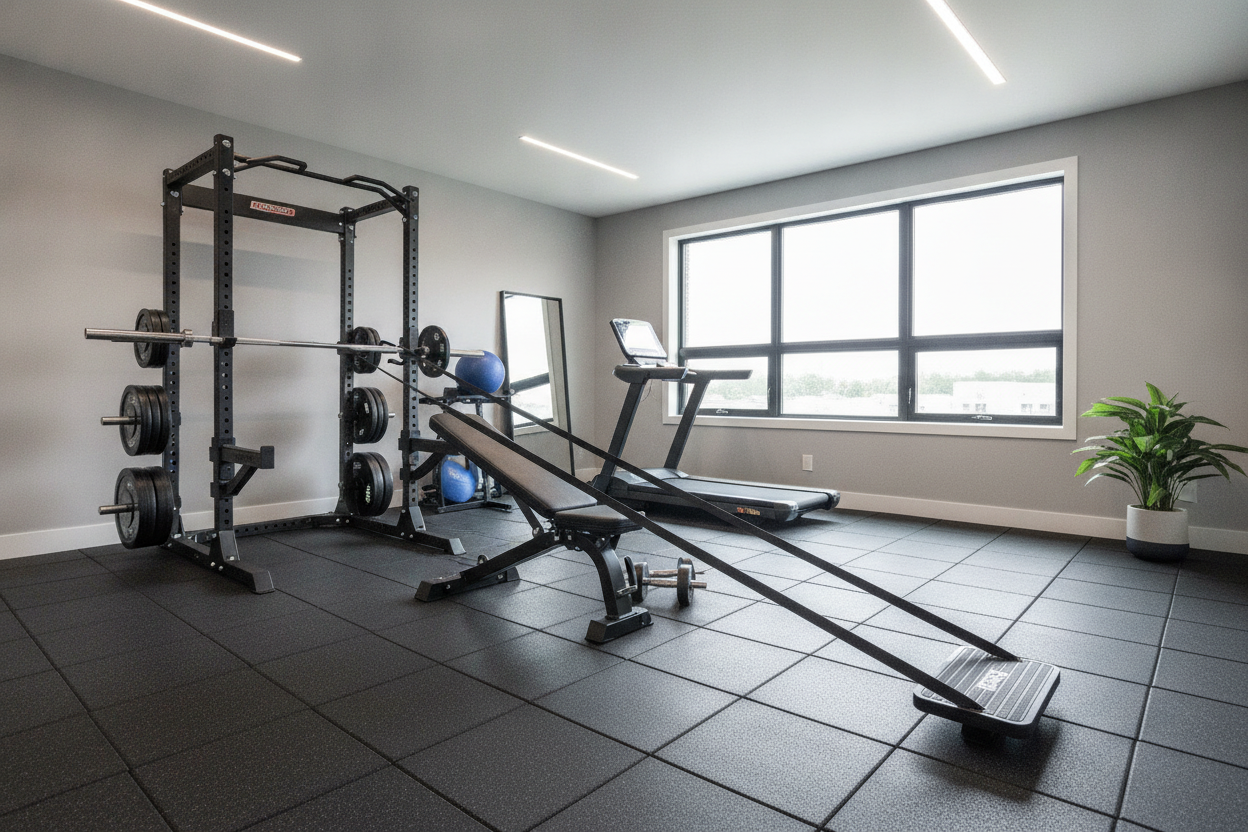
To set the band, sit on the floor with your back against the bench. Loop a long resistance band around your waist and anchor the ends under your non-working foot or to heavy anchors on either side of you. Place your working foot flat on the floor, about 6 to 8 inches from your glutes. Drive through the heel, keeping your chin tucked and your core braced. If the band is sliding up toward your ribs, you haven't anchored it low enough. It should sit right in the crease of your hips.
Anchoring Hacks for Garage Gyms
If you don't have a dedicated thrust station, use your dumbbells. Line up two 80-pound or 100-pound dumbbells on either side of your hips. Loop the band over your lap and hook the ends around the handles of the dumbbells. This creates a rock-solid anchor point that won't move, even with high-tension bands. If you're using a power rack, you can also use the band pegs at the base of the rack. Just make sure your bench is pushed up against the rack so it doesn't slide backward while you're driving upward.
Wobbly Hips? Try This Before You Give Up
The most common complaint I hear is, 'I feel too wobbly to get a good workout.' Balance is a skill, and it takes a few sessions to develop the stabilizer strength. Keep your core tight—think about pulling your ribs down toward your pelvis. If you find yourself tipping over, check your foot placement. Your working foot should be slightly outside your hip line, not directly in the center, to create a wider base of support.
If you're still struggling with the balance after a week, don't force it. I often recommend the b-stance hip thrust as the perfect middle ground. In a B-stance, you keep about 10% of your weight on the toes of the non-working leg. It acts like a kickstand, giving you the stability to move heavy band tension without the 'drunk sailor' wobble of a true single-leg movement.
How to Program This Into Your Current Leg Day
Don't try to make this your primary 'strength' lift. It's an isolation and hypertrophy tool. I like to start my leg days with a heavy compound movement, like a squat or a press on a leg machine, to get the central nervous system firing. Once the heavy lifting is done, I move to the banded single leg thrust as a high-volume finisher.
Aim for 3-4 sets of 15-20 reps per leg. The goal here isn't to survive the set; it's to maintain a 2-second pause at the top of every rep. If you can't hold the lockout, the band is too heavy. The 'burn' with bands is significantly more intense than with weights because the tension never drops off. By the time you hit rep 15, your glutes should feel like they're being pumped full of hot lead.
FAQ
Is the band better than the barbell?
It's not 'better' in an absolute sense, but it is more efficient for glute isolation. If your goal is specifically glute growth and you want to save your lower back from the compression of a heavy bar, then yes, the band is the superior choice for home gym owners.
Will this hurt my hips?
Actually, it's usually more comfortable. A barbell concentrates 200+ pounds on a narrow iron rod. A band distributes that pressure over a wider surface area. You rarely need a pad with a band, whereas a pad is mandatory for barbell work.
Can I use a mini-band instead?
Mini-bands (the small loops you put around your knees) serve a different purpose—they work the abductors. For a hip thrust, you need a 41-inch power loop band to provide enough resistance through the full range of hip extension.