I Swapped Complex Weightlifting Routines for 4 Basic Lifts
I remember staring at a 12-week spreadsheet in my freezing garage, trying to figure out if I was supposed to do 'tempo lunges' or 'deficit RDLs' first. My coffee was getting cold, and my progress had stalled for six months despite following these 'expert' weightlifting routines. I realized I was spending more time checking my phone for the next set than actually moving heavy iron.
- Complexity is usually a mask for a lack of intensity.
- Most 'influencer' programs are designed for people with three hours to kill.
- Progressive overload on four movements beats 12 movements with light weight.
- Paper logs beat phone apps for focus and consistency.
The Problem with Internet Workout Templates
Most modern lifting routines are bloated with junk volume. They are designed for fitness influencers who live in the gym, not for regular guys training in a 20-degree garage after a 9-to-5. When a program calls for four different types of lateral raises, it is trying to sell you variety because the creator thinks you will get bored. In reality, boredom is where the gains are.
I spent years chasing 'muscle confusion' and switching programs every three weeks. All it got me was a mediocre physique and a nagging shoulder injury. These templates often prioritize 'feeling the burn' over adding five pounds to the bar. If you are training at home, you do not have time for fluff. You need movements that provide the biggest bang for your buck.
Why I Cut My Program Down to the Studs
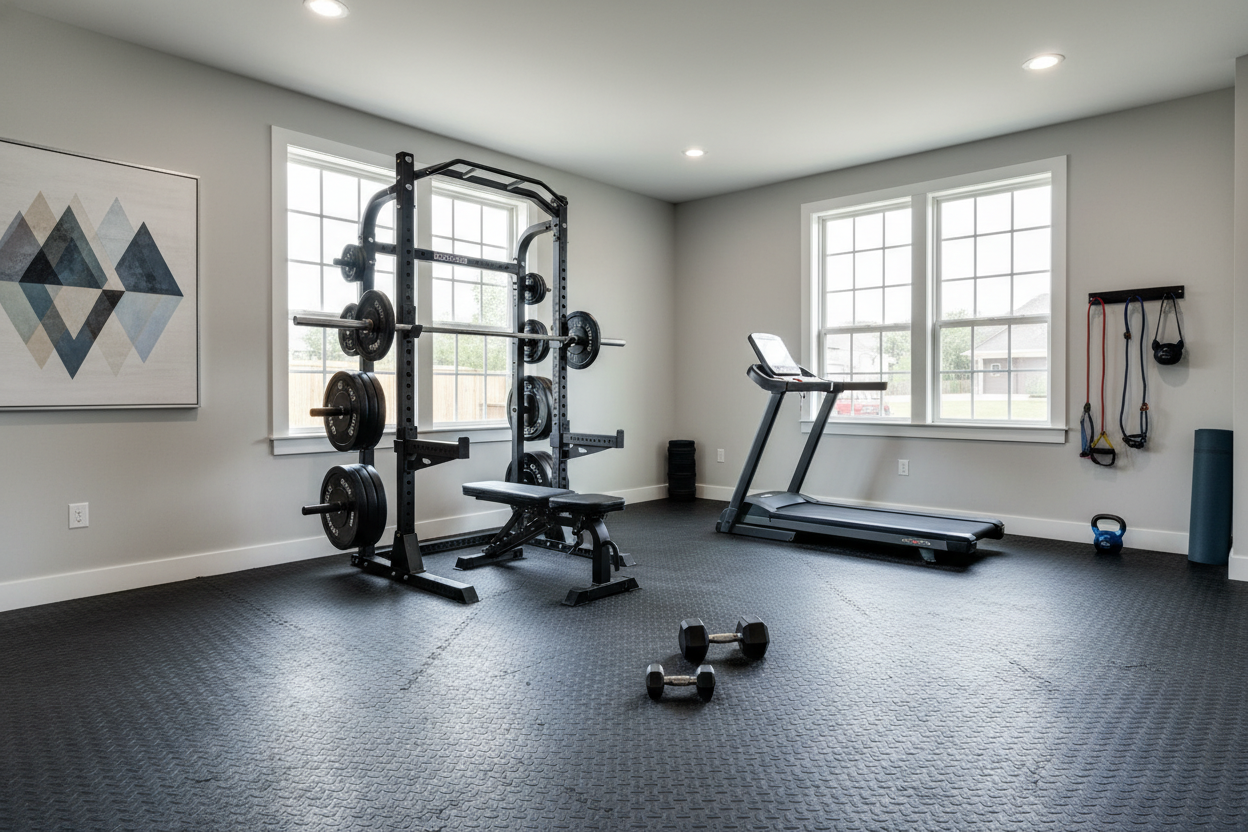
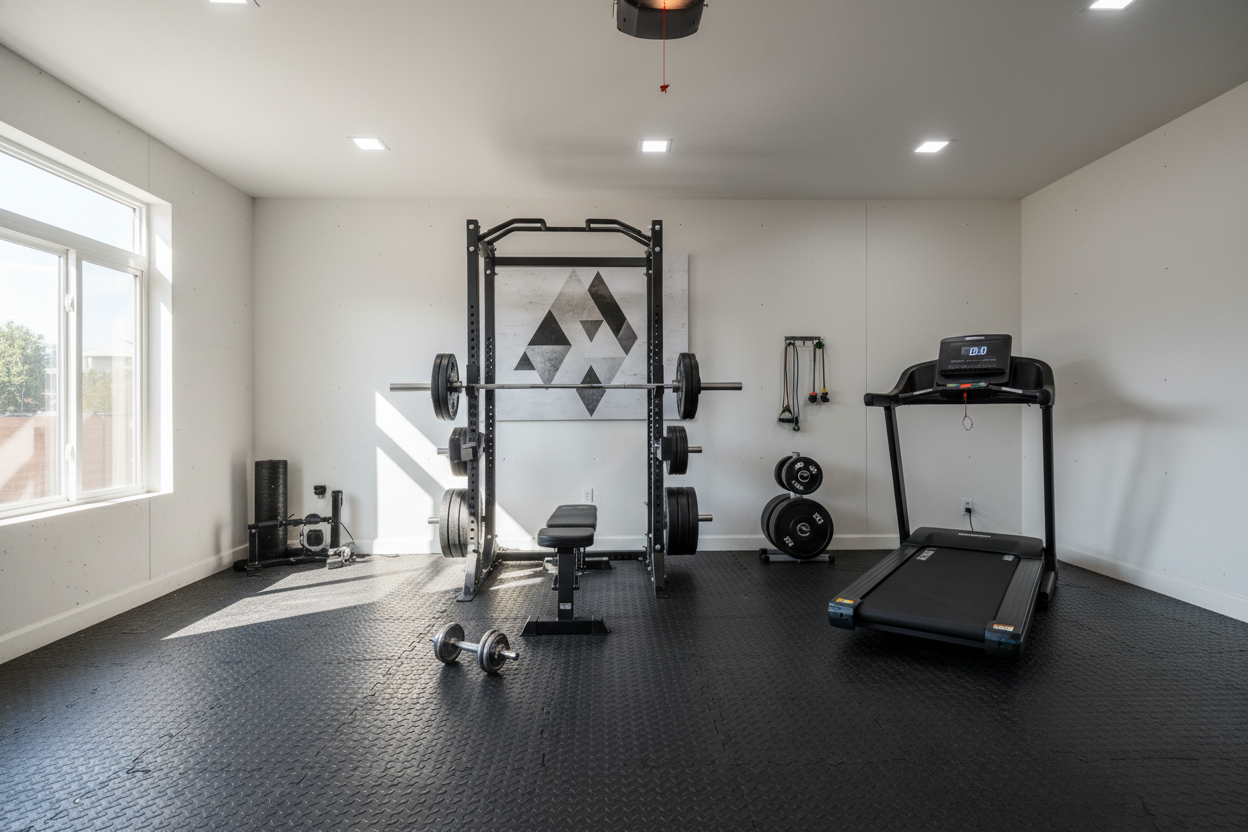
My breaking point came when I tried to fit a commercial gym leg day into a 100-square-foot space. I was tripping over my bench trying to set up Bulgarian split squats with a stack of bumper plates. It was a mess. I realized that my gear was not the limitation—my programming was. I was trying to juggle 12 different accessory movements with a single barbell and a rack.
I decided to stop pretending I was a pro bodybuilder. You do not need a warehouse full of commercial strength equipment to build a massive physique. I stripped everything back to the basics: getting incredibly strong on just a handful of movements. Once I stopped worrying about my 'inner chest' and started worrying about my 5-rep max, my plateau vanished.
The Only Four Movements That Actually Matter
I boiled my entire training philosophy down to four categories: Squat, Hinge, Push, and Pull. If a movement does not fall into one of those buckets, it is probably an accessory that you can live without. Getting strong at these basics is the fastest way to change your body composition. A 405-lb squat does more for your legs than any number of leg extensions ever could.
When it comes to the 'Push' category, I stopped doing five different incline and decline variations. I went back to heavy flat benching and strict overhead presses. Heavy pressing is the foundation of all effective chest workout routines. If you can bench 225 for sets of ten, your chest is going to grow. It is not rocket science; it is just physics and effort.
How to Structure Your Week Without Going Crazy
I now run a simple A/B split that I can finish in under 45 minutes. Workout A is Squat and Pull (like Barbell Rows or Weighted Pull-ups). Workout B is Hinge (Deadlifts or RDLs) and Push (Bench or Overhead Press). I train three days a week—Monday, Wednesday, Friday—alternating between the two. One week is A-B-A, the next is B-A-B.
This structure allows me to hit every muscle group with high frequency and high intensity. Because I only have two main movements per session, I can put 100% of my energy into them. I am not saving anything for the 'finisher' at the end. When I finish my last set of rows, I am done. I go inside, eat, and recover. This is how you actually build strength without burning out.
Tracking Progress When You Train Alone
Put the phone in a drawer. The blue light and the constant pings are the enemies of a good session. I went back to an old-school $2 notebook and a pen. There is something visceral about physically crossing off a successful set that a digital app cannot replicate. It keeps you focused on the numbers that matter rather than the 'social' features of a fitness app.
If you want a structured way to track your weightlifting routines, I highly recommend using printable weight lifting routines that you can clip to a board in your gym. It gives you a clear roadmap for the day. You write down the weight, you do the work, and you move on with your life. No notifications, no distractions, just progress.
Personal Experience: The GHD Mistake
I once spent $600 on a massive Glute Ham Developer because a YouTube video told me it was 'essential' for posterior chain development. It took up a 6-foot footprint in my garage and was a total pain to move. After three months, I realized my hamstrings grew more from simple, heavy Romanian Deadlifts than they ever did on that machine. I sold the GHD for half what I paid and used the space for a better rack. Don't buy specialized machines until you've maxed out what a barbell can do for you.
Frequently Asked Questions
Can I really grow muscle with only four lifts?
Yes. Muscle growth is a response to tension and volume. If you are adding weight to a heavy barbell row and a squat every week, your body has no choice but to grow. Most people lack the discipline to stay on the basics long enough to see them work.
What about my biceps and triceps?
Heavy pulls build biceps. Heavy pushes build triceps. If you have five minutes at the end of your session and you really want a pump, do a few sets of curls. But don't let the 'mirror muscles' distract you from the heavy compound work that actually moves the needle.
Is 45 minutes enough time to train?
If you are truly pushing your limits on a 5x5 or a 3x8 set of heavy squats, you won't want to be in the gym longer than 45 minutes. High intensity requires shorter sessions. If you can train for two hours, you aren't training hard enough.