I Survived a 30 Day High Intensity Workout (And Kept My Gains)
I was staring at my power rack like it was a chore. My squat had stalled, my conditioning was trash, and I was carrying five pounds of 'winter bulk' that refused to leave in June. Usually, I’m the guy arguing that cardio is just a way to lose your strength, but I was gassing out during my warm-up sets. I needed a shock to the system. So, I decided to tackle a 30 day high intensity workout protocol to see if I could sharpen my conditioning without melting my hard-earned muscle into nothingness.
Quick Takeaways
- Daily HIIT is a recipe for injury; you need to cycle intensity and focus on recovery.
- Surface quality is non-negotiable—don't do high-impact moves on bare concrete.
- Weighted movements preserve muscle better than 'air' movements during a challenge.
- Resting heart rate can drop significantly in just four weeks with the right plan.
Why I Traded the Barbell for a Stopwatch
Hitting a lifting plateau is a special kind of hell. You show up, move the same heavy iron, and wait for a PR that never comes because your heart can't keep up with your legs. I realized my work capacity was the bottleneck. I didn't want to become a marathon runner; I wanted to be a lifter who didn't need a five-minute break between sets of five. That is why I committed to a 30 day hiit challenge.
My goal wasn't just to 'burn calories.' I wanted to improve my metabolic conditioning so I could handle more volume back under the bar. Most people treat a hiit challenge as a way to punish themselves for a bad diet. I treated it like a training block. I replaced my accessory work with high-output intervals, keeping the main lifts heavy but brief. It was about finding the sweet spot where the heart rate stays in the red zone without the central nervous system catching fire.
The Dark Side of Doing 30 Days of HIIT
Most viral internet challenges are designed by people who don't actually train in a garage. They tell you to do 30 days of hiit with zero rest. If you try that on bare concrete, your shins will feel like they’re being hit with a ball-peen hammer by day four. The impact of daily burpees, tuck jumps, and mountain climbers is no joke for anyone over 200 pounds. I learned very quickly that my joints were the weakest link in this hiit training 30 days experiment.
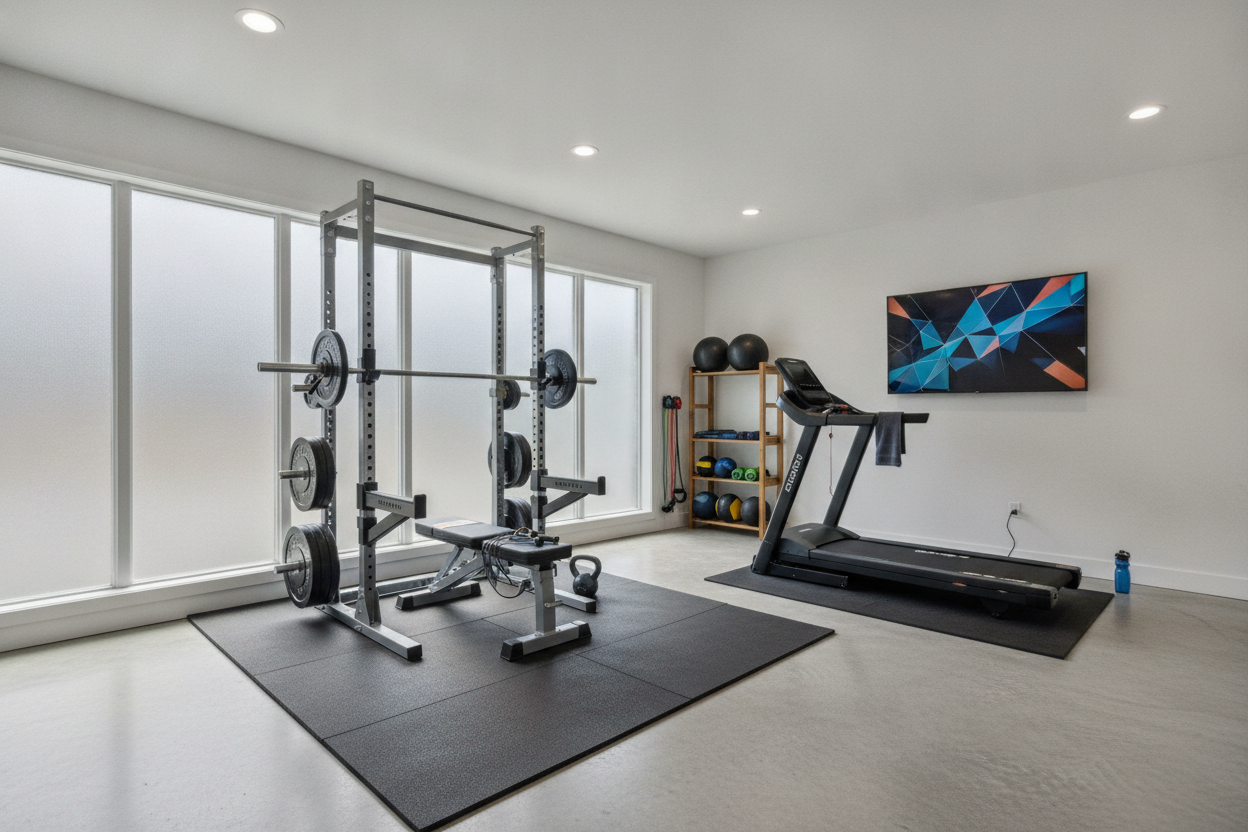
If you are going to commit to hiit challenges, you have to respect the floor. I stopped being cheap and rolled out a 6X8Ft Exercise Mat to save my ankles. It’s thick enough to absorb the shock of a heavy guy doing plyometrics, which is exactly what my patellar tendons needed to survive the volume. Without proper flooring, you aren't getting a better workout; you're just inviting chronic inflammation that will sideline your lifting for months.
How I Modified the Plan to Actually Work
I ignored the generic hiit workout 30 days templates that focus on endless core isolation. Crunches don't get your heart rate to 170 BPM. Instead, I focused on weighted movements—kettlebell swings, dumbbell thrusters, and sandbag cleans. I wanted to keep the tension on the muscle. I also integrated routines like this 30 Minute Kickboxing And Weights Workout because it forced me to move in different planes of motion while providing actual resistance.
A hiit workout 30 day challenge needs variety to prevent overuse injuries. I would do one day of high-impact jumping, followed by a day of weighted combat movements, followed by a day of low-impact rowing intervals. This 'undulating' intensity is the only way to survive a 30-day hiit workout without burning out. By swapping the 'fluff' for movements that actually require strength, I managed to keep my bench and squat numbers stable throughout the entire month.
My 30-Day HIIT Challenge Before and After (The Honest Truth)
Let's talk metrics. I didn't wake up with a shredded six-pack and 4% body fat. That doesn't happen in a month. However, my 30-day hiit challenge before and after results were visible in the data. My resting heart rate dropped from 64 to 58 BPM. My recovery time between heavy sets of squats dropped from three minutes to ninety seconds. I lost about 4.5 pounds, and my waist felt noticeably tighter in my lifting belt.
The biggest surprise of the hiit 30 day challenge was the mental shift. I stopped fearing the 'suck' of high-rep sets. On days when my joints felt particularly beat up, I didn't skip the session; I just pivoted to a lower-impact 30 Min Hiit Abs Workout Challenge to keep the metabolic fire going without the heavy pounding. This flexibility is what allowed me to finish the hiit workout 30-day challenge without a single missed session or a trip to the physical therapist.
How to Build Your Own Month-Long Sprint
If you want to build your own hiit workout plan 30 days out, you have to be your own coach. Don't blindly follow a PDF. Start by picking three 'anchor' days of high intensity and two days of moderate 'active recovery.' Use the other two days for actual rest or very light walking. If you try to go 100% every single day, you will fail by day ten. It is a sprint, but you still have to finish the race.
Invest in the right gear. Beyond the mat, get a decent timer and maybe a pair of adjustable dumbbells so you can scale the weight as you fatigue. If you need inspiration for different routines to plug into your schedule, check out the Workout Hub. It’s a great resource for finding scalable movements that fit into a garage gym setting. Remember, the goal of a 30 day hiit workout isn't to destroy yourself—it's to build a bigger engine so you can lift heavier and live longer.
FAQs
Will I lose muscle during 30 days of HIIT?
Not if you keep your protein intake high and include weighted movements. If you only do bodyweight cardio and starve yourself, yes, you'll lose muscle. If you keep swinging heavy bells and hitting your macros, you'll likely just look more defined.
Can I do HIIT every single day?
You can, but you shouldn't. True high intensity requires recovery. If you can do it every day, you aren't actually going 'high intensity.' Aim for 3-4 true redline sessions and use the other days for lower-impact movement.
What equipment do I absolutely need?
At a minimum, a shock-absorbing mat and a timer. A single kettlebell or a pair of dumbbells will make the 30 day challenge significantly more effective for muscle retention compared to bodyweight alone.