I Survived 30 Days on This Arm and Shoulder Workout No Equipment Plan
I recently hit a wall where my local commercial gym decided to hike membership fees by 30% while three out of the four cable stations were held together by duct tape. I decided to walk. For the next 30 days, I committed to a brutal arm and shoulder workout no equipment plan in my living room to see if I could actually keep my size without a dumbbell rack.
Most people think bodyweight training is just for cardio bunnies or people who enjoy doing 500 air squats. They’re wrong. If you understand leverage and mechanical disadvantage, you can wreck your triceps and delts just as effectively as a heavy set of overhead presses.
Quick Takeaways
- Standard push-ups are for endurance; mechanical drop-sets are for growth.
- Shifting from a pike position to a flat position mid-set targets different muscle fibers instantly.
- Floor-based skull crushers isolate the triceps better than most cheap gym machines.
- A dense mat is mandatory unless you want your wrist bones grinding against concrete.
The Problem With Most Bodyweight Upper Body Plans
The biggest issue with the average arm and shoulder workout at home no equipment routine is that it’s too easy. You do 20 push-ups, your chest gets a little warm, and you call it a day. That isn't training; that's a warm-up. To trigger hypertrophy, you need mechanical tension and metabolic stress.
When you do endless standard push-ups, you eventually hit a point of 'sloppy endurance.' Your form breaks down, your lower back sags, and you’re just moving through space without actually challenging the muscle. Your deltoids and triceps are small muscle groups that need focused, high-intensity stimulus to grow. Doing 100 reps of a mediocre exercise won't give you the capped shoulder look you’re after.
The 'Mechanical Drop-Set' Solution for Delts and Tris
In a traditional gym, a drop-set means finishing a set with 50-lb dumbbells and immediately grabbing the 30s to keep going. At home, you are the weight. To 'drop' the weight, you change your body's leverage. This is how you structure a complete arm and shoulder workout at home for maximum metabolic stress.
By shifting your center of gravity mid-set, you go from a high-difficulty angle to a lower-difficulty angle. This allows you to push past the point where you would normally stop. It’s brutal because it keeps the muscle under tension for 60 to 90 seconds. You’re essentially running down the dumbbell rack using nothing but gravity and your own stubbornness.
The Brutal Arm and Shoulder Workout at Home No Equipment Routine
This isn't a 'circuit' where you rest for two minutes between moves. This is a high-density protocol. You will perform three giant sets of the movements below, resting only 60 seconds between rounds. The goal is total muscular failure on every single set.
- Movement 1: Pike-to-Flat Press (8-12 Pike reps, then Max Flat reps)
- Movement 2: Ground-Based Skull Crushers (12-15 reps)
- Movement 3: Diamond Push-up ISO-hold (Hold for 30 seconds)
Movement 1: The Pike-to-Flat Press Transition
Start in a pike position—butt high in the air, hands shoulder-width apart, looking back at your feet. This puts the load directly on your front and lateral deltoids, mimicking a heavy overhead press. Lower your head toward the floor between your hands. When you can’t do another clean rep, immediately drop your hips into a standard push-up position.
Don't rest. Go straight into narrow-grip push-ups. Your shoulders are already fried, so your triceps have to take over the heavy lifting. This transition is the 'mechanical drop' that forces your triceps to work harder than they ever would in a standard set of 20 push-ups. I found that by day 15, my triceps had a noticeable 'pop' that I usually only get from heavy close-grip benching.
Movement 2: Ground-Based Bodyweight Skull Crushers
Forget the EZ-bar. Get into a plank position but with your hands flat on the floor and elbows tucked. Press through your palms to straighten your arms, lifting your elbows off the ground. This is pure tricep isolation. There is no chest involvement here if you do it right.
The key is to keep your core locked. If you find yourself 'worming' your way up, you’re cheating. If the full version is too hard, drop to your knees, but keep that hinge at the elbow. This movement targets the long head of the tricep, which is the key to filling out your shirt sleeves.
Why Hard Floors Are Wrecking Your Wrists
I tried doing this on my garage floor for the first week. Big mistake. When you’re doing pike presses and floor skull crushers, you’re putting a massive amount of concentrated pressure through your carpals. Hardwood or concrete will grind those joints and kill your force output because your brain will literally shut down the muscle to protect the joint.
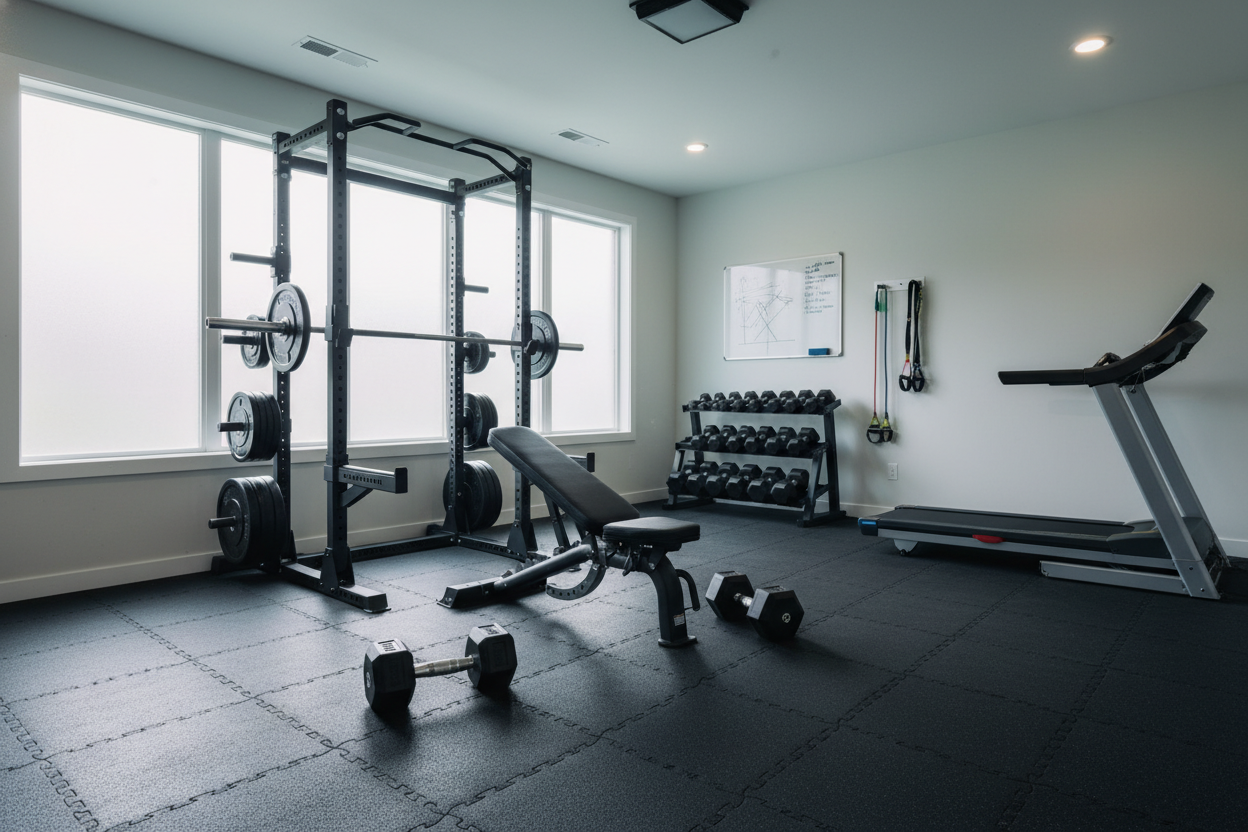
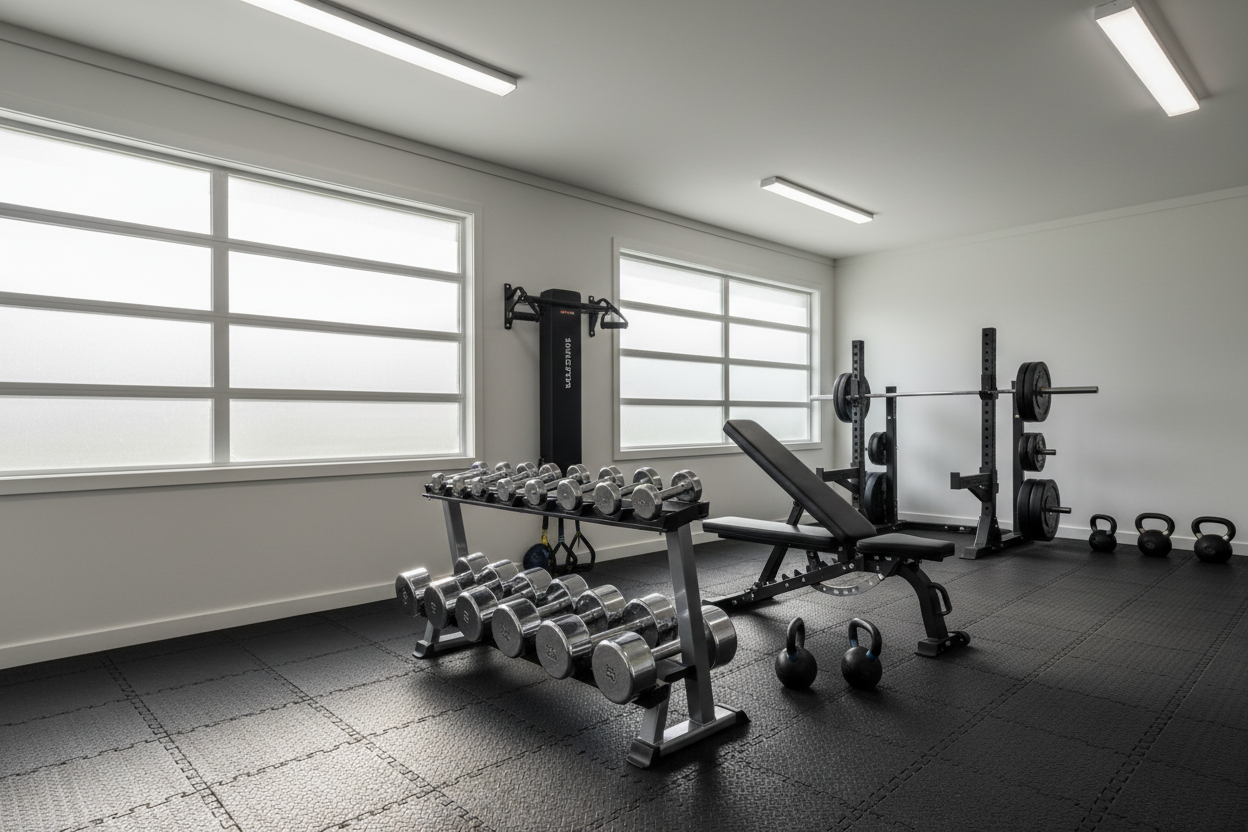
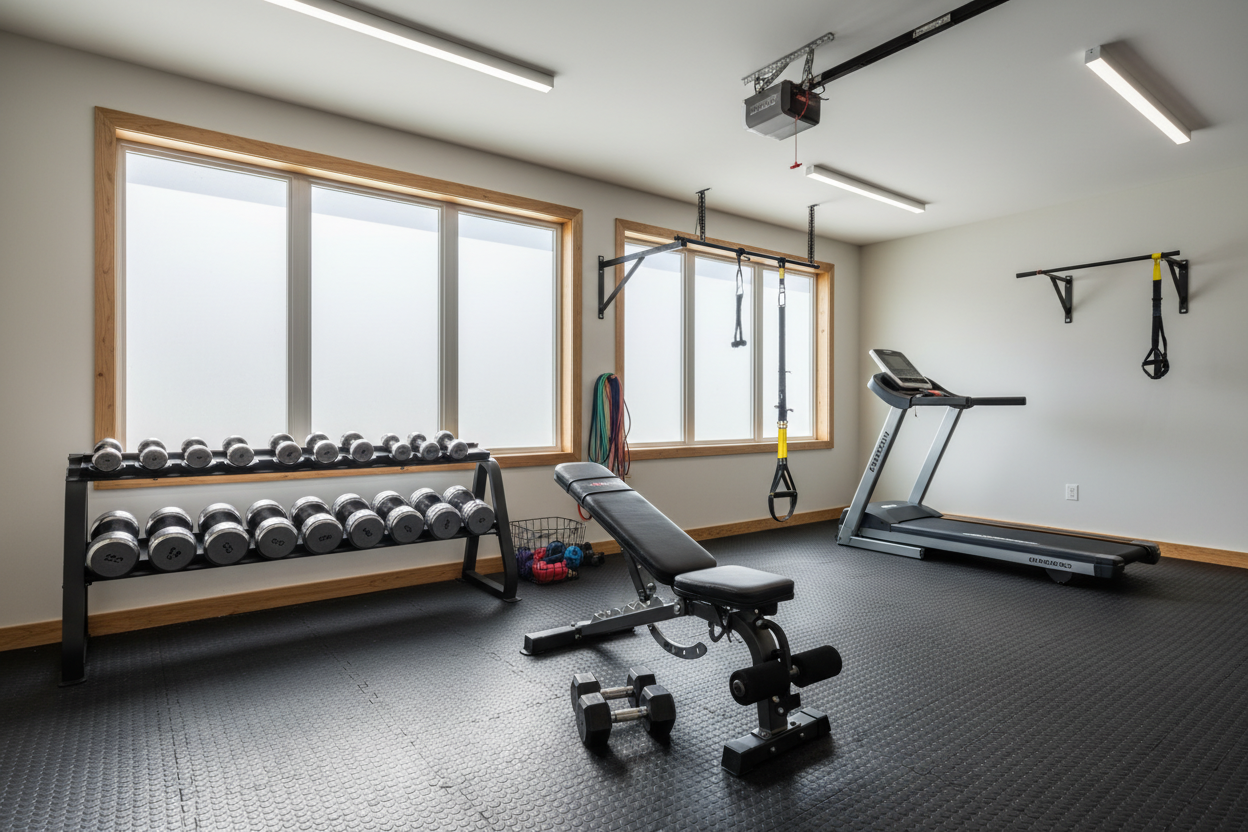
You need a dense gym flooring mat to cushion the palms. A standard thin yoga mat won't cut it—it’ll slide and compress too much. You want something with enough density to support your weight without bottoming out. Once I switched to a thicker surface, my rep counts on the skull crushers went up by 20% simply because I wasn't in pain.
How to Progress When Bodyweight Gets Too Easy
Eventually, your body adapts. To keep growing, you have to make the movements harder without adding plates. Use a 3-second eccentric (lowering) phase on every rep. The slow negative creates more micro-tears in the muscle fibers, which leads to more growth during recovery. You can also add a 2-second 'dead-stop' pause at the bottom of your pike presses to eliminate momentum.
Finally, remember that a big front side needs a big back side. Once you master this, you should pair it with a back and shoulder workout at home no weights to ensure you aren't developing that 'hunched' caveman posture. Balancing your push and pull volume is the only way to build a 3D physique that actually looks athletic.
Personal Experience: My 30-Day Reality Check
I’ll be honest: day four was miserable. My triceps felt like they were vibrating. I actually missed the feeling of a barbell because bodyweight failure feels 'sharper' and more metabolic. However, by the end of the month, my overhead stability improved significantly. I didn't lose any mass, and my shoulder definition actually improved because of the high-intensity techniques. My biggest mistake was skipping the mat for the first week; my wrists took another ten days to stop clicking.
FAQ
Can I do this workout every day?
No. Your delts and tris are small, but they still need 48 hours to recover. Run this 3 times a week max. Anything more is just junk volume that will lead to tendonitis.
What if I can't do a single pike press?
Start with your knees on a chair or the couch. This reduces the percentage of bodyweight you're lifting. As you get stronger, move to your toes on the floor, then eventually elevate your feet on a bench.
How long should this workout take?
If you're doing it right, you should be done in 20 to 25 minutes. If you're still going after 45 minutes, you aren't pushing close enough to failure on your sets.