I Ruined My Gains Picking the Wrong Intermediate Exercise Program
I remember the exact Tuesday my linear progression died. For six months, I’d been adding five pounds to the bar every session like clockwork, feeling like an absolute god of the garage gym. Then, I hit 225 lbs on the bench and 315 lbs on the squat, and the wall didn't just stop me—it flattened me. My joints hurt, my motivation tanked, and I spent three weeks failing reps I’d crushed the month before.
The mistake wasn't my effort; it was my refusal to accept that I was no longer a beginner. Choosing the right intermediate exercise program is the most critical pivot you’ll make in your lifting life. If you keep trying to force-feed a novice routine, you’ll burn out. If you jump into a pro-level bodybuilding split, you’ll probably get smaller because you can't recover from the volume. You need a middle ground that respects your recovery while pushing your limits.
- Stop Linear Progression: You can no longer add weight every single session; you need weekly or monthly cycles.
- Manage Fatigue: Intermediate training is about balancing intensity so you don't fry your nervous system by Wednesday.
- Focus on Weak Points: This is the phase where you stop just 'lifting' and start 'training' specific muscle groups.
- Stick to the Basics: You don't need a 20-piece cable machine; a solid barbell and rack still do 90% of the work.
The Day the Beginner Gains Finally Stop
Hitting a plateau is a rite of passage. In those first few months, your body is mostly learning how to use the muscles it already has—it's a neurological adaptation. But eventually, that 'newbie' efficiency peaks. You can't just walk into the gym and expect to set a PR every Monday, Wednesday, and Friday anymore. This realization is usually followed by a week of ego-lifting, where you try to grind through a weight you clearly aren't ready for, leading to a minor shoulder tweak or a back strain.
An intermediate gym routine accepts that progress is now measured in months, not days. If you're still trying to add five pounds a week to your overhead press after a year of training, you're just spinning your wheels. The stress required to trigger new muscle growth is now so high that your body needs more than 48 hours to recover. This is where the math changes, and your workout schedule for intermediate lifting needs to reflect that reality.
Why Jumping Straight to a Pro Split is a Massive Mistake
When the basic 5x5 stops working, most people make the fatal error of downloading a 6-day 'Pro Bodybuilding Split' they found on a forum. They go from squatting three times a week to doing 'Leg Day' once a week with 30 sets of isolation movements. This is a recipe for disaster. You don't have the work capacity of a professional, and you likely don't have their 'recovery aids' either. You need a workout plan for intermediate lifters that keeps frequency high but manages the total volume of each session.
Instead of chasing a massive pump until you can't lift your arms, you should browse our workout hub to find routines that prioritize compound movements with strategic accessory work. An intermediate weightlifting routine should be about 'purposeful volume.' Every set of curls or lateral raises should serve a specific goal—like stabilizing your bench or filling out your sleeves—rather than just being filler because you saw a YouTuber do it.
The Blueprint for a Realistic Intermediate Exercise Program
A solid intermediate weight training program usually moves away from static sets and reps. You’ll start seeing terms like 'undulating periodization' or 'wave loading.' This just means you vary the intensity throughout the week. You might have a 'Heavy' day where you work in the 3-5 rep range, and a 'Dynamic' or 'Hypertrophy' day where you stick to 8-12 reps. This keeps your body guessing and, more importantly, keeps your joints from taking a beating every single time you touch the bar.
You also need to start addressing your specific weaknesses. If your deadlift stalls because you can't break the bar off the floor, your intermediate lifting program needs to include deficit deadlifts or heavy rows. If you're shaky at the top of a bench press, you need tricep work. The 'one size fits all' approach is dead. You are now the architect of your own progress, and your intermediate gym workout plan should be tailored to your specific levers and limb lengths.
Swapping Linear Math for Real Fatigue Management
Fatigue management is the 'secret sauce' of an intermediate workout routine. In the beginning, you could recover from anything. Now, a true 1-rep max attempt might take you ten days to fully recover from. An intermediate workout schedule uses 'heavy' and 'light' days to keep you moving without crashing. For example, if you squat heavy on Monday, your Wednesday session might involve light front squats or even just some accessory leg work. This allows blood flow and movement without adding more structural stress to your spine.
Adding Accessory Volume Without Trashing Your Joints
This is the stage where you finally get to do the 'fun' stuff—the curls, the face pulls, and the calf raises. But don't get carried away. Accessory work should support your main lifts, not replace them. If your goal is aesthetic, an intermediate shoulder workout can be added once or twice a week to build that '3D' look, but it shouldn't come at the expense of your heavy pressing strength. Use isolation moves to target the muscles that the big compound lifts miss.
Equipment Reality Check: What You Actually Need at Home
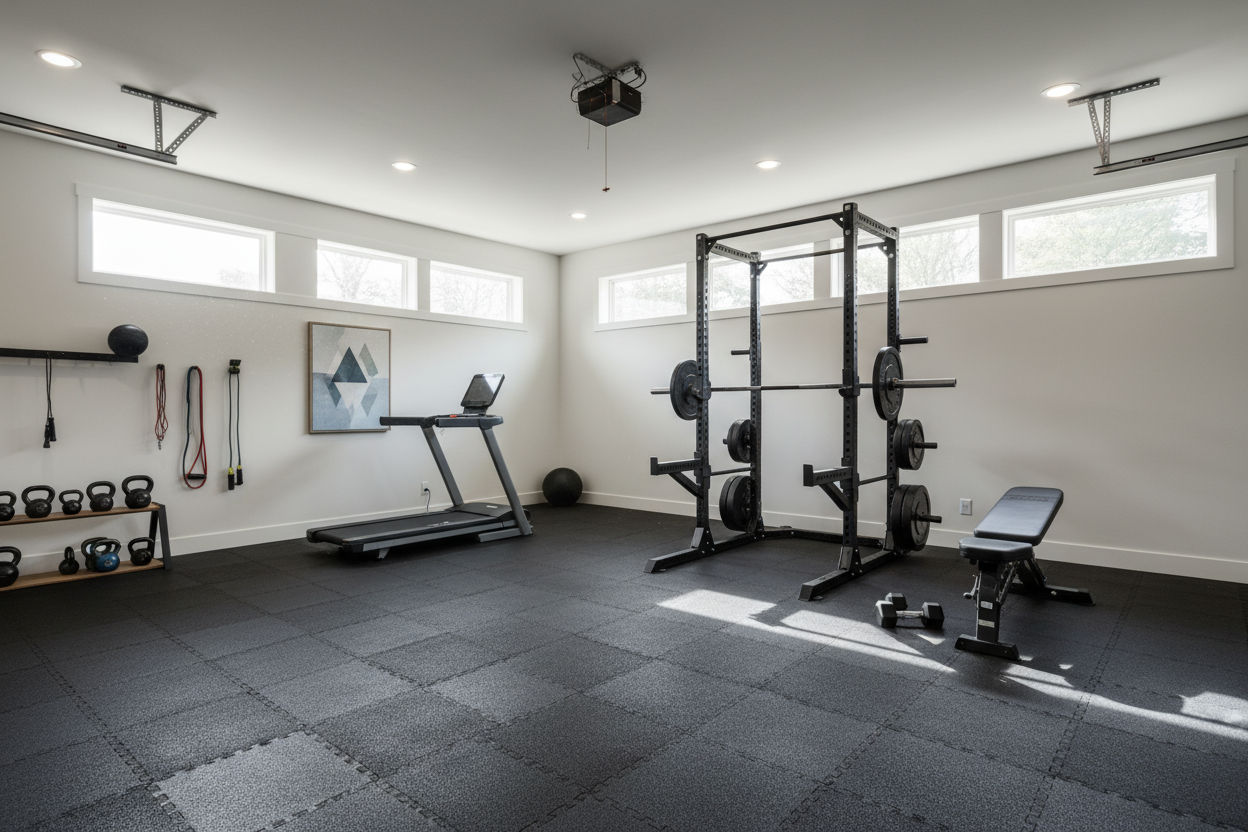
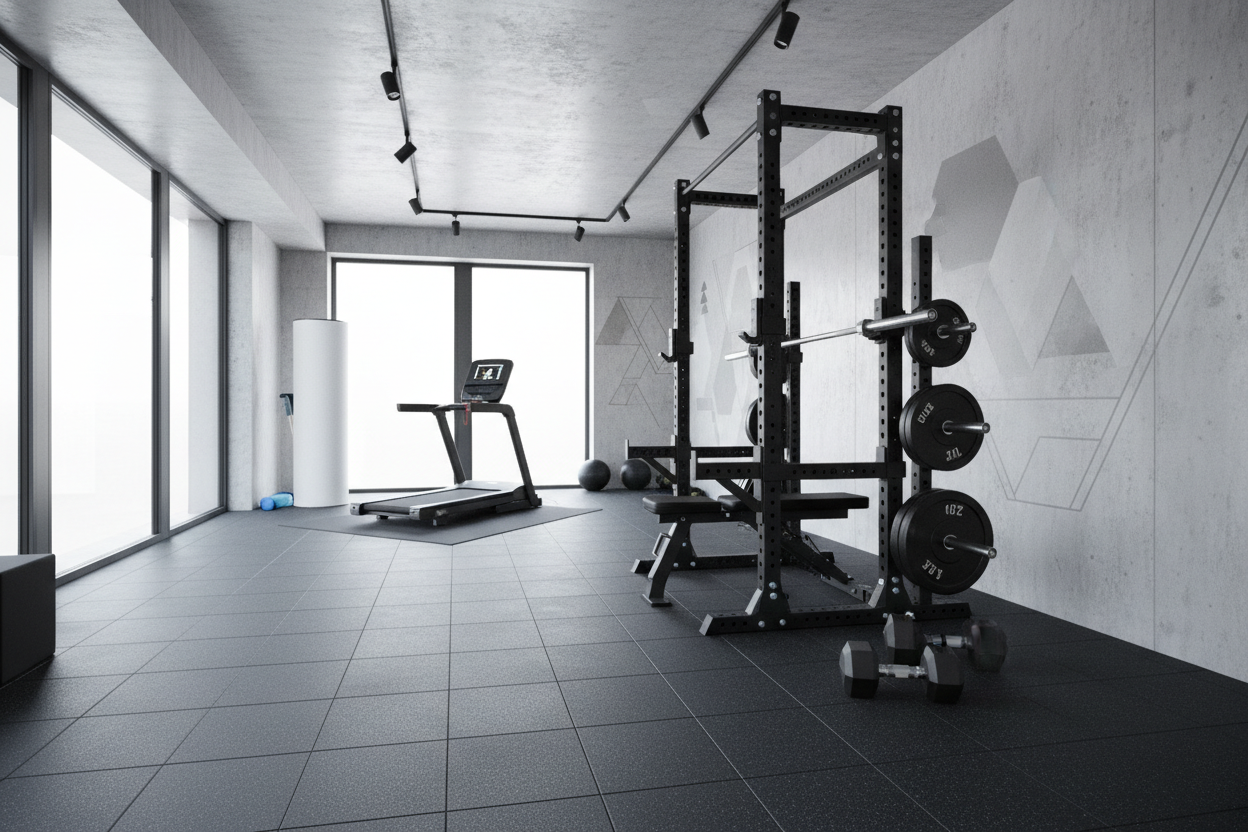
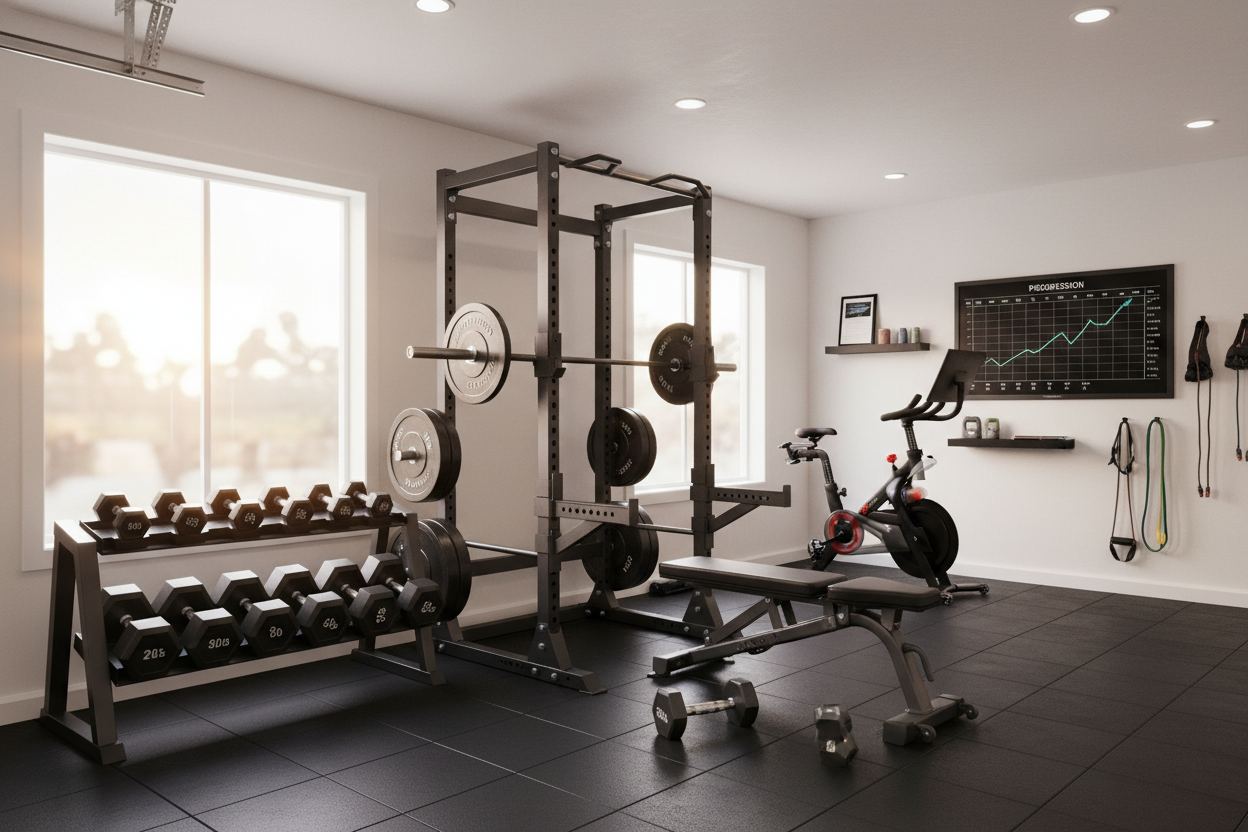
You don't need a commercial gym membership to run a high-level bodybuilding program intermediate style. I’ve built a 400-lb squat in a garage with a basic power rack and a bar that had seen better days. The key is stability. As the weights get heavier in an intermediate strength training program, the safety of your environment matters. You need a level surface where you won't slip during a heavy set of rows or cleans.
I highly recommend investing in high-quality gym flooring for home workout setups. Dropping 100-lb dumbbells on bare concrete is a great way to crack your foundation and annoy your neighbors. Beyond flooring, focus on a versatile bench and a barbell with decent knurling. If the bar is sliding out of your hands because the grip is worn down, you aren't training your back—you're just training your grip, and poorly at that.
Stop Rushing to the 'Advanced' Label
Everyone wants to call themselves an 'advanced' lifter, but the truth is, you can stay on an intermediate workout plan for years. In fact, most of the strongest people I know still use intermediate principles. They just do them with more weight and better form. There is no prize for moving to a complex, once-a-month peaking block if you can still make progress with a simple weekly wave. Milk every ounce of progress out of your intermediate weightlifting program before you even think about adding more complexity.
FAQ
How long does the intermediate phase last?
For most people, it lasts between two and five years. As long as you are still adding weight to the bar or increasing your total volume every few weeks, you are still in the intermediate phase. Don't rush to change what is working.
Do I need to change my diet for an intermediate program?
Yes. As the training stress increases, your caloric and protein needs usually go up. You can't 'under-eat' your way through a high-volume intermediate routine without eventually hitting a wall or getting injured.
Can I do an intermediate workout at home?
Absolutely. A power rack, a barbell, and a bench are all you need for 95% of the most effective intermediate programs. You can use bands or adjustable dumbbells to handle the accessory work that usually requires cables.