I Refuse to Write a Beginner Weight Training Programme With 10 Exercises
I remember staring at a 12-page PDF I bought from some shredded guy on Instagram years ago. It had three different types of bicep curls and four variations of lateral raises. I was three weeks into my beginner weight training programme and I already hated going to my garage. It felt like a chore, not a training session. I was spending 90 minutes a day chasing a 'pump' that disappeared the second I hopped in the shower, while my actual strength numbers stayed stagnant.
We have been lied to by the fitness industry. They want you to believe that more is better because it is easier to sell a complex, 20-exercise 'shred' plan than a boring, effective one. But if you are just starting out, complexity is the enemy of progress. You do not need variety; you need mastery. You need to stop worrying about your rear delts and start worrying about how much weight is on the bar when you squat.
Quick Takeaways
- Novice lifters see the best results from a high frequency of a few compound movements.
- Junk volume leads to central nervous system fatigue, not more muscle.
- Mastering the push, pull, squat, and hinge patterns is non-negotiable.
- A 3-day full-body split is the gold standard for long-term consistency.
Why You Are Doing Way Too Many Exercises
The 'optimal' programming trap is real. You see professional bodybuilders doing 6 exercises for chest alone and think you need to follow suit. Here is the reality: they have the work capacity and recovery profile (often chemically assisted) to handle that volume. You do not. When you are a beginner, every single set of a heavy compound movement is a massive stimulus. Adding five isolation moves on top of that doesn't double your gains; it just doubles your recovery time.
I see it every week in home gym forums. People post these massive spreadsheets with 15 exercises per session. By the time they get to exercise number eight, their intensity is in the gutter. They are just moving weights for the sake of checking a box. This 'junk volume' is the fastest way to stall out before you even get your first 225-lb bench press. You are better off doing three sets of heavy rows with 100% intensity than twelve sets of various cable movements at 50% intensity.
Focus on the 'Big Rocks.' If you hammer the foundational movements, the small muscles will grow as a byproduct. Your biceps will grow from heavy rows. Your triceps will grow from heavy pressing. Save the fancy isolation work for when you actually have enough muscle mass to isolate. Right now, you just need to build the base.
Your Central Nervous System Is Begging for Mercy
Strength is as much a neurological skill as it is a physical one. When you are learning to squat, your brain is trying to figure out how to coordinate dozens of muscles simultaneously. If you throw ten different exercises at your body in a single session, your Central Nervous System (CNS) gets fried. You aren't just taxing your muscles; you are taxing your brain's ability to fire those muscles efficiently.
I have seen guys try to run high-volume bodybuilding splits and wonder why they feel like they got hit by a truck every morning. It is because their nervous system never gets a break. When you reach that point of total exhaustion, form breaks down. And when form breaks down, injury follows. I have seen many novices retreat to Weight Lifting Machines simply because their nervous systems were too fried from over-programming free weights to even balance a barbell anymore.
Machines have their place, but as a beginner, you want to build the stabilizing muscles that free weights require. If you are too tired to stabilize a dumbbell, you aren't training effectively—you are just surviving. A minimalist program allows your CNS to recover between sessions, meaning you can show up to every workout ready to add 5 lbs to the bar. That linear progression is the 'secret sauce' of beginner gains, and you kill it the moment you over-complicate your routine.
The Only 4 Movement Patterns You Should Actually Care About
Stop thinking about 'arm day' or 'leg day.' Think about movement patterns. Human movement boils down to four main categories: the Push (bench press, overhead press), the Pull (rows, pull-ups), the Squat (back squat, goblet squat), and the Hinge (deadlift, RDL). If your program covers these four, you are hitting every major muscle group in your body.
Getting brutally strong at these four patterns will do more for your physique than any 10-exercise circuit ever could. For example, a heavy horizontal push and pull session is the foundation of a thick torso. I always recommend a solid Gxmmat Adjustable Weight Bench as the cornerstone of this. You need a stable surface that won't wobble when you start moving real weight. If you are benching on a flimsy piece of junk, you'll subconsciously hold back to avoid tipping over.
Mastering the hinge is the most common hurdle. Most people want to skip deadlifts because they are hard. They would rather do five different leg curl variations. Don't be that person. A heavy hinge builds the entire posterior chain—your glutes, hamstrings, and lower back. These are the muscles that actually make you look like you lift. Pick one exercise for each pattern, do it three times a week, and watch what happens to your strength levels over 90 days.
How to Strip Down Your Routine to the Bare Minimum
A minimalist routine isn't about doing less work; it is about doing more of the work that matters. A classic 3-day full-body split is perfect. Monday, Wednesday, Friday. You show up, you hit your four patterns, and you leave. No fluff, no 'burnout' sets, just heavy, quality reps. This frequency allows you to practice the movements often enough to get good at them quickly.
Before you go out and buy a bunch of specialized equipment for every body part, you need to understand that the routine dictates the gear, not the other way around. I highly suggest reading up on a proper weight training for beginners program before you start filling your cart. Most people buy a cable crossover machine before they even own a barbell, which is a massive mistake.
Your workout should look something like this: Squat 3x5, Bench Press 3x5, Row 3x5, and then a Hinge or Overhead Press. That is it. If you do that with high intensity and add weight every week, you will grow. If you find yourself finishing in 40 minutes and feeling like you need more, you aren't lifting heavy enough. The goal is to make those few sets so demanding that you couldn't possibly imagine doing 6 more exercises afterward.
What Gear You Need to Run a Minimalist Setup
You don't need a commercial gym membership to get strong. In fact, most commercial gyms are designed to keep you on machines so they don't have to teach you how to use a rack. For a home setup, the bare minimum is a barbell, some plates, and a bench. But the big question always comes up: Do You Need a Rack for a Beginner Weight Training Routine?
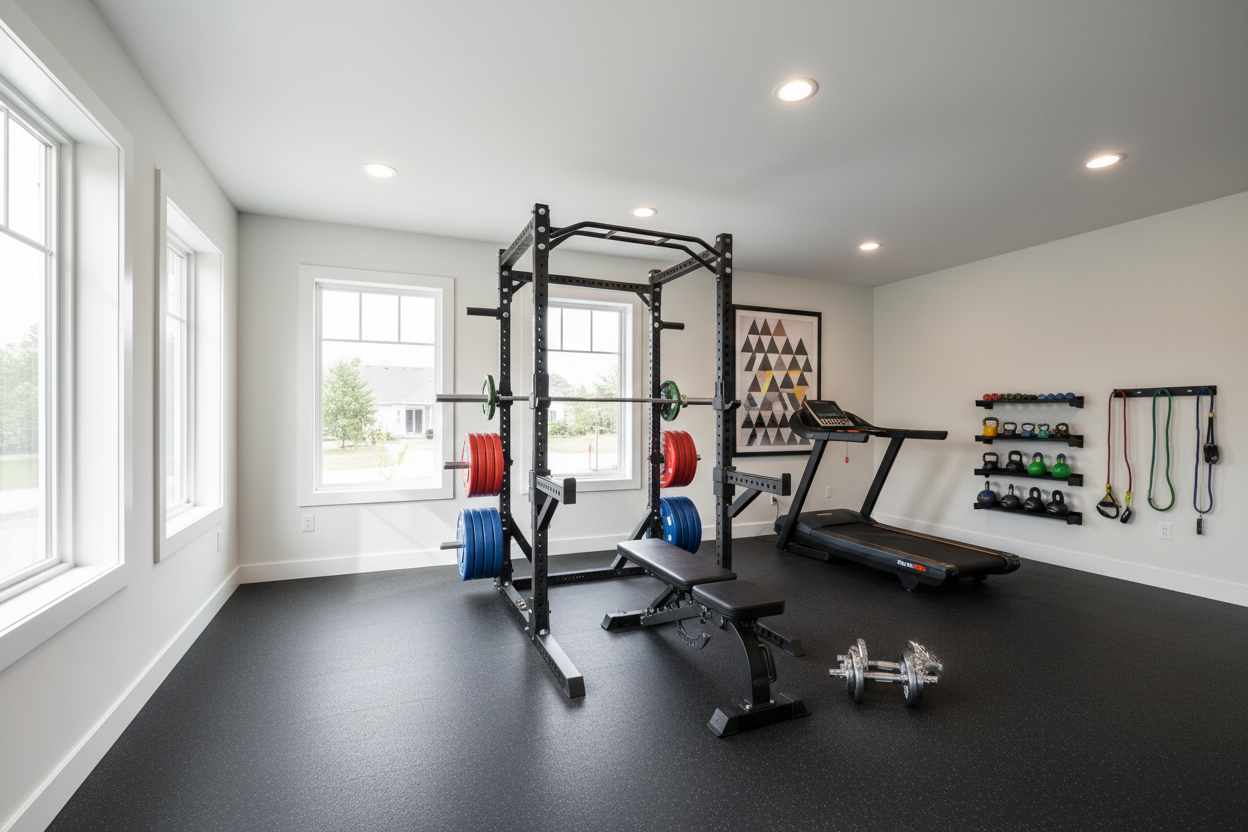
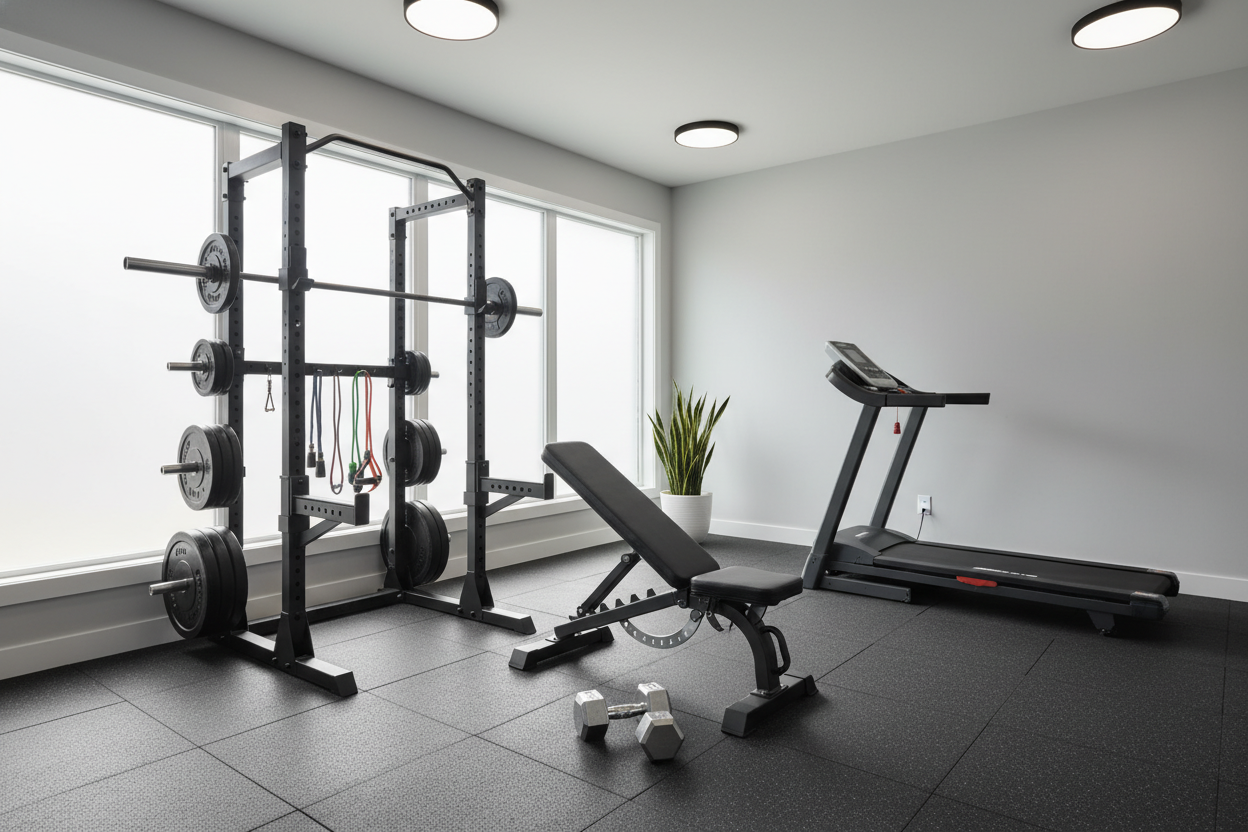
Technically, you can get by with floor presses and goblet squats for a few weeks, but you will quickly outgrow that. If you want to squat and press safely, a rack is mandatory. It is the insurance policy for your garage floor and your spine. If you are serious about sticking to the four main movement patterns long-term, investing in something like the Gxmmat X6 Power Rack Weight Bench Package is a smart move. It gives you the rack, the bench, and the safety spotting arms in one go.
I've wasted a lot of money on 'gadgets'—ab rollers, forearm trainers, specialized grip handles. They all end up in a box in the corner of my gym. The gear I use every single session is my rack, my bar, and my bench. Keep your equipment as minimalist as your programming. Spend your money on high-quality basics that have a high weight capacity. A bar that bends with 200 lbs on it is a liability. Buy once, cry once, and then get to work.
My Biggest Programming Mistake
When I started, I thought I was the exception to the rule. I tried to run a 6-day 'Pro' split I found online. I was doing 25 sets per workout. Within a month, my elbows were screaming with tendonitis and I was so tired I was falling asleep at my desk by 2 PM. I wasn't getting stronger; I was just getting better at being exhausted. I finally swallowed my pride, cut my exercises down to four main moves, and trained three days a week. My bench press jumped 30 lbs in a month because I was finally recovered enough to actually push hard. Don't repeat my mistake—more is just more, it isn't better.
Frequently Asked Questions
Can I add bicep curls to a minimalist program?
Sure, but do them at the very end. If curls are taking energy away from your rows or pull-ups, you are doing it wrong. Think of isolation work as the 'dessert' after the main course of compound lifts.
How long should I stay on a beginner program?
Until you stop making progress. If you can still add 5 lbs to the bar every week or two, you are still a beginner. Don't switch to an advanced 'periodized' plan just because you've been lifting for six months. Milk those easy gains for as long as possible.
Is 3 days a week really enough to build muscle?
Yes. Muscle grows while you recover, not while you are in the gym. For a novice, 48 hours of rest between full-body sessions is usually the 'sweet spot' for protein synthesis and CNS recovery.