I Mapped the Sweet Spot for Every Gym Products Price
I spent three hours last Tuesday scrolling through equipment sites, watching the same 11-gauge steel power rack fluctuate by five hundred dollars depending on the logo slapped on the uprights. It is enough to make you want to quit and join the local big-box gym, until you remember the smell of their locker rooms. Finding the right gym products price is not about hunting for the cheapest tag; it is about knowing where the manufacturer stopped spending money on safety and started spending it on their marketing budget.
Quick Takeaways
- Racks: $400–$800 is the sweet spot for 11-gauge steel. Anything less is a safety risk; anything more is usually just fancy paint.
- Barbells: Never spend under $200. Your wrists and the floor will thank you.
- Weight Plates: Cast iron is cast iron. Unless you are an Olympic lifter, the budget stuff weighs the same as the premium stuff.
- Cardio: Buy used or don't buy at all. The depreciation on treadmills is worse than a luxury sedan.
Why We Keep Guessing at the Value of Bent Steel
Home gym builders get paralyzed because the gap between basic equipments at gym and high-end boutique gear is massive. You see a rack for $250 on a flash-sale site and a similar-looking one for $1,200 from a name brand. It is easy to assume the expensive one is a rip-off, or that the cheap one will collapse under a heavy squat. Usually, the truth is buried in the steel thickness and the hole spacing.
Most folks looking for equipments gym setups forget that 'commercial grade' is often a marketing buzzword used to justify a 40% markup. I have seen 14-gauge 'pro' racks that wobble with 225 pounds on the bar. Real value is found when you stop looking at the brand and start looking at the shipping weight and the steel specs. If a company hides their steel gauge, run away.
The Fine Line Between Safety and Luxury
There is a baseline cost for structural integrity that you simply cannot bypass. When you are looking at this guide to gym equipment, you will notice that different fitness machine types have different failure points. A cable crossover can be a bit 'budget' and still function, but a squat stand cannot.
Luxury in the gym world looks like stainless steel finishes, laser-cut numbering on every hole, and custom colors. These are nice to have, but they do nothing for your deadlift. The sweet spot for a gym fitness machine is where the bearings are smooth and the frame is stable, but the finish is just a standard powder coat. You are paying for the function, not the furniture-grade aesthetics.
When You Need to Pay Up for a Gym Apparatus
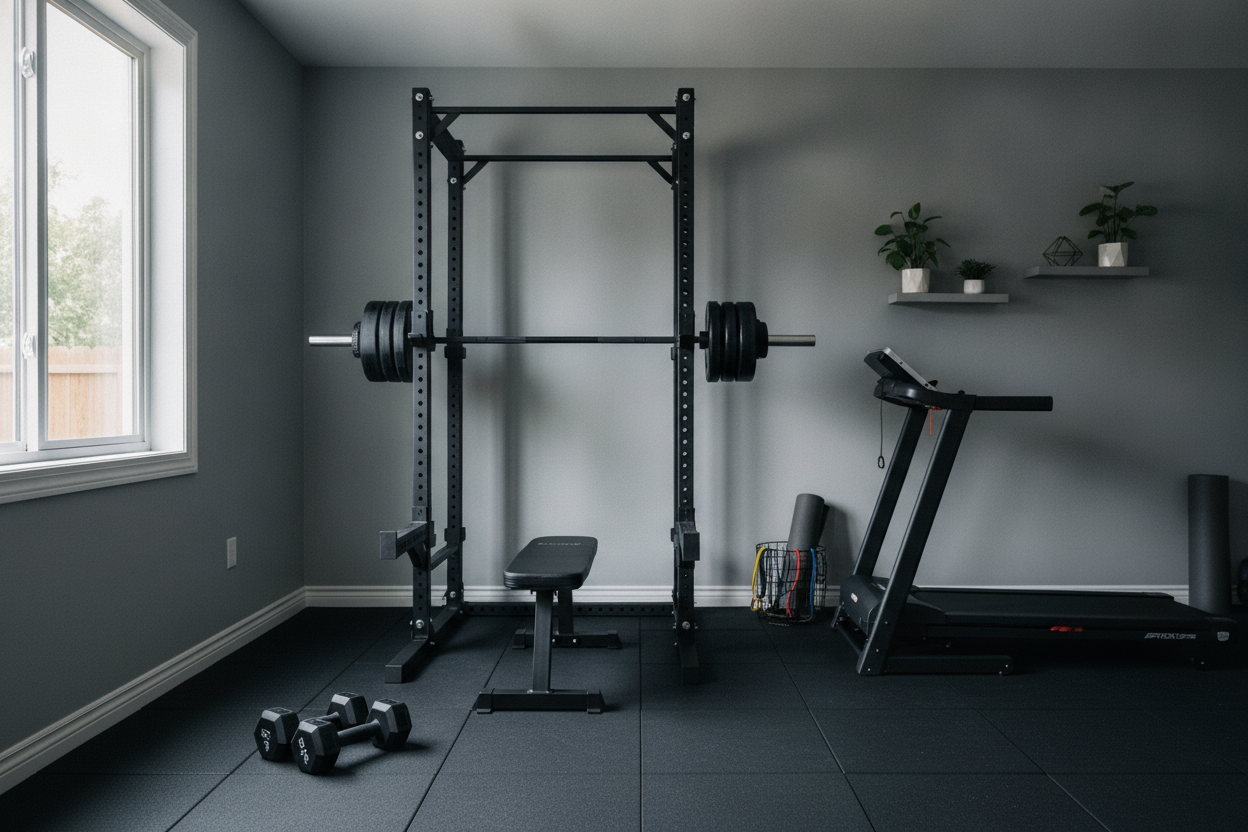
Do not cheap out on anything that holds weight over your face. This includes your power rack, your bench, and your barbell. A budget gym apparatus like a $100 flat bench often uses thin plywood under the vinyl that will crack the moment you try to hit a PR. I look for benches with a minimum 800-lb capacity and racks with at least 2x3 inch tubing.
For barbells, the 'sweet spot' is usually around $250. This gets you a 190,000 PSI tensile strength bar with decent knurling. If you go cheaper, the bar will likely permanently bend after a few heavy sessions. Paying more usually just gets you a different coating like Cerakote or stainless steel—great for rust prevention, but it won't make the bar stronger.
Where You Can Skimp on a Gym Fitness Machine
You do not need to spend $1,000 on a cable tower to get a good pump. A simple plate-loaded pulley system often feels identical to the fitness center equipment you find in high-end clubs. The same goes for weight plates. A 45-lb iron plate from a garage sale weighs 45 lbs (give or take a few ounces) just like a $200 calibrated plate.
Flooring is the biggest area where people overspend. You do not need premium branded rubber tiles that cost $10 per square foot. A high-quality gym flooring for home workout provides the same impact protection and noise dampening for a fraction of the cost. If it covers the floor and stops your concrete from cracking, it has done its job.
The Hidden Tax on the Latest Gym Equipments
The fitness industry loves 'new.' Every year, brands release the latest gym equipments with 'revolutionary' pivot points or 'patented' grip shapes. Most of this is just a way to recoup R&D costs. I have found that buying the version 1.0 of a product—or even better, last year's model—saves you about 20% without sacrificing a single rep.
Exercise equipment in gym settings is built to be abused 24/7 by hundreds of people. For your house, you don't need that level of over-engineering. If a machine is rated for 10 hours of use a day, you are paying for durability you will never actually utilize in your 60-minute solo sessions.
Where Can I Find Gym Equipment That Actually Makes Sense?
Finding a fair price requires looking past the first page of search results. I usually tell people to look for manufacturers that sell direct-to-consumer. This cuts out the middleman markup that usually plagues fitness club equipment. You want to find gear that uses standard bolt sizes (like 5/8 or 1 inch) so you can buy cheaper attachments from other brands later.
If you are tired of the research rabbit hole, I usually point people toward curated home gym equipment deals where the specs have already been vetted. It is better to wait two weeks for a sale on a good piece of gear than to buy a piece of junk today that you will have to pay to haul to the landfill in six months.
My Biggest Equipment Mistake
I once bought a 'deal' on an adjustable bench from a generic big-box store. It looked fine in the photos, but the first time I tried to incline press 225 lbs, the adjustment pin sheared off. I ended up pinned under the bar with a bench that had collapsed into a flat position. I saved $80 on the purchase and spent $400 on a physical therapy session for my shoulder. Now, I never buy a bench unless I can see the weld quality in high-resolution photos.
FAQ
Is expensive gym equipment always better?
No. You are often paying for the brand name, shipping costs, and aesthetics. Focus on the steel gauge (11 is better than 14) and the weight capacity instead of the logo.
How much should I spend on a home gym?
A solid starter setup with a rack, bar, and plates usually lands between $1,200 and $1,800. If you go lower, you are likely sacrificing safety or longevity.
Where can I find gym equipment for cheap?
Used marketplaces are great for iron plates and dumbbells. For anything structural like racks or bars, buy new from reputable direct-to-consumer brands to ensure you have a warranty and known steel quality.