I Made My Exercise Routine at Home No Equipment Totally Lopsided
I remember the Tuesday my gym membership hit $95 a month and I decided I was done. I went home, cleared some space between my couch and the TV, and started a standard exercise routine at home no equipment style. Ten minutes in, I was bored out of my mind. Doing 50 air squats and 40 push-ups felt like I was training for a marathon I didn't want to run. It wasn't building strength; it was just burning time.
Quick Takeaways
- Symmetrical bodyweight moves often lack the tension needed for muscle growth.
- Asymmetrical loading doubles the mechanical stress on a single limb.
- Leverage is your 'weight plate'—change the angle to increase the load.
- Traction is non-negotiable when shifting your center of gravity.
Stop Chasing Perfect Balance (It's Killing Your Gains)
Most of us are taught that symmetry is king. We want our chest perfectly square and our feet exactly shoulder-width apart. But when you are doing a workout plan without equipment, that balance is actually your enemy. Your body is incredibly efficient at distributing weight. When you do a standard push-up, your strongest muscles—usually your delts or triceps—take over, leaving your chest under-stimulated.
If you can do more than 20 reps of any bodyweight movement, you aren't building maximum strength anymore; you're building endurance. To trigger hypertrophy, you need high tension. By sticking to perfectly balanced movements, you're forced into high-rep territory just to feel a burn. It’s inefficient and, frankly, a waste of your training window. You need to stop thinking about balance and start thinking about bias.
How Asymmetrical Loading Hacks Your Bodyweight
The secret to a brutal no equipment workout routine is asymmetrical loading. This isn't about standing on one leg like a flamingo; it's about shifting 70-80% of your body weight onto a single limb while using the other just for stability. This instantly doubles the mechanical tension on the target muscle without you having to go buy a single dumbbell.
Think of it like this: if you weigh 200 lbs, a standard push-up puts roughly 130 lbs of resistance across both arms. By shifting your weight to one side, you’re forcing one arm to handle nearly 100 lbs on its own. This turns an at home workout routine without equipment from a sweaty cardio circuit into a genuine strength session. You move from the endurance zone back into the 8-12 rep hypertrophy sweet spot where real muscle is built.
The 4-Move Lopsided Blueprint
To get started with this no equipment workout plan, you only need four primary movements. First is the Archer Push-Up. Keep one arm straight like a kickstand while the other arm does the heavy eccentric and concentric work. It biases one pec and tricep at a time, exposing exactly where your chest strength is lagging.
Next is the Kickstand Squat. Place one foot slightly behind you, resting only on your toe. 90% of your weight stays on the front leg. If you want to see how this feels in a flow, this 13 Min Toned Butt Legs Workout No Equipment At Home With Yoga Mat From Gxmmat is a solid way to test your lower body stability. Follow this with the Offset Glute Bridge, driving through one heel while the other leg is extended. Finally, find a sturdy doorway for the Single-Arm Doorway Row. By using one arm to pull your body toward the frame, you'll feel a lat contraction that standard double-arm rows can't touch.
How to Progress When You Don't Have Plates to Add
The biggest mistake in a workout routine no equipment style is thinking you have to add more reps to progress. If you can do 15 Archer Push-Ups, don't go for 20. Instead, elevate your feet on a chair or a bed. Changing the angle increases the percentage of your body weight you're actually moving. This keeps you in the strength-building range rather than turning your session into a jog for your arms.
You have to be careful not to fall into the trap of speed. Why Your Home Workout No Equipment Routine Feels Like Cardio is usually because people use momentum to bypass the hard parts of a rep. Slow down the eccentric (the lowering phase). Take three full seconds to lower yourself in that kickstand squat. Control is the only way to ensure the tension stays on the muscle fibers and doesn't just bounce off your tendons.
Why Floor Traction is Your New Barbell Knurling
In a commercial gym, you have knurling on the bars and rubber flooring for grip. When you're performing an at home workout routine no equipment, your floor is your foundation. If you try to do an Archer Push-Up on a slick hardwood floor or a cheap, thin yoga mat, your hand is going to slide out from under you. You can't generate maximum force if your brain is worried about you face-planting.
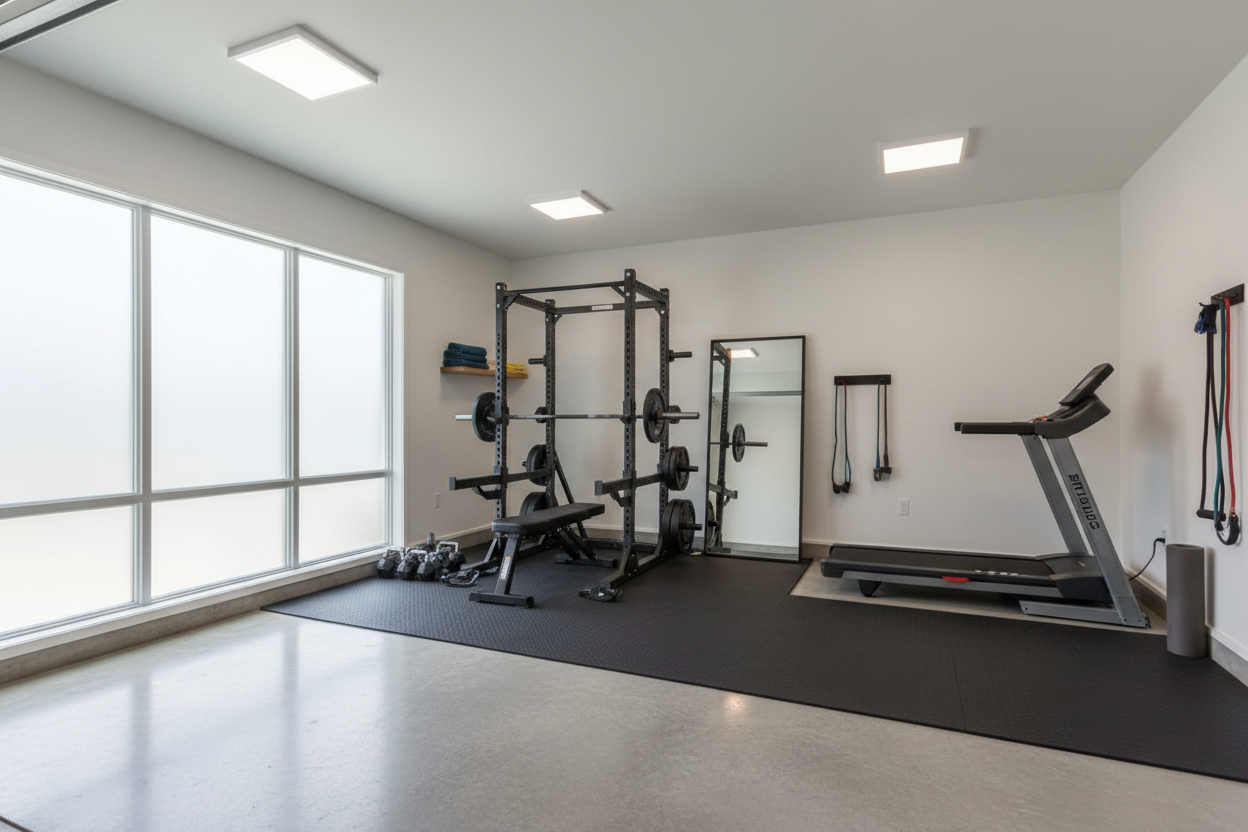
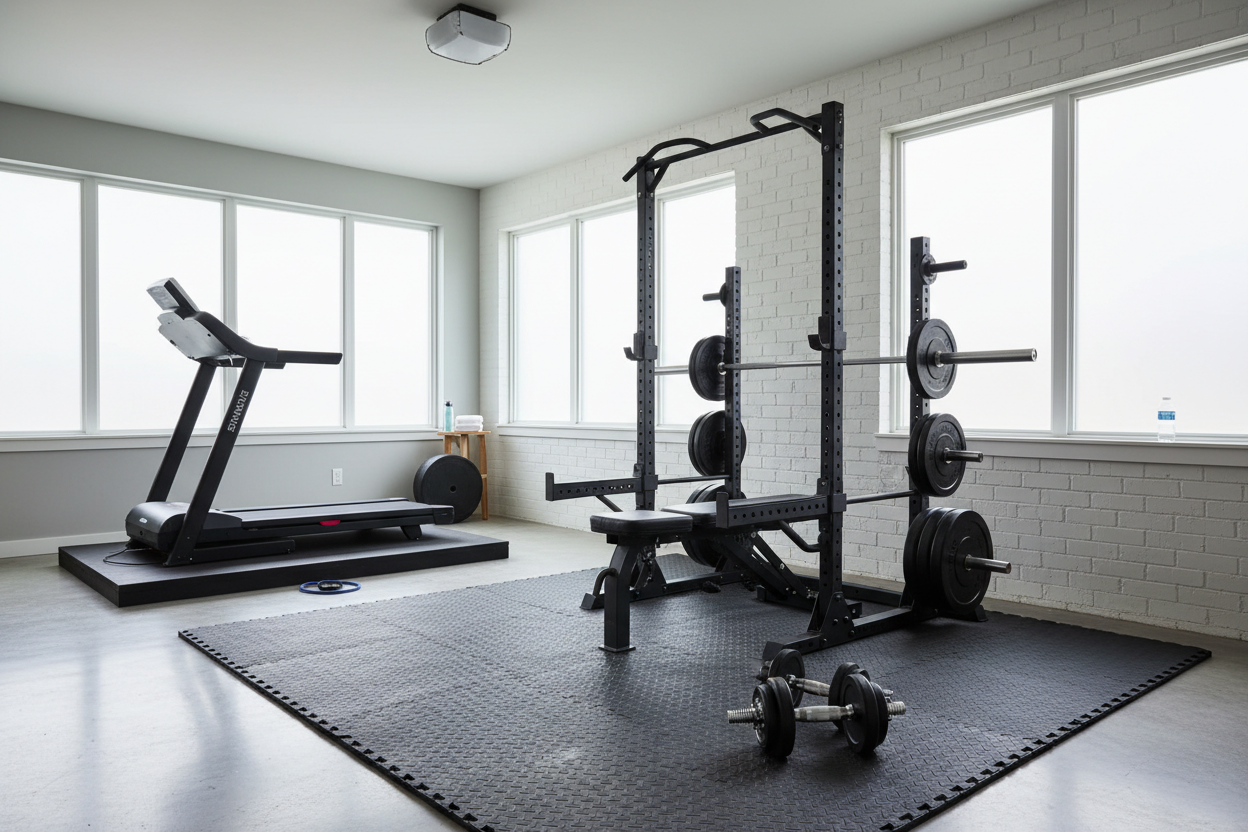
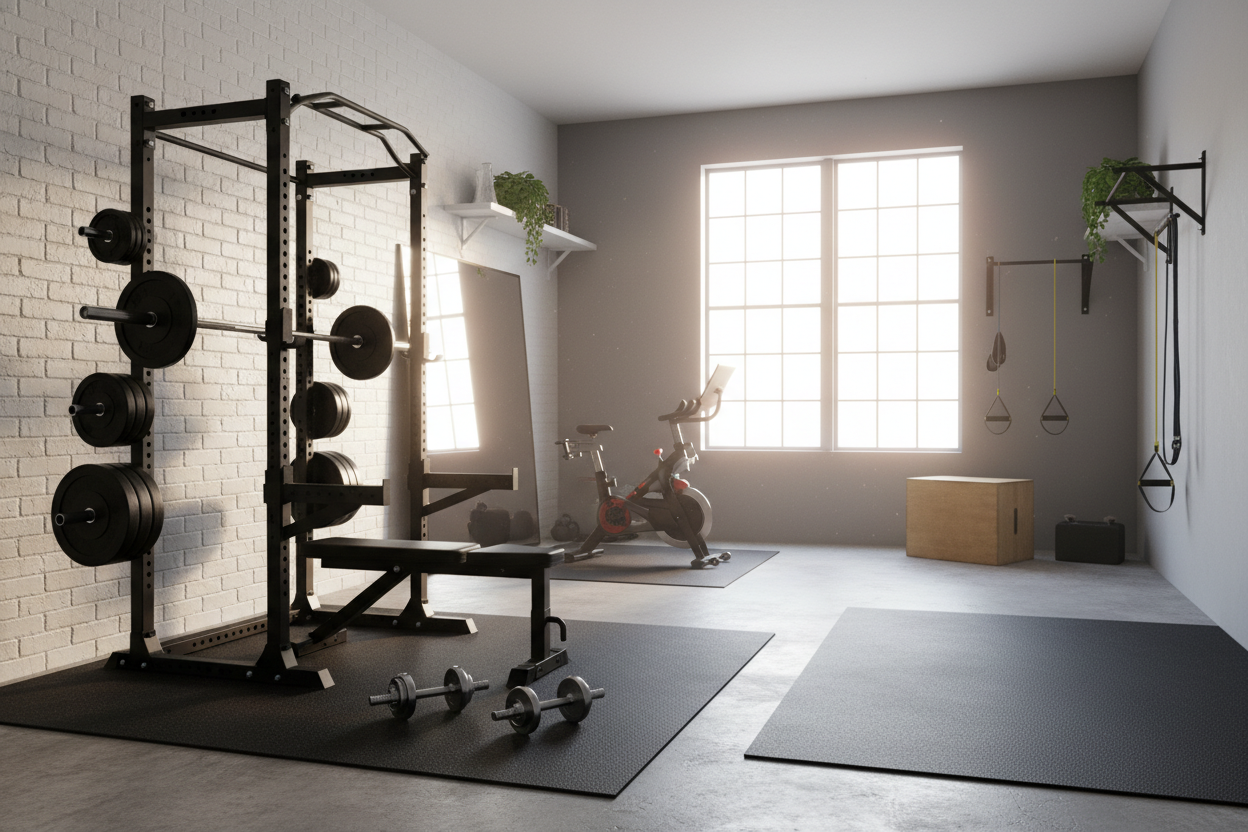
You need a surface that bites back. I personally use a 6X8Ft Exercise Mat Yoga Mat Gym Flooring For Home Workout because the extra width is essential for those wide-stance asymmetrical moves. It’s dense enough that it doesn't bunch up when you shift your weight, providing the same stability you'd get from professional gym flooring. Without that grip, you'll never be able to fully commit to the lopsided loading that makes this routine work.
Personal Experience: My Face-Plant Epiphany
I learned the importance of traction the hard way. I was three weeks into this asymmetrical experiment and feeling cocky. I tried to do elevated Archer Push-Ups on a towel laid over linoleum. My 'kickstand' arm slid out like it was on ice, and I ended up with a bruised jaw and a very bruised ego. It taught me that while you don't need weights, you absolutely need a stable environment. Since upgrading to a real mat, I’ve been able to push my intensity 30% higher because I’m not bracing for a fall.
FAQ
Can I really build muscle without weights?
Yes, provided you manipulate leverage and use asymmetrical loading to keep your repetitions low and your tension high. If the move is easy, you aren't building muscle; you're just moving.
What is the 'kickstand' method?
It’s using one limb as a secondary stabilizer (like a kickstand on a bike) while the primary limb handles the vast majority of the weight. It allows for a greater load than a standard move but more stability than a pure one-legged or one-armed move.
Is this routine okay for joints?
Actually, it's often better. Asymmetrical moves allow your body to find a more natural path of motion compared to being locked into a fixed barbell path, which can be easier on the shoulders and knees.