I Gave Up Fixed-Path Lifting: My Go-To Exercises Without Machines
The Day I Realized the Leg Press Was Lying to Me
I used to be the guy who lived on the leg press. I’d stack eight plates on each side, grunt through a set of ten, and walk away feeling like a monster. Then I tried to help a buddy move a sleeper sofa up a flight of stairs and almost threw my back out. My legs were strong, but my stabilizers were non-existent. That was the moment I realized most Weight Lifting Machines were lying to me. They lock you into a single plane of motion, doing all the hard work of balancing the load for you. I was strong in a track, but weak in the real world.
Switching to exercises without machines wasn't about being a minimalist; it was about being effective. When you remove the guided rails, your core, hips, and ankles finally have to show up to the party. I stopped chasing a number on a weight stack and started focusing on how my body actually moved through space. It turns out, you don't need a 500-pound sled to get a no weight strength workout that leaves your legs shaking.
The transition was humbling. I went from 'maxing out' machines to struggling with basic no weight strength exercises. But the results? My joints stopped aching, my core got rock hard, and for the first time, my strength actually felt useful outside the gym walls. If you're tired of the commercial gym crowd and the monthly fees, it’s time to look at no weight strength training as a legitimate path to a better physique.
Quick Takeaways
- Machine-free training builds 'functional' strength that translates to real-world tasks.
- You can achieve resistance exercise without weights by manipulating leverage and tempo.
- Bodyweight moves like Nordic curls and Sissy squats offer more intensity than their machine counterparts.
- Progressive overload is possible without adding plates—just change the mechanical advantage.
Swapping the Commercial Staples for Raw Movement
The biggest myth in fitness is that you need a cable tower or a leg press to build muscle. You don't. You need tension. Your muscles don't know if the resistance is coming from a 45-lb iron plate or the Earth's gravity acting on your own torso. By choosing the right strength exercises without weights, you can replicate almost every machine in the gym.
I started by auditing my routine. Every time I reached for a pin-loaded machine, I asked: 'What is the movement pattern here?' Usually, it was a press, a pull, or a squat. Once you identify the pattern, you can find strength training without weights that hits the same muscle groups but forces your body to stabilize itself.
Ditching the Leg Extension for Sissy Squats
The leg extension machine is a quad-killer, sure, but it’s also notoriously tough on the knees because of the shear force. When I moved my strength training at home no equipment style, I discovered the Sissy Squat. Don't let the name fool you—this is the most brutal quad isolation move I’ve ever done. By leaning back and driving your knees forward while staying on your toes, you create a massive stretch and contraction in the rectus femoris.
This is strength exercises at home without equipment at its finest. You don't need a padded roller; you just need a vertical post or a door frame to hold onto for balance. It’s a pure strength workout no equipment staple that builds that 'teardrop' quad muscle without the need for a bulky machine taking up space in your garage.
Replacing the Pec Deck with Deficit Push-Ups
The Pec Deck is great for that chest squeeze, but it’s a fixed-arc movement. To get a better result with resistance training at home without weights, I switched to deficit push-ups. I use a couple of sturdy boxes or even just two stacks of books to increase the range of motion. By letting your chest sink below the level of your hands, you get a stretch that no machine can match.
This is a prime example of weight training without weights. By elevating your feet, you shift more of your body weight to your upper chest, essentially turning a standard push-up into an incline bench press. It’s weight training at home no equipment that actually builds a thick, wide chest because you’re forced to control the horizontal adduction throughout the entire rep.
Trading the Hamstring Curl for Nordic Curls
If there’s one move that proves weight training without equipment is superior, it’s the Nordic Curl. Commercial hamstring curl machines are easy to ego-lift on. Nordics, however, will humble the strongest lifter in the room. You anchor your heels, lower your torso slowly toward the floor, and use your hamstrings to catch yourself and pull back up. It’s the ultimate home strength workout no equipment move for posterior chain health.
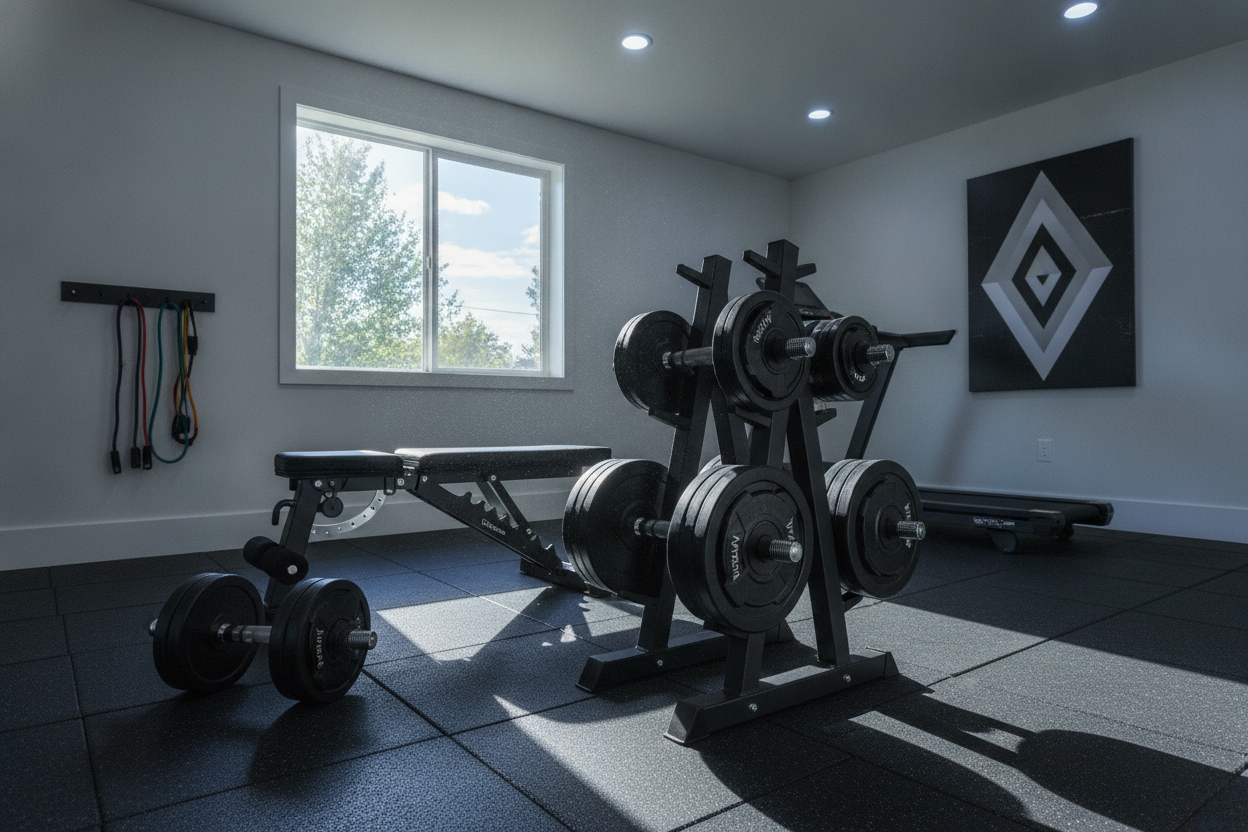
I’ve found that using a Gxmmat Adjustable Weight Bench as an anchor point for my feet makes this much easier to set up. Even though we’re talking about strength training without equipment, having a solid anchor is key. This move is so effective at preventing ACL injuries and building massive hamstrings that pro athletes use it as a staple. It’s strength training no equipment at its most elite level.
How to Force Progress When You Can't Just 'Move the Pin'
The main argument against strength training without gym access is that you can't 'add weight.' That’s a lazy excuse. You can increase intensity through tempo manipulation. Instead of banging out 20 fast push-ups, try a 5-second eccentric (lowering) phase and a 3-second pause at the bottom. I guarantee you'll find how to strength train without weights is plenty difficult when you remove momentum.
You can also use mechanical disadvantage. A regular squat is easy; a Bulgarian split squat is harder; a shrimp squat is a nightmare. Once you’ve mastered the basics of strength training without weights for beginners, you move to unilateral (single-limb) variations. This doubles the load on the working muscle without adding a single pound of external iron. If you do want to start adding external load safely, check out this guide on How to Find the Right Weights for Strength Training Without Guessing.
Finally, don't sleep on Strength Training Accessories like resistance bands. They aren't 'weights,' but they change the resistance curve of your bodyweight moves. Adding a band to a push-up or a squat makes the lockout—the easiest part of the move—the hardest. This is how you keep muscle strength exercises without equipment from plateauing.
Building Your Unplugged Routine
To make strength training at home without equipment work, you need a plan. I split my week into Push, Pull, and Legs. For pushing, I do deficit push-ups and pike presses (for shoulders). For pulling, I find a sturdy tree branch or a door-frame pull-up bar for chin-ups and inverted rows. For legs, it’s all about the Sissy squats, Nordics, and lunges. This ensures weight lifting without equipment doesn't leave any muscle group behind.
Consistency is the only thing that matters. Whether you're doing no gym strength training for beginners or advanced calisthenics, you have to track your reps and your rest times. If you did 10 reps last week, aim for 11 this week. That’s how you get strength without weights. It’s not magic; it’s just physics and grit.
My Personal Experience: The Sissy Squat Ego-Check
When I first started training without weight, I thought I was too advanced for 'bodyweight stuff.' I tried to jump straight into full Sissy squats without holding onto anything. On the third rep, my quads gave out, and I did a slow-motion fall right onto my garage floor. It was embarrassing, but it taught me a lesson: how to train without weights requires more focus and technique than sitting in a machine. I had to swallow my pride, use a support beam for balance, and actually learn the movement. Now, my knees feel more stable at 35 than they did at 25.
FAQ
Can you really build muscle with exercises without machines?
Absolutely. Muscle grows from mechanical tension and metabolic stress. As long as you are pushing your sets close to failure, your body will adapt by building muscle, regardless of whether you're using a $5,000 machine or your own body weight.
How do I make bodyweight exercises harder?
Slow down the reps, decrease your rest time, or change the angle to put more weight on the working muscle. For example, moving from regular push-ups to feet-elevated push-ups significantly increases the load on your chest and shoulders.
Is strength training without equipment safe for beginners?
Yes, it's often safer because you aren't being forced into a fixed path that might not suit your individual anatomy. Strength training without equipment for beginners allows you to learn how your joints move naturally before you start adding heavy external loads.