I Found 10 Exercises for Flexibility That Actually Don't Suck
I spent years thinking stretching was for people who liked incense and Enya. Then I hit 30, and my squat depth started looking like a power-bellied half-rep. I realized that my 'stiffness' wasn't just old age; it was a lack of intentional movement. If you're searching for 10 exercises for flexibility, you're likely tired of the same old toe-touches. You need movements that translate to the platform.
Quick Takeaways
- Focus on dynamic movement over static holding for better lifting carryover.
- Target the hips and thoracic spine first; they are the biggest 'stiffness' culprits.
- Consistency beats intensity; five minutes a day is better than an hour once a week.
- Use a supportive surface to protect your joints during floor work.
Why You Feel Like a Crowbar (And How to Fix It)
Most people treat mobility like a chore. I treat it like a pre-flight check for my spine. When people ask what are 10 exercises for flexibility that actually yield results, they usually want a magic bullet. The truth is, you feel like a crowbar because your body has adapted to the positions you spend the most time in—likely sitting in a chair or bracing under a heavy bar. Aimless stretching is a waste of time if it doesn't address the specific roadblocks in your kinetic chain.
If you've already mastered The Only 4 Exercises for Strength and Flexibility I Actually Do, this expanded list is your next step. This diagnostic 10-move routine expands upon that minimalist baseline when you need a deeper mobility reset. We aren't just trying to get 'bendy.' We are trying to reclaim the range of motion that allows you to hit a deep squat without your heels lifting or overhead press without arching your lower back into another dimension.
Lower Body: Un-Baking Your Hips and Hamstrings
The first four of our 10 flexibility exercises focus on the engine room. If your hips are locked, your lower back will try to do their job, and that is a recipe for a blown disc. I start with 90/90 Hip Switches. Sit on the floor with both knees bent at 90 degrees, one in front and one to the side. Rotate your knees to the other side without using your hands. It’s a brutal reality check for internal rotation.
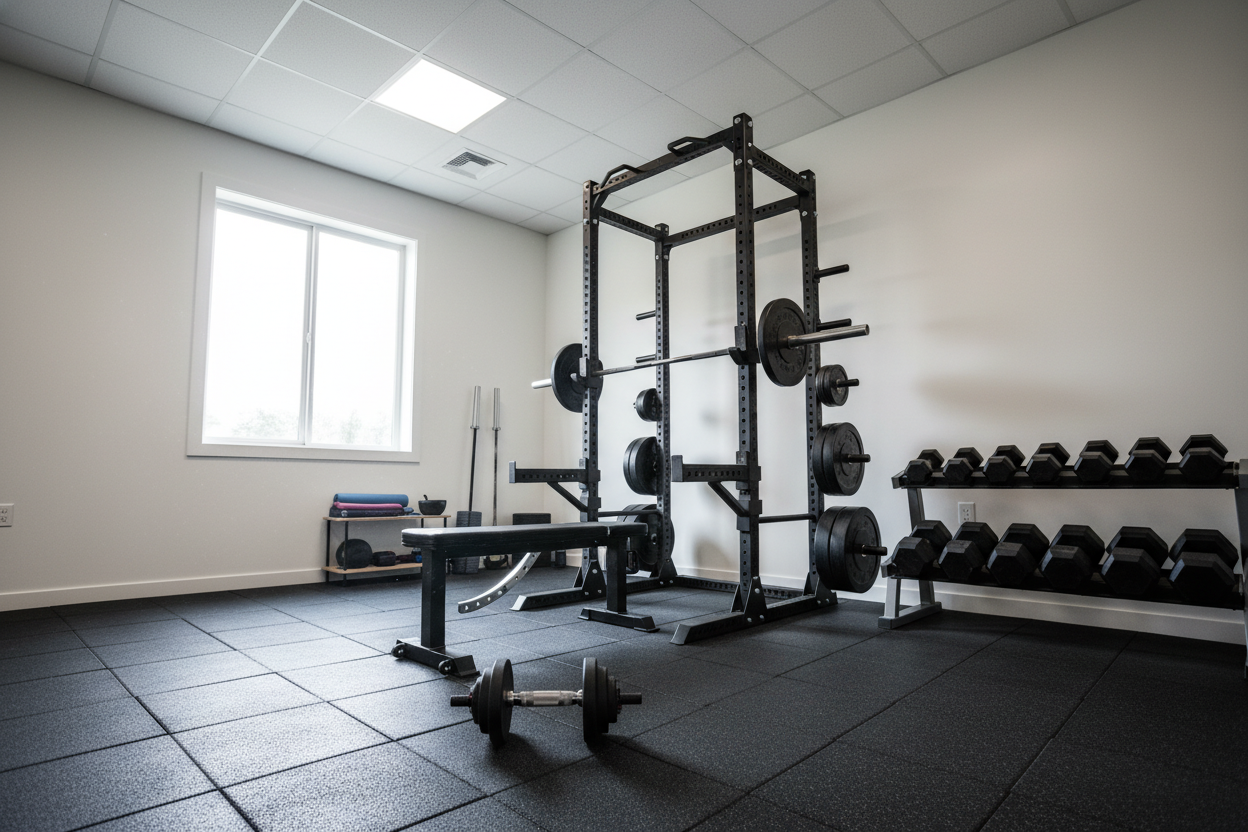
Next, move into Adductor Rock-backs. Get on all fours, extend one leg out to the side, and rock your hips back toward your heel. I do these on a 6x8ft exercise mat gym flooring because my garage concrete is unforgiving on the knees, and having that extra 7mm of high-density foam makes a massive difference in how deep you can actually sink into the stretch. Follow this with the World’s Greatest Stretch—a deep lunge with a thoracic twist—and finish the lower body block with Hamstring Flossing. Instead of a static pull, lie on your back, hold your thigh, and actively extend your leg. This targets the nerve and the muscle belly without the 'tearing' sensation of old-school stretches.
Upper Body: Reversing the 'Desk-Worker' Slump
Your shoulders and upper back are likely a mess from a combination of bench pressing and staring at a laptop. To fix this, we use three specific movements. First: Band Dislocates. Grab a light resistance band and move it in a full arc from your hips to your glutes with straight arms. Check out Why I Swapped Static Stretches for Flexibility Exercises for Shoulders for the full breakdown on why this beats static doorway stretches every time.
Second is the Bench T-Spine Extension. Kneel in front of a bench, put your elbows on it, and drop your head through your arms while holding a PVC pipe. This forces your thoracic spine to extend, which is vital for a stable front squat. Finally, we do Segmental Cat-Cow. Don't just flap your back up and down. Try to move one vertebra at a time, starting from the tailbone. It sounds 'woo-woo' until you realize you have a massive 'flat spot' in your mid-back that doesn't move at all.
Full Body: Tying the Kinetic Chain Together
The final three movements integrate everything. We start with the Deep Squat with Thoracic Reach. Sit in the bottom of your squat, grab your opposite ankle, and reach the other hand toward the ceiling. It forces your hips to stay open while your upper back rotates. Then, we hit Cossack Squats. These are like side lunges but deeper, forcing one hip into flexion while the other leg gets a massive adductor stretch.
We finish with Inchworms with a Push-up. Walk your hands out from a standing position, hit a clean push-up, and walk your feet back to your hands keeping your legs as straight as possible. This forces the newly mobilized joints to work together. This list of 10 flexibility exercises isn't about being a yogi; it's about being a better lifter who isn't constantly fighting their own tight tissues.
How to Actually Program This Routine in Your Home Gym
You don't need to spend an hour on this. If I’m short on time, I pick the three moves that address my tightest spots and use them as a warm-up. On recovery days, I’ll run the full circuit twice, holding each position for about 5-10 breaths. It takes 12 minutes. If you can't spare 12 minutes to keep your joints from 'baking' into place, you're going to spend a lot more time than that in physical therapy later.
My Personal Experience
I once tried to skip the warm-up on a cold February morning in my garage. I felt a 'zip' in my lower back during a warm-up set of 135 lbs. I spent the next three days rolling off the bed onto the floor because I couldn't sit up straight. I had the strength to pull 500 lbs, but I didn't have the flexibility to handle a simple warm-up because I was so brittle. That was the day I stopped being 'too busy' for mobility. I started using these 10 moves, and my recovery time between heavy sessions dropped noticeably.
FAQ
How long should I hold each stretch?
For these dynamic moves, don't 'hold' them like a traditional stretch. Move through the range of motion for 10-12 reps or breathe deeply in the bottom position for 5-10 breaths. We want to teach the brain that these new ranges are safe.
Will flexibility training make me lose my 'tightness' for heavy lifting?
No. That is a myth. You need 'stiffness' under the bar, but you need 'mobility' to get into the right positions. Being so stiff that you can't reach the bar properly actually makes you weaker and more prone to injury.
Can I do these every day?
Absolutely. Unlike heavy lifting, these movements don't tax your central nervous system. Doing them daily, especially the hip switches and T-spine work, will yield the fastest results for chronic stiffness.