I Fixed My Bench Press With These strength shoulder exercises
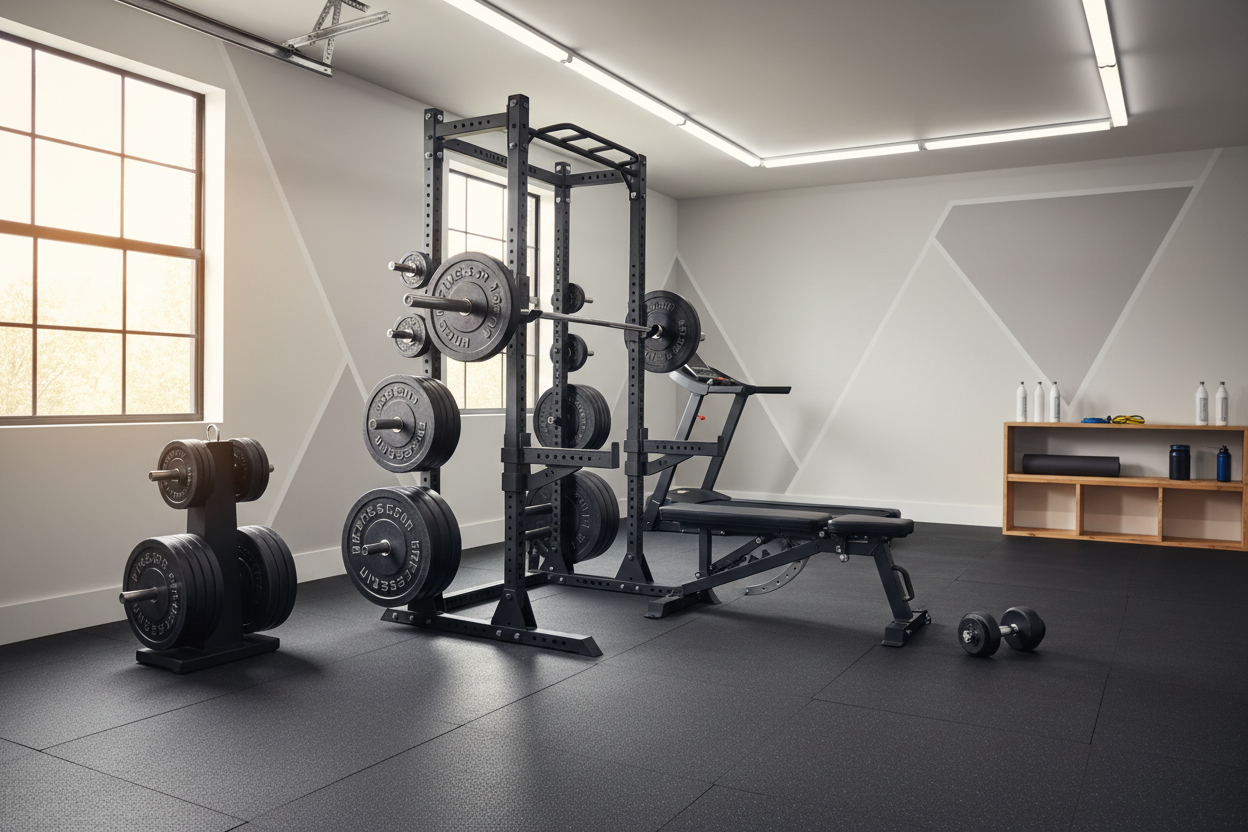
I remember staring at the ceiling of my garage, 275 pounds pinned to my chest, wondering why my progress had hit a brick wall. I had the power rack, the competition-spec barbell, and more plates than I knew what to do with, but my lockout felt like it was moving through wet concrete. My shoulders felt 'loose' in the socket, and no amount of extra chest volume was fixing it.
The reality hit me after a particularly painful session: I wasn't failing because my pecs were weak. I was failing because my shoulders were acting like a shaky card table under a heavy load. Implementing specific strength shoulder exercises that focused on stability rather than just 'the pump' changed the trajectory of my training forever.
- Stability is the foundation of all heavy pressing power.
- Isolation work like lateral raises won't fix a weak lockout.
- Bottoms-up movements and landmine presses are the secret to bulletproof joints.
- Eccentric loading on overhead presses builds massive overhead capacity.
The Hidden Weak Link in Your Heavy Lifts
When you're under a heavy barbell, your deltoids are the primary stabilizers of the glenohumeral joint. If those muscles aren't firing correctly, your brain essentially 'brakes' your power output to prevent an injury. It’s an autocorrect feature you don't want. If your foundation is leaky, you lose force that should be going into the bar. This is why you must properly exercise shoulder muscles to ensure they can handle the sheer force of a max-effort bench.
I spent years thinking that as long as I benched, my shoulders would grow strong enough. I was wrong. I was experiencing 'energy leaks' where my elbows would flare or my shoulders would shrug toward my ears under load. By treating the shoulder as a stabilizing platform, I stopped the leaks. You need to build a base that doesn't budge when the weight gets north of 300 pounds.
Why Standard Isolation Work Wasn't Cutting It
For a long time, my shoulder 'day' consisted of three sets of ten lateral raises with some 25-pound dumbbells. It gave me a nice rounded look in a t-shirt, but it did absolutely nothing for my overhead press or my bench. Light isolation work has its place for hypertrophy, but it lacks the neurological demand required for true strength. To move heavy objects, you need heavy Strength Equipment that forces your body to coordinate multiple muscle groups at once.
The shift happened when I stopped chasing the burn and started chasing tension. Shifting my focus to heavy strength exercises for shoulders meant I had to stop ego-lifting with momentum and start controlling the weight through a full range of motion. If you want a 405-lb bench, you can't have 50-lb stability.
The 3 Moves That Actually Bulletproofed My Delts
Once I stripped away the fluff, I landed on three movements that provided the most 'carryover' to my big lifts. These aren't just exercises to build shoulder strength; they are tools that teach your body how to stay rigid under pressure. I integrated these as my primary accessory work, and within eight weeks, my bench felt significantly more 'locked in.'
Move 1: The Bottoms-Up Kettlebell Press
This is the ultimate humbler. Take a kettlebell, flip it upside down so the heavy part is balancing on top of the handle, and press it overhead. You can't cheat this. If your wrist wobbles or your rotator cuff isn't engaged, the bell will flop over. It forces a level of irradiation—full body tension—that standard dumbbell presses just can't match.
I usually grab some Strength Training Accessories like chalk or a thin grip wrap to ensure the bell doesn't slip, but the real work is in the shoulder. Start light. If you usually press 70-lb dumbbells, try a 25-lb kettlebell bottoms-up. It will expose every weakness you have in seconds. It’s the single best way to wake up the stabilizers before a heavy bench session.
Move 2: The Half-Kneeling Landmine Press
The landmine press is the bridge between a vertical and horizontal press. Because the bar moves at an angle, it’s much friendlier on the joints than a strict overhead press, but it still hammers the anterior deltoid and serratus. The half-kneeling position is key because it removes your ability to use your legs, forcing your core and shoulder to do 100% of the work.
I do these on my 6X8Ft Exercise Mat Yoga Mat Gym Flooring For Home Workout to save my knees from the concrete. Setting up on a non-slip, cushioned surface allows you to drive through the floor without your back knee sliding out. Focus on reaching at the top of the movement to engage the serratus anterior—the 'boxer's muscle'—which is vital for shoulder health and bench press stability.
Move 3: The Strict Push Press for Eccentric Overload
The push press is often seen as a 'cheat' overhead press, but if used correctly, it’s a massive strength builder. Use a slight leg drive to get a weight overhead that you couldn't normally press strictly. Once it's up there, the real work begins: lower it as slowly as possible. This eccentric loading creates massive structural integrity in the delts.
I like to use a weight that is about 10-15% higher than my strict press max. Fighting that weight on the way down teaches your nervous system not to panic under heavy loads. It’s a grind, and it’s taxing, but it’s the fastest way to build the raw horsepower needed for a massive upper body.
How to Program This Without Wrecking Your Joints
You can't just add these on top of a high-volume chest routine and expect to survive. You have to be smart. I recommend swapping out your standard dumbbell overhead presses for the bottoms-up kettlebell press for a few weeks. Use the landmine press as a secondary move on your bench day. It provides a different stimulus without the same joint wear and tear as a barbell.
Building a stable shoulder foundation is critical for anyone looking to improve their pushing strength, and that includes following a solid routine like these Chest Exercises For Women To Build Strength And Tone. Whether you're a powerlifter or just training in your garage, your shoulders are the pivot point for everything. If they aren't strong, you aren't strong. Period.
FAQ
Can I do these exercises if I have a history of shoulder impingement?
Always check with a pro first, but the landmine press is generally much safer for impingement because of the neutral grip and the angled path. It allows the scapula to move more freely than a fixed barbell press.
How heavy should I go on bottoms-up presses?
Weight is secondary to control here. If the bell is flopping, it’s too heavy. Start with a weight you can control for 8-10 reps with perfect form. The goal is stability, not ego.
Do these exercises help with lockout strength?
Absolutely. Most lockout issues are actually stability issues. When your shoulders are 'packed' and stable, your triceps can do their job more efficiently to finish the lift.