I Finally Cracked Easy Strength Training for Women at Home
I remember scrolling through my feed at 11 PM, watching a fitness influencer do a one-legged squat on a vibrating platform while holding a resistance band between her teeth. I felt exhausted just watching it. If that is what it takes to get fit, I thought, I am out. But after years of testing gear and breaking my own PRs, I realized that easy strength training for women isn't about doing less work—it is about removing the mental clutter that keeps us from starting.
The fitness industry loves to overcomplicate things because they want to sell you a new subscription every month. They make you think you need a 45-minute circuit of 'glute finishers' and 'arm sculpting' moves just to see a change. You don't. You need a few heavy things, a bit of floor space, and a plan that doesn't require a degree in kinesiology to follow.
- Focus on four foundational movements: Squat, Hinge, Push, Pull.
- Ditch the pink 2-lb dumbbells; they are effectively paperweights.
- Consistency beats intensity every single time.
- Progression is linear—add weight, not more complicated moves.
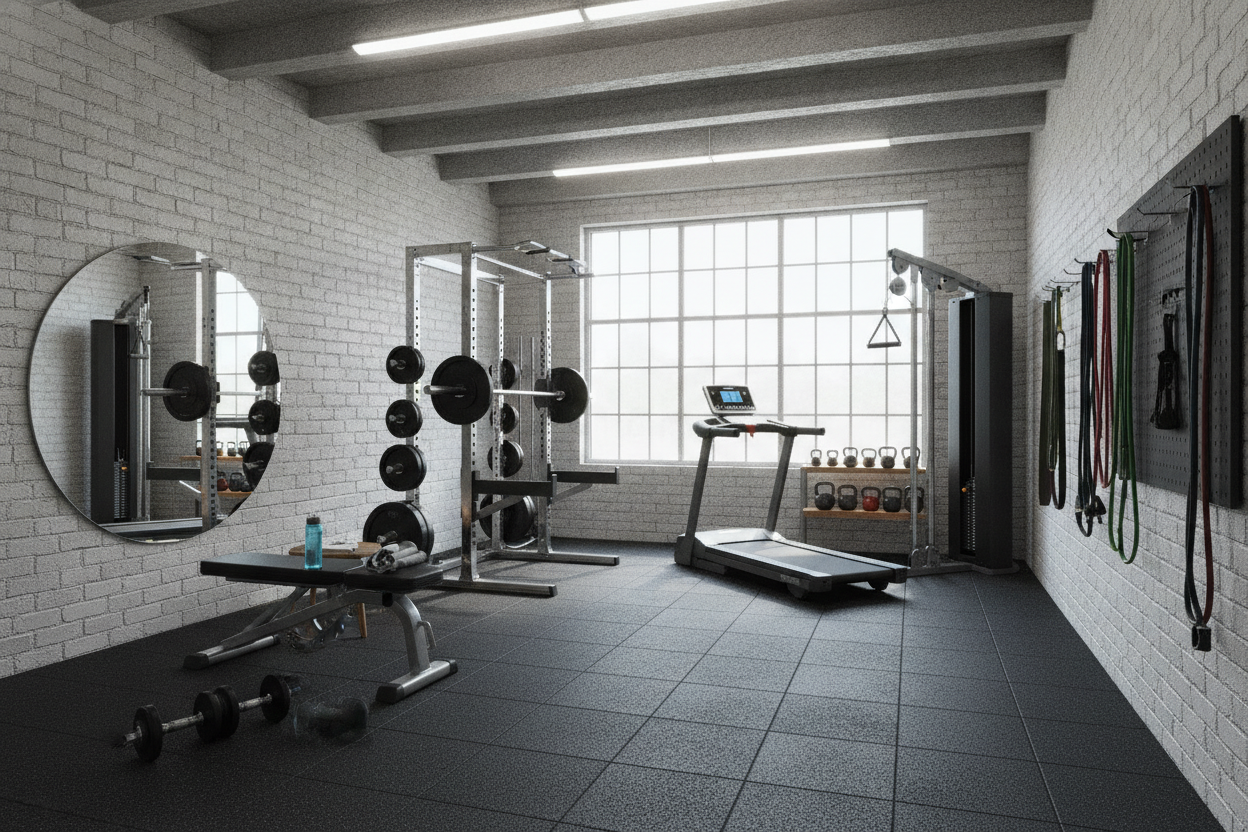
- Simple gear is better than a room full of machines.
Why 'Easy' Usually Means 'Ineffective' in the Fitness Industry
For decades, women's fitness magazines have sold us a lie: that 'easy' means effortless. They show us 3-lb plastic-coated weights and promise 'long, lean muscles.' In reality, that kind of training is a waste of time. It doesn't stress the bone density, it doesn't build metabolism-boosting muscle, and it certainly doesn't make you stronger for real-life tasks like lugging a 40-lb bag of dog food up the stairs.
When I talk about 'easy' training, I am talking about low-complexity, not low-effort. Low-effort training yields zero results. You can do 100 reps with a soup can and your body won't change because there is no stimulus. Low-complexity training, however, is the secret to long-term success. It means choosing movements that are easy to learn and hard to outgrow. It means you don't have to spend 20 minutes watching a tutorial before every set.
We have been conditioned to think that if we aren't dripping sweat and gasping for air in a puddle on the floor, the workout didn't count. That is nonsense. Real strength training is about tension and load. If you can pick up a heavy weight for 8 reps with good form, you are doing more for your body than an hour of 'easy' cardio-based sculpting. The goal is to strip away the 'fluff' and focus on the 'meat' of the movement.
The Difference Between Simple and Useless
There is a massive gap between a 'simple' routine and a 'useless' one. Simple strength training for women focuses on the big rocks. When you stop trying to hit every muscle from seventeen different angles, something magical happens: you actually get stronger. You stop being a 'beginner' and start being an athlete in your own home.
I have found that strength training workouts for women are surprisingly simple once you ignore the noise. You don't need a different workout every day of the week. In fact, doing the same four or five moves for a month is the fastest way to see progress. It allows your central nervous system to master the mechanics. Once the mechanics are 'easy,' you can add weight. That is where the transformation happens.
Sticking to foundational mechanics is mentally easier because it removes decision fatigue. You don't walk into your gym space wondering what to do. You know exactly what is on the menu. This mental ease translates to physical rewards because you are more likely to actually do the workout when it doesn't feel like a chore. I would much rather see someone do two simple, heavy lifts twice a week than a complex 6-day split that they quit after two weeks because it was too much to manage.
My 4-Move Blueprint (No Circus Tricks Required)
This is the actual basic strength training routine for women I recommend to anyone who wants results without the headache. We are focusing on high-return movements. These are the moves that recruit the most muscle mass and burn the most energy. You don't need to do thirty exercises. You need to do these four well.
First, the Squat. Whether it is a goblet squat with a kettlebell or a simple dumbbell squat at your sides, this is the king of lower body moves. Second, the Hip Hinge. Think deadlifts or Romanian deadlifts. This targets the entire back of your body—glutes, hamstrings, and lower back. Third, the Overhead Press. This builds strong shoulders and a stable core. Finally, the Row. Pulling a weight toward your chest builds the back and improves posture, which most of us need after sitting at a desk all day.
Limiting your choices reduces workout anxiety. My modular strength training program for women uses these exact pillars. You can swap a barbell for a dumbbell or a kettlebell for a sandbag, but the movement patterns stay the same. If you have 20 minutes, you do one set of each. If you have 45 minutes, you do four sets. It is modular, it is scalable, and it works. I have used this blueprint myself on days when I'm exhausted and just want to quit, and I always feel better afterward because I didn't have to think.
The Bare Minimum Gear You Actually Need
You do not need a $3,000 smart mirror or a commercial-grade cable crossover machine. If you are training at home, you need gear that is durable and versatile. I always tell people to start with a solid pair of adjustable dumbbells or a few high-quality kettlebells. You want basic strength equipment for home that can grow with you. A pair of 15-lb dumbbells might feel heavy today, but in three months, you will be using them for your overhead press and wishing you had 30s for your squats.
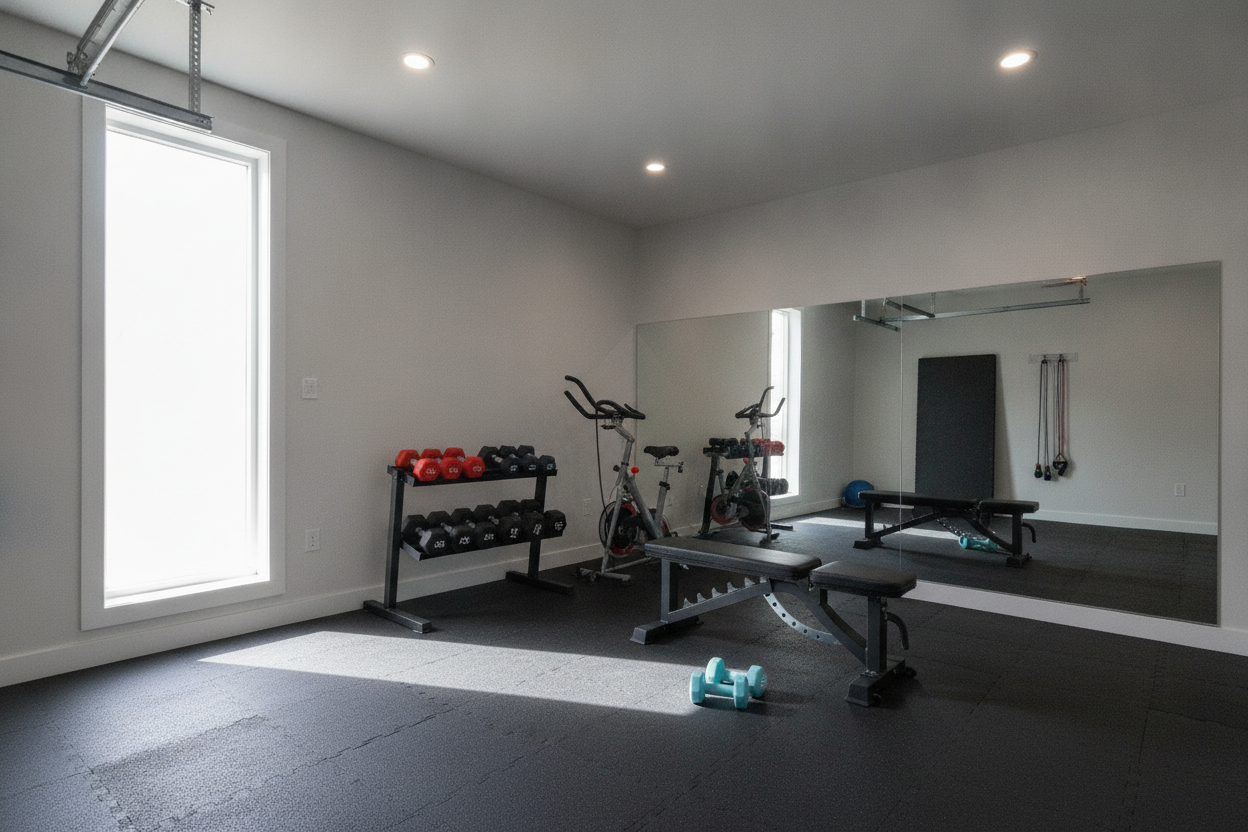
Beyond the weights, the most overlooked piece of equipment is what is under your feet. Lifting on hardwood or thin carpet is a recipe for a slipped disc or a ruined floor. I highly recommend a solid home gym flooring setup. A 6x8ft mat gives you enough room to move without feeling cramped, and it provides the grip you need when you are holding heavy loads. It also dampens the sound if you happen to set a weight down a little too hard—your downstairs neighbors or sleeping kids will thank you.
Keep it realistic. If you have a corner of a bedroom or a small slice of the garage, that is your gym. You don't need a dedicated 500-square-foot room. You just need enough space to swing a kettlebell and a floor that won't crack under pressure. I have tested dozens of mats, and the ones that stay put without sliding are worth every penny.
How to Progress Without Making Things Complicated
The biggest mistake I see is people adding 'complexity' when they get bored. They start standing on one leg or adding resistance bands to their dumbbells. Don't do that. When the routine becomes too easy, the answer is simple: pick up a heavier weight. This is called progressive overload, and it is the only way to actually change your body composition.
The math is simple. If you squatted 20 lbs last week for 10 reps, try 25 lbs this week. Or try 20 lbs for 12 reps. You don't need a spreadsheet or a complex app. Just write it down in a notebook. When you focus on the numbers rather than the 'burn,' you stay motivated because you can see the tangible proof of your strength increasing. That is the real 'easy' button in fitness.
My Personal Experience
A few years ago, I fell into the 'more is better' trap. I was doing 60-minute HIIT sessions five days a week. I was constantly sore, my joints ached, and I wasn't actually getting any stronger. I was just tired. I eventually hurt my lower back doing a 'speed deadlift' during a circuit. I had to stop everything. When I came back, I stripped everything away. I did three moves, three days a week. Within two months, I was lifting heavier than I ever had, and my back pain vanished. I realized I had been working hard, but I hadn't been working smart.
FAQ
How heavy should I start?
Start with a weight that feels challenging but allows you to keep perfect form for 8 to 10 reps. If the last two reps don't feel significantly harder than the first two, it is too light.
Can I really get results in 20 minutes?
Yes, if you focus on compound movements. A 20-minute session of heavy squats and rows is infinitely more effective than 60 minutes of low-intensity 'toning' exercises.
Do I need a squat rack for a home gym?
Not at first. You can go a long way with goblet squats and lunges using just dumbbells or kettlebells. A rack is great, but it isn't a requirement for starting an easy strength routine.