I Ditched Fitness Apps For This Simple Weight Lifting Worksheet
I was halfway through a heavy set of squats when my phone buzzed in my pocket. I finished the set, racked the bar, and spent the next three minutes deleting spam emails and checking a Slack notification instead of resting. My heart rate dropped, my focus vanished, and my workout was basically over. That was the day I realized my weight lifting worksheet shouldn't live behind a lock screen.
Quick Takeaways
- Phones are distraction machines that kill training intensity.
- A physical logbook forces you to focus on progressive overload rather than 'junk volume.'
- You only need to track four variables: Exercise, Sets, Reps, and Weight.
- Analog tracking creates a permanent record of your strength that never needs a software update.
Why Your Phone is the Enemy of a Heavy Lift
Unlocking a smartphone with chalky, sweaty hands is a special kind of hell. You swipe three times, the face ID fails because you're making a 'heavy lift face,' and by the time you finally open your fancy tracking app, you’ve already seen three Instagram notifications. Your rest interval is gone, and your brain has shifted from 'beast mode' to 'scroll mode.'
I’ve spent years testing high-end home gym gear, and the most expensive piece of equipment in the room—the smartphone—is usually the one sabotaging your gains. When you use a paper weight lifting worksheet, there are no blue light distractions. There is just you, the pen, and the iron.
A physical log stays open on your bench. You can see your previous set without tapping a screen. It’s tactile, it’s immediate, and it doesn't try to sell you a premium subscription while you're trying to catch your breath.
The Trap of the Overcomplicated Weight Training Worksheet
Most people fail at tracking because they try to track too much. They download a weight training worksheet that looks like a NASA flight manual, complete with RPE scales, rest timers, tempo notations, and percentage charts. Unless you are an elite powerlifter three weeks out from a meet, you don't need all that noise.
I see beginners get so bogged down in the data that they forget the primary goal: moving more weight than they did last Tuesday. I fell into this trap myself, spending more time color-coding my Excel cells than actually squatting. It’s a form of 'productive procrastination' that stops you from working hard.
If you're feeling overwhelmed by the sheer amount of data out there, you aren't alone. I actually wrote about this in the I Built the Weight Lifting Training Guide I Wish I Had at 20, where I break down why simplicity almost always beats a complex program that you can't actually follow.
The Anatomy of a No-BS Weight Lifting Worksheet
Your worksheet should be a simple grid. That’s it. You need five columns: Exercise, Sets, Reps, Weight, and Notes. If you can't fit your workout data into those five columns, you're probably doing too much fluff and not enough work.
The 'Notes' column is the most underrated part. This isn't for your feelings; it's for technical cues. 'Bar path felt fast,' 'Right knee caved on rep 5,' or 'Use the 3rd hole on the rack next time.' These small details are what actually help you adjust your form and stay safe when the weights get heavy.
The 'Beat the Book' Philosophy
The goal of every session is simple: beat the book. If your log says you did 225 lbs for 5 reps last week, your only job today is to do 225 lbs for 6 reps, or 230 lbs for 5. It’s a binary win or loss.
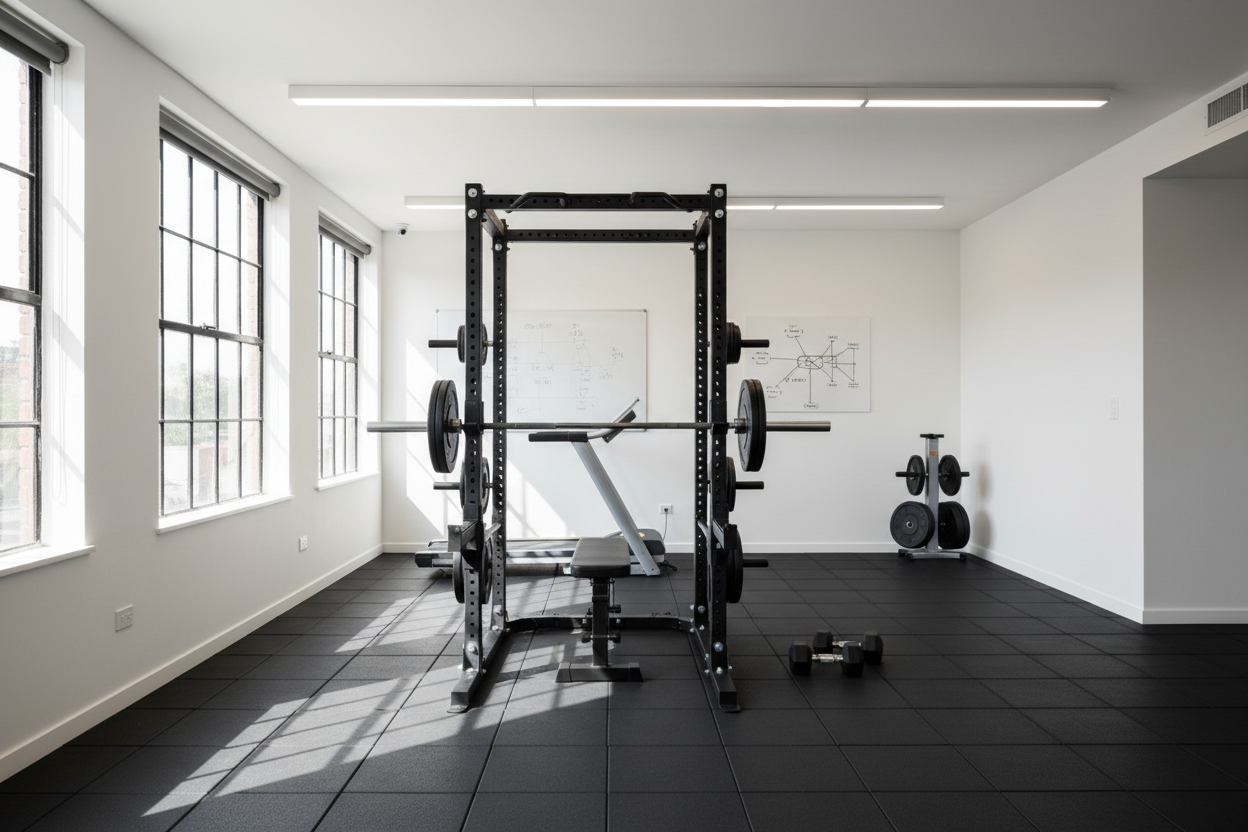
When you have a heavy-duty setup like the Gxmmat X6 Power Rack Weight Bench Package, you have the stability to actually push those limits safely. Having that physical logbook sitting on the spotting arm serves as a constant reminder of what you need to do to progress. You aren't competing against a leaderboard of strangers; you're competing against the ink on the page.
Stop Tracking Junk Volume on Shiny Machines
A simple paper tracker naturally pushes you toward big, meaningful movements. It’s satisfying to write down 'Deadlift' and '315 lbs.' It is significantly less satisfying to write down 'Cable Tricep Kickback' for the 4th variation of the day. If it’s not worth the ink to write it down, it might not be worth the effort to do it.
I recommend Choosing The Best Strength And Weight Training Equipment For Your Goals based on what you can actually track and improve over time. A solid Gxmmat Adjustable Weight Bench allows you to hit incline, flat, and seated presses—all of which are 'log-worthy' compound lifts that build real-world strength.
When you stop chasing 'the pump' on fifteen different machines and start chasing numbers on a worksheet, your physique changes faster. The paper doesn't lie, and it doesn't care about your 'mind-muscle connection' if the weight on the bar hasn't moved in three months.
How to Build Your Own Tracker in 60 Seconds
Don't buy a pre-printed fitness journal. They are usually overpriced and filled with pages you won't use. Go to the drugstore and buy a $2 composition notebook. Use a ruler (or the edge of a weight plate) to draw your columns.
Write the date at the top. List your 4-6 main movements. Leave enough space to write your sets clearly. At the end of the month, you’ll have a physical record of your hard work that you can flip through. There is nothing more motivating than seeing 20 pages of increased numbers staring back at you.
Personal Experience: The Spreadsheet Failure
A few years back, I built a massive Google Sheet to track my training. It had automated graphs and estimated 1RMs. I spent more time checking my phone to see if the formulas were working than I did focusing on my bracing. My strength plateaued for six months. I switched back to a notebook, left the phone in the house, and added 40 lbs to my total in eight weeks. The lack of distraction was the only variable that changed.
FAQ
Do I need to track warm-up sets?
Generally, no. Only track your 'working sets'—the ones that actually challenge you. Warm-ups are just to get the joints moving and the nervous system ready. Writing them down just clutters the page.
What if I miss a rep?
Write it down exactly as it happened. If you aimed for 5 and got 4, write '4.' Then, in the notes, write why. Did you lose your balance? Was your sleep bad? That data is more valuable than a successful set.
Should I use a pen or a pencil?
Use a pen. Pencils smudge when they get hit with sweat or chalk. Use a bold ink that you can read even when your eyes are blurry after a heavy set of lunges.