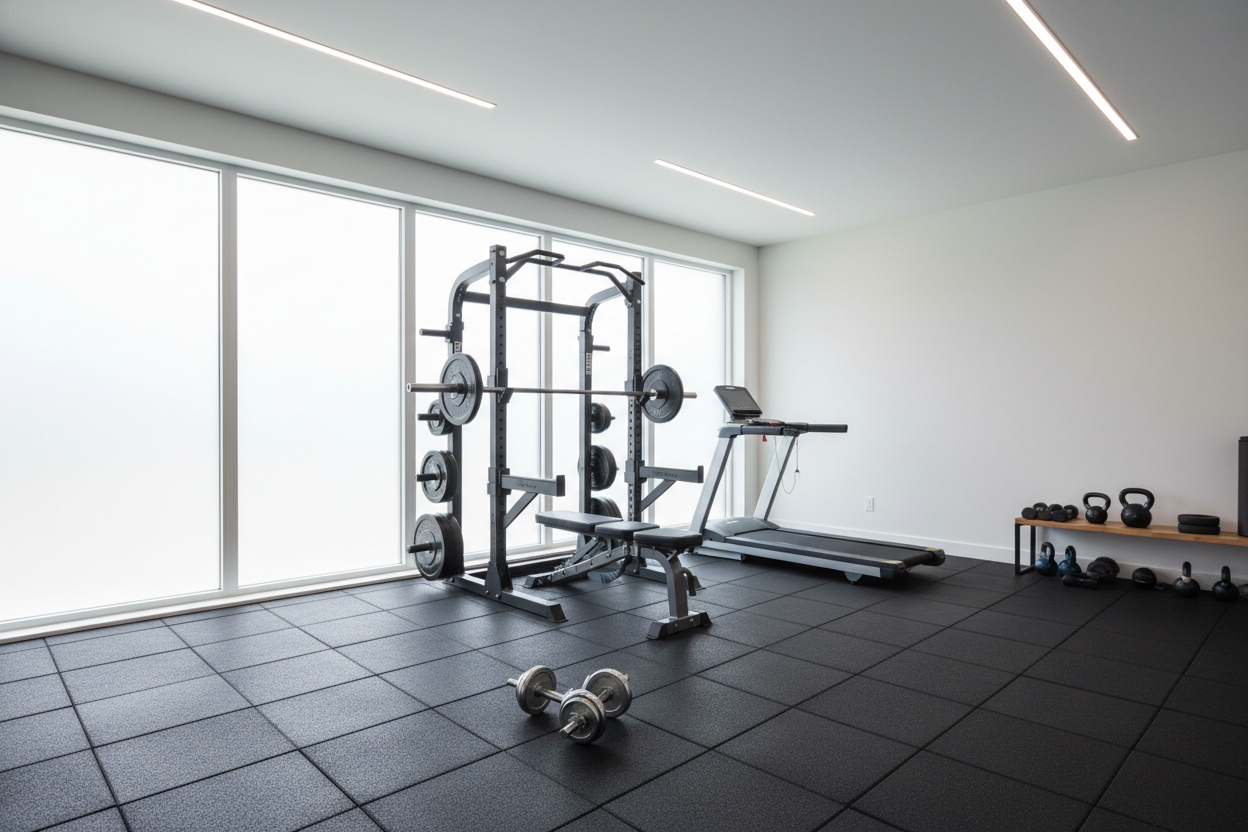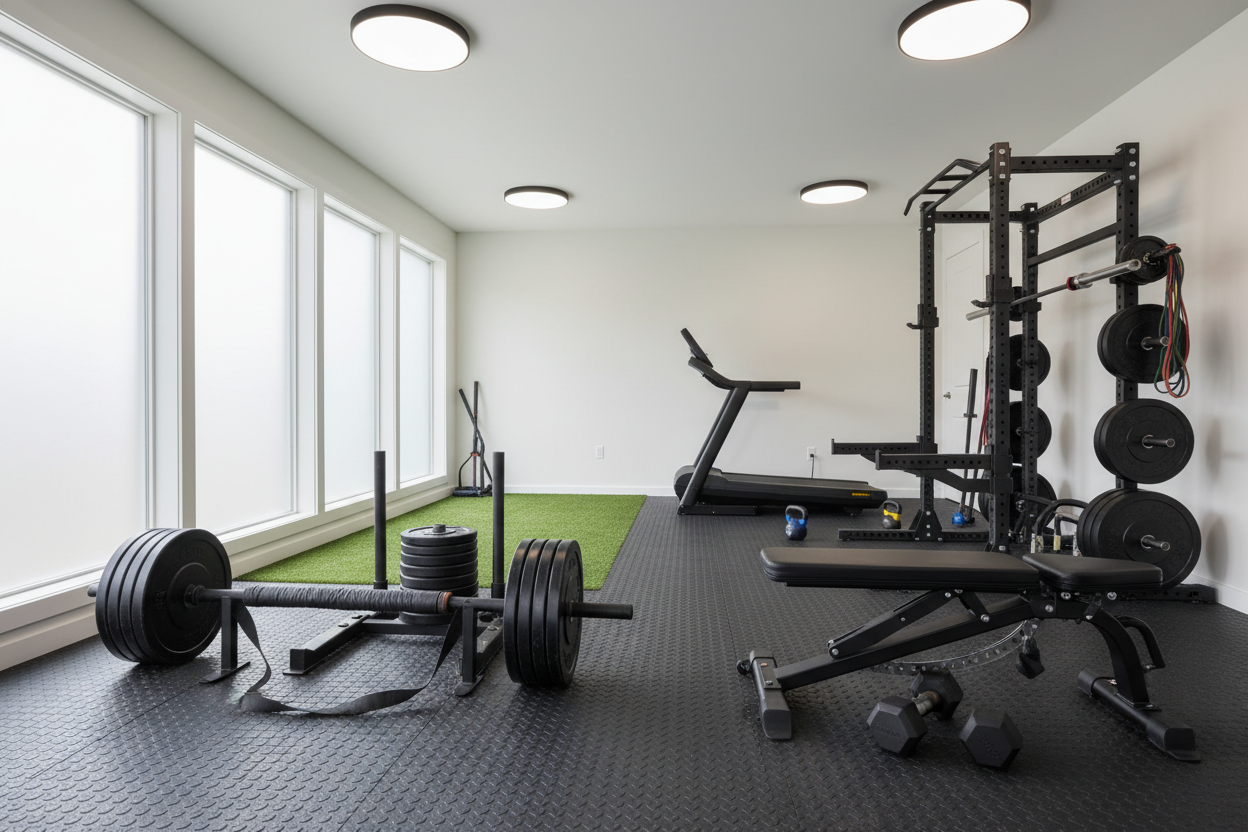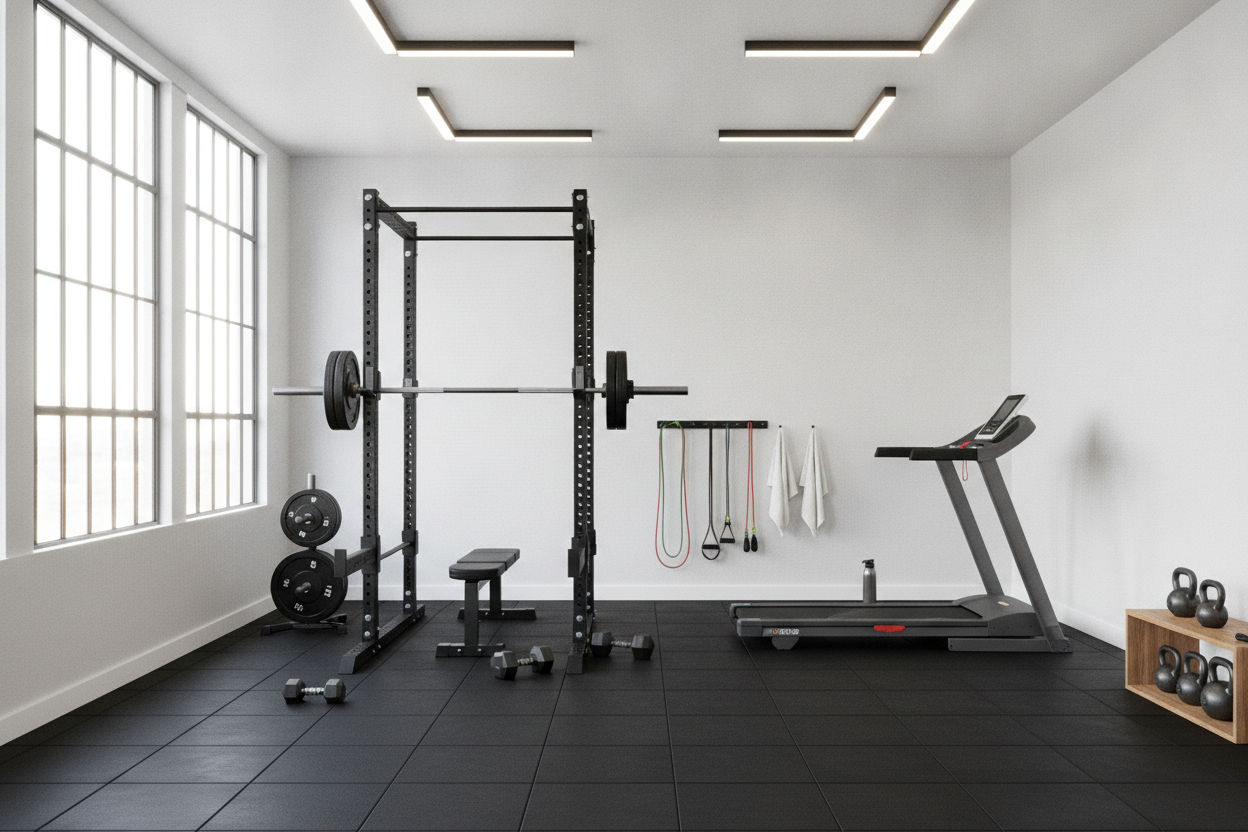
I Cut the Fluff: A Brutally Simple Workout for Home Gym Gains
I remember the day I finally cancelled my commercial gym membership. I was standing in a line three people deep for a cable crossover machine that looked like it hadn't been greased since the 90s. I went home, cleared out a 10x10 space in my garage, and realized I had no idea how to actually train without forty different machines. The biggest mistake I made—and the one I see most lifters make—is trying to force a 6-day bodybuilding split into a space that only has a rack and a barbell. You don't need a leg press to grow legs, and you definitely don't need a pec deck to build a chest.
Building a high-impact workout for home gym success isn't about variety; it's about intensity and mechanical tension. If you stop trying to mimic the local Life Time Fitness and start embracing the constraints of your garage, you'll actually start seeing the scale move. Here is how I stripped away the junk volume and finally started making progress again.
Quick Takeaways
- Stop trying to replicate cable exercises with bands; they aren't the same.
- Focus on four foundational movements: Push, Pull, Squat, and Hinge.
- Three days a week of high-intensity lifting beats six days of 'going through the motions.'
- Invest in a solid floor before you buy fancy bars.
- Progressive overload is the only metric that matters.
The Commercial Gym Trap Most Guys Fall Into
The first thing most people do when they build a home gym is try to replicate their old routine. They buy a cheap door-frame pull-up bar and some resistance bands, then spend forty minutes doing 'banded flyes' and 'banded pushdowns' trying to get a pump. It’s a waste of time. You cannot replicate the constant tension of a $4,000 functional trainer with a $20 piece of latex from Amazon.
When you train at home, you have to accept that your exercise selection is limited. That’s actually a superpower. In a commercial gym, you have too many options, which leads to 'program hopping' and doing six different variations of a bicep curl. In your garage, you have the barbell. It’s heavy, it’s hard, and it works. If you're bored, you're not lifting heavy enough.
I wasted two years doing high-rep 'maintenance' work because I was afraid of dropping heavy weights on my concrete floor. Once I stopped worrying about variety and started worrying about the weight on the bar, my physique changed more in three months than it had in the previous twelve.
The Non-Negotiable Rules of a Workout Routine With Home Gym Gear
To make a home-based program work, you need a framework. First, you have to prioritize heavy, multi-joint movements. If an exercise doesn't involve at least two joints moving, it shouldn't be in your primary rotation. You have limited time and limited equipment; make every set count.
Second, you need a stable environment. You can't squat 315 lbs if you're worried about your feet sliding or your floor cracking. I always tell people to invest in a Large Exercise Mat For Home Gym setups before they buy their second pair of 45s. Having a 7mm or 8mm thick non-slip surface changes the psychology of your lift. When you feel planted, you pull harder.
Finally, limit your 'junk volume.' At home, the temptation is to keep adding sets because you're already there. Don't. Stick to 3-5 high-quality exercises per session. If you can do more than that, you aren't training with enough intensity on the first three.
The 'Big Four' Movement Blueprint
Every effective workout routine with home gym equipment is built on four pillars. You need to squat (quad dominant), hinge (posterior chain), push (chest/shoulders), and pull (back). If you have a rack, a barbell, and a bench, you can do all of these at a world-class level.
For the push, stick to the overhead press and the floor press or bench press. For the pull, nothing beats the conventional deadlift and the bent-over row. These movements require massive stabilization from your core—something you lose when you sit in a machine. If you're unsure about your setup, I’ve put together Home Gym Workout Routines With Pictures: Form-First Guide to help you visualize the spacing and form needed for these lifts in tight quarters.
Focus on mechanical tension. That means controlled eccentrics (the way down) and explosive concentrics (the way up). Don't just move the weight from A to B. Make the muscle fight the weight the entire time.
Home Gym Workout Routines: The 3-Day A/B Split
This is the exact routine I run when I’m short on time but want to maintain strength. You alternate Workout A and Workout B on Monday, Wednesday, and Friday.
Workout A:
1. Back Squat: 3 sets of 5-8 reps
2. Bench Press: 3 sets of 5-8 reps
3. Barbell Row: 4 sets of 8-10 reps
4. Weighted Planks: 3 sets to failure
Workout B:
1. Deadlift: 2 sets of 5 reps (Heavy)
2. Overhead Press: 3 sets of 8-10 reps
3. Pull-ups or Chin-ups: 3 sets to failure
4. Lunges: 3 sets of 12 reps per leg
Rest 2-3 minutes between sets. This isn't cardio. You want your nervous system to recover so you can move the maximum amount of weight possible. If you’re a natural lifter, three days of high-intensity work is the sweet spot for recovery and growth.
How to Progress When You Run Out of Weight Plates
Eventually, you’re going to get strong enough that your 300-lb weight set isn't enough for deadlifts. Instead of dropping another $400 on iron immediately, you can use 'intensity multipliers.' Try adding a 3-second pause at the bottom of your squats or a 5-second eccentric on your rows.
Another tactic is density training—doing the same amount of work in less time. If you usually do 3 sets of 10 with 2 minutes of rest, try doing them with 60 seconds of rest. For more on this, check out The Density Workout for Home Gym Owners: Beating Light Weights. It’s a great way to keep progressing without needing a 1,000-lb stack of plates in your garage.
My Personal Take
I once bought a 'multi-function' home gym station from a big-box store. It had a leg extension, a butterfly press, and a lat pulldown. It took up half my garage and felt like it was going to snap every time I loaded more than 100 pounds. I ended up selling it for a loss and buying a used Rogue rack. My mistake was thinking I needed variety to get results. I didn't. I needed a heavy bar and the discipline to stop scrolling my phone between sets. My best gains didn't come from a fancy 6-day split; they came from getting really good at the boring stuff.
FAQ
Do I need a power rack for a home gym?
If you plan on squatting or benching heavy without a spotter, yes. It's a safety requirement, not a luxury. If space is tight, look for a folding rack or a high-quality squat stand with spotter arms.
Can I build muscle with just dumbbells?
Yes, but you'll hit a ceiling faster. A 50-lb dumbbell is great for rows, but it's light for squats. If you go the dumbbell route, invest in high-quality adjustables that go up to at least 80 lbs per handle.
How do I stay motivated training alone?
Stop relying on motivation. Set a schedule and treat it like an appointment. Also, get a decent sound system. Blasting your own music without headphones is one of the best perks of a home gym.