I Cut My Sets in Half: How Can You Build Muscle Mass Doing Less
I spent three years in my garage gym doing 25 sets per body part. I was tired, my joints felt like they were filled with crushed glass, and my shirts weren't getting any tighter. I kept asking myself, how can you build muscle mass without spending half my life under a barbell? I was following the 'more is better' philosophy that most of us fall for when we first start out.
Quick Takeaways
- Junk volume is any set that doesn't force your body to adapt.
- Intensity (effort) is the primary driver of hypertrophy, not the total clock time.
- Two sets taken to absolute failure are more effective than five sets done with 'good form' but low effort.
- Recovery is a finite resource; don't spend it all on empty repetitions.
Why I Stopped Doing 20 Sets Per Body Part
The trap is easy to fall into. You see a pro bodybuilder on YouTube doing six different variations of a lateral raise and you think that's how can you gain muscle. I was doing the same. I'd spend two hours in my garage, hitting every angle possible. But here is the reality: if you can do 20 sets for your chest and still have the energy to check your phone between sets, you aren't training hard enough. You're just performing 'junk volume.'
Junk volume is the work you do after you've already triggered the growth response. It doesn't help you with how to get build muscle; it just eats into your ability to recover. My progress stalled because I was digging a recovery hole faster than my body could fill it. I was constantly sore, my sleep was trash, and my numbers on the big lifts were actually going down. I realized that to see how grow muscle mass effectively, I had to stop measuring my workouts by the hour and start measuring them by the level of discomfort I could tolerate.
By cutting my volume in half, I gave my central nervous system a break. I stopped doing five sets of 'okay' effort and switched to two sets of 'I might die' effort. Suddenly, the weights started moving up again. My muscles felt denser. I wasn't just chasing a pump; I was chasing actual tissue growth. This shift in mindset is the best way to get muscle mass for anyone who has a life outside the gym.
The Science of 'Effective Reps' (And Why the First 8 Don't Matter)
Let's talk about the biological switch. Your body is lazy; it doesn't want to build muscle because muscle is metabolically expensive to keep. To convince it otherwise, you have to provide a reason. That reason is the 'effective rep.' If you're doing a set of 12 reps with a weight you could actually lift 15 times, the first 8 or 9 reps are essentially a warm-up. They don't recruit the high-threshold motor units required for building muscle growth.
It is only when the bar speed starts to involuntarily slow down—no matter how hard you're pushing—that the magic happens. These are the reps that signal the body to increase gains. If you do 5 sets of 12 and stop 3 reps short of failure every time, you've done 60 reps but maybe only 5 of them were actually 'effective.' However, if you do 2 sets to absolute mechanical failure, you might get 10-12 effective reps in a fraction of the time. This is how can you increase muscle mass without living in your garage.
When you understand this, the 'how to gain massive muscle' puzzle becomes much simpler. You don't need variety; you need intensity. You need to reach the point where your nervous system is screaming at you to stop, and then you do one more. This is the best way to put muscle mass on because it forces the maximum amount of mechanical tension on the muscle fibers. If you aren't reaching that point, you're just exercising; you aren't training.
How to Tell if You're Actually Lifting Hard Enough
Most lifters are lying to themselves about how hard they work. I know I was. We use a scale called Reps in Reserve (RIR). If you finish a set of squats and you could have done three more, that's 3 RIR. For most people trying to figure out how to gain muscle, 3 RIR is the absolute maximum cushion you should have. If you're constantly at 5 RIR, you're just burning calories, not building mass.
The best way to gain mass and muscle is to aim for 0 to 1 RIR on your working sets. How do you know you're there? Your face should look like you're trying to solve a complex math equation while being chased by a bear. Your bar speed should slow to a crawl. If the last rep looks as fast as the first, you didn't work hard enough. This is how can you make your muscles bigger: by making the muscle work so hard it has no choice but to grow.
Practical cues help here. If you find yourself thinking about what you're having for dinner during the middle of a set, you've lost the intensity. You need to be internally focused on the muscle contraction. I started filming my sets. What I thought was failure was often just me getting uncomfortable. When I watched the footage, I realized I had two or three more reps in the tank. Correcting that was how I finally saw muscles gain in areas that had been flat for years.
Building a Low-Volume, High-Yield Routine at Home
To make this work in a home gym, you need to be surgical. You don't need a 12-station cable machine. You need a way to load weight and a way to stay stable. The goal is to get in, hit 2-3 exercises per body part, and get out. This minimalist approach is how to get muscles bigger while keeping your sanity. You focus on the big movers: presses, rows, squats, and hinges.
Structure your workout around 2 heavy working sets per exercise. The first set is your 'top set'—the heaviest weight you can handle for 6-8 reps. The second set is a 'back-off set' where you drop the weight by 10-15% and aim for 10-12 reps. Both must be taken to the brink. This combination of heavy mechanical tension and metabolic stress is how to grow muscle mass efficiently.
The Exercises That Give You the Biggest Bang for Your Buck
When you're doing low volume, exercise selection is everything. You can't waste time on 'fluff' exercises. You need movements that allow for a deep stretch and a massive load. Think Bulgarian split squats instead of leg extensions. Think weighted pull-ups instead of straight-arm pulldowns. When deciding how to gain muscle mass faster, I usually lean toward movements that let me load the most weight safely.
Barbells are great, but don't sleep on dumbbells or even high-quality resistance bands for finishers. The key is to find the movements that you can progress on every single week. If you can add 5 pounds or one extra rep to your lift every session, you are winning the war. That is the best way to get muscle mass. It’s not about the fancy equipment; it’s about the logbook. If the numbers are going up and the intensity is high, the muscle will follow.
Setting Up Your Space for Absolute Failure
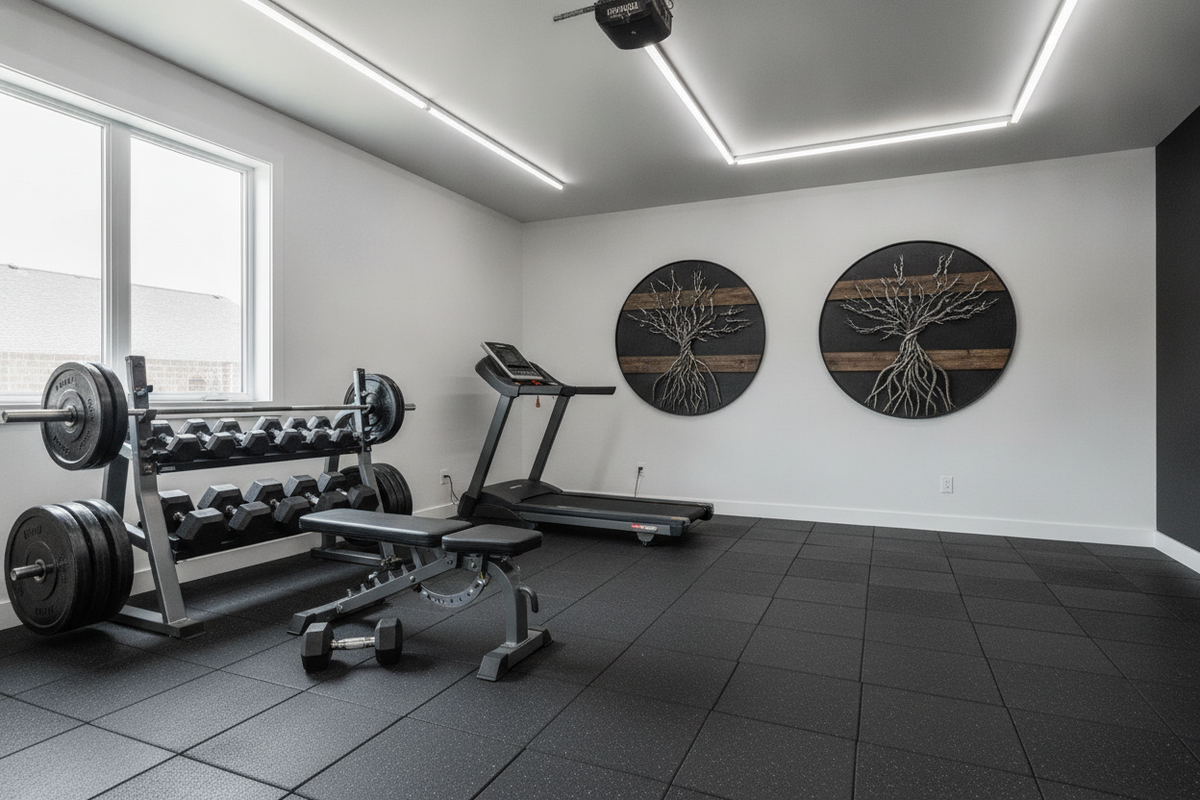
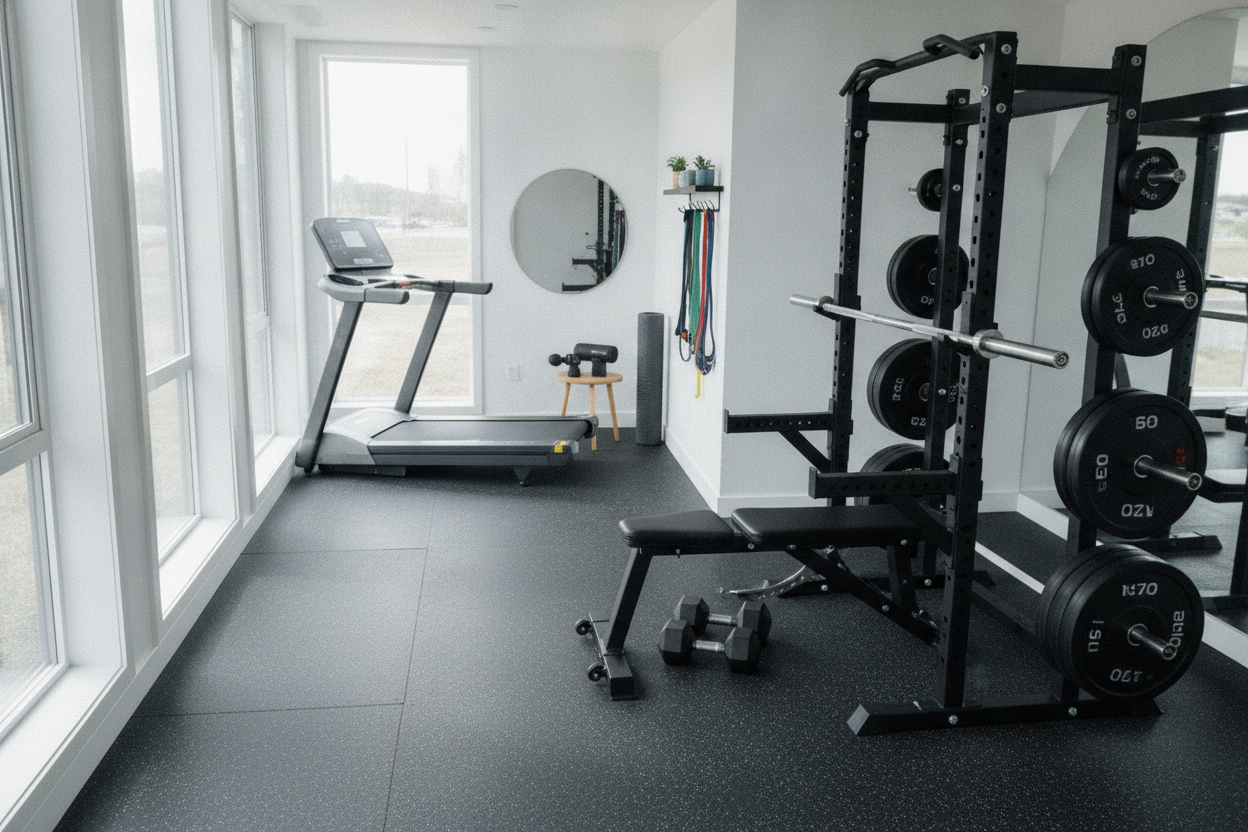
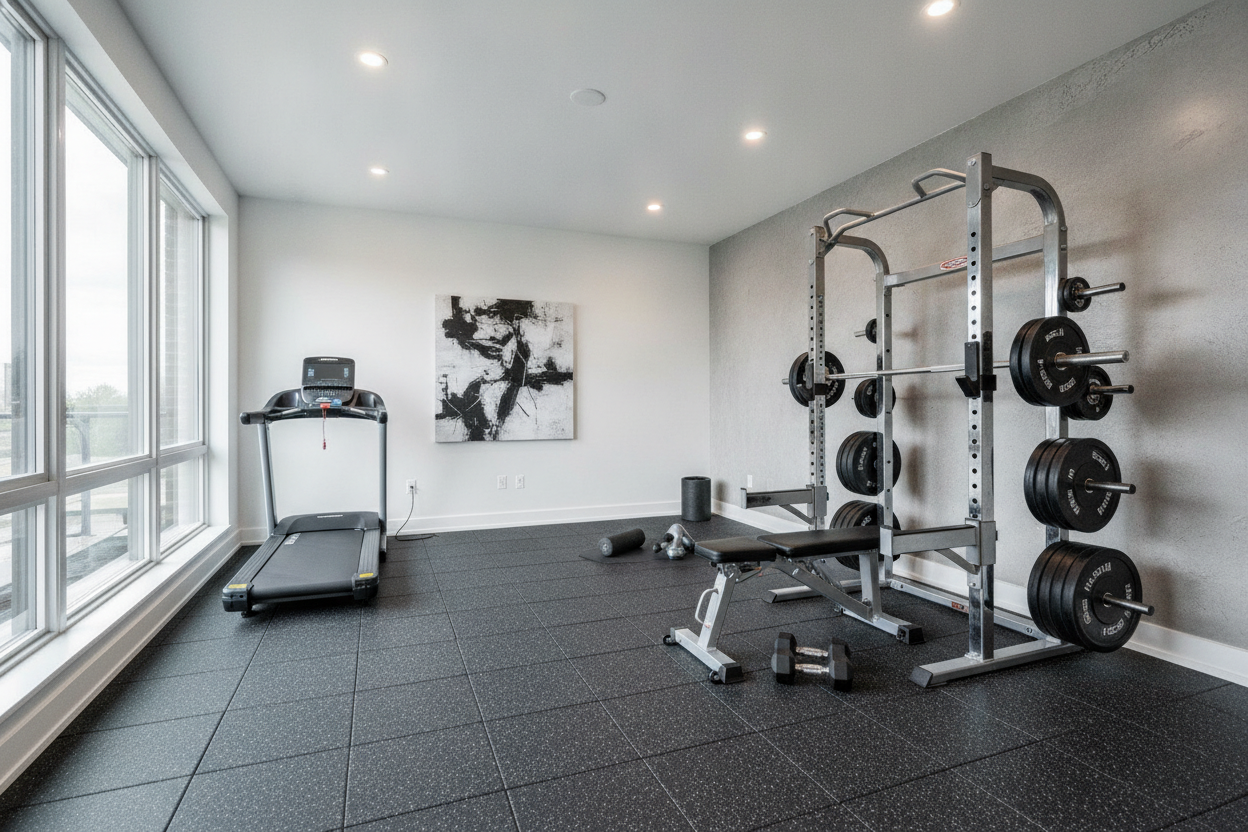
If you're going to train to failure, you have to be safe. You can't push a set of bench presses to the limit if you're worried about the bar crushing your throat. You need a power rack with spotter arms or a way to bail safely. You can even gain muscle mass on the floor if you're smart about your bracing and floor press variations, which naturally limit the range of motion and keep you out of the 'danger zone' for your shoulders.
Stability is also a huge factor. If your feet are slipping on a dusty garage floor, you'll never be able to exert maximum force. I recommend the best large exercise mat you can afford to ensure you aren't sliding mid-set. For my own space, I use the extra wide 7 feet exercise mats because they give me enough room to dump a bar without cracking the concrete or losing my footing. When you feel stable, you can focus 100% of your mental energy on the muscle you're trying to kill.
The Hard Truth About Recovery and Growth
Here is the part most people hate: you don't grow in the gym. You grow while you're sleeping or sitting on the couch. The high-intensity, low-volume approach works because it provides a massive stimulus but creates less overall systemic fatigue than a high-volume marathon session. This allows your body to actually recover and build new tissue.
If you're wondering how to gain muscle, look at your plate and your pillow. If you aren't eating enough protein and sleeping 7-8 hours, all the 'effective reps' in the world won't save you. You've provided the spark; now you need to provide the fuel. Trust the process. It feels weird to leave the gym after 45 minutes, but when you start seeing your lifts explode and your clothes get tighter, you'll never go back to the two-hour slog.
FAQ
How many days a week should I train with low volume?
Three to four days is plenty. Since you're pushing each set to failure, your body needs more time to recover between sessions. Quality over quantity always wins.
Can I really grow muscle with just two sets?
Yes, provided those two sets are high intensity. Most of the growth stimulus happens in those final reps. Adding more sets often just adds fatigue without adding more growth.
What if I don't feel sore the next day?
Soreness is a terrible indicator of a good workout. Progressive overload—adding weight or reps to the bar—is the only metric that matters for long-term growth.