I Cringe Watching These Muscle-Building Exercises For Beginners
I remember my first leg day in my drafty garage. I was wearing squishy running shoes on bare, dusty concrete, swinging 20-pound dumbbells like they were kettlebells. I thought I was crushing it because I was sweating, but I was really just wasting time. Most muscle-building exercises for beginners fail because people confuse 'moving weight' with 'training muscle.'
Quick Takeaways
- Tension matters more than the number on the dumbbell.
- Stability is the foundation of force—don't lift on slippery floors.
- Master the four core movements before adding 'fancy' variations.
- Control the eccentric (lowering) phase to trigger real growth.
The Trap of Just Moving the Weight
Most novices treat a bicep curl or a press like a physics problem: get the weight from Point A to Point B. They use momentum, shoulder shrugging, and a weird little hip dance to get the weight up. While the weight moved, the actual muscle tissue barely felt a thing. Physics won; you lost.
You have to stop obsessing over the weight on the bar during your first few months. If you can't feel the muscle stretching under load and contracting at the top, you aren't building mass; you're just practicing being inefficient. Real good muscle building workouts for beginners start with internal focus, not external ego.
Why Your Footing is Sabotaging Your Force Production
You can't fire a cannon from a canoe. If you are lifting on slick garage concrete or those cheap, 1/2-inch foam puzzle mats that slide around when you sweat, you are leaking energy. Your brain will literally down-regulate your strength if it feels your feet aren't secure.
I spent two years sliding around before I finally invested in a large exercise mat for home gym setup that actually gripped the floor. A solid, high-density rubber surface allows you to 'screw' your feet into the ground. This creates torque in the hips and stability in the spine, which is the only way to safely move heavy loads.
4 Boring Lifts You Actually Need to Master
The fitness industry loves to sell 'muscle confusion,' but your muscles don't need to be confused; they need to be challenged. You only need to master four patterns: the squat, the hinge, the horizontal push, and the vertical pull. Everything else is just dressing.
For the push, beginners often flare their elbows and wreck their shoulders. When looking for effective chest workouts for building lean muscle fast, the secret is usually better technique—tucking the elbows to 45 degrees and focusing on the squeeze. Don't touch a cable crossover until you can do 10 perfect push-ups and a solid dumbbell bench press.
Slow Down: The Real Secret to Newbie Gains
The fastest way to spot a beginner is to watch how fast they drop the weight. Gravity is free, so why let it do the work? The eccentric phase—the part where you lower the weight—is where the most mechanical tension and muscle damage occur. Rushing this phase is leaving 50% of your gains on the table.
I tell everyone to use a 3-1-1 tempo: three seconds down, a one-second pause, and one second to explode up. Now, some internet gurus might claim your muscle-building exercises for beginners are way too slow if you aren't moving with maximum velocity, but for a novice, control must come before speed. Once you own the movement, then you can add the fire.
Building a Barebones Setup to Support Your Growth
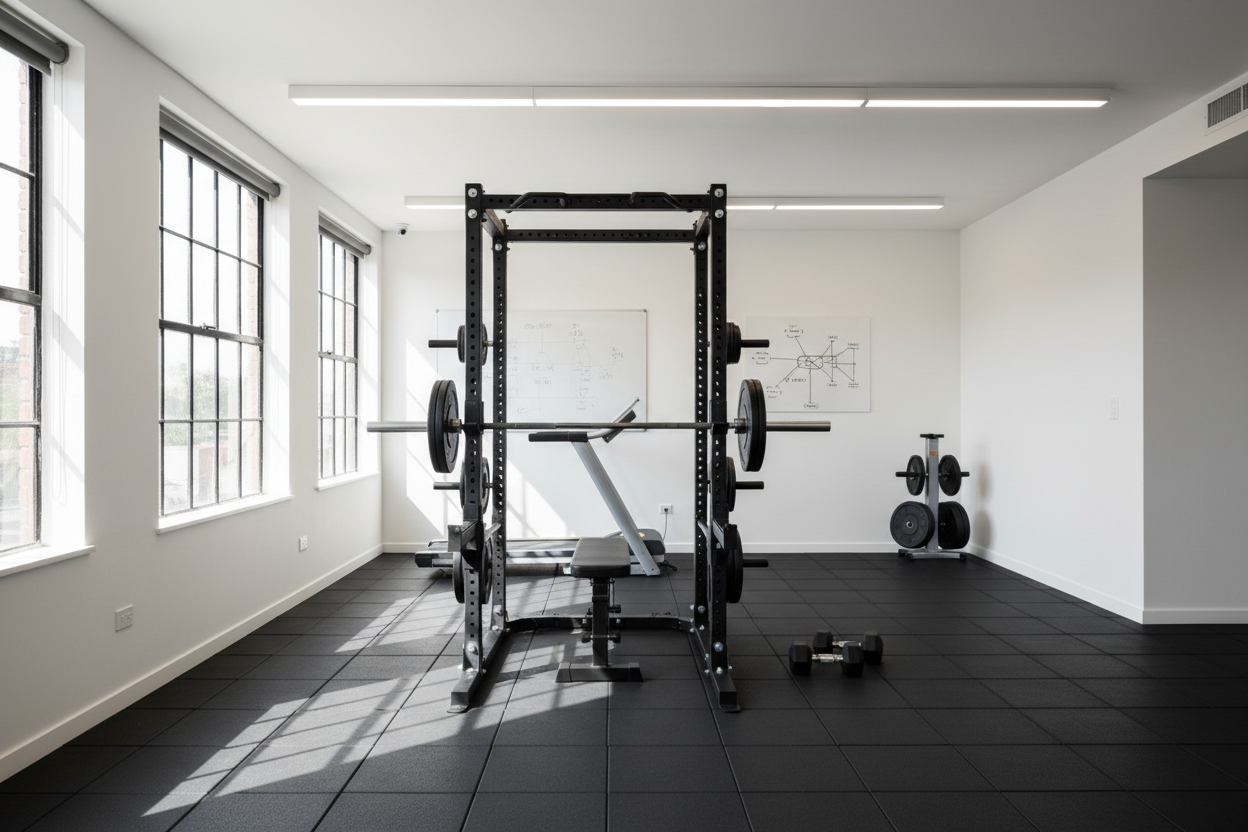
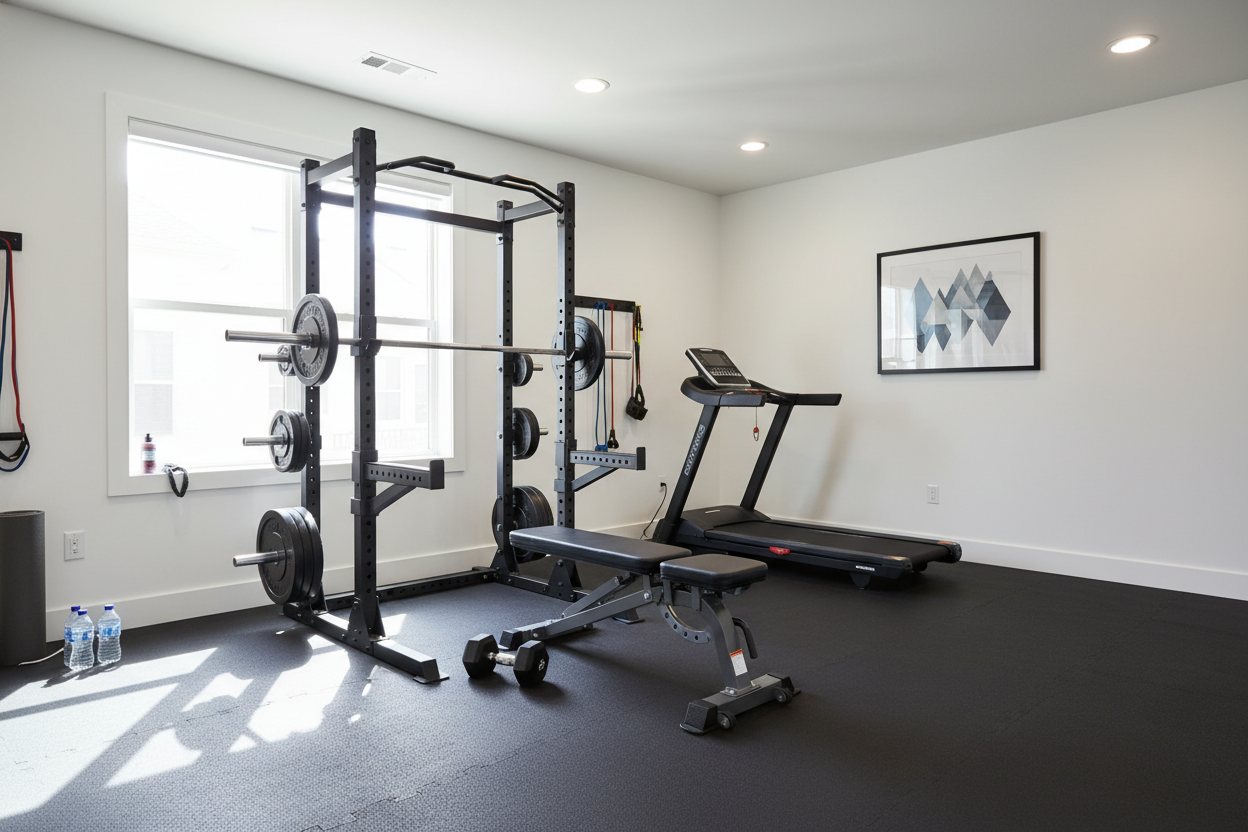
You don't need a $5,000 commercial rack. To get through your first year, you need a heavy-duty adjustable bench, a set of dumbbells that go up to at least 50 lbs, and a dedicated floor space. I personally recommend a 6X8Ft Exercise Mat because it fits perfectly in a standard garage corner and gives you enough room to lung without hitting a wall.
Buy equipment that is rated for at least 600 lbs (user weight plus weights). I once bought a 'budget' bench that creaked when I sat on it with 40-lb dumbbells. It’s hard to focus on muscle tension when you’re wondering if the weld is going to snap under your shoulder blades.
Personal Experience: The 'More is Better' Mistake
Early on, I thought doing 20 different exercises was the key to growth. I’d spend two hours in the garage doing every variation of a curl I could find on YouTube. My arms stayed the same size for six months. It wasn't until I cut my workout down to five basic moves—and actually tracked my weights—that my shirt sleeves started getting tight. Simplicity is a superpower.
FAQ
Do I need a barbell to build muscle?
No. Dumbbells are actually better for beginners because they allow for a natural range of motion and fix strength imbalances between your left and right sides.
How many days a week should I train?
Three days a week is the sweet spot for beginners. It gives your central nervous system enough time to recover between sessions while still providing enough stimulus to grow.
Should I lift until I can't move?
Absolutely not. Training to 'failure' every set is a recipe for burnout and injury. Leave one or two reps 'in the tank' so you can maintain perfect form.