I Built a 2-Person Gym: How to Share Fitness Equipment at Home
I remember the day my wife decided she wanted to start lifting. My garage gym, which was once a messy cave of heavy iron and grease, suddenly needed to accommodate someone who wasn't 6'1' and 220 lbs. Buying fitness equipment at home is a logistical puzzle when you're trying to fit two people with vastly different strength levels and heights into one 400-square-foot box.
- Prioritize pop-pins over bolts: If it takes a wrench to adjust, you won't use it.
- Laser-etched numbers are a lifesaver: Knowing your 'squat number' vs your partner's 'squat number' saves ten minutes a session.
- Invest in a 15kg bar: It is not just about the weight; the 25mm grip diameter is better for smaller hands.
- Double the flooring: Two people training means twice the impact on your concrete slab.
The Multi-User Gym Problem Nobody Mentions
The real killer of a shared workout isn't the lack of gear; it's transition friction. If you have to spend five minutes stripping 45-lb plates and lowering J-cups every time you swap sets, you're going to quit. When you audit your workout equipment home setup, you need to look at how quickly a piece of gear resets. If a machine has a fixed seat height that doesn't work for one of you, it's dead weight. You want a space that flows, not a space that requires a tool kit to change users.
Why Rack Hole Spacing Matters More Than You Think
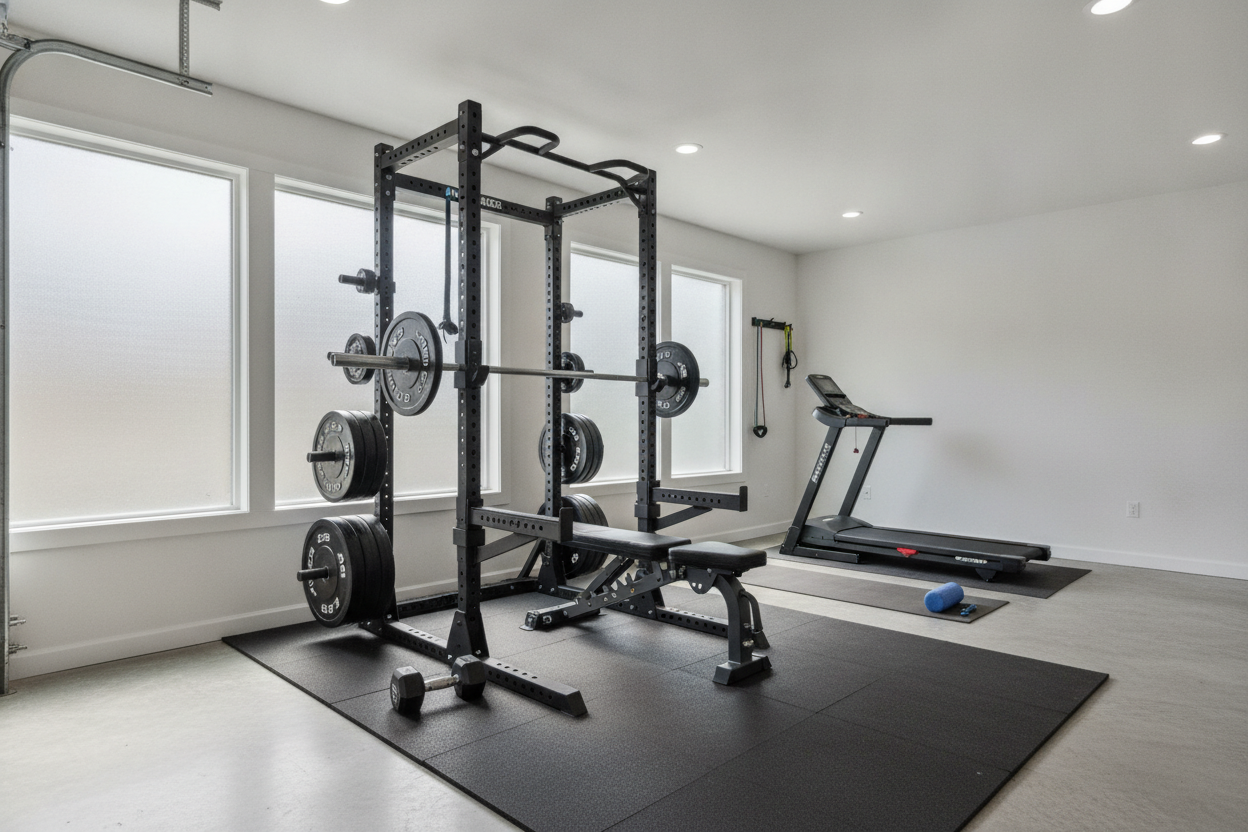
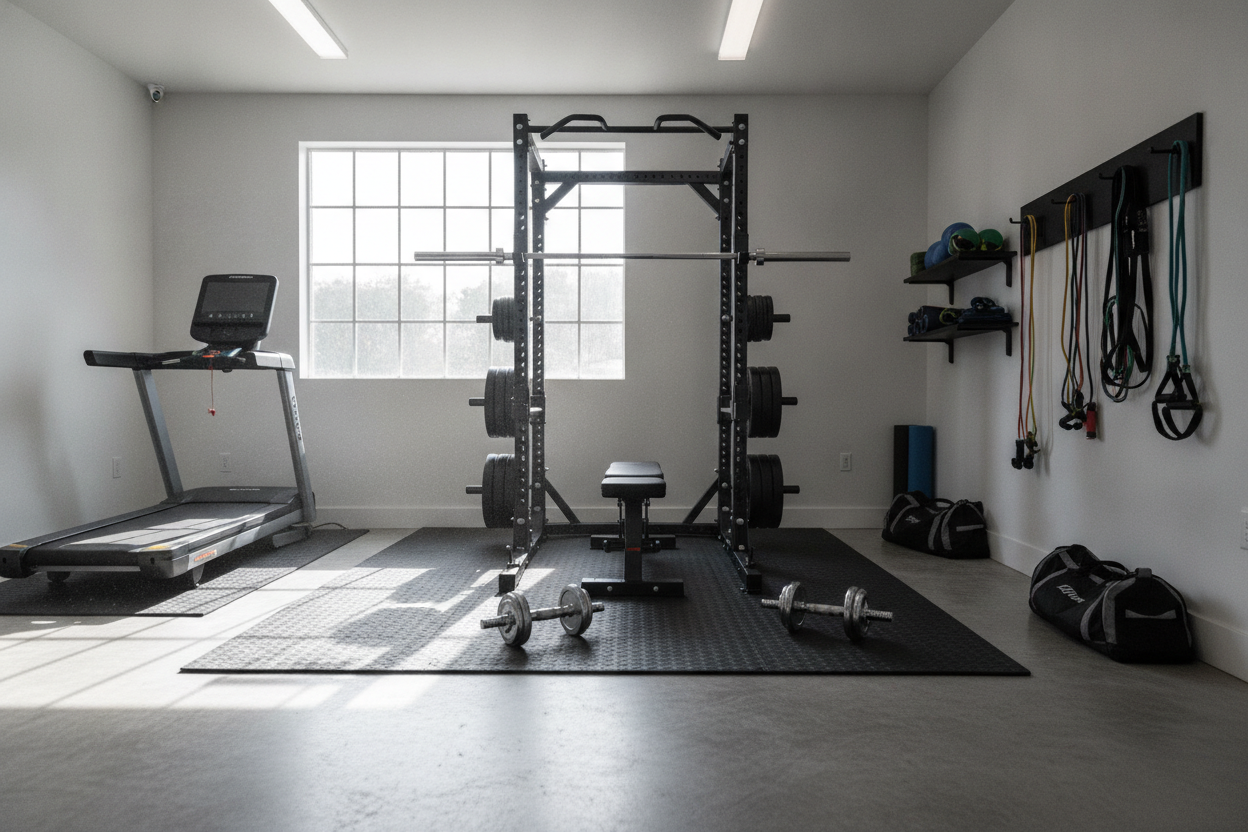
If you're buying a power rack, do not settle for 3-inch hole spacing. I made that mistake once. For a 6-foot lifter and a 5-foot lifter, those big gaps mean the safety pins are either too high (cutting your range of motion) or too low (risking your neck). You need Westside spacing—1-inch gaps through the bench and pull-off zone. This allows both of you to set safeties at the exact millimeter needed for a safe fail. I'd suggest keeping an eye on home gym equipment deals to snag a 3x3-inch 11-gauge steel rack with precise spacing without overpaying.
The Barbell Dilemma: Do You Really Need Two?
In short: Yes. Don't force a beginner or a smaller-framed person to use a 29mm power bar. It’s like trying to grip a soda can. A 15kg (33lb) bar with a 25mm shaft is easier to hook grip and much more comfortable for cleans and presses. Having two bars also allows you to both deadlift or press simultaneously if you have a second set of racks or a wall-mount folding station. It’s the best $200 you’ll spend to stop the bickering over who gets the 'good' bar.
Protecting Your Floors From Double the Impact
Most people think 3/4-inch horse stall mats are enough. They aren't—not when two people are dropping weights in the same room four days a week. I started seeing hairline cracks in my garage floor after six months of shared heavy pulling. To fix this, I added a 6x8ft exercise mat for home workout as a secondary layer in our 'open' zone. It’s perfect for the person doing kettlebell work or stretching while the other occupies the main lifting platform. It saves the foundation and your joints.
The Core Pieces Every Shared Space Needs
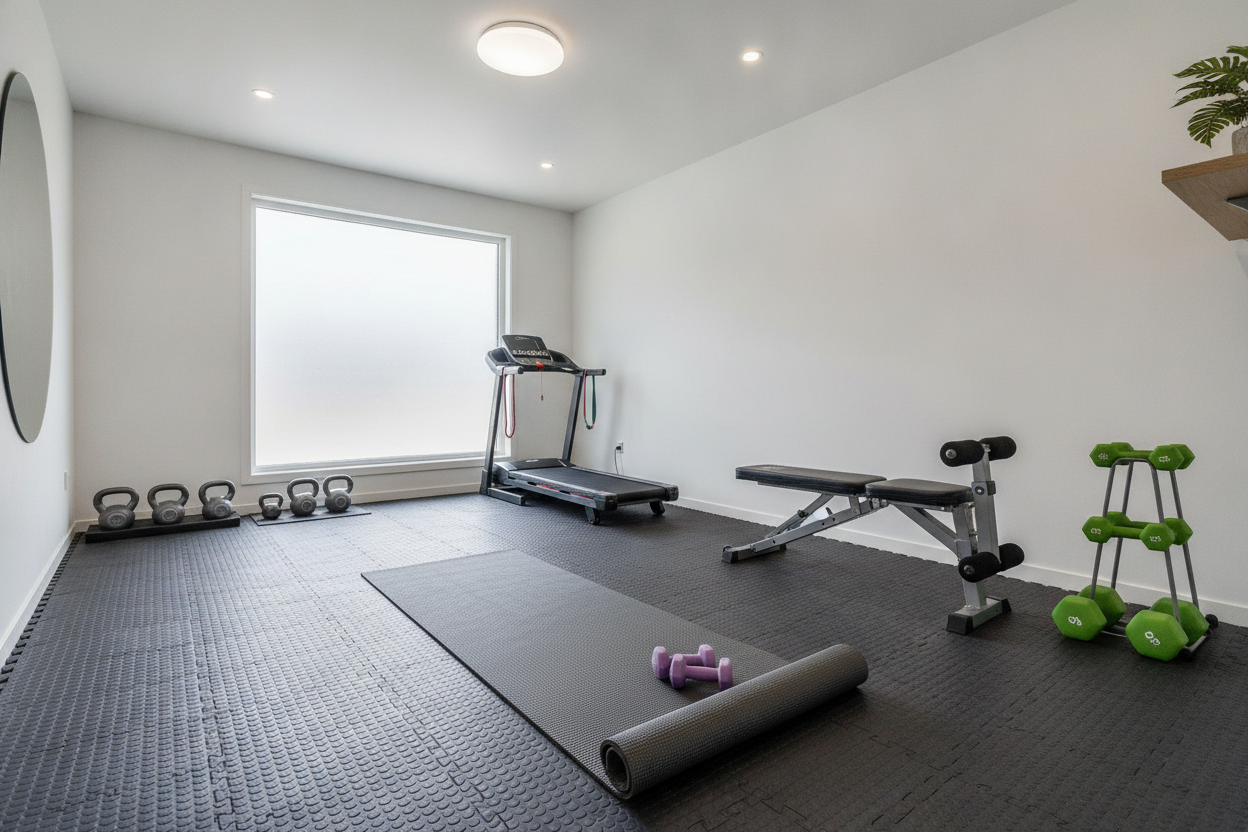
You don't need two of everything; you just need the right things. Adjustable dumbbells are the gold standard here. A pair that goes from 5 to 50 lbs replaces an entire wall of fixed bells. Look for a functional trainer with a 2:1 cable ratio. This makes the weight increments smaller and more manageable for someone just starting out. When searching for the best home fitness equipment for every workout need, prioritize home fitness exercise equipment that uses selectorized stacks. Swapping a pin is always faster than sliding plates, especially when you're alternating sets of tricep pushdowns.
Shared Gym FAQ
Do we need two benches?
Only if you plan on benching at the exact same time. Otherwise, one high-quality FID (Flat, Incline, Decline) bench is enough, provided it has wheels for easy movement.
Is a 15kg bar too light for a man?
It's a tool, not a statement of masculinity. It's great for technique work, high-rep overhead pressing, or rehab. I use my wife's 15kg bar more than I'd like to admit for mobility drills.
How do we handle different weight plate needs?
Buy more 10-lb and 5-lb plates than you think you need. Shared gyms often run out of 'change plates' long before they run out of 45s.