I Always Pair These back and chest exercises for women — Here is Why
I remember staring at a pair of 5lb neoprene dumbbells in my early twenties, thinking they were the only tools allowed in my 'toning' routine. It was boring, ineffective, and frankly, a waste of my 45-minute window before the workday started. Switching to heavy back and chest exercises for women changed my physique and my strength levels in ways those pink weights never could.
Quick Takeaways
- Antagonist supersets (pairing push/pull) save massive amounts of time without losing intensity.
- Heavy loads build bone density and real-world strength that circuits can't match.
- Floor presses are a shoulder-saver for home lifters training without a spotter.
- Chest-supported rows prevent the lower back from giving out before your lats do.
Why You Need to Stop Training Chest and Back on Separate Days
The old-school bodybuilding split has you doing 'Chest Monday' and 'Back Tuesday.' For most of us with actual jobs and lives, that is inefficient. When you perform a chest and back workout for women, you are utilizing antagonist supersets. While your chest is pushing, your back is resting, and vice versa. This keeps the blood flowing to the upper body without the long recovery times needed between sets of the same muscle group.
This isn't just a time-saving hack; it's a foundational strategy. I've often referred to this as The Chest-and-Back Workout for Muscle Mass I Swear By because it keeps the heart rate elevated while allowing you to move serious weight. You get the cardiovascular benefit of a circuit with the mechanical tension of a heavy lifting session.
The Biomechanics of a True Push-Pull Session
There is a specific magic in the way a chest back workout women perform affects posture. Most of us spend our days hunched over keyboards, which shortens the pec muscles and weakens the upper back. By pairing a heavy horizontal push with a heavy horizontal pull, you are balancing the tension across the shoulder joint.
When you pull a heavy weight toward your torso, you are actively stretching the chest wall. When you press, you are engaging the serratus and stabilizing the scapula. This reciprocal inhibition makes for a chest back workout women find more effective for improving range of motion and fixing that 'desk hunch' than stretching alone ever will.
My 4 Non-Negotiable Upper Body Movements
If you want results, you have to move away from the high-rep, low-weight mindset. The back and chest workout female lifters actually need focuses on high-quality compound movements. These four exercises form the bedrock of my programming because they offer the most bang for your buck. Mastering these will also make your heavy back and shoulder workout much more productive because your stabilizing muscles will be bulletproof.
Heavy Dumbbell Floor Presses
I prefer the floor press over the standard bench press for home trainees. By lying on the floor, the ground acts as a hard stop for your elbows. This prevents you from over-extending the shoulder joint under load. It allows you to grab those 40 or 50-pound dumbbells and push to failure without fearing you'll get pinned or tear a rotator cuff.
Chest-Supported Dumbbell Rows
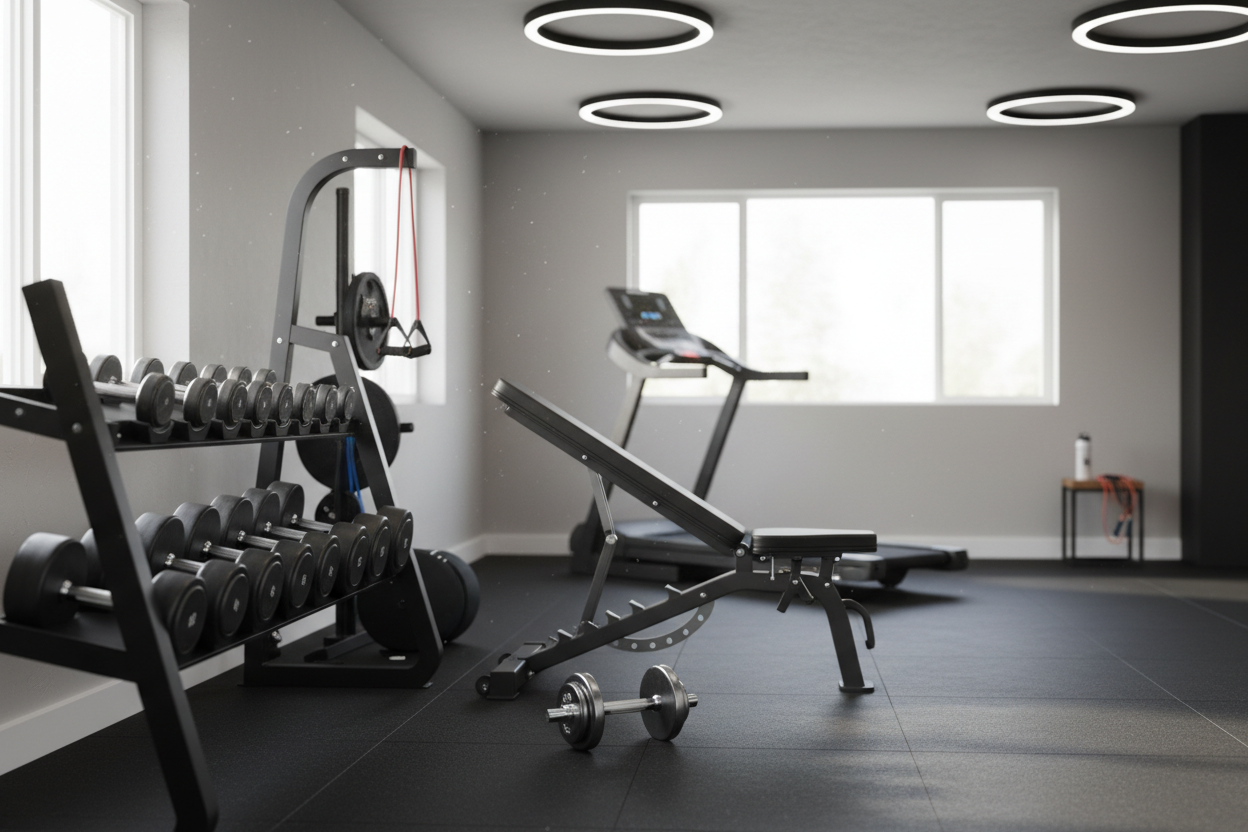
Most people 'ego-row' by swinging their hips and using momentum. By laying face-down on an incline bench set to 45 degrees, you isolate the lats and rhomboids entirely. It removes the lower back from the equation, which is usually the first thing to tire out during a chest back workout for women. If your bench has thin padding, throw a towel over it so the edge doesn't dig into your ribs.
Protecting Your Joints When Going Heavy at Home
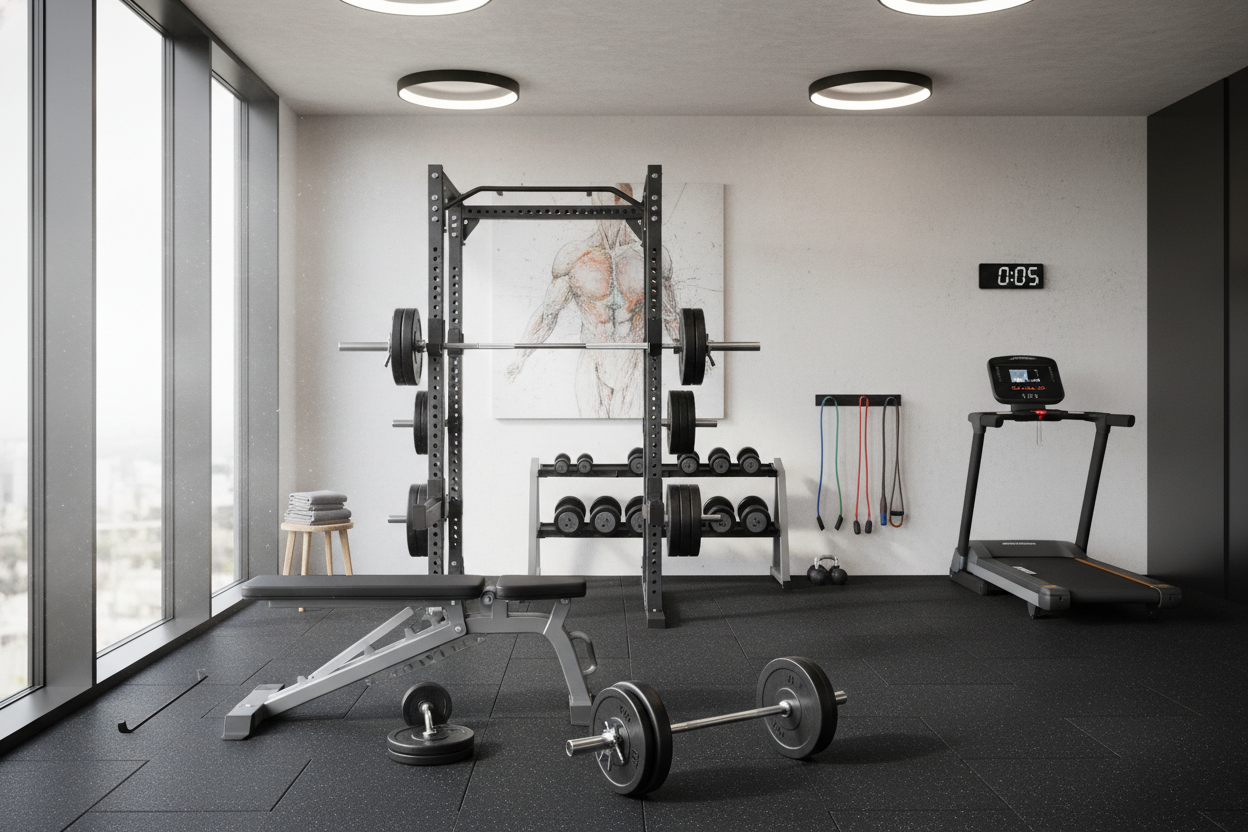
If you are training in a garage or a spare room, you have to think about the environment. Dropping a 60lb dumbbell on bare concrete or thin carpet is a recipe for a cracked slab and a noise complaint from the neighbors. I learned the hard way that 'standard' yoga mats don't cut it when you start moving real weight.
Investing in high-quality gym flooring for home workout is essential if you're doing floor presses or heavy rows. You need a surface that absorbs shock and provides enough grip so your feet don't slide out during a press. A solid 7mm or 8mm mat is the difference between a stable lift and a potential injury.
How to Program This Routine for Maximum Growth
To see real changes in muscle definition, aim for 3 to 4 sets of 8 to 12 reps per exercise. I like to pair one push and one pull together with 60 seconds of rest between the pair. This ensures you're recovered enough to stay heavy but keeps the session under 40 minutes. For more detailed templates, you can browse the Workout Hub to see how this fits into a full weekly split.
Personal Experience: The 'Roll of Shame'
A few years ago, I tried to max out my bench press on a cheap, narrow bench without a rack. I couldn't lock out the last rep and had to perform the 'roll of shame'—rolling a 135lb barbell down my ribs and stomach to get out. It was painful and embarrassing. That experience is exactly why I transitioned to heavy floor presses and dumbbells for my chest and back workout for ladies. Safety isn't just a footnote; it's what allows you to train hard enough to actually see progress.
FAQ
Will heavy chest exercises make me look 'manly'?
No. Women lack the testosterone levels to accidentally build massive pectoral bulk. Instead, you'll develop better posture and a 'lifted' appearance in the upper chest area.
Can I do this workout with resistance bands?
You can, but you'll hit a plateau quickly. To build muscle, you need mechanical tension that usually requires dumbbells or kettlebells once you move past the beginner stage.
How many times a week should I do this?
Twice a week is the sweet spot. It gives your central nervous system enough time to recover while keeping protein synthesis elevated in the target muscles.