How Workout At Home Routines Succeed: The Zone Method
I remember trying to train in my cramped 600-square-foot apartment a few years ago. I would push the coffee table aside, stare at the TV, and completely lose my drive. If you are trying to figure out how workout at home routines actually stick, you are definitely not alone. The failure rate is high, and it usually happens because your brain associates the living room with resting and Netflix, not sweating and heart rates.
Over the years, I have built dozens of garage and spare-bedroom setups for my personal training clients. The ones who succeed do not always have $5,000 power racks or endless square footage. They just know how to create a psychological boundary. I call this 'sensory zoning.' You use physical anchors like flooring, lighting, and specific playlists to tell your nervous system it is time to work.
Quick Takeaways
- Your brain needs a physical boundary to separate 'relaxing space' from 'training space.'
- You do not need an entire room; a dedicated 6x8 foot floor space is enough for 90% of exercises.
- High-density flooring protects your joints during plyometrics and saves your subfloor from dumbbell drops.
- Intensity and strict rest periods matter more than workout duration when training in your living room.
Why Is It So Hard To Workout At Home? The Boundary Problem
Clients ask me constantly, why is it so hard to workout at home? The answer lies in environmental psychology. When you go to a commercial facility, the smell of rubber, the loud music, and the sight of iron immediately trigger a physiological response. Your heart rate elevates slightly before you even lift a weight. Working out in home environments usually means your brain is fighting conflicting signals. You are trying to do burpees two feet away from the couch where you eat dinner.
Motivation relies on momentum, and momentum dies when you face friction. If you have to spend ten minutes clearing away kids' toys, moving furniture, and hunting for your 15-pound dumbbells, your workout is dead before it starts. The lack of physical boundaries creates a psychological blur. You need a way to instantly transition your mind.
One of the best tips for training at home is to eliminate the setup phase. Your environment must dictate your behavior. If you want to know how to properly workout at home without losing focus, you have to stop treating your living room like a multi-purpose space during that 45-minute window. You need a dedicated zone that looks, feels, and sounds different from the rest of your house.
The Physical Anchor: Defining Your Training Zone
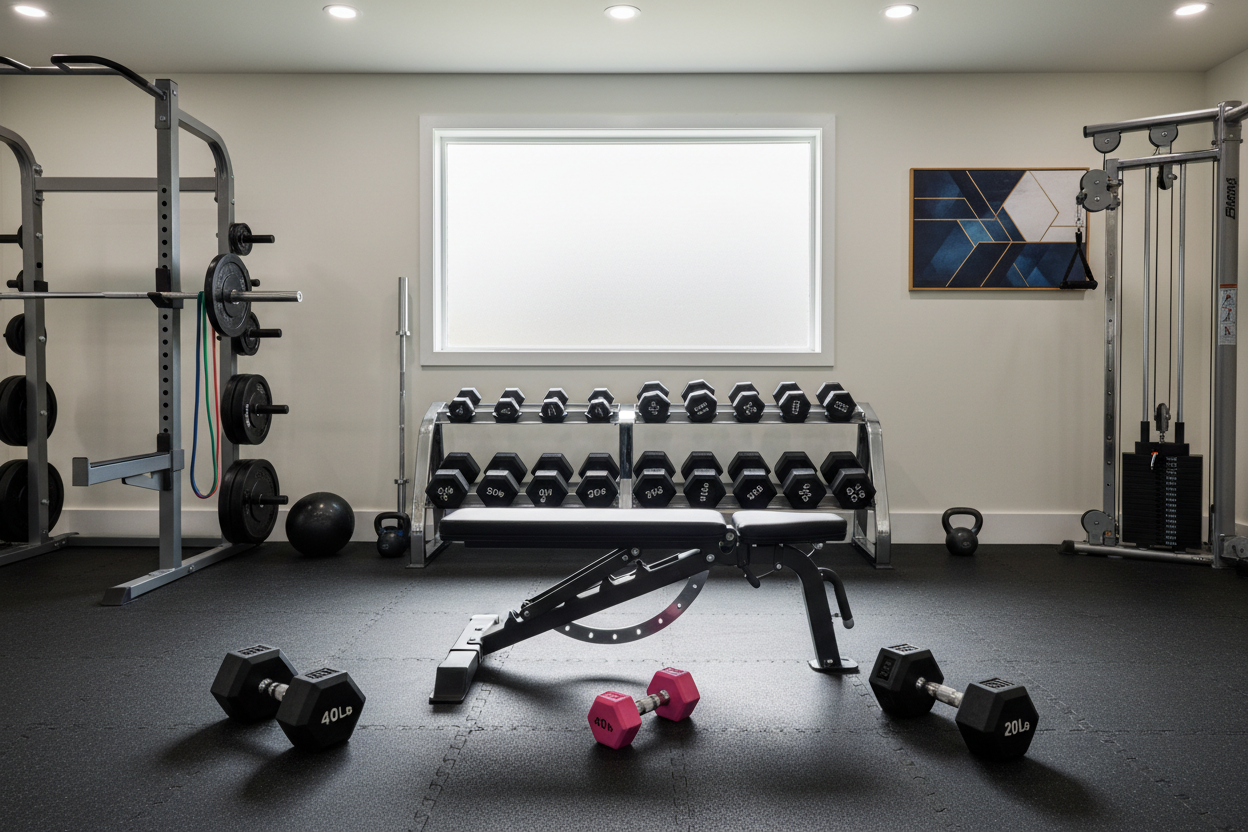
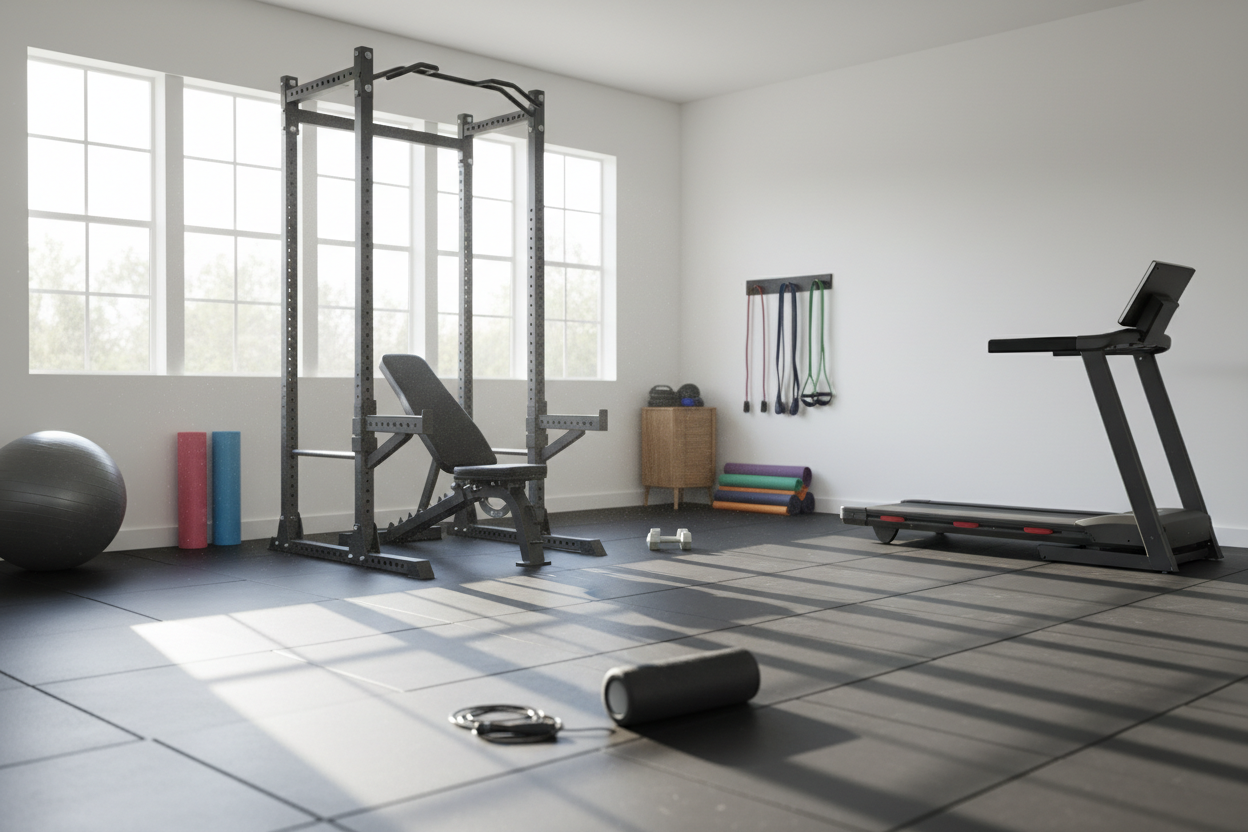
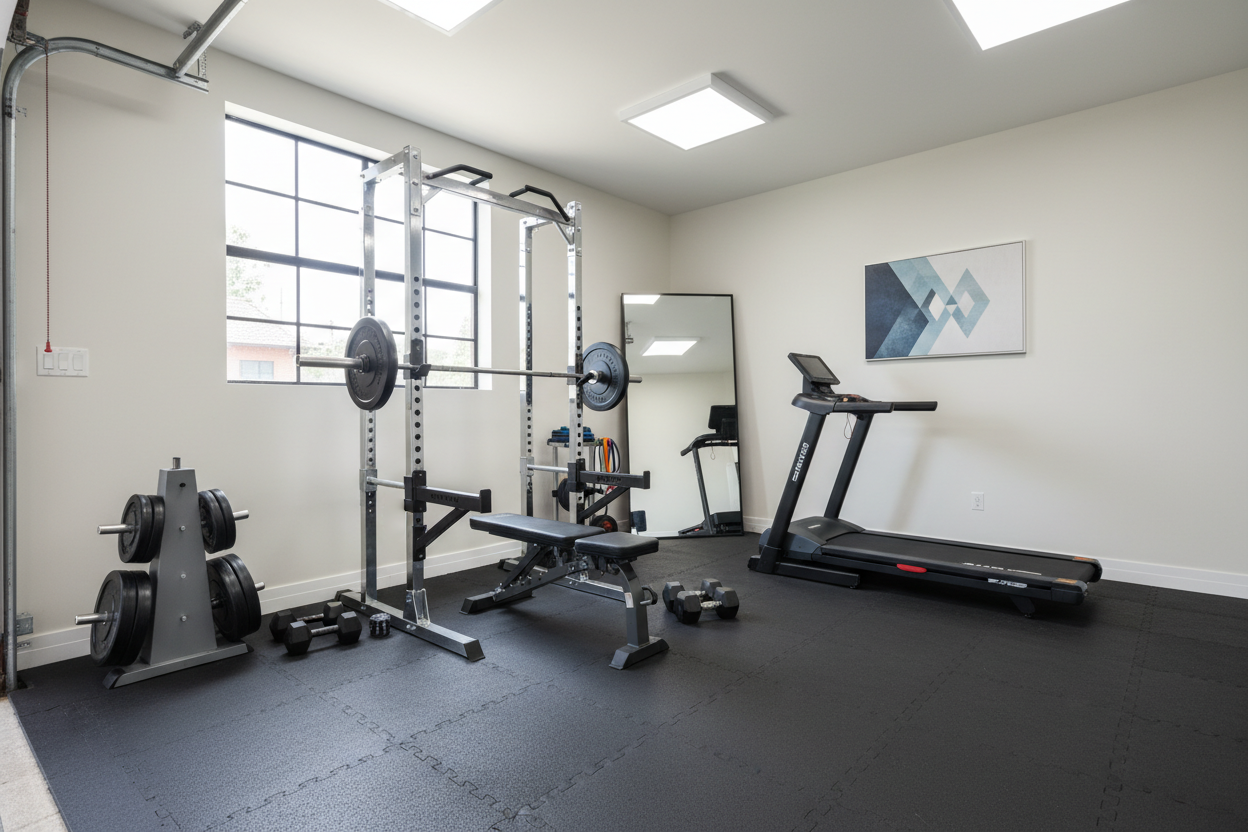
To fix the boundary problem, you need a physical anchor. This is where sensory zoning comes into play. You do not need an entire spare bedroom to get results. A dedicated 6x6 or 6x8 foot space is plenty of room for dumbbells, kettlebells, and bodyweight movements. The trick is making that space feel official.
One of my top at home workout tips is to use your flooring to define the area. When you roll out a Large Exercise Mat For Home Gym, you instantly transform a generic living room into a defined workout zone. Stepping onto that specific texture signals to your brain that casual time is over. I tested a cheap, half-inch puzzle mat once, and it slid apart during a set of mountain climbers. It was a disaster that completely ruined my focus.
A solid, single-piece mat establishes a visual and tactile boundary. Keep your 5-52.5 lb adjustable dumbbells at the top edge of the mat. Set a specific playlist that you only listen to when standing on that surface. Over a few weeks of consistency, just stepping onto the rubber will trigger your workout mindset.
Joint Protection and Surface Traction: Exercising Tips At Home
Beyond psychology, we have to talk about biomechanics. If you want to know how to workout properly at home, you have to prioritize your foundation. Hardwood floors and plush carpets are terrible for dynamic movements. Hardwood destroys your knees during jump squats, and carpet absorbs force unevenly, leading to rolled ankles.
For optimal exercising tips at home, I always tell clients to look at their flooring first. You need a surface that provides traction for heavy lateral lunges but has enough density to absorb shock. I highly recommend a 6X8Ft Exercise Mat Yoga Mat Gym Flooring For Home Workout. It gives you 48 square feet of usable space, which is exactly enough room to lie down fully for core work or step out wide for sumo deadlifts.
I will share one honest downside: high-density 7mm mats are heavy. Weighing around 25 pounds, rolling them up every single day gets annoying fast. I advise my clients to leave them flat permanently if they have the floor space. The trade-off is worth it. Dropping a 30-pound dumbbell on bare floor creates a massive noise spike and dents the wood. A dense mat drops the decibel level significantly and protects your security deposit.
Structuring Your Sessions: How To Workout Effectively At Home
Once your zone is set, you need a plan. When you work out of home, it is easy to get distracted and let a 45-minute session drag into 90 minutes of half-hearted effort. The secret to how to workout effectively at home is manipulating intensity rather than relying on heavy loads.
Most people do not have 300 pounds of barbell weight in their apartment. To make lighter weights feel heavy, you have to use tempo manipulation and strict rest periods. Try doing 3 sets of 12-15 reps with a 3-second negative on every single rep. Suddenly, a 20-pound dumbbell feels like 40 pounds. Keep your rest periods strictly under 60 seconds.
Need a practical example? Check out How To Build Powerful Legs With An Upper Thigh Workout At Home. Great home gym workout tips rely on targeted isolation and high time-under-tension. By focusing on the muscle contraction rather than just moving the weight from point A to point B, you can absolutely destroy your legs using nothing but a pair of moderate dumbbells and your defined floor space.
Programming for Success: Working Out From Home For Beginners
People always ask me, can I workout at home and actually build muscle? Yes, but you need a progression model. Working out from home for beginners often fails because they jump between random YouTube videos every day. Muscle growth and fat loss require progressive overload—doing slightly more over time.
Pick a program and stick to it for at least six weeks. Track your reps, sets, and the weight you use. If you did 10 goblet squats with 30 pounds last week, you need to aim for 11 reps or 35 pounds this week. That consistency is what forces your body to adapt.
For a structured place to start, read How To Build Serious Mass With An At Home Lower Body Workout. It maps out exactly how to structure your lower body days. Step into your sensory zone, turn on your music, execute the programmed sets, and step off the mat. That is how you win the home fitness game.
Frequently Asked Questions
How much space do I actually need for a home gym?
You need an area roughly 6 feet by 8 feet. This provides enough clearance for a person who is 6 feet tall to lie down completely flat, perform push-ups, and do lateral movements without kicking the walls or furniture.
Can I really build muscle without a barbell?
Absolutely. Muscle tissue responds to tension, not the specific tool you use. By slowing down your reps, doing unilateral (one-sided) exercises like Bulgarian split squats, and taking sets close to failure, you can stimulate significant muscle growth with just dumbbells or bands.
How do I stop my mat from sliding on carpet?
If you are placing a heavy-duty mat over plush carpet, look for mats with a textured bottom grip, or use double-sided rug tape on the corners. However, a thick 7mm mat weighing over 20 pounds generally has enough mass to stay planted during normal workouts.