How to Workout Thighs for Maximum Definition (The Science)
If you’ve ever walked out of the gym feeling like your legs are made of jelly but seeing zero visual changes weeks later, you aren't alone. Leg training is notoriously difficult, yet it is often plagued by poor form and "junk volume." Knowing how to workout thighs effectively isn't just about doing endless squats until you collapse; it requires understanding biomechanics and tension.
Building strong, shapely legs requires a mix of intensity, proper recovery, and strategic exercise selection. Whether you have access to a full commercial gym or just a living room floor, the principles of hypertrophy (muscle growth) remain the same. Let's break down exactly how to construct a leg day that actually delivers results.
Key Takeaways: The Thigh Training Blueprint
- Compound First: Always start with multi-joint movements like squats or lunges to recruit the maximum amount of muscle fibers.
- Time Under Tension: Slow down your eccentric (lowering) phase to 2-3 seconds to stimulate growth.
- Target All Angles: Effective routines hit the quadriceps (front), hamstrings (back), and adductors (inner thigh).
- Progressive Overload: You must add weight, reps, or improve form every session to force adaptation.
- Frequency Matters: Training legs twice a week usually yields better results than a single "annihilation" day.
Understanding the Anatomy of Fit Thighs
Before grabbing a dumbbell, you need to know what you are targeting. "Thighs" isn't a single muscle; it is a complex group that requires different movement patterns.
The Quadriceps are the large muscles on the front of your leg, responsible for extending the knee. To target these, you need deep knee bending. The Hamstrings oppose them on the back, responsible for hip extension and knee flexion. Finally, the Adductors (inner thigh) are crucial for stabilization and that "full" look. Neglecting any of these results in imbalances and stalled progress.
The Hierarchy of Exercises That Target Thighs
Not all movements are created equal. If you have limited time, focus on high-yield movements.
1. The Squat Pattern (The King)
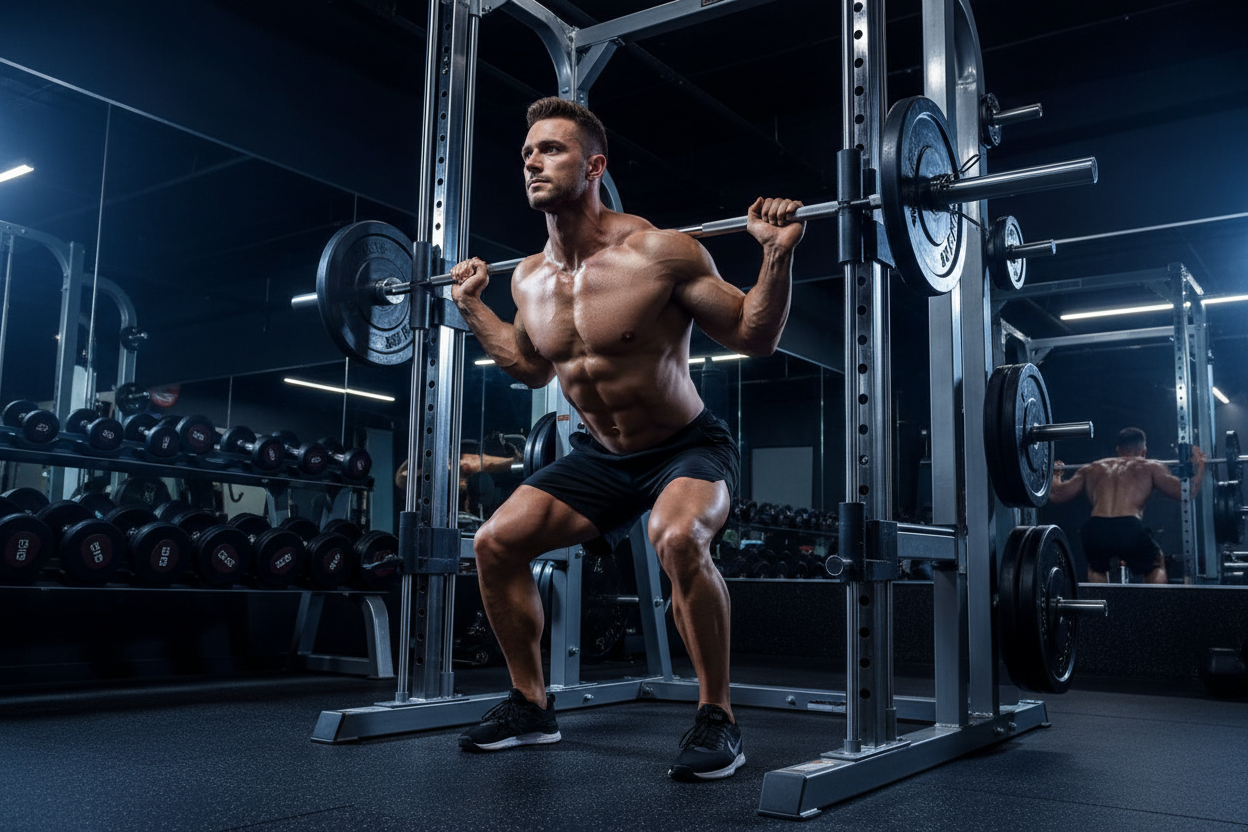
Whether it's a Goblet Squat, Back Squat, or Front Squat, this movement is non-negotiable. It places the quadriceps under immense tension while engaging the core. The deeper you go (safely), the more activation you get.
2. Unilateral Movements
Exercises like the Bulgarian Split Squat or Reverse Lunge are essential. They fix muscle imbalances and force the stabilizers to work overtime. If you want fit thighs that function as well as they look, single-leg work is mandatory.
3. The Hinge Pattern
For the back of the thighs, you need Romanian Deadlifts (RDLs). Unlike a squat, this is a hip-dominant movement. Imagine pushing a car door shut with your glutes. This stretches the hamstring under load, which is the primary driver for hypertrophy in that region.
Thigh Muscle Exercise at Home: No Gym Required
A common misconception is that you need heavy machinery to build legs. While heavy loads help, mechanical tension can be created with body weight if you manipulate the leverage.
The Nordic Curl (Hamstrings): Anchor your feet under a couch. Lower your torso toward the floor as slowly as possible using only your hamstrings. Most people can't do a full rep, and that's fine. The lowering phase alone is one of the most potent exercises targeting thighs available anywhere.
The Sissy Squat (Quads): Don't let the name fool you. Holding onto a doorframe for balance, lean your torso back while pushing your knees forward and heels up. This isolates the quads aggressively without any external weight.
Common Mistakes Killing Your Gains
Ego Lifting and Range of Motion
Loading up the leg press with every plate in the gym and moving it two inches does nothing for muscle growth. It only stresses your joints. Drop the weight. Go all the way down until your thigh covers your calf, then push back up. Full range of motion beats heavy weight every time.
Ignoring the Eccentric
Gravity is free resistance. If you drop into a squat quickly, you are wasting half the rep. Control the descent. Fight gravity. That specific tension causes the micro-tears necessary for muscle repair and growth.
My Personal Experience with How to Workout Thighs
I used to think a "good" leg workout meant I had to feel nauseous by the end of it. I’d do 20 sets of squats, leg extensions, and presses until I physically couldn't walk. I did this for two years and my legs barely grew. I was overtraining and under-recovering.
The turning point came when I bought a pair of Olympic lifting shoes with a raised heel. I remember the first time I wore them for a high-bar squat. The stability was instant—I didn't feel that usual wobble in my ankles.
But the real reality check was the Bulgarian Split Squat. I dropped the heavy dumbbells and just used my body weight, focusing on a 3-second descent. The burn wasn't a general fatigue; it was a specific, searing heat right in the "teardrop" (VMO) muscle above my knee. I remember having to hold the railing to get down the gym stairs because my legs would buckle if I didn't lock my knees. That specific instability—where the muscle simply refuses to fire—is the indicator of a successful session for me now, not the nausea. Once I switched to lower volume with higher quality reps, my jeans finally started feeling tight in the thighs, not just the waist.
Conclusion
Learning how to workout thighs is a lesson in humility and physics. It requires leaving your ego at the door and focusing on the uncomfortable sensation of muscle tension. Prioritize full range of motion, stay consistent with your compound movements, and don't shy away from the pain of a slow eccentric rep. Your legs are the foundation of your physique; treat them with the intensity they deserve.
Frequently Asked Questions
How often should I train my thighs?
For most lifters, training legs twice a week is optimal. This allows you to split the volume (e.g., one quad-focused day and one hamstring-focused day) and keeps muscle protein synthesis elevated throughout the week.
Can I build big thighs with just bodyweight?
Yes, to a degree. Beginners can see significant growth with thigh muscle exercise at home routines. However, as you get stronger, you will eventually need to add external resistance (bands, dumbbells, or barbells) to continue applying progressive overload.
Why do my knees hurt when doing lunges?
Knee pain during lunges often comes from the front knee caving inward (valgus collapse) or the heel lifting off the ground. Ensure your knee tracks directly over your toes and keep your weight distributed through the mid-foot and heel, not just the toes.