How to Start Your Today Workout at Home in 60 Seconds
I've seen it a hundred times. A client finishes a long shift, walks through their front door, and immediately sinks into the couch. The intention to train was there at 9 AM, but by 6 PM, the gravity of the living room takes over. If you are struggling to initiate your today workout at home, you are fighting against decision fatigue and environmental friction.
You don't need a massive surge of motivation; you need a zero-friction system that forces you into action before your brain can formulate an excuse. When you eliminate the setup time, you eliminate the hesitation.
Quick Takeaways
- Leave your gear out permanently to act as a visual trigger.
- Execute a 60-second joint scan instead of a complex 15-minute warmup.
- Have a default, equipment-free routine memorized for low-energy days.
- Dedicate a minimum 6x6 foot area of permanent floor space so you never move furniture.
The Trap of 'I Will Train Later'
The hardest part of training in your living room is that your house is psychologically wired for rest. When you go to a commercial gym, the environment dictates the behavior. At home, your brain associates the space with Netflix, dinner, and sleeping. This creates a massive psychological barrier.
When you tell yourself you will train later, you are usually lying to yourself. The longer you wait, the more friction builds up. Think about the steps required for a typical session: you have to change clothes, move the coffee table, find your resistance bands, pick a routine, and set up your water bottle. That is five separate points of friction. By step three, you have already convinced yourself to just do it tomorrow.
To beat this, we use the zero-friction method. The goal is to reduce the time between 'I should work out' and your first repetition to under 60 seconds. If you can move from the couch to the floor in under a minute, the procrastination window slams shut.
Step 1: The Permanent Visual Trigger
Out of sight means out of mind. If you have to dig your dumbbells out of a hall closet or unroll a dusty mat from under your bed, your workout is dead on arrival. You need a dedicated, always-ready physical cue in your living space that immediately signals your brain it is time to sweat.
I force all my remote clients to leave their primary workout surface out 24/7. Having a large exercise mat for home gym permanently rolled out serves as an unavoidable visual cue to start your routine. When it takes up a permanent 6x8 footprint in your room, you literally have to walk over it. It stares at you, silently demanding action.
This physical footprint acts as an anchor. You don't have to think about where you are going to do your burpees or lunges; the space is already defined. Keep a pair of 15-pound dumbbells or a medium resistance band sitting right on the corner of it. The visual of the equipment resting on the mat triggers a habitual response over time, bypassing the need for willpower entirely.
Step 2: The 60-Second Warm-Up Scan
Most people skip their home workouts because they dread the 15-minute warmup block. They think they need to do a complex dynamic stretching routine before they can lift a single weight. Instead, I teach the 60-second warm-up scan. It is a rapid, immediate physical checklist to assess joint readiness and get blood flowing before you can talk yourself out of the session.
Start at your neck and move down. Five neck circles, ten arm swings, ten torso twists, and ten bodyweight squats. That is it. It takes exactly one minute. Doing a quick stretching workout at home serves as an ideal starting point for this 60-second joint scan. The moment you drop into that first squat, your heart rate elevates slightly, synovial fluid starts lubricating your joints, and the inertia of resting is broken.
The secret here is that action precedes motivation. You don't wait to feel ready to start moving; you start moving to feel ready. Once you complete the 60-second scan, you are already on the floor, your blood is pumping, and quitting suddenly feels harder than just doing a few more exercises.
Step 3: Picking Your Priority Movement
Decision fatigue is the silent killer of home fitness. You step onto your mat and think, 'What should I do today?' Ten minutes later, you are still scrolling through fitness apps or YouTube videos, getting cold and losing interest. You must bypass this by having a go-to, equipment-free routine ready on standby.
I call this your Priority Movement Protocol. It is a baseline workout you memorize and execute when you lack the mental energy to program a complex session. It doesn't need to be optimal; it just needs to be accessible. For example, a simple legs workout no equipment at home provides a concrete, zero-barrier routine that can be executed immediately.
My personal default is the 100/50/50 rule. 100 bodyweight squats, 50 pushups, and 50 sit-ups, partitioned however I want. It requires zero equipment, zero decisions, and hits the entire body. When you have a default protocol burned into your brain, you never waste time planning. You just drop and start counting reps.
Creating a Safe, Furniture-Free Zone
Nothing stalls a home workout faster than stubbing your toe on a coffee table or worrying about your downstairs neighbors hearing your kettlebell swings. You need uninhibited floor space. If you have to waste three minutes pushing couches and rolling up decorative rugs before every session, you will eventually stop training.
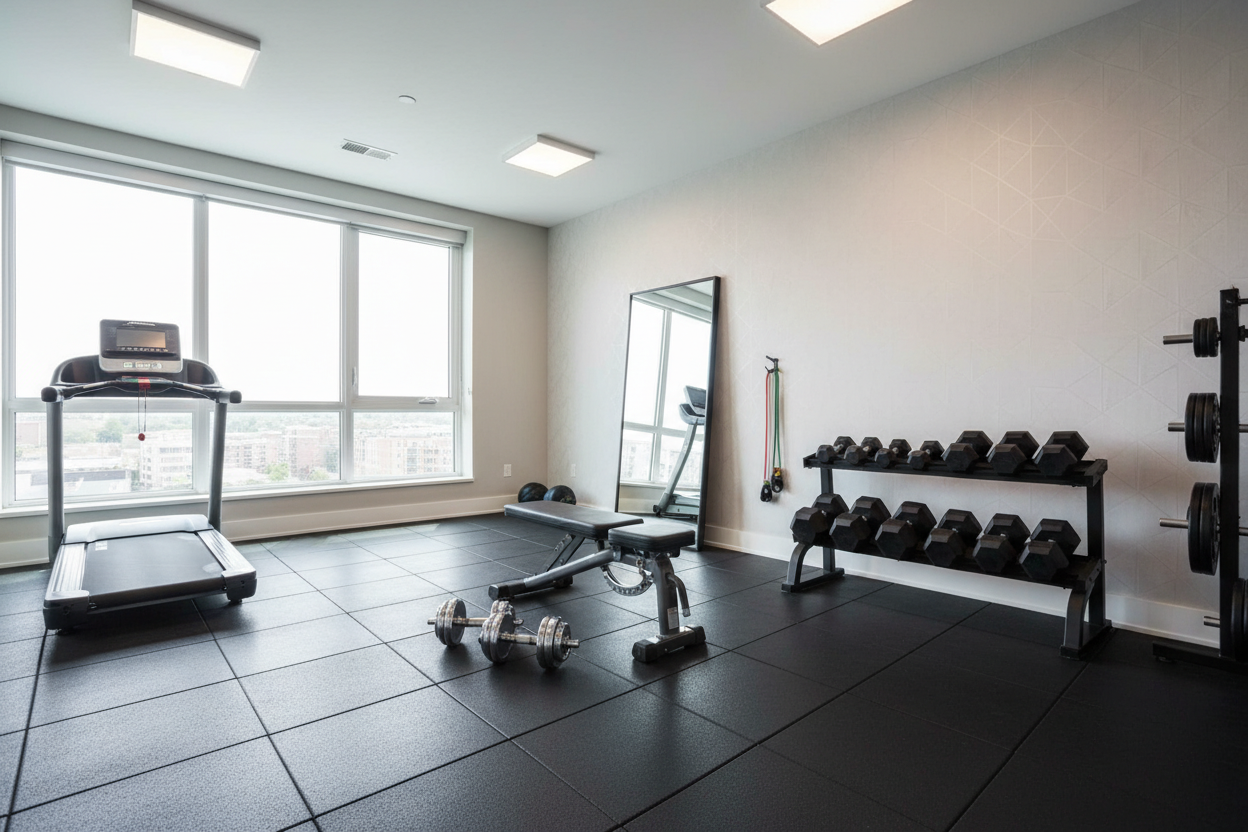
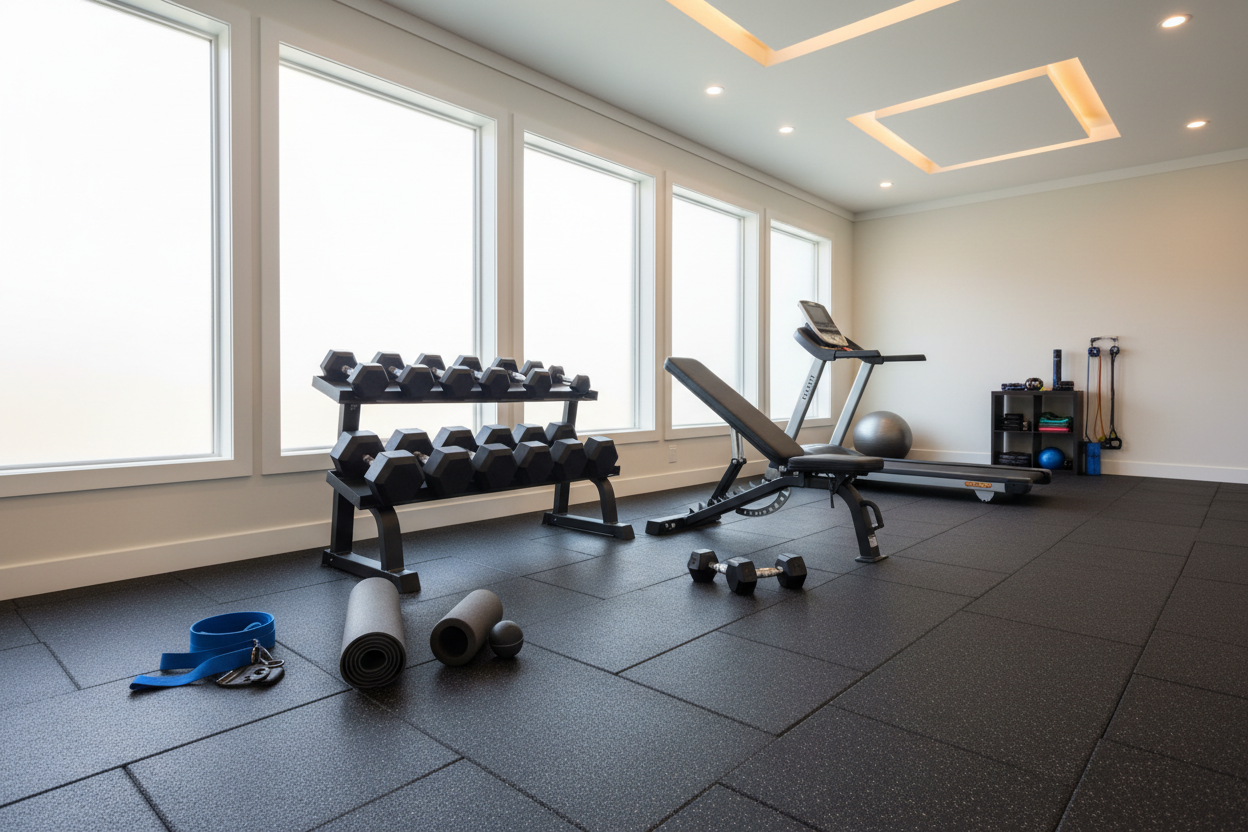
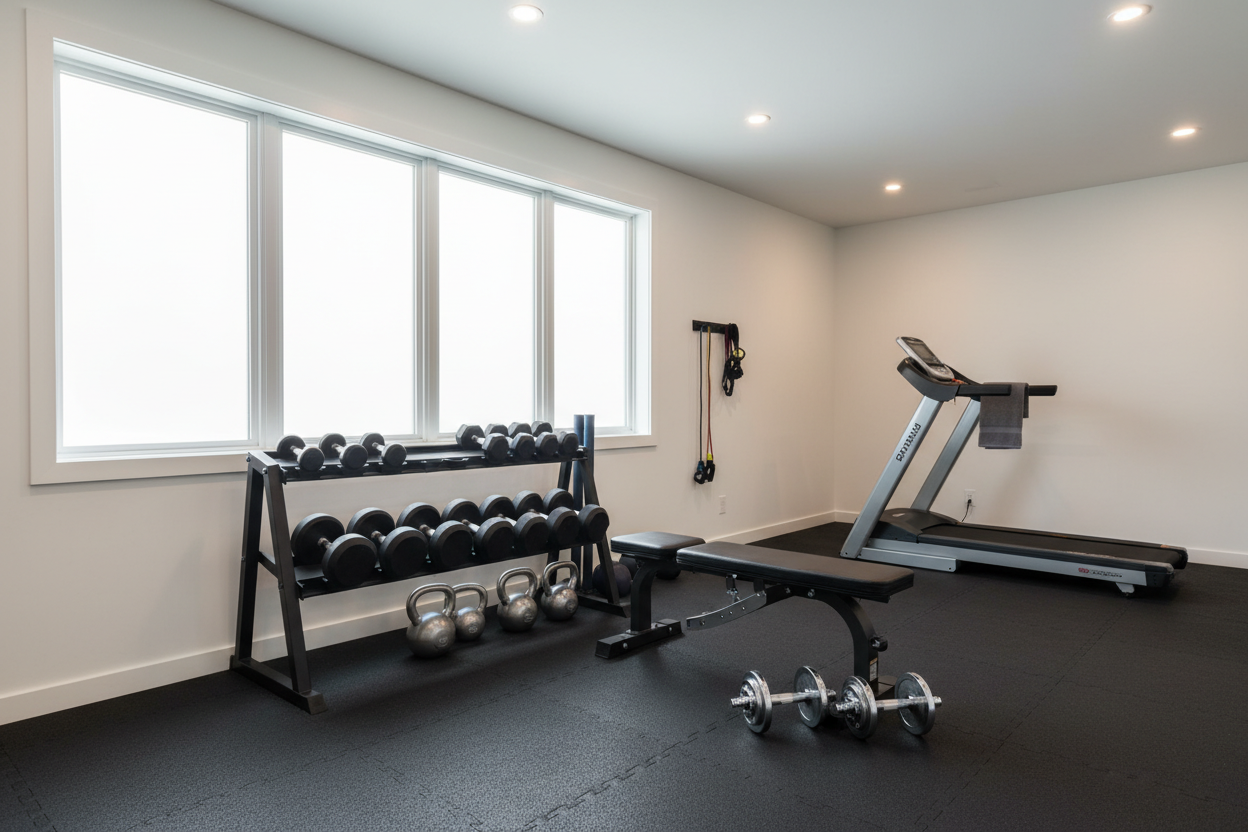
Claim a permanent zone. Even in a cramped apartment, you can usually carve out a 6x6 foot square. Recommending oversized gym flooring for home workout setups is my standard practice because it instantly converts any room into a safe training zone without shifting furniture. It defines the boundary, absorbs the impact of a dropped 50-pound dumbbell, and provides enough grip for lateral bounds.
Once you establish this zone, protect it. Do not let it become a storage area for laundry baskets or Amazon boxes. It must remain clear, clean, and ready for immediate use at all times.
Committing to the Immediate Action Mindset
The zero-friction system only works if you commit to the five-second rule. The moment the thought of exercising enters your mind, count down from five and physically move to your workout zone. Do not negotiate with yourself. Do not check your email one last time. Drop to the floor and do one pushup. Getting started is 90% of the battle, and a 60-second immediate action protocol ensures you win that battle every single day.
My Experience Building Zero-Friction Spaces
Over the last six years, I have designed home gym layouts for dozens of clients, ranging from 400-square-foot studio apartments to massive basements. The people who actually stick to their routines are never the ones with the most expensive functional trainers or racks. They are the ones who remove all the barriers to entry.
I personally tested the permanent mat setup in my own office. I laid down a heavy-duty 6x8 foot 7mm thick mat right behind my desk. The visual cue worked flawlessly; I found myself doing sets of 20 pushups between client calls just because the space was inviting. However, I will share one honest downside: leaving a large, grippy mat out 24/7 means it collects dust and pet hair incredibly fast. If you have a dog, be prepared to run a dry Swiffer over it every other day to keep it usable.
Frequently Asked Questions
What if I only have 10 minutes to train?
Ten minutes is plenty. Execute your 60-second warm-up scan, then pick one compound movement like burpees or lunges. Do an EMOM (Every Minute on the Minute) for 9 minutes. It is highly effective and requires zero setup.
Do I need to wear shoes for my living room routine?
Not necessarily. Barefoot training is excellent for strengthening the intrinsic muscles of the feet and improving ankle mobility. Just ensure your floor surface has enough grip so you do not slip during lateral movements.
How do I stop getting distracted by chores while training at home?
Treat your workout zone like a commercial gym. Once you step onto your mat, you are not allowed to leave that 6x8 square until the routine is done. Ignore the dishes and the laundry; they will still be there in 20 minutes.