How to Spot Cheap Gyms Accessories Before They Snap Mid-Lift
I’ve spent the last decade in garage gyms, basement dungeons, and high-end commercial clubs. I’ve seen it all—the 1,000lb squats and the catastrophic gear failures. Most lifters spend months researching the perfect power rack but then head to a discount site to buy their gyms accessories. They think a handle is just a handle until a $15 D-handle snaps while they’re pulling a heavy set of rows, sending their knuckles into their teeth.
Quick Takeaways
- Never trust a carabiner that doesn't have a stamped weight rating.
- Focus your budget on load-bearing items like J-cups and lifting belts.
- Cheap chrome plating on workout equipment accessories often hides porous, brittle welds.
- High-quality flooring is the most underrated accessory for protecting your iron.
The Hidden Danger of White-Label Attachments
The market is currently flooded with white-label workout equipment accessories that look identical to the name-brand stuff in photos. But once you get them in your hands, the reality sets in. I recently tested a set of 'heavy-duty' cable handles from a random overseas brand. The steel was thin, the knurling was practically non-existent, and the welds looked like they were applied by a hobbyist with a glue gun. This isn't just about aesthetics; it's a safety hazard.
When you are pulling 200 pounds on a lat pulldown, that D-handle or straight bar is the only thing between you and a face full of steel. Cheap attachments often use low-grade pot metal instead of solid cold-rolled steel. If you see a carabiner that feels light as a feather or a swivel that grinds when it rotates, get rid of it. I've seen 'heavy-duty' clips straighten out under load. If it’s not rated for at least twice what you plan to lift, it shouldn't be in your gym.
Look for accessories with powder-coated finishes or high-quality hard chrome. If the finish is peeling off in flakes, the metal underneath is likely oxidizing and losing its structural integrity. You want gym accessories equipment that feels dense and has clean, continuous weld beads around every joint.
Load-Bearing vs. Non-Load-Bearing: The Golden Rule
If an accessory stands between a heavy weight and your body, you do not skimp. This is my golden rule for accessories for gym equipment. Things like J-cups, spotter arms, lifting belts, and triceps ropes are load-bearing. If they fail, the weight falls—potentially on you. I’ve seen cheap J-cups with plastic liners that crack after three sessions, leaving the metal to chew up your expensive barbell knurling. That's a $300 mistake caused by a $20 saving.
On the flip side, you can save money on non-load-bearing gear. You don't need a $100 magnetic phone holder or a brand-name chalk block. A bucket is a bucket, and a timer is a timer. But when it comes to exercise equipment accessories that hold the load, like a dip belt or a cable attachment, the stakes are too high for bargain-bin hunting. I always look for 11-gauge steel on rack attachments and 1-inch thick nylon webbing on straps.
Compare a cheap triceps rope to a premium one. The cheap one uses thin polypropylene that frays within a month and has plastic ends that pop off. A premium rope uses heavy-duty braided nylon and solid rubber ends that are bolted through the core. One lasts a lifetime; the other lasts a dozen leg days. Investing in quality fitness equipment and accessories means only buying it once.
Why Your Floor Is the Ultimate Accessory
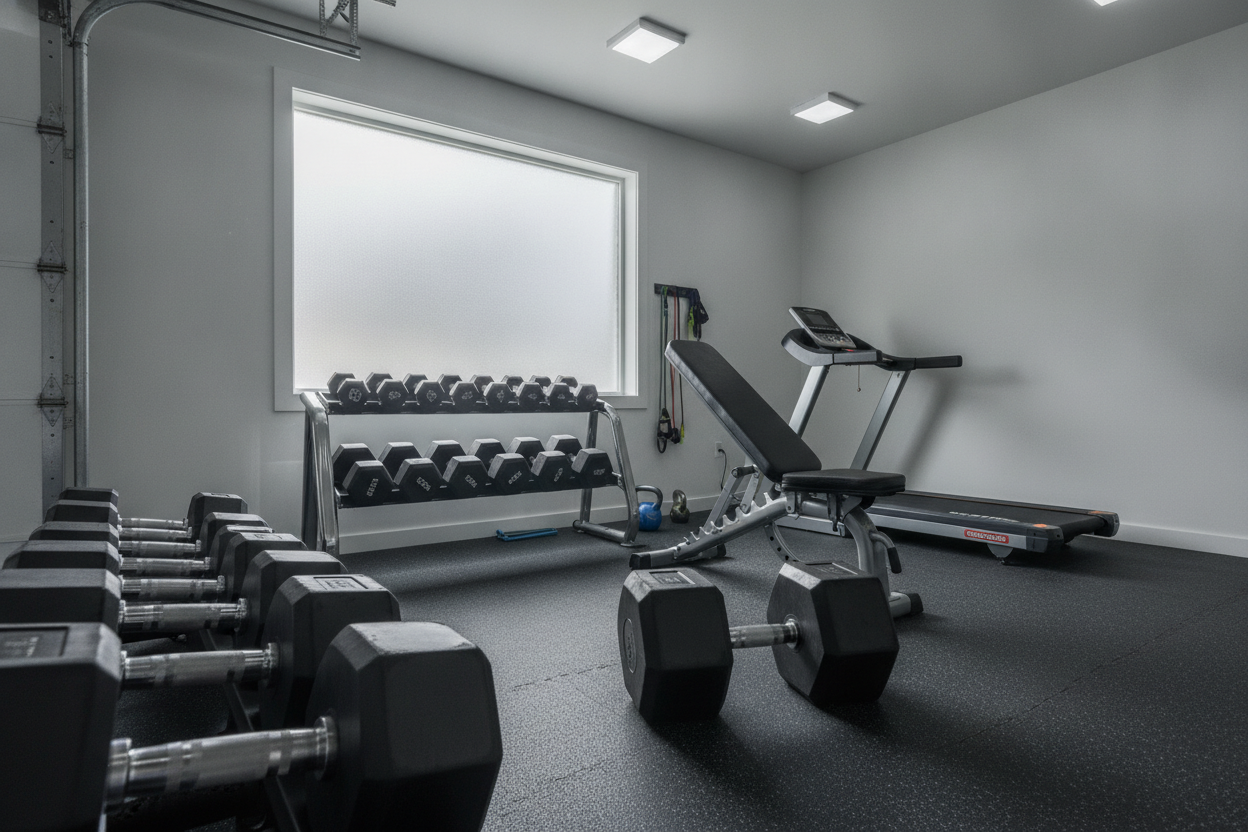
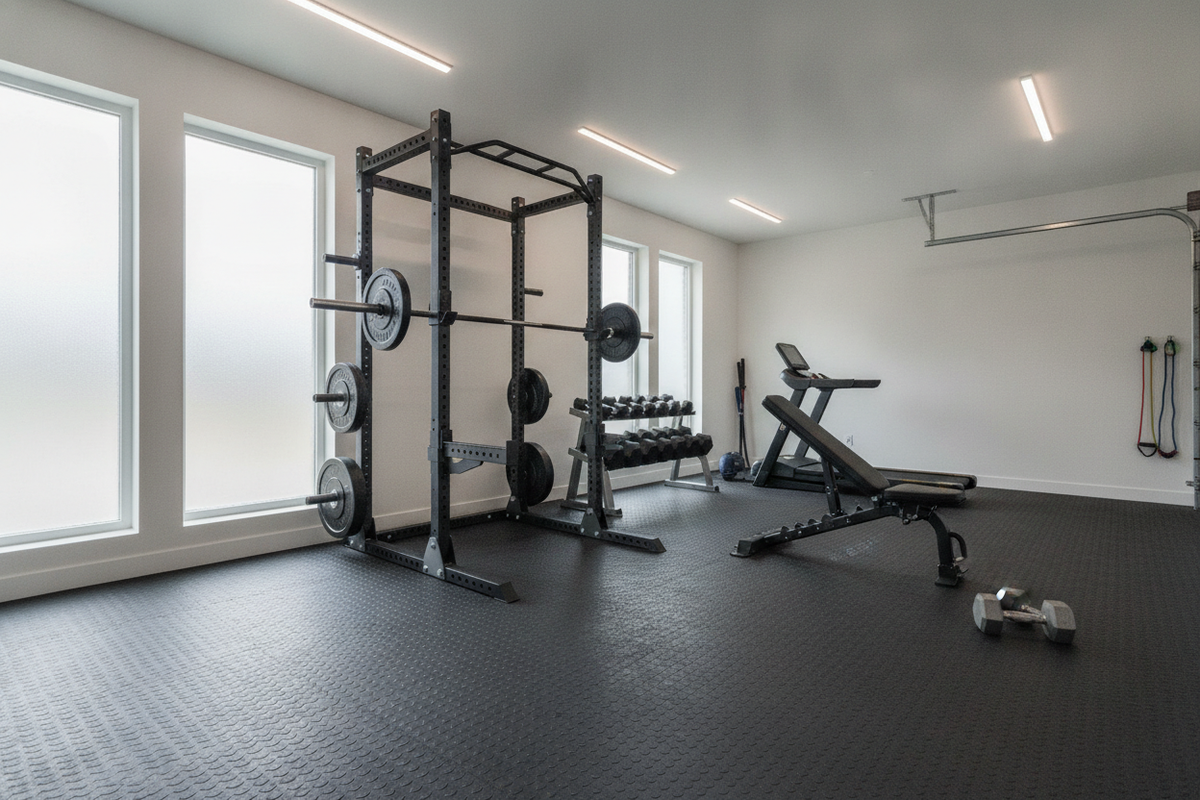
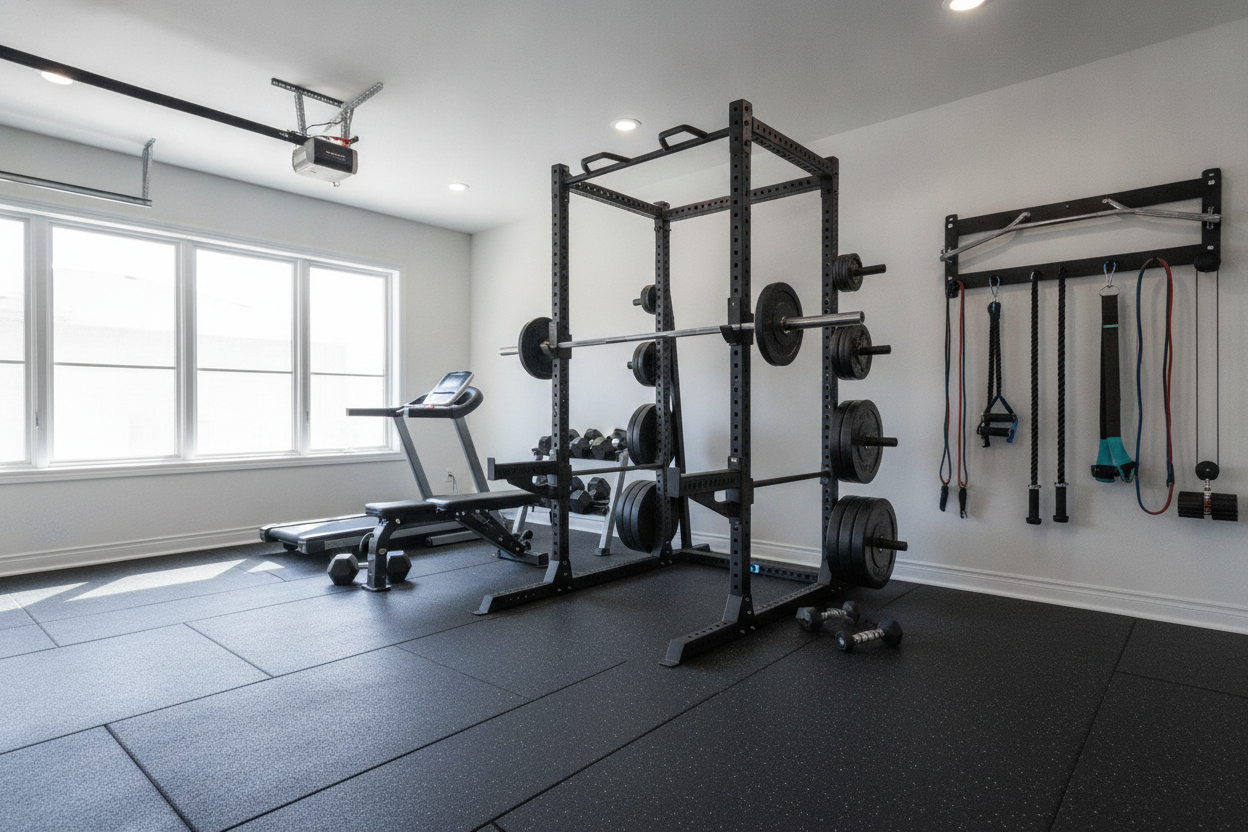
Most garage gym owners treat their floor as an afterthought. They spend thousands on a rack and plates, then drop them directly onto a thin layer of carpet or bare concrete. This is a recipe for cracked slabs and bent bars. Your flooring is the most critical piece of exercise equipment and accessories in the room. It absorbs the shock, deadens the noise, and keeps your gear from sliding around during a heavy set.
I recommend at least 3/4-inch thick rubber. Anything thinner is just a yoga mat in disguise. If you're doing deadlifts or cleans, you need a dedicated space that can take a beating. A solid gym flooring for home workout setup provides the necessary friction for your feet while protecting the structural integrity of your weight plates. I’ve seen iron plates crack because they were dropped on concrete too many times. Don't let your foundation be the reason your equipment dies early.
Think of flooring as a long-term insurance policy for your gym. It’s not flashy, and it doesn't help you get a pump, but it keeps the rest of your gym equipment and accessories from vibrating themselves to pieces. Plus, your joints will thank you when you're not doing burpees on a rock-hard surface.
The Only 3 Add-Ons Actually Worth the Premium Price
If you're looking to build out a list of top equipment and accessories, there are three places where I always tell people to spend the extra cash. First: Ergonomic cable grips. Brands that focus on biomechanics create handles that take the stress off your wrists and put it on your lats. Once you use a neutral-grip lat bar with a textured dip coating, you’ll never go back to those thin, slippery chrome bars.
Second: A high-quality lever belt. A cheap velcro belt is fine for high-rep circuit training, but if you’re moving heavy triples on the squat, you want 10mm to 13mm of solid leather. A steel lever system provides a level of intra-abdominal pressure that a plastic buckle simply can't match. This is one of those fitness equipment and accessories items that actually changes how you lift.
Third: Reinforced steel carabiners and pulleys. If your cable machine feels 'choppy,' it’s likely the cheap plastic pulleys that came with it. Swapping those out for aluminum pulleys with high-grade bearings makes a world of difference. It turns a budget functional trainer into something that feels like it belongs in a pro-athlete facility. When you're picking out gym equipment and accessories, look for components that use sealed bearings rather than simple bushings.
How to Hunt for Real Bargains on Quality Gear
You don't have to be rich to own a safe gym, you just have to be patient. I never buy weight equipment accessories at full price unless I absolutely need them for a specific program. Most of the top-tier manufacturers have 'Boneyard' sections or 'Garage Sale' pages where they sell items with minor cosmetic flaws—like a scratch in the powder coat—for 30% off. The structural integrity is still 100%, but the price is much closer to the cheap knock-offs.
Another tip: Watch the seasonal cycles. You can find incredible home gym equipment deals during the 'New Year, New You' rush in January and again around Black Friday. I’ve picked up competition-grade kettlebells and stainless steel barbells for nearly half price just by waiting for the right window. Avoid the 'flash sales' on social media from brands you've never heard of; those are almost always drop-shipped junk.
Check local marketplaces too. People often buy high-end gear, use it as a clothes rack for six months, and then sell it for pennies on the dollar because they need the space. I once found a pair of premium adjustable dumbbells for $100 because the owner thought they were 'too heavy.' Their loss is your gain. Just make sure to inspect the gear for rust or cracks before you hand over the cash.
Personal Experience: The Day the Row Bar Bent
I once bought a 48-inch lat bar from a generic sporting goods store because it was $20 cheaper than the one I actually wanted. I was doing heavy seated rows—about 240 pounds—and halfway through the set, I felt a weird 'give.' I thought the cable was fraying. Nope. The actual steel bar was bowing in the middle. Within two reps, the bar had a permanent 15-degree bend in it. If that steel had snapped instead of bending, I would have taken 240 pounds of tension straight to the forehead. I threw it in the scrap pile that afternoon and bought the reinforced version. I learned the hard way: your safety is worth more than twenty bucks.
FAQ
How can I tell if a cable attachment is high quality?
Check the weight. High-quality attachments are usually made of solid steel and feel significantly heavier than cheap, hollow versions. Also, look at the swivel point; it should be smooth and silent, not grinding or wobbling.
Are plastic-coated weights okay for home gyms?
Standard vinyl-coated weights are fine for light accessories, but for heavy lifting, you want cast iron or urethane-coated steel. Vinyl can crack and leak sand or cement over time, which ruins the balance of the weight.
Do I really need a lifting belt?
You don't need one for everything, but for heavy compound lifts, a high-quality leather belt provides critical support for your spine. It’s an accessory that pays for itself in injury prevention and increased stability.