How to Safely Do power exercises for shoulders in a Tiny Garage Gym
I remember the first time I tried a heavy split jerk in my single-car garage. I had 225 pounds on the bar, old-school iron plates, and a lot of ego. I missed the lockout, bailed, and the sound was like a gunshot. My wife ran out thinking a car had crashed into the house, and I was left staring at a fresh, half-inch crater in my concrete slab. That was the day I realized that power exercises for shoulders require a completely different approach when you do not have a professional lifting platform.
Training for explosive strength at home is a different beast than bodybuilding. You are moving heavy loads at high velocities, and in a confined space, that creates two major risks: destroying your floor and destroying your joints. If you are tired of sticking to slow overhead presses because you are scared of the noise, there is a better way to build a shoulder power workout without getting evicted or breaking your foundation.
Quick Takeaways
- Never bail iron plates on bare concrete; your slab will crack eventually.
- Prioritize movements with controlled eccentric phases to save your floor.
- Invest in a rack with high-quality J-hooks and safeties.
- Rest longer than you think—3 to 5 minutes is the sweet spot for power.
The Problem With Explosive Lifts in a Spare Bedroom
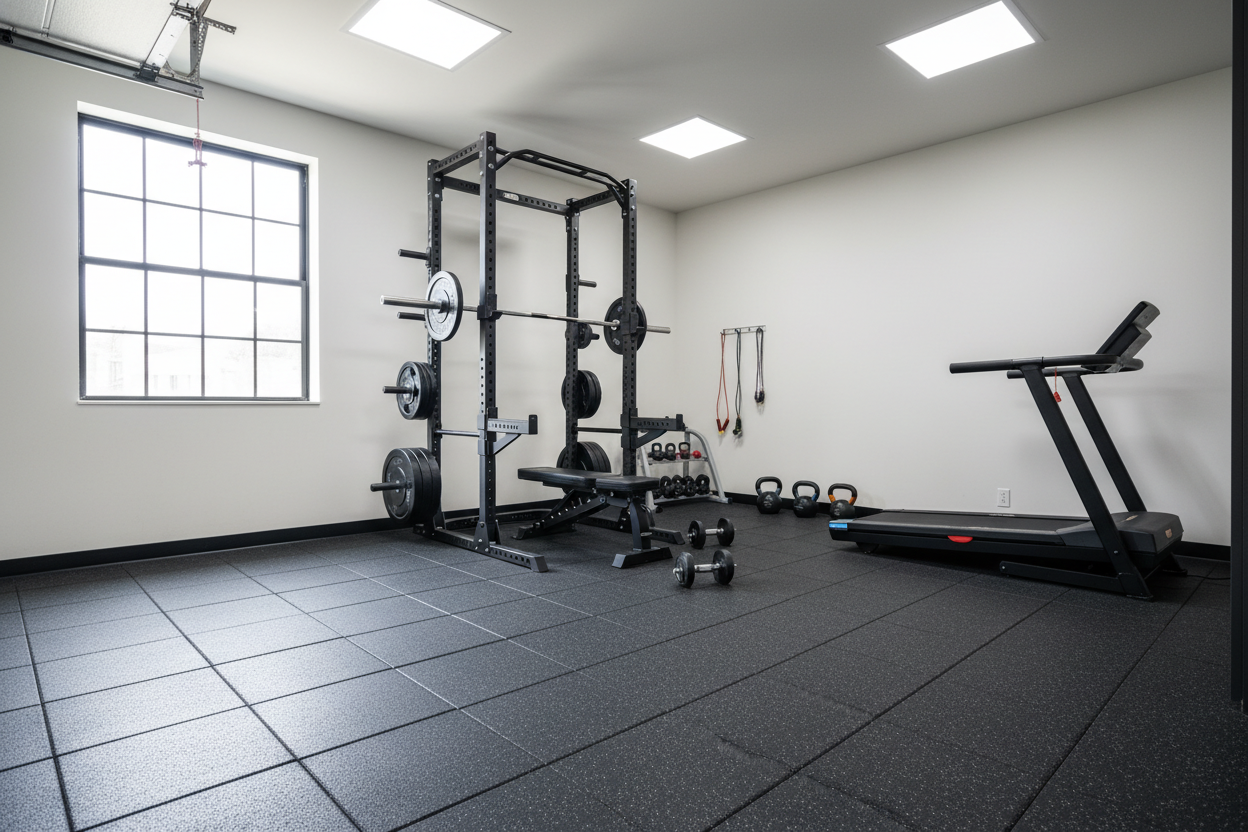
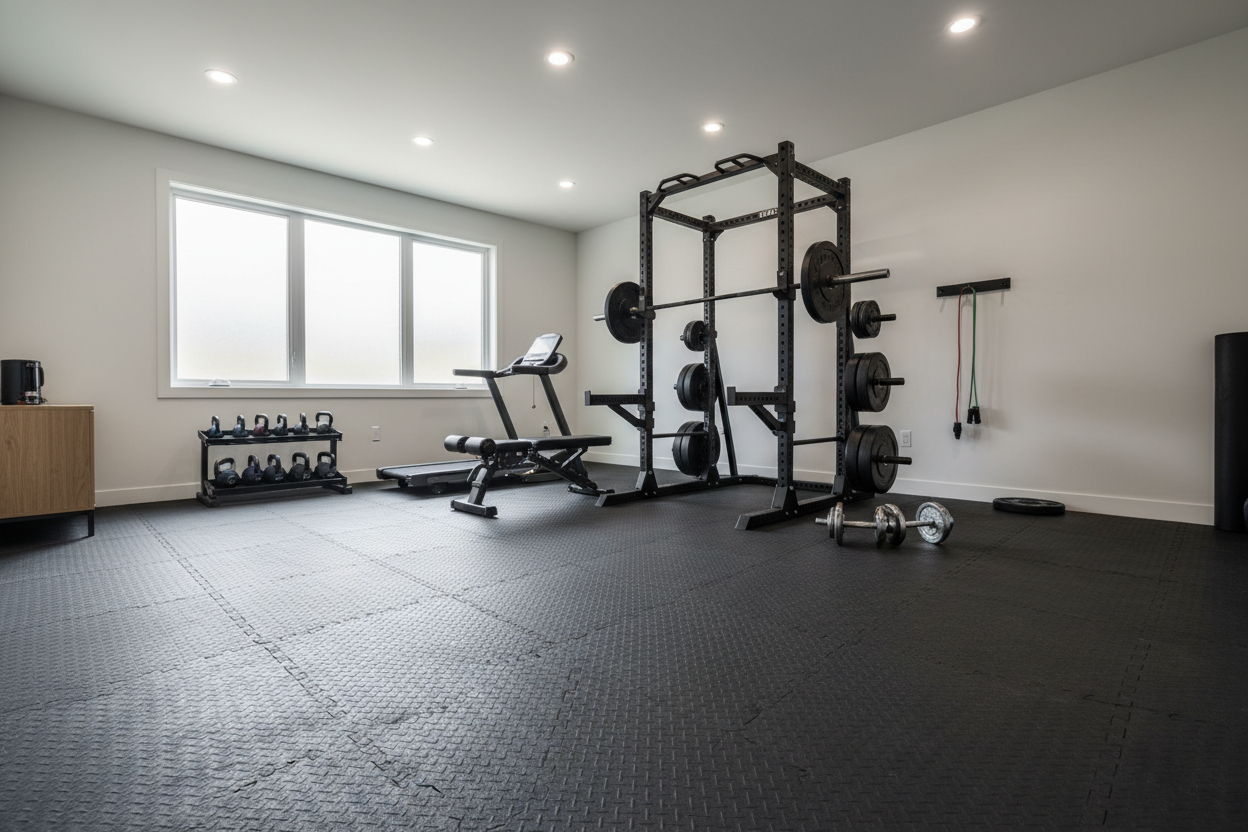
The reality of a home gym is that most of us are lifting on 3/4-inch stall mats over a concrete foundation. That is fine for deadlifts, but it is not enough for bailing a failed snatch from seven feet in the air. Unless you have a dedicated lifting platform with multiple layers of plywood and high-density rubber, you cannot just drop the bar. This limitation forces you to rethink how you approach power shoulder exercises.
Space is the other killer. In a low-ceiling basement or a cramped garage, a standard barbell can feel like a wrecking ball. You have to choose movements that allow for maximum speed on the way up but offer a safe, predictable path on the way down. You are looking for high-velocity output with a 'soft landing' protocol. It is about being an athlete, not a demolition expert.
Prepping the Joints for Fast, Heavy Loads
You cannot just walk into the garage, grab a bar, and start ripping push presses. Slow, controlled lifting is forgiving; power training is not. When you move a weight fast, the sheer force on your AC joint and rotator cuff increases exponentially. I have learned the hard way that a 'quick' warm-up usually leads to a week of icing my shoulders.
Before you touch the heavy iron, you need to lubricate the joint capsule. I spend at least ten minutes on dynamic pre workout shoulder stretches to get the blood flowing. I am talking about band pull-aparts, face pulls, and controlled articular rotations. If your shoulders feel 'crunchy' before your first set, you are not ready for power work. Get the joints warm so they can handle the violent deceleration that comes with home-gym lifting.
3 power exercises for shoulders That Won't Wreck Your Floors
If you want to build a massive overhead press and explosive triple extension, you need specific movements. These three exercises are my blueprint for athletic power because they allow for maximum speed without the need to drop the bar like a professional Olympic lifter.
The Rack-Rest Push Press
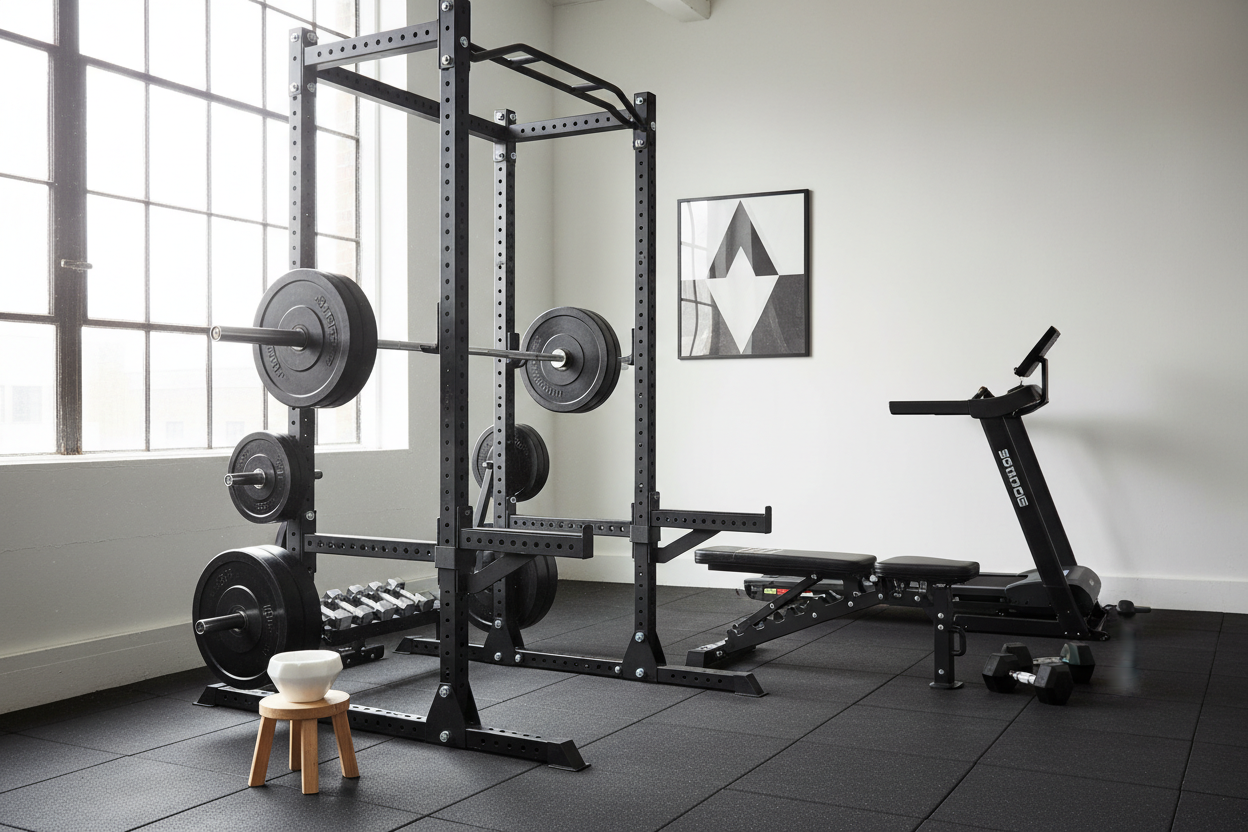
The push press is the king of overhead power, but the descent is where garage lifters get into trouble. Instead of dropping the bar to your shoulders—which can be brutal on the collarbones and the floor—I recommend using a heavy duty Gxmmat X6 Power Rack. Set your J-hooks at shoulder height and your safeties just below that.
Drive the weight up explosively using your legs. Once you lock out, stay tight and lower the bar under control back to the J-hooks. It takes more discipline, but it saves your equipment. If you miss a rep, those heavy-duty safeties are there to catch the bar before it hits your floor. This turns a high-risk move into a repeatable, safe strength builder.
The Hang Muscle Snatch (No Bumper Plates Required)
I love the snatch for power, but the full Olympic version is a floor-killer. The hang muscle snatch is the home gym workaround. Start with the bar at your mid-thigh, explode upward, and pull the bar in a straight line until it is locked out overhead. There is no 'catch' in a squat, which means there is less impact.
Because you are not dropping into a deep squat, the weights are naturally lighter, and the movement is easier to decelerate. You get all the trap and medial delt development of a snatch without the violent impact of bailing a 200-pound barbell from overhead. It is the perfect 'iron plate' power move.
Seated Explosive Landmine Presses
If you have low ceilings, the landmine is your best friend. By anchoring one end of the bar to the floor, you create a fixed arc of movement. Sit on a bench or the floor and drive the bar away from you as fast as possible. This is a unilateral power move, meaning you can work on those imbalances that usually lead to injury.
The landmine is inherently safer because the weight is always connected to the ground. You get the speed and the 'pop' of a power exercise without any of the overhead risk. It is quiet, it is effective, and it fits in a 6x8 foot corner without hitting the ceiling fan.
Structuring Your shoulder power workout
When programming a shoulder power workout, less is more. You are training the nervous system, not just the muscles. I usually pick one primary explosive lift—like the push press—and do 5 sets of 3 reps. The goal is 100% effort on every single rep. If the bar speed slows down, the set is over.
Rest periods are non-negotiable. You need at least 3 minutes between sets to let your ATP stores recover. If you are huffing and puffing, you are doing cardio, not power work. Keep the volume low and the intensity high. Follow your power work with some standard hypertrophy stuff—lateral raises or face pulls—to round out the session.
The Equipment You Actually Need for Overhead Safety
At the end of the day, your training is only as safe as the gear you are using. I have seen cheap racks sway and bend under the pressure of a heavy rerack. If you are serious about overhead power, you need a solid power rack setup that is bolted to the floor or weighted down with plate storage.
Look for 11-gauge steel and 3x3 inch uprights. You want J-hooks with plastic liners so you don't chew up the knurling on your bar during those heavy push press descents. A quality setup doesn't just make you safer; it gives you the confidence to actually move the weight with the speed required for true power development.
FAQ
Do I need bumper plates for power exercises?
Not necessarily. If you use the rack-rest method or movements like the muscle snatch and landmine press, you can safely use iron plates. Bumper plates are only essential if you plan on dropping the bar from overhead.
Is power training bad for old shoulder injuries?
It can be if you skip the warm-up. However, building explosive strength can actually stabilize the joint by strengthening the fast-twitch fibers in the rotator cuff. Just start light and prioritize form over weight.
How often should I do a shoulder power workout?
Once or twice a week is plenty. Power training is taxing on the central nervous system. If you do it too often, your strength will plateau and your joints will start to ache.