How to Reverse-Engineer a Weight Lift Routine for Your Garage
I remember standing in my driveway two years ago, staring at a PDF of a 'pro bodybuilder' split I'd paid $50 for. The program called for a seated leg curl, a Pec Deck, and a specific cable crossover machine. I looked at my 11-gauge power rack and my single barbell and realized I’d wasted my money. Designing a weight lift routine for a home gym isn't about replicating a commercial facility; it's about maximizing the steel you actually own.
Most people quit their home workouts because they try to force a square peg into a round hole. You don't need forty different stations to get strong. You need a plan that respects your floor space and your equipment's limitations while pushing your intensity.
Quick Takeaways
- Focus on movement patterns (squat, hinge, push, pull) rather than specific machines.
- The barbell is your primary tool for 90% of your strength gains.
- Adjustable benches and resistance bands can replace almost any cable-based isolation exercise.
- Consistency in a simple routine beats a complex plan you can't actually finish.
Why Copy-Pasting Commercial Routines Never Works at Home
Commercial gym templates are designed for people who have access to $100,000 worth of specialized equipment. When your lifting weights workout routine tells you to do four sets of leg presses followed by hack squats, and you're working out in a single-car garage, you're going to get frustrated. You end up spending more time trying to 'hack' a substitute than actually lifting.
I’ve seen guys try to use a barbell and a chair to mimic a leg extension. It’s dangerous, it feels like garbage, and it usually results in a sub-par stimulus. Stop trying to find good weight lifting routines written for Gold's Gym. Your garage is a different beast entirely. You need a routine that anchors itself in heavy compounds and uses smart, low-tech swaps for the fluff.
The Anatomy of Good Weight Lifting Routines in a Garage
A solid home plan focuses on the 'Big Five' movement patterns: the squat, the hinge (deadlifts), the vertical push/pull, and the horizontal push/pull. If you hit these, you’re hitting every major muscle group. You don't need a dozen 1,000-lb weight lifting machines taking up your precious floor space when a heavy set of barbell rows or weighted pull-ups provides the same, if not better, back development.
The goal is to build a good weight training routine that prioritizes efficiency. In a garage, floor space is your most valuable currency. If a piece of gear only does one thing, it better do it exceptionally well, or it shouldn't be there.
Building Around Your Rack and Bench
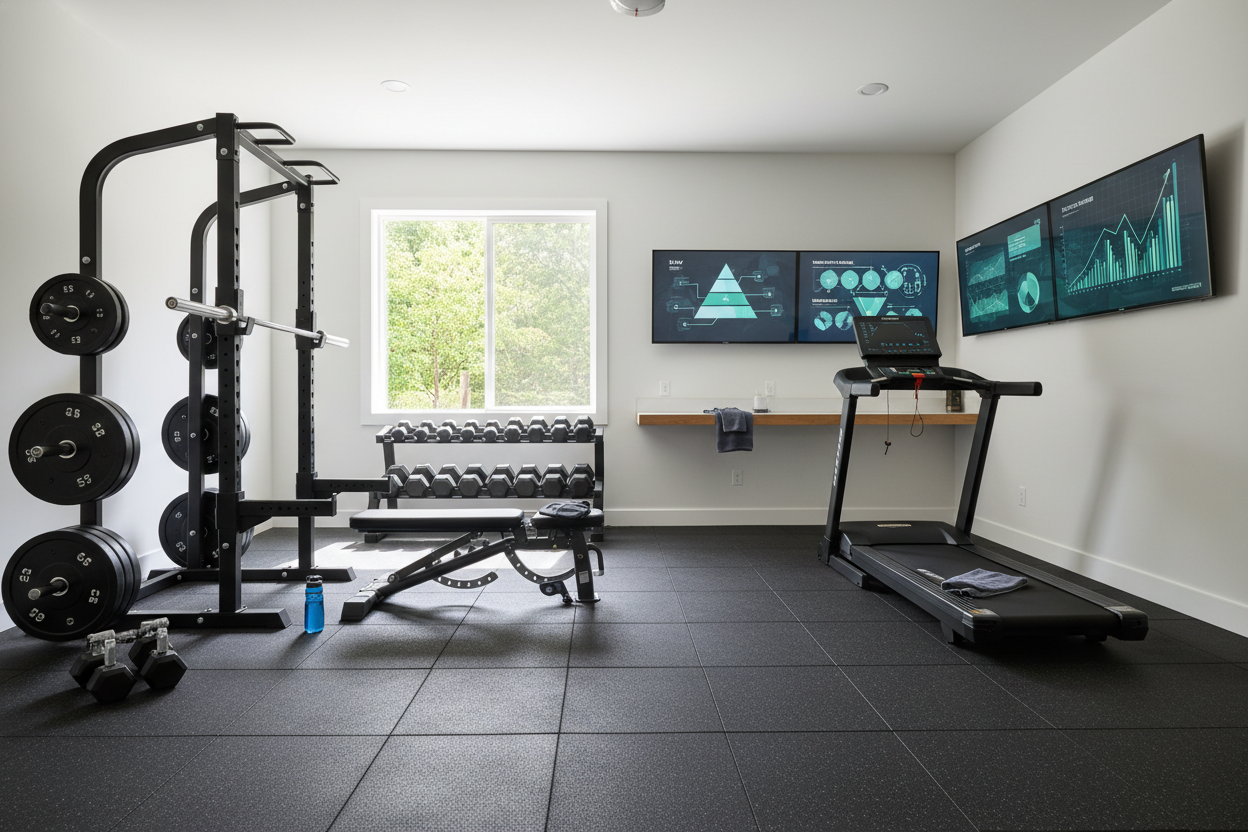
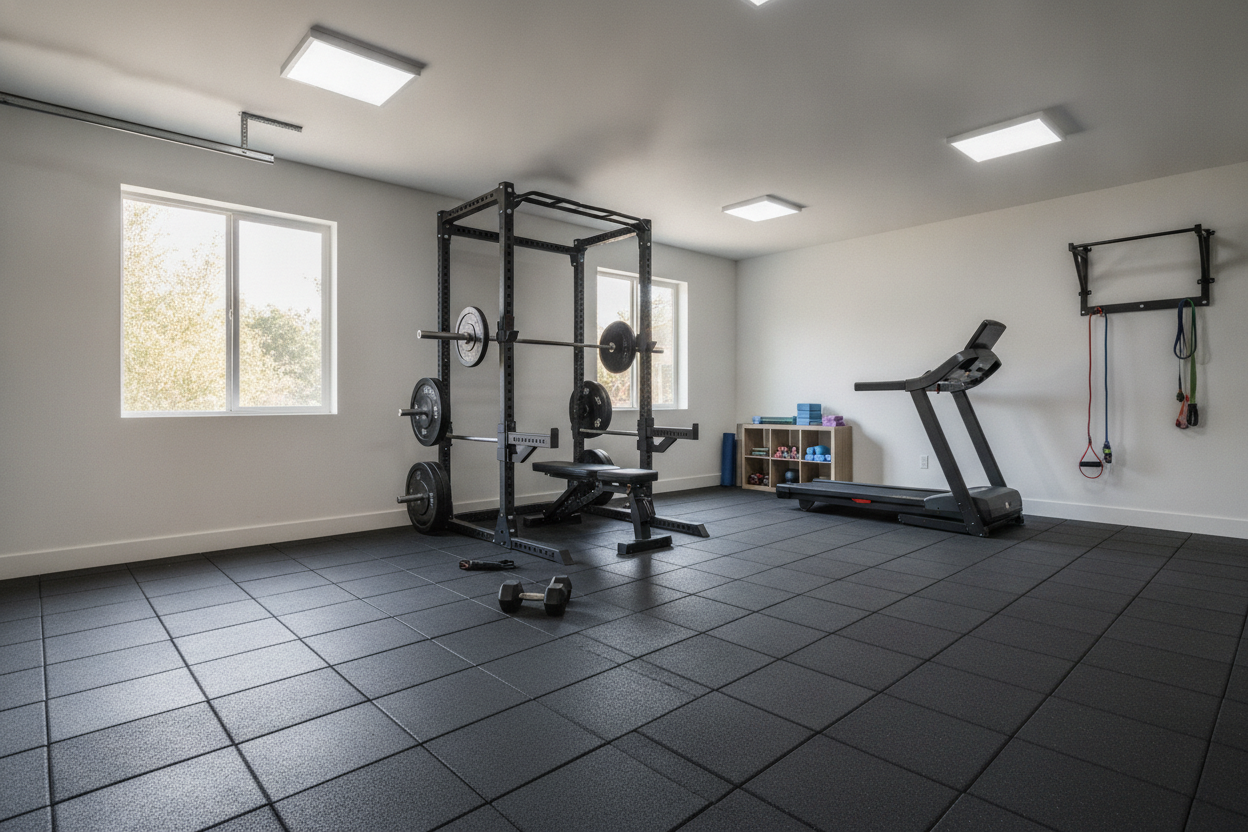
Your power rack is the heart of your gym. Everything else is just an accessory. When I finally invested in a heavy-duty power rack weight bench package, my training transformed. It gave me the safety to fail on a heavy squat and the stability to push my bench press without a spotter.
Your routine should start with the heaviest lift you can do in that rack. That’s your anchor. If you’re doing a lower-body day, you start with back squats or front squats. If it’s upper body, it’s the bench or overhead press. Use the rack for what it’s built for: heavy, safe, compound movements.
Swapping Cables for Dumbbells and Bands
You don't need a five-stack cable jungle for isolation work. If a program calls for cable flyes, use dumbbells on an adjustable weight bench. By simply changing the angle of the bench—from flat to a 30-degree incline—you can shift the stimulus to different parts of the chest without needing a single pulley.
Bands are another secret weapon. I often loop a heavy resistance band over the top crossmember of my rack for tricep pushdowns or 'lat' pulldowns. It’s not exactly the same as a commercial machine, but the tension is real, and it takes up zero square feet when you're done.
A Basic Lifting Weights Workout Routine You Can Start Today
If you're stuck, start with a 3-day full-body split. It’s the gold standard for garage lifters because it allows for maximum recovery. Day A: Squat, Bench Press, Barbell Row. Day B: Deadlift, Overhead Press, Weighted Pull-ups. Keep it simple. Three to five sets of five to eight reps will build more muscle than a dozen 'finisher' exercises.
For those of you on a tight schedule, you might want to look into a quick weight lifting routine that utilizes supersets to get you in and out in 30 minutes. The key is to keep the rest periods short and the intensity high.
The Gear That Actually Expands Your Options
Once you’ve mastered the barbell basics, you can start thinking about 'specialty' gear. But don't just buy stuff because it looks cool on Instagram. Focus on choosing the best strength and weight training equipment based on your specific weaknesses. If your grip is failing on deadlifts, get some straps or a thicker pull-up bar. If you want bigger arms, grab a set of loadable dumbbells.
I made the mistake of buying a cheap, bolt-together cable tower early on. It shook every time I used more than 50 lbs and the plastic pulleys melted after three months. Now, I tell everyone to stick to the basics until they can justify the cost of high-end, commercial-grade add-ons.
Stop Asking 'What is the Best Weight Training Routine' and Just Lift
People spend months searching for what is the best weight training routine as a way to procrastinate. There is no 'perfect' plan. There is only the plan you actually do. If you have a barbell, a rack, and enough plates to make it heavy, you have everything you need to get world-class results.
Stop overthinking the spreadsheets. Pick five movements, do them three times a week, and add five pounds to the bar every time you succeed. That is the only 'secret' that matters in a garage gym.
Personal Experience: The Wobbly Bench Lesson
Early in my lifting career, I bought a 'budget' bench from a big-box store. It was rated for 300 lbs. I weighed 200 lbs and was benching 185 lbs. You do the math. During a heavy set, the frame flexed so hard I thought the welds were going to snap. It was terrifying. I learned the hard way that when it comes to your rack and bench, you never buy the cheapest option. Buy once, cry once. Your safety is worth the extra $200 for 11-gauge steel.
FAQ
Do I need a platform for deadlifts?
If you're lifting on bare concrete, yes. You'll crack your floor eventually. A simple layer of 3/4-inch horse stall mats is usually enough to protect the slab and your plates.
Can I build a big chest without a cable fly machine?
Absolutely. Weighted dips and incline dumbbell presses are arguably better for hypertrophy anyway. Cables provide constant tension, but heavy free weights build the foundation.
How long should a home workout take?
If you're training solo, you can finish a heavy session in 45-60 minutes. Without waiting for machines or chatting with 'gym bros,' you’ll find your productivity skyrockets.