How to Make a Weight Lifting Plan Without Overthinking It
I remember staring at a 12-week powerlifting program designed by a world-record holder, wondering why I couldn't finish the Wednesday session without feeling like a total failure. I was working 50 hours a week and training in a garage with no heater and a barbell that had seen better days. You don't need a pro's spreadsheet or a PhD in kinesiology; you need to know how to make a weight lifting plan that actually fits your life and your gear.
Quick Takeaways
- Consistency beats 'optimal' programming every single time.
- Be brutally honest about your schedule before picking a split.
- Prioritize compound movements (the 'Big Rocks') for the best ROI.
- Track your progress with a simple notebook or app—no fancy math required.
Stop Downloading Routines Built for Elite Athletes
Most of the free programs you find online are written for people whose entire job is to recover. If you have a mortgage, a boss, or kids, trying to mirror the volume of a 22-year-old influencer is a fast track to injury and burnout. I spent years hopping from one 'pro' program to another, only to quit when the 2-hour sessions became impossible to maintain.
Designing your own path is how I finally stuck to a lifting weight program for more than a month. When you build the plan yourself, you account for your specific weaknesses and the equipment you actually own. You stop being a slave to a PDF and start training for your own goals.
Step One: Audit Your Time and Recovery
Before you pick up a dumbbell, look at your calendar. If you can only commit to three days a week, don't try to run a six-day 'Bro Split.' It won't work, and you'll feel like a loser every time you miss a 'Leg Day.' I've made the mistake of over-committing and ended up skipping the gym entirely because I was too overwhelmed to catch up.
You need to schedule around a 40-hour work week by identifying your high-stress days. If Tuesday is always a disaster at the office, that's not the day to attempt a new squat PR. Recovery isn't just about sleep; it's about your total life stress. Be realistic, not aspirational.
Step Two: How to Make a Weight Training Plan Using the 'Big Rocks' Method
Here is the core of how to make a weight training plan that actually builds muscle: start with the movements that move the most weight. I call these the 'Big Rocks.' Squats, deadlifts, presses, and rows. These exercises recruit the most muscle fibers and give you the biggest bang for your buck in a limited time frame.
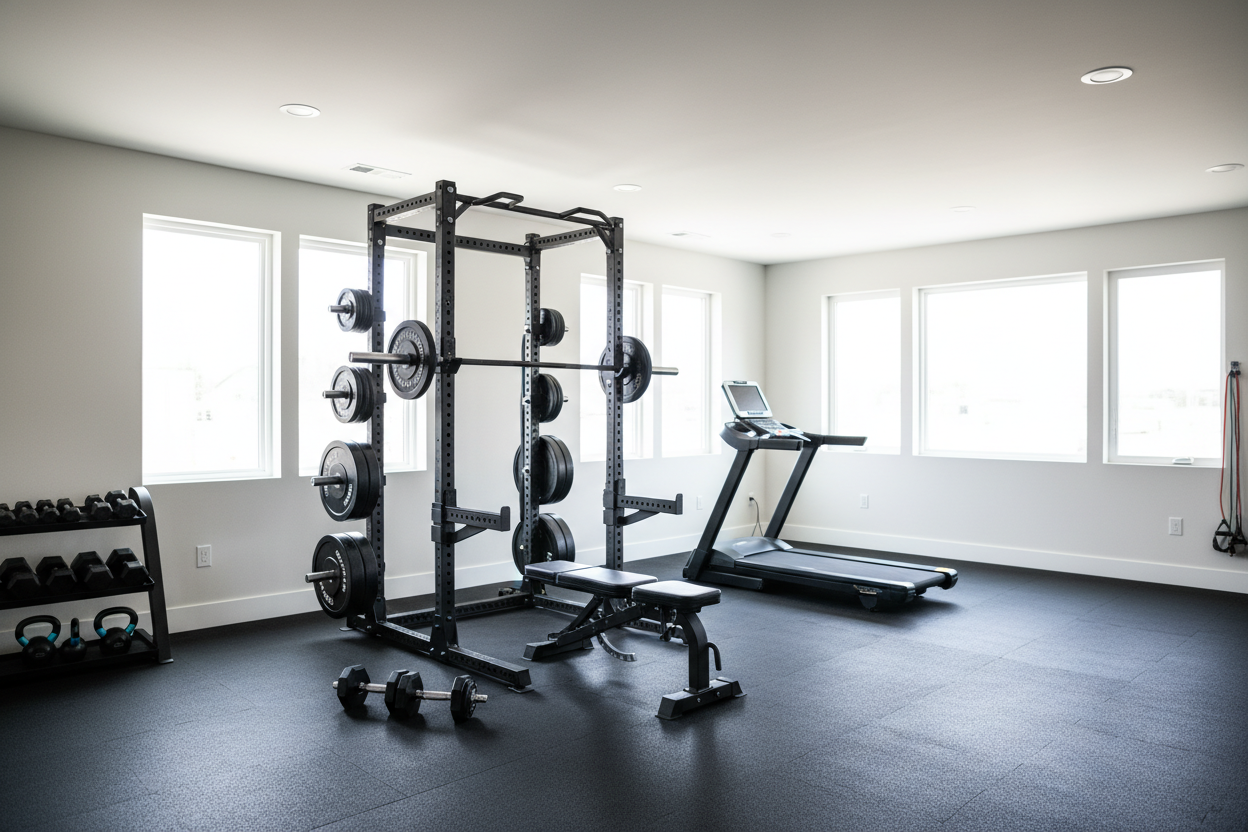
If you have a solid power rack weight bench package, you have everything you need for 90% of your gains. Put your heaviest compound movement at the very beginning of your workout when your central nervous system is fresh. Everything that follows is just supporting detail.
Choosing Your Accessory Movements
Accessories are the 'sand' that fills the gaps between the big rocks. They fix imbalances and help you build specific areas without the crushing fatigue of a heavy barbell. I like to pick two accessory movements per session that target the muscles I just used in my main lift.
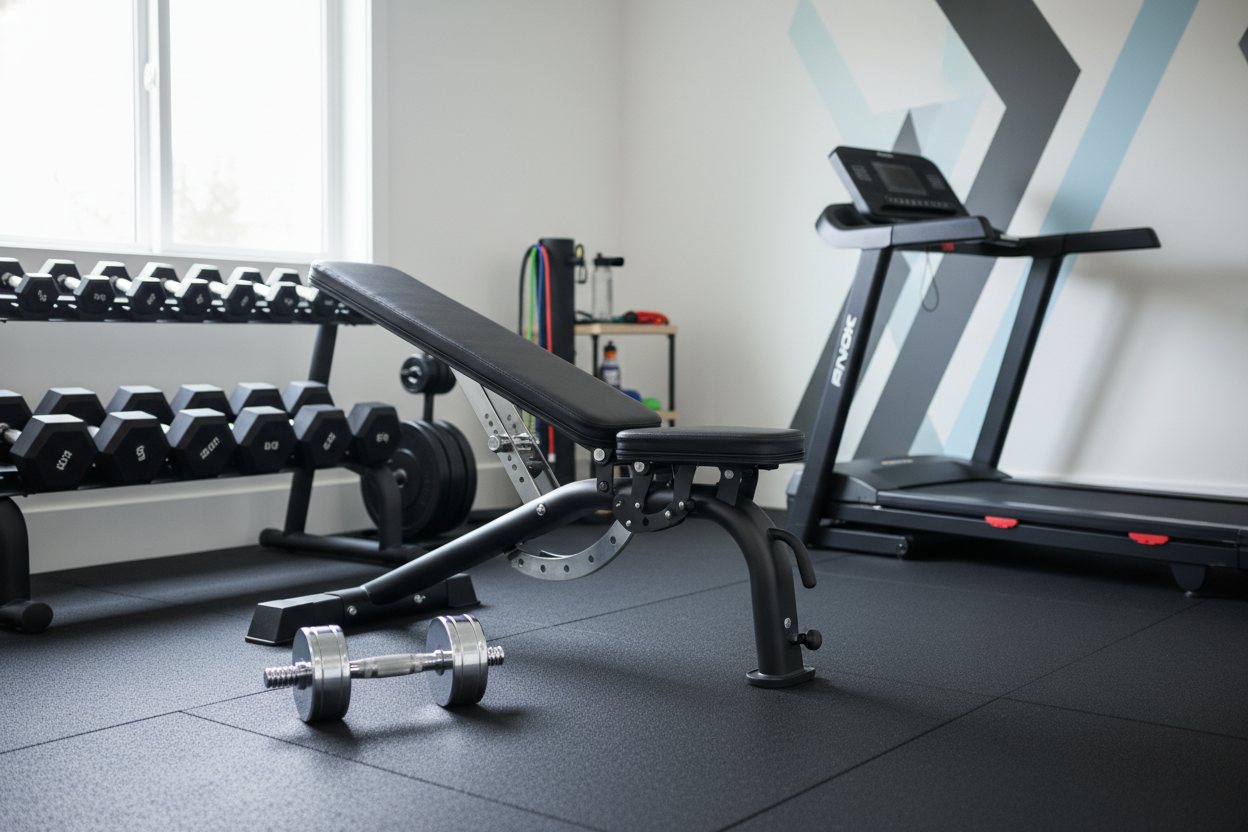
Using an adjustable weight bench allows you to hit different angles that a flat bench can't reach. Think incline dumbbell presses for the upper chest or seated curls. Don't go overboard here—three sets of 8-12 reps is usually plenty to get the job done without adding 'junk volume' that just makes you tired.
Step Three: Build Your Progression Model (The Secret Sauce)
A plan without progression is just a list of chores. You don't need complex periodization. Use 'Double Progression': pick a rep range, like 8 to 12. Once you can hit 12 reps for all your sets with a specific weight, increase the weight by 5 lbs next week. If your reps drop down to 8, stay at that weight until you're back up to 12.
It is simple, boring, and it works. I’ve wasted months trying to calculate percentages of my one-rep max, only to realize that just adding a little weight or one more rep is what actually builds the muscle. Keep a log. If the numbers aren't going up over a month, you're just exercising, not training.
Structuring Your Week: Push/Pull/Legs vs. Full Body
If you're training 3 days a week, Full Body is the king of splits. You hit every muscle group every time you walk into the garage. If you miss a day, it’s no big deal because you’ll hit those muscles again in 48 hours. It's the most 'forgiving' way to train for a busy person.
If you can hit 4 or 5 days, a Push/Pull/Legs (PPL) split is great because it allows for more focus on specific muscle groups. I personally prefer a 4-day Upper/Lower split. It gives me enough volume to see growth but enough rest days that my joints don't feel like they're grinding together by Friday afternoon.
Personal Experience: The 'Optimal' Trap
I once tried a Bulgarian-style program where I squatted every single day. I thought I was being hardcore. By week three, my knees felt like they were filled with broken glass and I dreaded going into my garage. I was trying to train like an Olympic athlete while living the life of a regular guy. I learned the hard way that the best plan is the one you can actually do when you're tired, busy, and unmotivated.
FAQ
How long should a home gym session last?
Aim for 45 to 75 minutes. Anything less and you're probably rushing your rest periods; anything more and you're likely doing too much fluff that won't actually help you get stronger.
What if I don't have a certain piece of equipment?
Sub it out. No barbell? Use dumbbells. No cables? Use resistance bands. The movement pattern (push, pull, hinge, squat) matters way more than the specific tool you use to load it.
How often should I change my plan?
Stick with the same plan for at least 8 to 12 weeks. If you change your exercises every week, you'll never know if you're actually getting stronger or just getting better at a new movement.