How to Maintain Your Routine Anywhere With a Portable Exercise Mat
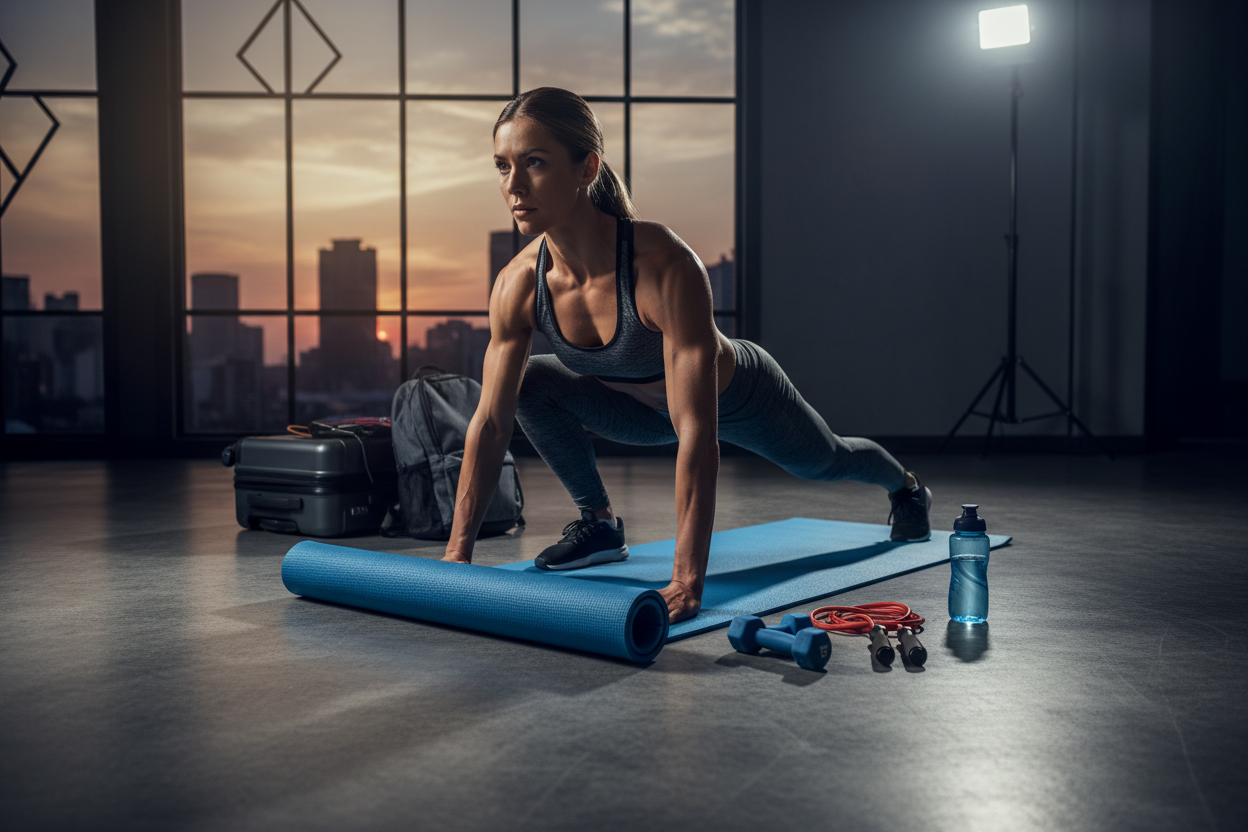
Let’s be honest: hotel carpets are questionable at best. If you are serious about maintaining your fitness consistency while traveling, relying on a towel thrown over a dusty floor isn't going to cut it. You risk hygiene issues, carpet burn, and a lack of joint support that can derail your progress. This is where a high-quality portable exercise mat becomes essential gear, not just an accessory.
Key Takeaways: Quick Summary
- Weight vs. Cushion: The sweet spot for travel is usually 1.5mm to 2mm thickness. Anything thicker adds too much bulk; anything thinner offers zero knee protection.
- Folding vs. Rolling: For air travel, folding mats are superior as they fit flat in carry-on luggage. Rolling mats are better suited for road trips.
- Material Density: Natural rubber offers the best grip but is heavier. TPE is lighter but can be slippery when sweaty.
- Hygiene: A personal mat creates a barrier against bacteria found on public gym floors or hotel carpets.
Why Material Density Matters More Than Thickness
Most people look at thickness first, assuming a thicker mat equals more comfort. When selecting a portable workout mat, density is actually the metric you should watch.
A low-density, thick foam mat might look comfortable, but it compresses to nothing the moment you put weight on it. This results in your knee hitting the hard floor underneath. Conversely, a high-density natural rubber mat that is only 1.5mm thick provides a stable, protective surface that doesn't bottom out.
For travelers, high density allows you to go thinner (saving space) without sacrificing the protection your joints need during high-impact movements or yoga flows.
The Mechanics of Portability: Fold or Roll?
The form factor defines the utility. If you are flying, the folding mechanism is critical. A standard rolled mat counts as a separate personal item on many airlines, which is a hassle.
The Folding Advantage
Folding mats utilize creased lines to collapse into a square, roughly the size of a folded sweater. You can slide this into the laptop compartment of a backpack or the bottom of a suitcase. The structural integrity of these mats relies on the durability of the hinges; look for reinforced mesh layers to prevent tearing at the fold lines.
The Rolling Compromise
Rolling mats generally last longer because they lack stress points at the creases. However, they are awkward to carry. Unless you are driving to your destination or have a dedicated yoga bag strap, a rolling mat often becomes a burden that gets left behind.
Hygiene and The "Hotel Floor" Factor
Beyond biomechanics, let's talk about microbiology. Hotel carpets act as sinks for allergens, skin cells, and bacteria. Doing push-ups or burpees with your face inches from these surfaces exposes you to unnecessary respiratory irritants.
A personal portable mat creates a sanitized "island." Because travel mats are thinner, they are easier to wash in a hotel shower or wipe down with sanitizer than their full-sized studio counterparts. Quick-drying closed-cell surfaces prevent moisture absorption, stopping bacteria growth before it starts.
My Personal Experience with Portable Exercise Mats
I learned the hard way that "lightweight" isn't always the best metric. A few years ago, I packed an ultra-light PVC folding mat for a two-week trip. It weighed less than a pound, which felt great in my backpack.
However, the first morning I tried to do mountain climbers in my Airbnb, the experience was a disaster. Because the mat lacked weight and a grippy texture on the underside, it didn't stick to the floor. With every drive of my legs, the mat scrunched up and slid across the hardwood.
I spent the entire workout stopping to flatten it out. It was distracting and ruined my flow. Now, I willingly carry a slightly heavier natural rubber travel mat. Yes, it adds an extra pound to my luggage, but when I unroll it, it stays glued to the floor. That stability allows me to focus on the movement, not on fixing my gear.
Conclusion
Consistency is the hardest part of fitness, and travel is the biggest consistency killer. Investing in the right gear removes the friction of training in unfamiliar environments. Don't settle for a towel. Find a mat that fits your luggage and your training style, and keep moving no matter where you wake up.
Frequently Asked Questions
Can I bring a portable exercise mat on a plane as a carry-on?
Yes, especially if it is a folding mat. Folding mats fit easily inside standard carry-on suitcases or backpacks. Rolled mats may be counted as your "personal item" depending on the airline's specific dimensions, so check with the carrier first.
Is a 1.5mm mat thick enough for sensitive knees?
For most people, 1.5mm is quite thin for kneeling poses. If you have sensitive knees, look for a mat with high-density rubber rather than foam. Alternatively, you can fold the mat over on itself to create a double layer (3mm) specifically for kneeling exercises.
How do I clean my portable workout mat while traveling?
Most travel mats are closed-cell, meaning they don't absorb water. You can wipe them down with a damp cloth and mild soap, or even take them into the shower with you for a quick rinse. Hang it over a shower rod or chair, and it should dry within a few hours.