How to Fix That Free Exercise Program for Beginners You Downloaded
I have spent a decade in my garage testing everything from $5,000 power racks to $10 Facebook Marketplace dumbbells that smelled like a basement fire. One thing remains constant: people are still downloading terrible PDFs. You know the ones. You enter your email, and in return, you get a free exercise program for beginners that looks like it was written by someone who has never touched a barbell.
- Most free plans prioritize sweat over actual strength gains.
- Junk volume (useless exercises) is the number one progress killer.
- Functional movements like squats and rows should be the priority.
- You do not need a commercial gym membership to see results.
Why That PDF You Downloaded is Setting You Up to Fail
Most lead-magnet routines are designed to make you tired, not strong. They are packed with 'junk volume'—movements that burn calories but do not build a foundation. I have seen countless free beginner workouts that prescribe 50 burpees and 100 mountain climbers before you even get to a squat. That is not a strength program; it is a cardio circuit disguised as muscle building.
These programs are often overly complex because complexity sells. If a program looks simple, people think it is too easy. But the truth is, a beginner needs less variety and more intensity on the basics. If your current plan has you doing three different types of bicep curls but zero heavy rows, you are wasting your time.
How to Spot a Program That Won't Waste Your Time
A legitimate routine has three non-negotiables. First, it must have clear progressive overload. This means the program tells you exactly how to increase the weight or reps over time. If it just says 'do 3 sets of 10' forever, it is a dead end.
Second, it focuses on compound movements. We are talking about the big lifts: squats, hinges, pushes, and pulls. Third, it respects recovery. You do not grow in the gym; you grow when you are sleeping. Any free beginner workout plan at home that suggests you train seven days a week is a recipe for burnout or a snapped tendon.
Red-Penning a Free Beginner Workout Plan at Home
Grab a digital red pen and start slashing. If your program includes balancing on a Bosu ball while doing lateral raises, cross it out. If it demands a cable crossover machine and you are working out in a spare bedroom, stop. You can get the same stimulus by blending bands and free weights to replace those fancy commercial gym movements.
Strip the routine down to its skeleton. You want one big leg movement, one push, and one pull per session. Everything else is just accessories. I have found that most people get 90% of their results from the first two exercises of a workout. The rest is often just filler to make the session feel 'hard.'
A Better Way to Structure Free Exercise Routines for Beginners
Stop overthinking free exercise routines for beginners and go back to the basics. I recommend a simple A/B split. You train three days a week, alternating between the two. Workout A: Goblet Squats, Push-ups (or Bench Press), and Dumbbell Rows. Workout B: Romanian Deadlifts, Overhead Press, and Pull-ups (or Lat Pulldowns).
That is it. If you can't do a pull-up yet, use a resistance band for assistance. This structure ensures you hit every major muscle group twice a week without spending two hours in the gym. It is boring, and that is why it works. Consistency beats novelty every single time.
The Only Gear You Need to Actually Do This
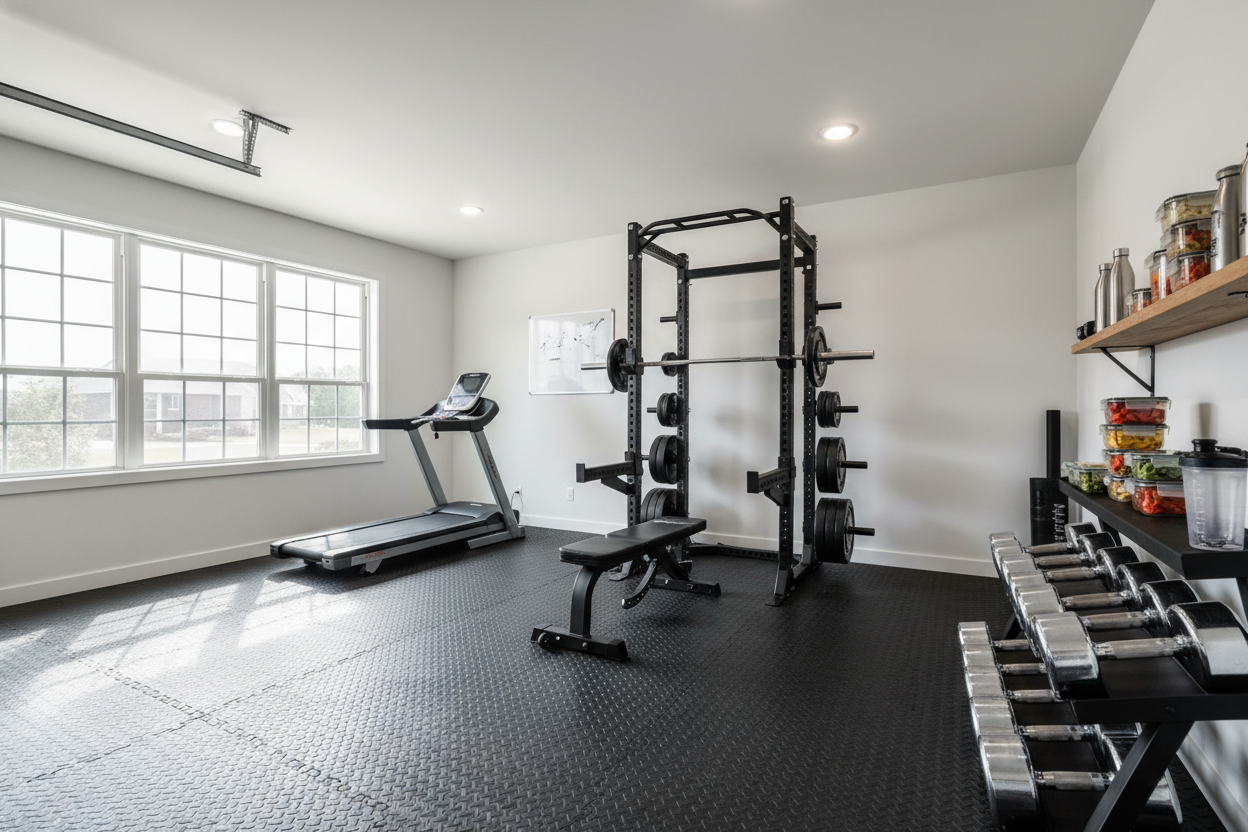
You do not need a $3,000 functional trainer. I started with a pair of adjustable dumbbells and a flat bench. The most overlooked piece of gear? The floor. If you are training on concrete or slippery hardwood, you are going to hurt yourself. I personally use a 6x8ft exercise mat for home workout because it provides enough grip for heavy lunges and protects my floor from dropped weights.
If your workout space is a weird shape—like a narrow basement hallway or a corner of the garage—you might need to browse a large exercise mat for home gym collection to find the right dimensions. Get the foundation right, buy some iron, and stop worrying about the latest fitness gadgets.
Personal Experience: My $400 Mistake
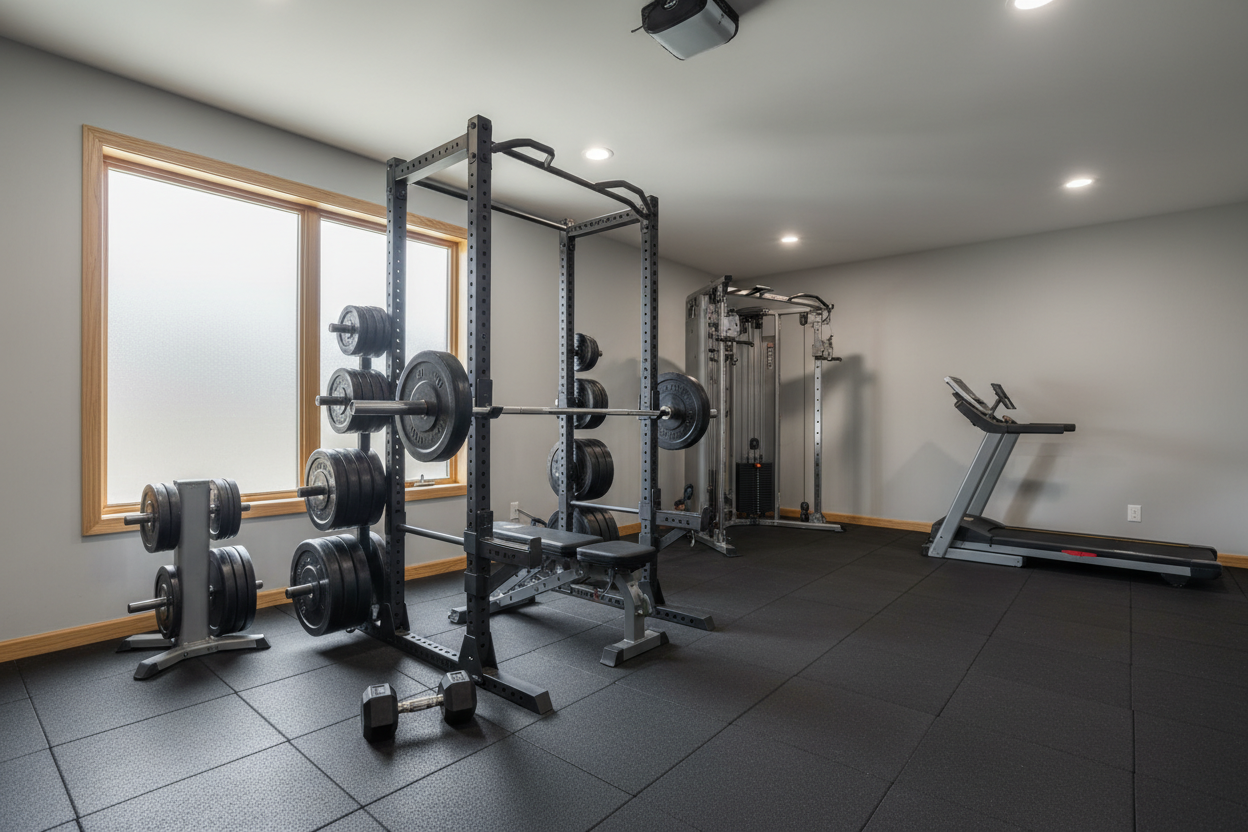
When I first started training at home, I bought a 'complete' home gym system from a big-box store. It had pulleys, a leg extension attachment, and a butterfly press. It took six hours to build and felt like it was made of soda cans. I used it for three weeks before the cables started fraying. I eventually sold it for pennies and bought a used barbell and a squat rack. I learned the hard way that simple gear lasts forever, while complex junk ends up in a landfill.
FAQ
How long should a beginner workout take?
If you are training with intensity, 45 to 60 minutes is plenty. Anything longer usually means you are spending too much time on your phone or doing too many 'fluff' exercises.
Can I build muscle with just bodyweight?
You can, but it is harder to track progress. Adding external weight—even just a single kettlebell or a pair of dumbbells—makes it much easier to ensure you are actually getting stronger over time.
What if I don't have space for a rack?
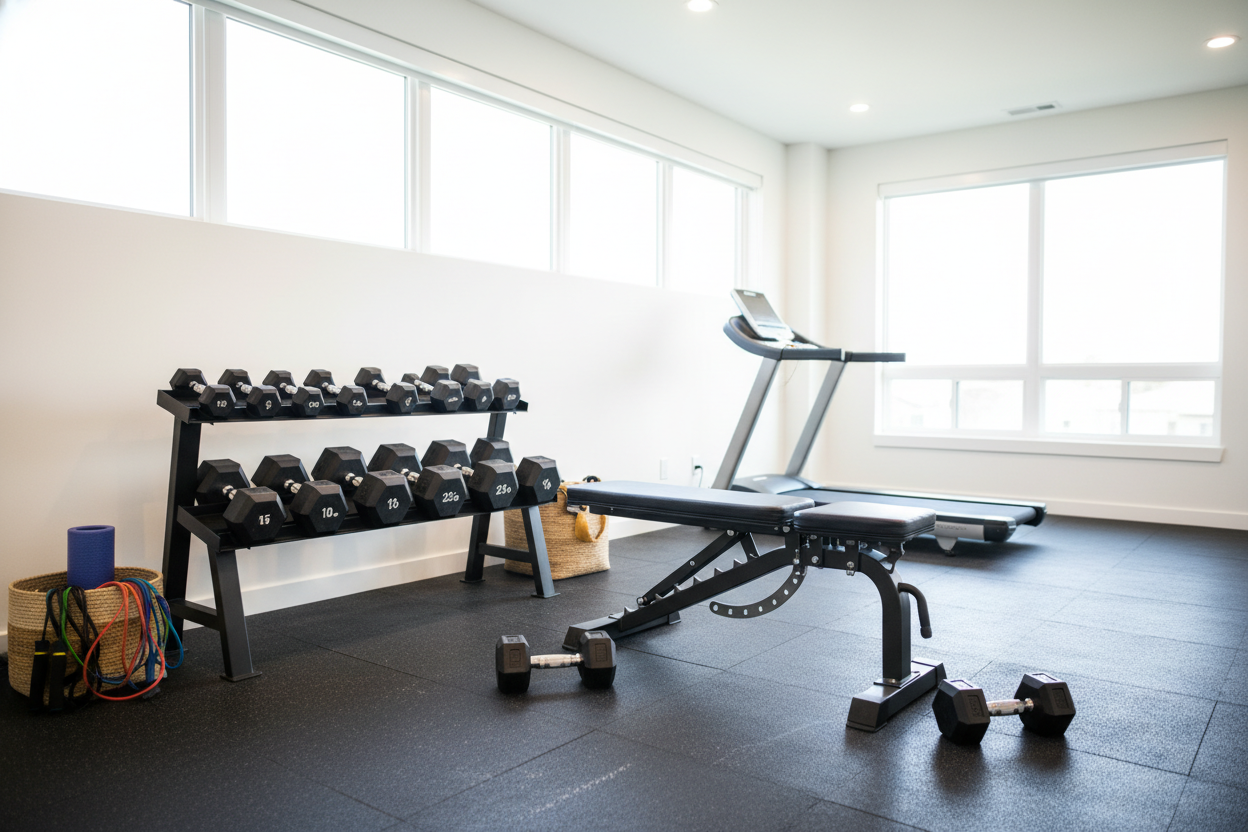
Stick to dumbbells and a high-quality mat. You can build an incredible physique with just a few pairs of weights and enough floor space to move around safely.