How to Fit Real Strength Training Equipment at Home in 50 Sq Ft
I spent years paying for a commercial gym membership just because I thought my 500-square-foot apartment couldn't handle a heavy barbell. I was tired of waiting for the only power rack in the building while some guy scrolled through TikTok on the bench. I finally realized that owning strength training equipment at home doesn't require a converted barn or a three-car garage.
You can build a world-class strength setup in the corner of a bedroom if you stop buying the fluff and focus on the footprint. I’ve personally squeezed a full rack, a barbell, and 300 lbs of plates into a space no bigger than a walk-in closet. It’s about being smart with your inches and honest about what you actually need to get strong.
Quick Takeaways
- A standard 7-foot Olympic bar needs a 10-foot wide 'lifting lane' to load plates safely.
- Skip the foam puzzle mats; they compress under heavy loads and create an unstable surface.
- Vertical storage is your best friend for plates and bars.
- Adjustable dumbbells replace a 10-foot long rack of fixed weights.
Forget the Two-Car Garage (You Only Need 50 Square Feet)
Most people think they need a massive footprint because they see influencers training in 2,000-square-foot warehouses. In reality, a standard Olympic barbell is 86 inches long. If you have a 5x10 foot area, you have more than enough room to squat, bench, and deadlift. The 10-foot width gives you about 1.5 feet on either side of the bar to slide plates on without hitting the wall.
The 5-foot depth is plenty for a squat stand and a bench. I’ve mapped this out dozens of times: if you can fit a twin-sized bed in the room, you can fit a serious lifting station. You just have to be disciplined about where you put the 'dead' space. Don't let your gear sprawl. Keep your plate storage tight to the rack and your bench tucked inside the frame when you aren't using it.
Protecting Your Floors Before You Drop a Single Weight
If you’re a renter or you just don’t want to crack your foundation, those cheap foam mats from the hardware store are a trap. They’re fine for yoga, but they’ll shred and shift the second you try to pull a heavy deadlift. I always recommend a 'sandwich' approach: a layer of 3/4-inch plywood on the bottom to distribute the weight, topped with high-density rubber.
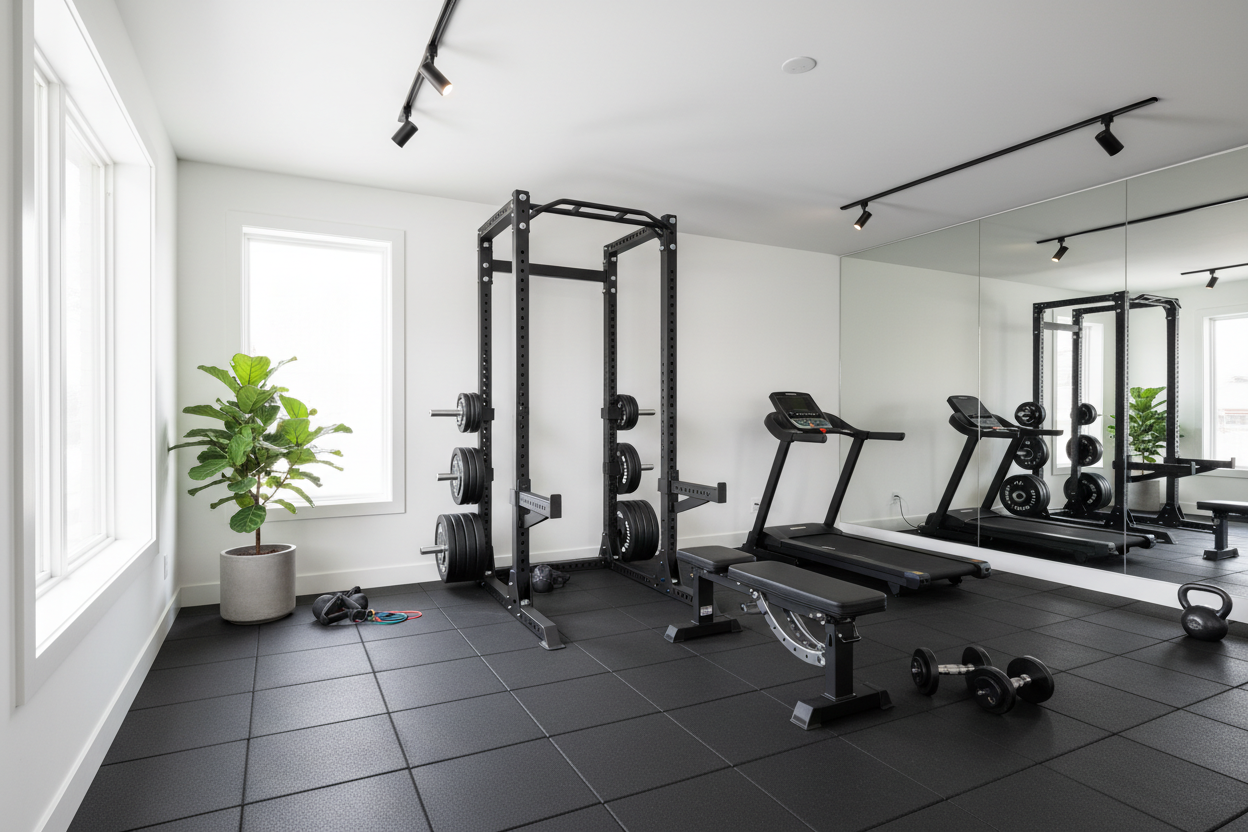
For that top layer, I prefer a heavy-duty gym flooring for home workout. It’s dense enough to handle a dropped 45-lb plate without leaving a permanent dent in your subfloor. Plus, a single large mat is easier to clean than twenty interlocking pieces that eventually trap sweat and chalk in the seams. It’s a one-time investment that saves your security deposit.
The Squat Stand vs. Power Rack Space Dilemma
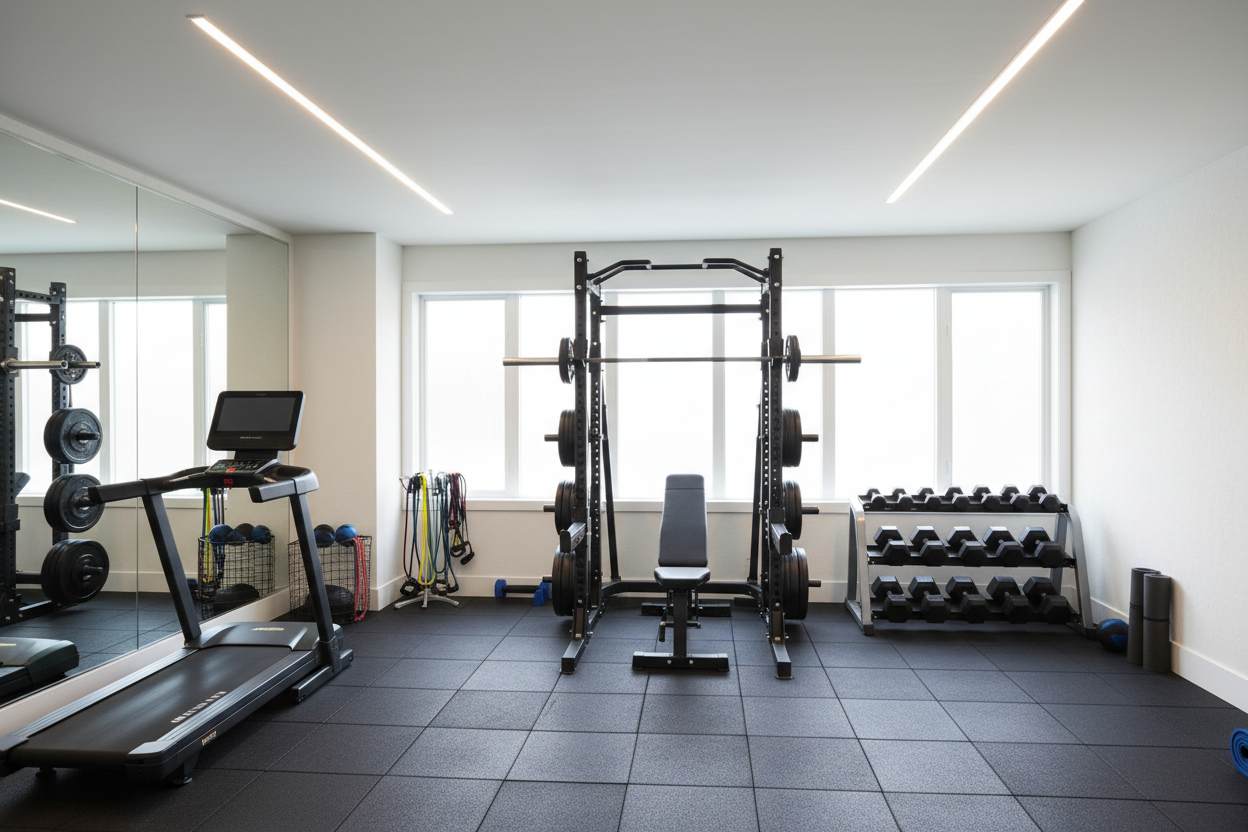
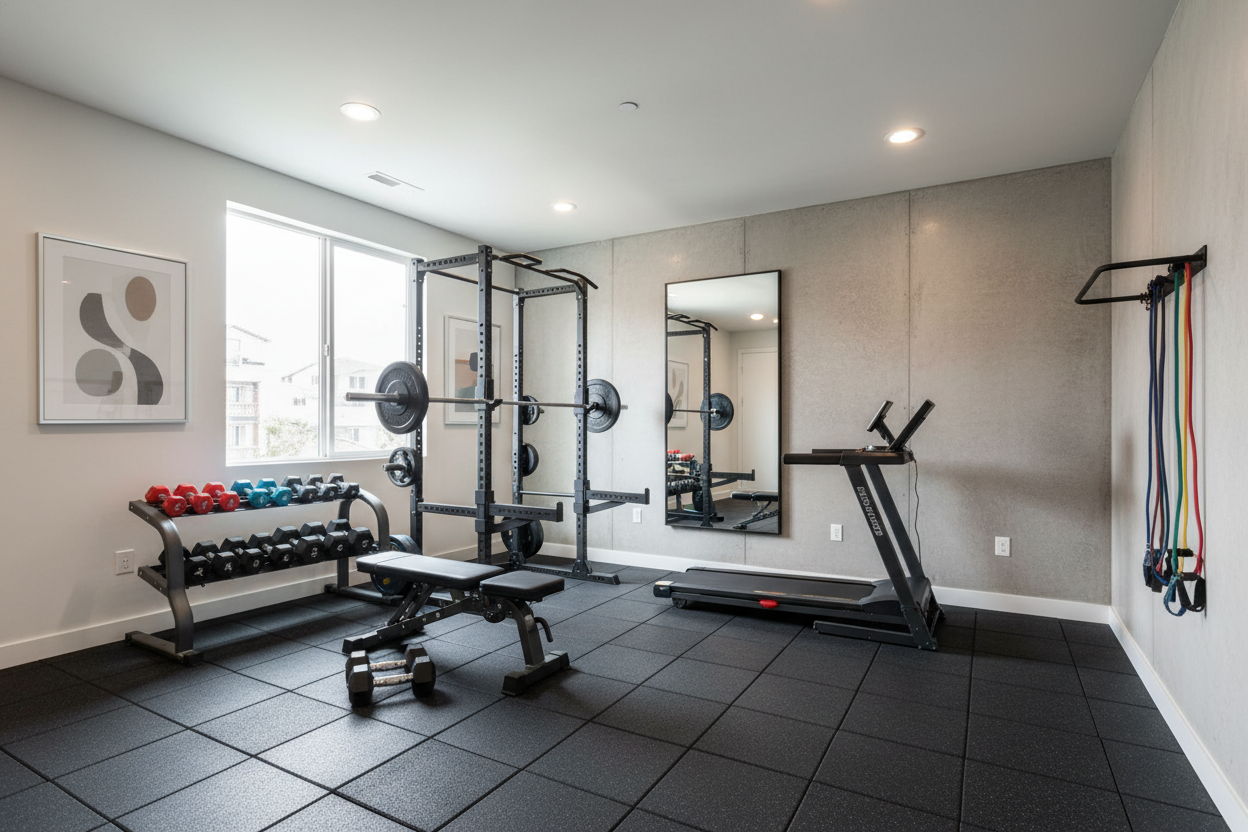
In a small room, a full 4-post power rack can feel like a cage. If you’re claustrophobic or dealing with a low ceiling, look at independent squat stands or a slim half-rack. These are the most efficient types of home gym equipment for effective strength training because they provide the safety of J-hooks and spotter arms without the massive steel footprint of a full cage.
I personally use a set of independent stands that I can bolt to the floor or tuck away. However, if you're hitting heavy triples near your 1RM, a bolt-down half-rack is the gold standard. It won't wobble when you re-rack a heavy squat, and it usually includes a pull-up bar. Just make sure you measure your ceiling height twice—nothing kills the mood like hitting your head on the drywall during a set of chin-ups. This is the core of any solid home gym equipment for strength training setup.
Picking Weights That Don't Eat Up Your Floor Plan
A full set of dumbbells from 5 to 50 lbs takes up about six feet of wall space. That’s a death sentence for a 50-square-foot gym. I switched to heavy-duty adjustable dumbbells years ago and never looked back. You get the same utility in the space of two shoeboxes. I suggest keeping an eye on home gym equipment deals to find a pair that goes up to at least 70 or 90 lbs, so you don't outgrow them in six months.
For your barbell plates, stop stacking them against the wall in piles. Use a vertical plate tree or a wall-mounted toaster rack. If you use bumper plates, remember they are much thicker than iron; you might only fit four 45-lb bumpers on a peg where you could fit six or seven iron plates. If space is your absolute priority, thin 'deep dish' iron plates are the way to go.
Keeping Your Tiny Gym From Smelling Like a Locker Room
When your gym is also your guest room or office, air quality matters. Chalk dust is the enemy. I switched to liquid chalk, which stays on your hands and off your carpet. It’s a small change that saves you from a lifetime of vacuuming white powder out of the floorboards. Also, keep a small fan and a dehumidifier in the room if you live in a humid climate.
I keep a 6x4ft exercise mat rolled up in the corner for my warm-ups and accessory work. It’s easier to wipe down than the heavy rubber flooring and keeps the 'clean' part of the room separate from the 'heavy' part. A quick spray with a mild disinfectant after every session is the difference between a functional home gym and a room that smells like a middle school gym class.
My Personal Experience: The 'Too Big' Mistake
I once bought a massive 6-post power rack with plate storage wings because I thought it looked 'pro.' Within a week, I realized I couldn't actually walk around it to load the bar. I had to shimmy sideways like a crab just to put on a 10-lb plate. I ended up selling it at a loss and buying a simple 2-post squat stand. The lesson? More steel isn't always better. Measure your 'working' space, not just the base of the equipment. You need room to move, breathe, and occasionally fail a rep safely.
FAQ
Is 50 square feet really enough for a barbell?
Yes, but you have to be smart. The bar itself is 7 feet long, so you need a room that is at least 9 or 10 feet wide. The depth is less of an issue; you can perform most lifts in a 4-foot deep space.
Will dropping weights damage my apartment floor?
If you use a 3/4-inch plywood base and a high-impact rubber mat, you'll protect the floor from most damage. However, if you're deadlifting 500 lbs, you should also invest in 'silencer' pads to absorb the vibration and noise.
Should I buy iron or bumper plates for a small home gym?
Iron plates are thinner and allow you to fit more weight on the bar and the storage pegs. Bumper plates are quieter and safer for the floor, but they are bulky. If you aren't doing Olympic lifts like cleans or snatches, iron is usually the better space-saving choice.