How to Buy Home Weights That Won't End Up on Craigslist
I remember the night I decided to quit my commercial gym. The monthly dues had just spiked again, and the only squat rack was permanently occupied by a guy filming his 'set' for TikTok. I jumped online to buy home weights at 2:00 AM, thinking I'd save a fortune and a headache. Three weeks later, a box of plastic-encased sand arrived that felt like a toy, and I realized I'd fallen for the same trap thousands of others do every year.
Quick Takeaways
- Avoid plastic-coated or 'cement-filled' weights; they leak and break within months.
- Prioritize a 2-inch Olympic barbell over 1-inch 'standard' bars for better compatibility.
- Adjustable dumbbells are the ultimate space-saver for apartments.
- Never skip flooring—concrete is more fragile than you think when iron is involved.
The Craigslist Graveyard (And Why You're Headed There)
Most people treat buying weights for home like a New Year's resolution—high on enthusiasm, low on technical planning. They buy the first shiny set they see at a big-box store, only to realize the handles are too thin or the weight increments are too large for real progress. Six months later, that gear is sitting in a garage gathering dust, eventually listed for 40 cents on the dollar.
The secret to avoiding this fate is buying the right weight set that actually matches your long-term strength goals. If you plan on deadlifting, don't buy a set that maxes out at 100 lbs. You'll outgrow it in a month. Think about where you want your strength to be in two years, not just two weeks.
Space vs. Iron: The Adjustable Dumbbell Dilemma
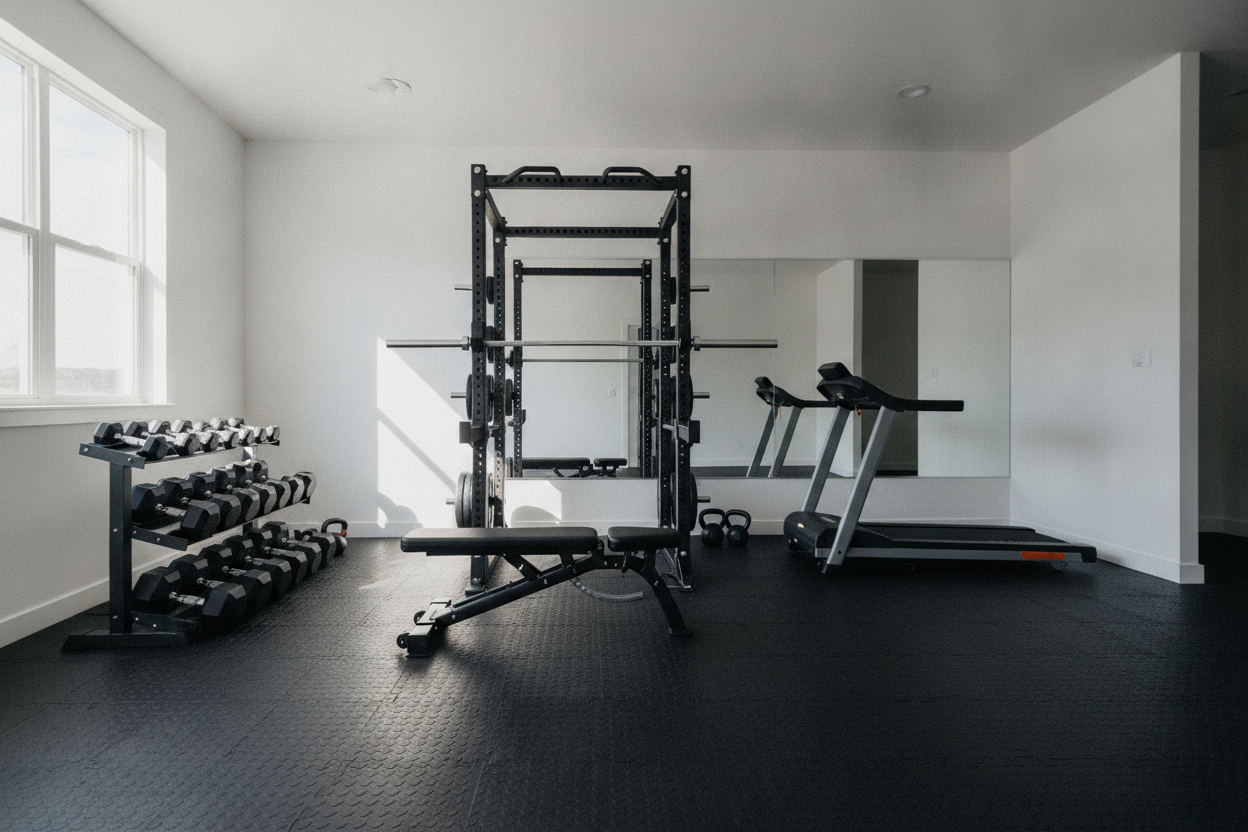
If you're working in a 700-square-foot apartment, a full rack of fixed dumbbells is a logistical nightmare. This is where in home weights like high-quality adjustable systems shine. I've used the ones that click, the ones that turn, and the ones with pins. The Ironmasters are my favorite for durability, but the Bowflex SelectTechs are faster for drop sets.
Don't get distracted by the marketing of 'men's free weights' versus lighter aerobic sets. Iron doesn't care who is lifting it. You need enough resistance to trigger progressive overload. A pair of 52.5-lb adjustable dumbbells takes up the space of two shoeboxes but replaces an entire wall of equipment.
Building a Real At-Home Free Weight Set
If you have a garage or a basement, stop messing around with small stuff and build a real at-home free weight set. This means a 20kg Olympic barbell with a 1,000-lb capacity and a 28.5mm diameter. You want a bar that has a bit of 'whip' but doesn't feel like a pool noodle when you load two plates on each side.
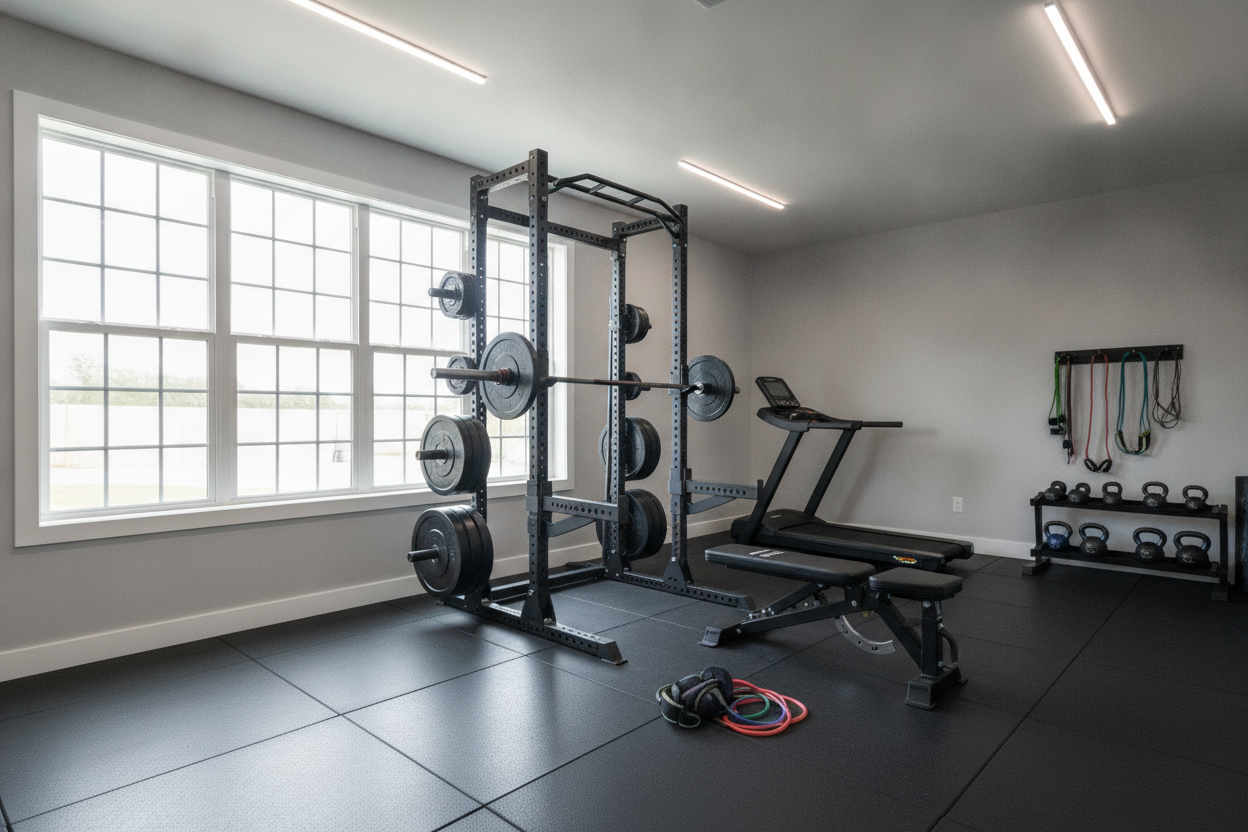
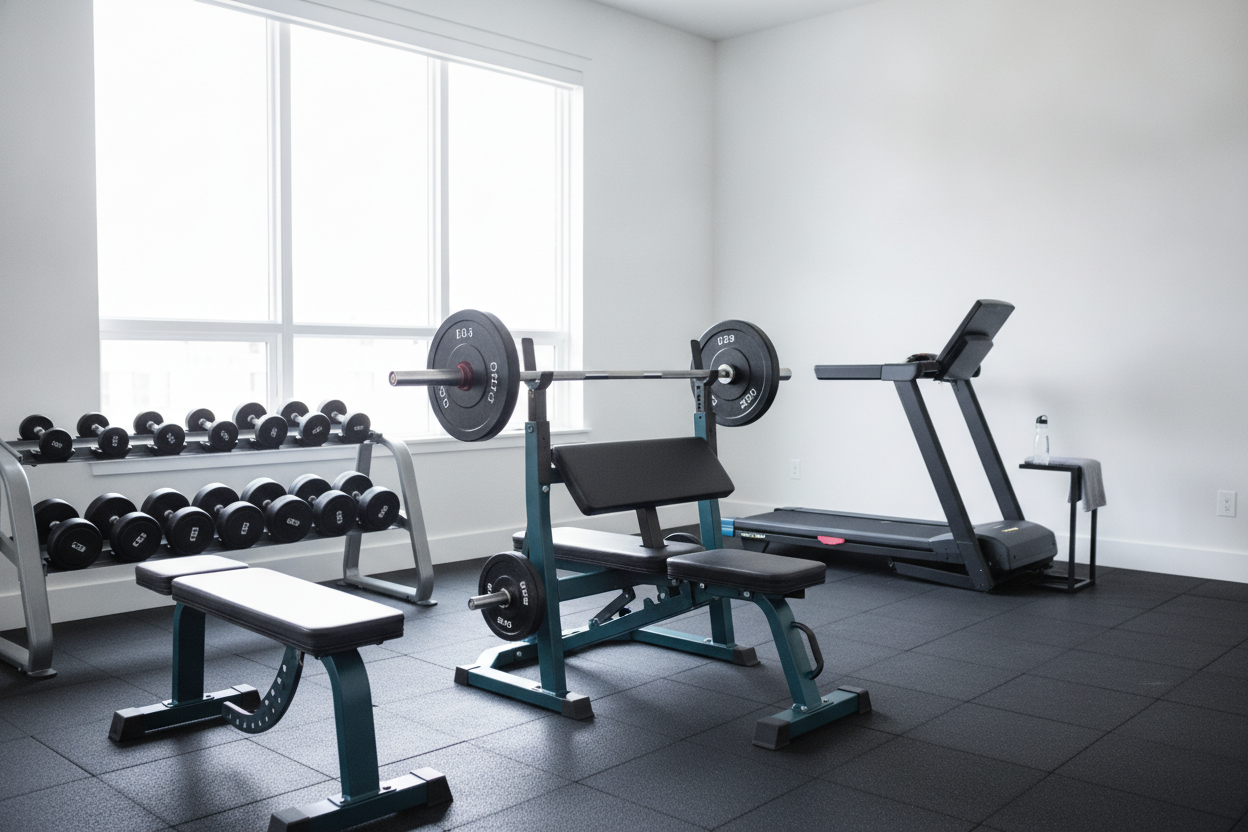
The gold standard for a serious setup is a power rack and bumper plate set. Bumper plates are essential if you're training alone—they allow you to bail on a lift without shattering your floor or your eardrums. For those starting from scratch, a quality weight set and bench provides the foundation for the 'Big Three' lifts that actually move the needle on your physique.
Why That Boxed Home Workout Weight Set is a Trap
Those 100-lb home workout weight set bundles you see at department stores are almost always a scam. The bars are usually two pieces that screw together in the middle—a massive structural failure waiting to happen. The plates are often filled with sand or concrete, making them twice as bulky as iron plates, which limits how many you can fit on the bar.
An all-in-one weight set for home is usually designed for the casual user who never plans on getting stronger. If you're serious, buy loose iron. It holds its value better, it's more durable, and you can add to it incrementally as you get stronger.
Don't Forget the Floor (Seriously, Protect Your Concrete)
I learned this the hard way. I dropped a 45-lb plate on my garage floor while wearing thin socks. Not only did I nearly break a foot, but I took a massive chunk out of the concrete. You need high-density gym flooring for home workouts. A standard yoga mat is for stretching, not for supporting a 300-lb squat rack. Get at least 1/2-inch thick rubber to save your foundation and your deposit.
The Final Verdict: Exactly What Weights to Buy for Home Workout
So, what weights to buy for home workout success? Here is my breakdown based on your budget:
- Under $500: One pair of heavy adjustable dumbbells (up to 50 lbs) and a sturdy flat bench.
- Under $1,000: A basic squat stand, a 7-foot Olympic bar, and 160 lbs of iron or bumper plates.
- Unlimited: A full 4-post power rack, a 1,500-lb capacity bar, and a full set of urethane dumbbells.
My Honest Mistake
When I built my first gym, I bought a 'bargain' barbell for $60. The first time I tried to clean 185 lbs, the sleeves didn't rotate. The torque nearly snapped my wrists. I sold it for $10 and bought a proper bearing bar the next day. Don't skimp on the parts that connect you to the weight.
FAQ
Are bumper plates better than iron?
Only if you plan on dropping the weight or doing Olympic lifts. Iron is thinner, meaning you can fit more weight on the bar, and it has that classic 'clank' that some people love.
How much weight do I need to start?
Buy your current max plus 50 lbs. If you can bench 150 lbs, buy a 200-lb set. You'll be surprised how fast you progress when you don't have to wait for a rack.
Should I buy used weights?
Yes, for iron plates. No, for adjustable dumbbells or barbells. Used plates are just heavy circles; used barbells often have bent shafts or rusted bearings that you can't see in a photo.