
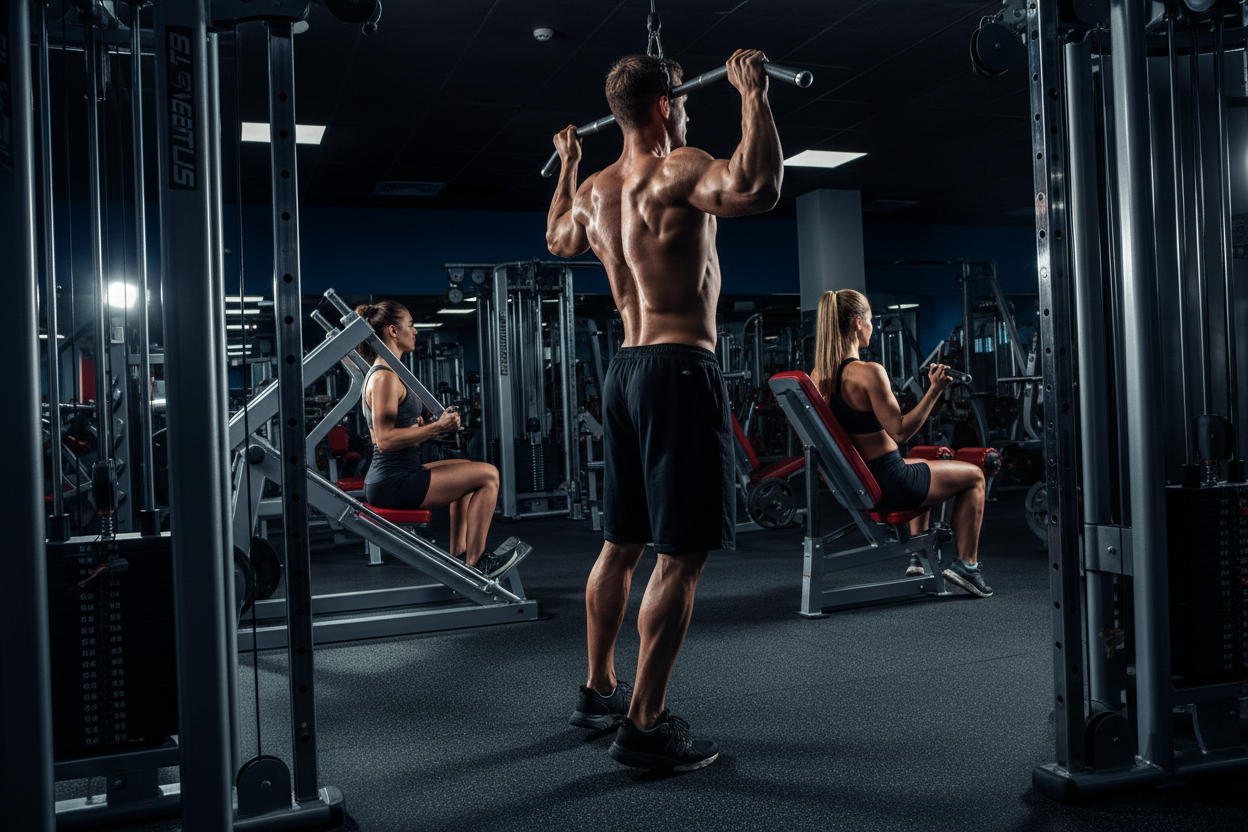
How to Build Serious Muscle With Just The Gym Machines
Walking onto the fitness floor for the first time feels like entering a cockpit without a pilot's license. You see rows of iron, cables, and levers, and the intimidation sets in immediately. Many lifters assume that to get big or strong, they must stick strictly to barbells. That is a myth. The gym machines are not just training wheels; they are precision tools designed to take your hypertrophy to the next level.
Key Takeaways
- Stability is Key: Machines provide external stability, allowing you to focus 100% of your effort on pushing the muscle to failure without worrying about balance.
- Safety First: You can safely train to failure on weight training gym machines without needing a spotter.
- Isolation: Unlike free weights, machines can isolate specific muscle groups, fixing imbalances and targeting lag areas.
- Time Efficiency: Circuit training on machines allows for rapid volume accumulation with minimal setup time.
Why Prioritize Strength Training Machines at the Gym?
There is a lingering stigma that machines are "soft." This creates a barrier for many who could benefit from them. The science of hypertrophy (muscle growth) relies on mechanical tension. Your muscles do not have eyes; they don't know if you are holding a rusty barbell or sitting in a $5,000 selectorized machine.
When you use strength training equipment at the gym, the machine creates a fixed path of motion. This reduces the need for your stabilizer muscles to work. While stabilizers are important, taking them out of the equation allows the prime mover (the target muscle) to handle a heavier load relative to its capacity.
The Stability-Hypertrophy Connection
Think about a barbell squat. You have to balance the bar, brace your core, and manage your center of gravity. Now, consider the leg press. The seat stabilizes your back. You can load significantly more weight and push until your legs literally cannot move the platform. That level of exhaustion is difficult to achieve safely with free weights alone.
Navigating Different Workout Machines at the Gym
Not all equipment is created equal. To get the most out of your session, you need to categorize the exercise machines in the gym by movement patterns rather than body parts.
The Pulling Machines (Back and Biceps)
If you want a wide back, you need to row. The Seated Cable Row is a staple. This is the classic gym machine pull towards you movement. It targets the lats and rhomboids.
Pro Tip: Don't just yank the handle. Let your shoulders protract (stretch forward) at the start, then drive your elbows back past your torso. The cable provides constant tension that dumbbells often lack at the bottom of the movement.
The Pushing Machines (Chest and Shoulders)
Chest press machines have evolved. Older models forced your shoulders into awkward positions, but modern converging chest presses mimic the natural arc of a dumbbell press. These are excellent for drop sets—where you lower the weight immediately after reaching failure—because changing the pin takes two seconds.
Common Mistakes With Exercise Machines Gym Users Make
Even though machines guide your movement, you can still mess it up. The most common error with weights machines in the gym is improper setup. If the pivot point of the machine (usually marked with a red dot or sticker) doesn't align with your body's joint, you are asking for an injury.
For example, on a leg extension, your knee must be exactly in line with the machine's axis of rotation. If you sit too far back or forward, you place shearing force on the knee joint rather than tension on the quadriceps.
Integrating Weight Training Machines at Gym Into a Routine
You don't have to choose between free weights and machines. The best programs use a hybrid approach. Start your workout with a compound free-weight movement (like a deadlift) to engage the nervous system. Then, move to weight training gym machines to hammer the muscles with high volume and lower fatigue costs.
My Training Log: Real Talk
I want to be transparent about my relationship with machines. For years, I was a "free weights snob." I thought if I wasn't under a barbell, I wasn't working. That changed when I tweaked my lower back on a squat.
I was forced to switch to the Hack Squat machine for three months. I remember the specific frustration of the first few sessions—the vinyl pads were slippery with sweat, and I couldn't find a foot placement that didn't feel unnatural. There was also this distinct, gritty friction in the guide rods on the way down that drove me crazy.
But here is the thing: because I didn't have to balance the weight, I could grind out reps that took five or six seconds to complete. My quads grew more in those three months of "machine work" than they had in the previous year of squatting. I learned that the "clank" of the weight stack hitting the bottom isn't a sign of laziness; it's the sound of mechanical failure, which is exactly where growth happens.
Conclusion
Stop viewing machines as the inferior option. They are sophisticated tools that offer safety, stability, and isolation that free weights cannot match. Whether you are rehabilitating an injury or chasing a bodybuilder physique, the gym machines belong in your routine. Adjust the seat, check your alignment, and push the pin to the bottom of the stack.
Frequently Asked Questions
Are machines better than free weights for beginners?
Machines are generally better for learning movement patterns safely. They allow beginners to build a base level of strength without the risk of dropping weights or losing balance, making the initial learning curve much less steep.
Can I build muscle using only machines?
Absolutely. Muscle growth requires mechanical tension and metabolic stress. Machines provide both efficiently. Many top-tier bodybuilders rely heavily on machines to target specific muscles without accumulating excessive systemic fatigue.
How do I know if the machine is adjusted correctly?
Look for the pivot point on the machine (often a cam or bolt). It should align with the joint you are working (e.g., your elbow for a bicep curl machine). Also, ensure you can achieve a full range of motion without the weight stack touching down between reps.


